10 Best Cities To Retire In Italy
Florence alone could fill a retirement with art. The city gave the world the Renaissance, and its galleries hold enough painting to reward a daily visit for years. Catania offers the opposite case on the coast of Sicily, a working-class port with a low cost of living and beaches within easy reach. Italy has room for both kinds of later life. These ten cities show how wide that range runs.
Rome

Rome serves as a living museum of the Roman Empire, which makes it a natural home for anyone who enjoys history. Ruins like the Colosseum and Trajan's Column sit in the middle of ordinary city life, a short walk from a morning coffee. The Colosseum shows the engineering of the Romans, while Trajan's Column records the emperor's campaigns in the Dacian Wars. The layout of the old city rewards slow, repeated exploration of the kind retirement allows.
Rome is not only ancient history. The Galleria Doria Pamphilj holds ornate furniture and paintings by Rubens and Titian in a private collection large enough to repay several visits. In summer, the city runs Estate Romana, a season-long program of concerts, outdoor film screenings, stage productions, and art installations spread across neighborhoods. Much of it takes place outdoors in the evening, when the heat eases.
Florence

Florence is the birthplace of the Renaissance, and its museums hold the art to prove it. Palazzo Pitti, housed in a palace the Medici once owned, gathers work by European masters of the period. The Uffizi Galleries add early Florentine and Tuscan painting by Giotto, Cimabue, and Duccio, tracing the art from its roots forward. A resident can return to either across a season and still find rooms left to see.
The city's cultural calendar runs year-round, and Estate Fiorentina anchors the summer with live concerts and performances in the parks and piazzas. Florence also keeps the daily infrastructure a retiree relies on, with markets, walkable streets, and a compact center that does not require a car.
Pisa

Pisa sits in Tuscany like Florence, but it is a smaller and quieter city of fewer than 100,000 residents. The Leaning Tower draws the crowds, yet most of the city carries on at the unhurried pace of a university town along the Arno. That smaller scale and lower cost are part of what makes it manageable for retirees.
Palazzo Blu, the art gallery on the riverfront, runs a permanent collection alongside rotating exhibitions that change the reason to visit each year. For practical matters, the city is home to the Azienda Ospedaliero-Universitaria Pisana, a major teaching hospital serving the region.
Venice

Venice moves by water and on foot, with no cars anywhere in the historic center. For a major city it is unusually quiet, which suits residents who want calm streets and architecture worth living among. The setting on the Gulf of Venice puts the lagoon and its islands within a short boat ride.
For sand, Lido di Venezia is the barrier island that holds the city's free beaches, an easy day out across the water. The Lido also hosts the Venice Film Festival each summer, one of the oldest film festivals in the world, with screenings open to the public well before the titles reach theaters. For an evening indoors, the Teatro La Fenice stages ballet, opera, and concerts in one of Italy's grand historic opera houses.
Palermo

Palermo has lived through much of Sicily's history, including its long entanglement with the Mafia. The No Mafia Memorial in the city center documents that period and honors those who died resisting it, and it has become a fixture for residents and visitors who want the real story rather than the myth.
The coast is close at hand. Mondello Beach, just outside the city, has soft sand and a clear view across the Mediterranean Sea. Cooks have reason to settle here too: Mercato Ballarò runs daily with produce, fresh fish, and Sicilian staples, the kind of working market that makes home cooking cheap and easy.
Catania

Catania gives a different side of Sicily, with a lower cost of living, a sizable English-speaking community, and Mount Etna and the Ionian Sea both close by. The Catania Fish Market opens early each morning, when local boats land their catch in the heart of the city.
For a quieter hour, Villa Bellini is the city's main public garden, with shade, fountains, and benches a few steps from the main streets. Culture sits nearby at the Palazzo Biscari, a private baroque palace decorated with reliefs and frescoes that still serves as a concert venue.
Milan

Milan suits retirees who want a city pace and the public transport to match it. The Galleria Vittorio Emanuele II, the glass-roofed arcade beside the Duomo, lines up cafes, restaurants, and shops under one of the oldest shopping galleries in the world. For culture, the Teatro alla Scala has staged opera and ballet since it opened in 1778, and it keeps an on-site museum of operatic and ballet history open between performances.
Healthcare access matters in later life, and Milan is one of Italy's strongest cities for it. The Niguarda hospital is among the largest in the country and offers a full range of specialist services.
Naples

Naples keeps the lower costs of southern Italy along with quick access to the outdoors. Lo Zoo di Napoli, in the Fuorigrotta district, runs a wildlife park built around conservation and biodiversity. For plants over animals, the Orto Botanico di Napoli spreads about 12 hectares of gardens and collections through the middle of the city.
The sea is part of daily life here. Bagno Elena, in the Posillipo district, is a historic bathing establishment with water access and views over the Gulf of Naples.
Turin

Turin sits in the northwest near the French border, with the Alps on the horizon. A lower cost of living than Milan and a deep bench of museums have drawn retirees who want a northern city without the northern prices.
The Museo Nazionale dell'Automobile traces the history of Italian carmaking through vehicles kept in working order, a draw for anyone who followed the country's auto industry. The Museo Nazionale del Cinema occupies the Mole Antonelliana tower and walks through Italian film, and the Galleria Sabauda rounds out a museum day with Italian paintings from the 14th to the 18th centuries. Three major collections within a short walk give a resident plenty to fill the calendar.
Genoa

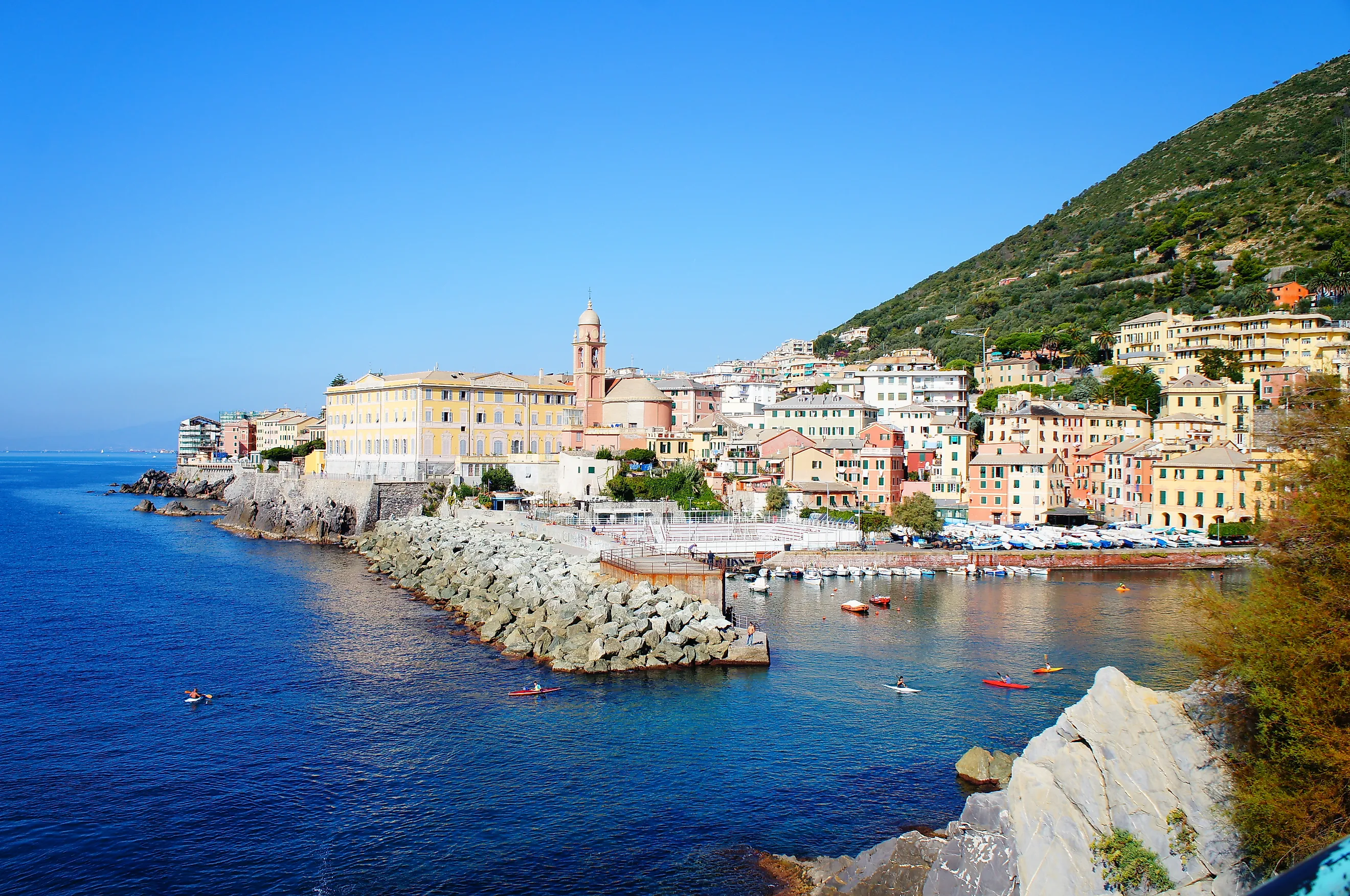
Genoa was once a great trading republic, and it still faces the sea from its place on the Italian Riviera. Sitting on the Gulf of Genoa, the city pairs a reasonable cost of living with constant access to the water. Boccadasse, a former fishing village folded into the city, keeps a small pebble cove where residents swim and anglers cast from the rocks. The Acquario di Genova holds local species alongside ocean and freshwater life from around the world.
The city's maritime past is the subject of the Galata Museo del Mare, which displays reconstructed ships, a real submarine moored alongside, and artifacts spanning the centuries Genoa spent as a sea power.
Choosing Among Italy's Cities
The choice comes down to what kind of day a retiree wants. Florence and Turin reward a museum habit, Venice and Genoa put the sea outside the door, and Catania and Naples keep costs down in the warmer south. Each city on this list can sustain a long retirement, and the deciding factor is which version of Italian life fits best.