10 Most Hospitable Towns In Wisconsin
Wisconsin has long been known for Midwestern warmth, and its most hospitable towns take that even further. They back it up with free concerts and decades-old festivals that locals still turn out for. They also have museums run by people who spent careers keeping a single tradition alive. In New Glarus, visitors who show up for the Labor Day Swiss independence play sometimes get pulled right into the cast. In Ephraim, the whole village gathers at the harbor for midsummer bonfires each June. The towns ahead all share a knack for making newcomers feel like part of the community.
New Glarus

New Glarus has carried its Swiss identity since 1845 with remarkable consistency. The Swiss Historical Village lays out that founding story across 14 original and replica buildings. Walking through a one-room schoolhouse, blacksmith shop, church, bee house, and a cheesemaker's room with original copper kettles still intact gives you a real sense of how early settlers actually lived. That same pride in local tradition continues at New Glarus Brewing Company. Visitors can explore the brewery on a self-guided tour before relaxing on the outdoor patio. Its flagship beer, Spotted Cow, remains available only in Wisconsin.
Downtown, Glarner Stube continues the village's Swiss culinary traditions with cheese fondue, schnitzel, sausages, and rösti, the Swiss potato dish. Locals eat here regularly, which is usually the best sign. Labor Day weekend brings one of New Glarus's most enduring traditions, the Wilhelm Tell Festival. First staged in 1938, the celebration centers on an outdoor performance of the Swiss folk hero's story and expands into a weekend of music, cultural events, and community gatherings.
Cedarburg

Cedar Creek Settlement is housed in the Wittenberg Woolen Mill, a landmark originally constructed in 1864 by German entrepreneurs. The large structure now houses more than 20 specialty retailers, dining spots, and Cedar Creek Winery, allowing visitors to browse boutiques and sample regional vintages under one roof. One of the winery's best-known releases, Strawberry Blush, ties neatly into Cedarburg's annual Strawberry Festival. Each June, the celebration features an all-you-can-eat pancake breakfast, artisan vendors, live entertainment, and duck races along Cedar Creek, drawing families onto streets lined with cream city brick and limestone storefronts.
Textile traditions remain visible at the Wisconsin Museum of Quilts & Fiber Arts. Galleries rotate between nineteenth-century needlework and contemporary fiber installations, while workshops give participants the chance to learn quilting, weaving, and other hands-on techniques. Those looking for fresh air can head to the Ozaukee Interurban Trail, a 30-mile paved corridor crossing the county. Its Cedarburg section passes through woodlands, agricultural landscapes, and the covered bridge, completed in 1876, one of the last surviving examples of its kind in Wisconsin.
Bayfield

Around 500 year-round residents share Bayfield with thousands of visitors who arrive for island cruises, orchard harvests, and summer performances overlooking Lake Superior. Much of that activity begins at the waterfront, where Apostle Islands Cruises operates narrated excursions through the Apostle Islands National Lakeshore. The Grand Tour covers roughly 55 miles, passing sea caves carved into the islands, historic lighthouses on Raspberry and Devils islands, and remnants of the region's brownstone quarrying industry. No paddling or outdoor experience is required, making the archipelago accessible to travelers who prefer to explore from the water.
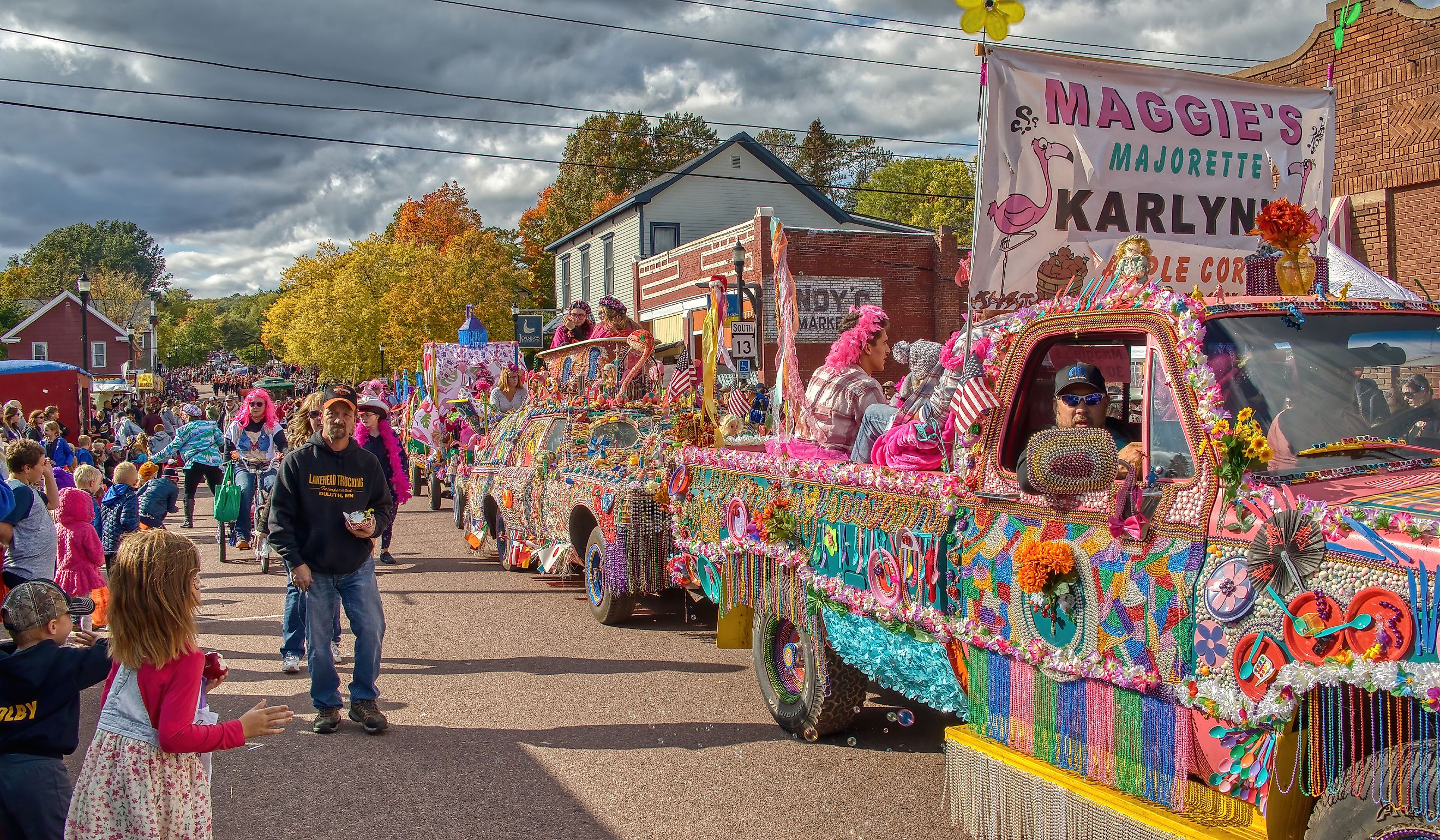
Above the shoreline, Hauser's Superior View Farm has remained in the same family for five generations. Guests can browse preserves, apple butter, orchard-grown fruit, and hard cider produced at the on-site Apfelhaus Cidery, then take in views stretching across Lake Superior toward the island chain. October is all about Bayfield's signature event. Now past its sixtieth year, the Apple Festival fills downtown with fruit vendors, regional food producers, artists, and live entertainment. One of the recurring highlights comes from the Blue Canvas Orchestra, the house band of Big Top Chautauqua. Housed beneath a 900-seat canvas tent near Mount Ashwabay, the venue stages more than 60 concerts and original productions each season.
Port Washington

Fishing boats, charter vessels, and recreational sailboats still crowd Port Washington's harbor, keeping a steady maritime rhythm that dates to the nineteenth century. That connection to Lake Michigan is easy to see at the 1860 Light Station Museum, where seasonal tours lead visitors through restored keeper's quarters furnished to reflect life during the Lewis family's six-decade stewardship of the beacon. After climbing the reconstructed tower, guests are rewarded with sweeping views across the harbor, breakwater, and shoreline. The working harbor remains just as important today. Angry Fin Charter Fishing takes anglers onto Lake Michigan in pursuit of salmon, trout, and other cold-water species, offering a firsthand experience.
Port Fish Days showcases that relationship with the water on a larger scale. Held each July, the weekend features multiple entertainment stages and family activities, in addition to the fish fry that made it famous. Finally, Coal Dock Park occupies a narrow peninsula extending into Lake Michigan, giving visitors water views on nearly every side. The 1,500-foot promenade is popular for walking, fishing, birdwatching, and sunset viewing, while an 80-foot pedestrian bridge links the park to the South Dock sanctuary and South Beach.
Lake Geneva

Few places in Wisconsin let the public walk the entire shoreline of a major lake, and Geneva Lake's 21-mile path would be your best bet. The path threads past landmarks such as the sprawling Wrigley Estate, Black Point Estate, historic boathouses, formal gardens, and stretches of undeveloped shoreline. Most visitors walk shorter sections for sightseeing, photography, birdwatching, or estate-spotting. The same shoreline takes on a different character from aboard the U.S. Mailboat Tour. Running mid-June through mid-September, the Walworth delivers mail to dozens of lakeside homes while a mail jumper leaps from the moving vessel onto private piers before returning on board.
For something that does not require leaving Main Street, Topsy Turvy Brewery operates inside a former church where neo-Gothic stained-glass windows remain part of the taproom. Small-batch beers draw inspiration from Wisconsin history, landmarks, and folklore, for instance Geneva Beach Blonde and Wisconsin Big Buck IPA. On the southeastern shore of Geneva Lake, Big Foot Beach State Park spreads across more than 270 acres of oak woodland, open meadows, and lakeside habitat. Visitors come for swimming, fishing, birdwatching, picnicking, and nearly 7 miles of hiking and ski trails that wind through the forest, while the park's 900-foot beach provides one of the largest public stretches of shoreline on the lake.
Sturgeon Bay

The 75-foot observation tower at Potawatomi State Park rises above the treetops with views stretching across Sturgeon Bay, Green Bay waters, and miles of Door County forest. Many visitors start with the Tower Trail before branching onto more than 8 miles of additional routes that pass through hardwood woodland, rocky ridges, and the eastern terminus of the Ice Age National Scenic Trail. Back near the ship canal, the Door County Maritime Museum invites guests aboard the restored tugboat John Purves and into exhibits covering commercial fishing, lighthouse operations, shipwrecks, and vessel construction. Freighters, recreational craft, and working boats continue to move through the waterway outside, providing context for much of what is displayed inside.
The Miller Art Museum gives visitors another reason to linger downtown, with rotating displays that have ranged from Lake Michigan landscapes and maritime scenes to contemporary fiber installations, photography, and ceramics by Wisconsin artists. When the sun goes down, Third Avenue PlayWorks keeps audiences coming back with a year-round lineup of comedies, dramas, and new productions performed by professional actors in the heart of the city.
Sister Bay

Door County Magazine has repeatedly recognized Sister Bay Marina as the best on the peninsula, mainly for its high walkability. Many visitors eventually find their way to Al Johnson's Swedish Restaurant, where Swedish pancakes, limpa bread, lingonberries, and other Scandinavian specialties have been drawing crowds since 1949. The goats grazing on the sod roof remain the landmark most people photograph. Inside, hand-painted rosemaling and family recipes carry as much of the restaurant's identity as the goats do. Peach Barn Farmhouse & Brewery provides a different gathering place. Housed inside a converted barn, the property combines farmhouse ales, hard seltzers, outdoor seating, lawn games, weekend music, and a family-friendly atmosphere where children and dogs are equally welcome.
October heralds Fall Fest, when the waterfront fills with a soapbox derby, live entertainment, an arts and crafts fair, the Ping Pong Ball drop, and a children's parade that has become a tradition for many Door County families. A few miles beyond the center of town, Stoneboat Farm adds an unexpected experience through encounters with Bactrian camels, farm tours, seasonal activities, and locally produced goods available directly from the property.
Ephraim

Ephraim is one of the quietest villages in Door County and one of the most visited, largely because it looks exactly the way people imagine Door County should. The Hardy Gallery at Anderson Dock is a good starting point. Inside the weathered warehouse, the gallery rotates exhibitions featuring artists from Door County and across the region. The dock itself has become an attraction through decades of signatures, sketches, and messages covering nearly every available surface. From the dock, Wilson's Restaurant & Ice Cream Parlor sits about half a mile up the waterfront. Open since 1906, it serves flame-grilled burgers and home-brewed draft root beer out of a classic counter-service parlor with a jukebox and lake views.
Ephraim marks the start of summer in June with the Fyr Bal Festival (pronounced "fear-ball"), a Scandinavian midsummer celebration that has been running for more than 60 years. At dusk, bonfires are lit along Eagle Harbor, fireworks go off over the water, and the day builds toward it with a pet parade, an artisan market, cherry pie eating contests, and live Scandinavian folk dance. The Evenings in Ephraim Concert Series is a highlight on Mondays, with concerts at Harborside Park running roughly from mid-June through the end of August. It features local jazz ensembles, swing bands, and Door County singer-songwriters on the waterfront gazebo stage.
Burlington

About 50 minutes from Milwaukee, being called a liar in Burlington counts as a compliment. Since 1929, the city's Liars' Club has crowned a World Champion Liar every New Year's Eve, continuing a tradition that began with friendly storytelling contests between members of the police and fire departments. Winning tales live on along the Tall Tales Trail, where bronze plaques scattered through downtown preserve decades of outrageous claims, giving pedestrians plenty to read, debate, and laugh about.
South of town, Brightonwoods Orchard invites visitors to wander among more than 150 apple varieties alongside pears, quince, and seedless grapes. Depending on the season, guests can sample fruit, browse the farm market, or walk the rows to see varieties rarely found outside specialty orchards. The experience continues next door at AeppelTreow Winery & Distillery, where much of that harvest reappears as hard ciders, apple wines, and spirits. The tasting room next door makes it easy to follow the fruit's journey into cider, wine, and spirits over a single afternoon.
Baraboo

More than 100 American circuses spent their off-seasons in Wisconsin, and Baraboo was home to the biggest of all, the Ringling Brothers, who wintered there between 1884 and 1918. That history remains remarkably accessible at Circus World, where visitors can watch live performances beneath the Big Top, step inside historic Ringling Bros. railcars, examine intricately carved circus wagons, and walk through original winter quarters buildings spread across a 64-acre riverside campus. The Al. Ringling Theatre continues to fill seats more than a century after opening. Guided tours reveal ornate European-inspired interiors, while the performance calendar ranges from concerts and films to touring productions and children's programming. The Mighty Barton Organ, still in use today, remains one of the theater's signature attractions.
About 42 miles from Madison, Devil's Lake State Park draws hikers onto nearly 30 miles of trails climbing quartzite bluffs that rise 500 feet above a 360-acre lake. Swimming beaches, paddling routes, rock-climbing areas, and scenic overlooks keep the landscape active year-round. About 10 miles beyond the park, the International Crane Foundation offers the rare chance to see all 15 crane species in one location. Walking paths pass through habitats that host birds from five continents. Guided programs offer a closer look at conservation efforts worldwide.
A Warm Wisconsin Welcome
The most hospitable towns in Wisconsin share a willingness to involve visitors in local traditions, whether that means walking the 21-mile Geneva Lake Shore Path in Lake Geneva or attending a waterfront concert in Ephraim. Across this corner of the United States, hospitality often comes through experiences that are easy to join, like community festivals, family-run businesses, public waterfronts, and neighborhood gathering places. These towns prove that a memorable visit often starts with a friendly smile and a genuine welcome.