10 Little-Known Towns In Wisconsin
Wisconsin's best small towns tend to sit outside the usual travel orbit. They're scattered across the Driftless Area's bluffs, the Door Peninsula's Lake Michigan shoreline, and the Apostle Islands' coast on Lake Superior. Some, like Mineral Point, still carry the Cornish stone-cottage architecture brought by 19th-century lead miners. Others, like Bayfield, work as small working harbors into sea-cave country. And a few, like Sister Bay, have turned specific quirks into a local identity, such as a Swedish restaurant with grass-roof goats. These ten towns each earn their place through a distinct combination of history, geography, and surviving character.
Mineral Point

Mineral Point sits in the Driftless Area, the unglaciated region of southwestern Wisconsin known for its bluffs and river valleys. Settled by Cornish lead miners in the 1820s and 1830s, the town still carries the stone cottages those miners built, preserved primarily along Shake Rag Street. Pendarvis, a state historic site, covers six of those cottages and interprets the daily life of Cornish immigrant miners.
Library Park marks the site where Henry Dodge was inaugurated as the first governor of the Wisconsin Territory on July 4, 1836. Other historic draws include the Mineral Point Railroad Museum, housed in an 1856 depot that is the oldest in Wisconsin, and the Mineral Point Opera House on High Street, which still runs films, concerts, and theater. The town's gallery and studio scene, concentrated along Commerce and High Streets, is one of the strongest in southwestern Wisconsin.
St. Croix Falls

St. Croix Falls sits along the St. Croix River on the Minnesota border and serves as the Wisconsin-side gateway to Interstate State Park, which runs across the river in both states. The park's signature feature is the Dalles of the St. Croix, a basalt gorge carved by glacial meltwater where the river narrows into a set of pools and rock walls. Hiking, camping, rock climbing, and kayaking all work here, and Taylors Falls Scenic Boat Tours on the Minnesota side runs seasonal paddlewheel cruises through the Dalles.
The St. Croix itself is a federally protected National Scenic Riverway running more than 200 miles, with a visitor center in town that covers the river's ecology and cultural history. The St. Croix Festival Theatre runs a summer repertory season of plays and musicals, and Loggers Bar & Grill handles the post-hike dining.
Pepin

Pepin sits on the shore of Lake Pepin, a wide natural lake formed where the Mississippi River slows behind a delta-built constriction at its downstream end. The lake is the largest natural Mississippi lake, about 22 miles long, and supports sailing, fishing, and the best inland lake-effect winds in the Midwest.
Laura Ingalls Wilder was born in a log cabin seven miles north of Pepin in 1867, and the Laura Ingalls Wilder Museum in town covers her Little House on the Prairie origins. The Pepin Depot Museum preserves an 1886 rail depot and local history. Harbor View Café, on the waterfront, has been a destination restaurant for Twin Cities day-trippers for decades.
Fish Creek

Fish Creek is one of the main villages on the Door Peninsula, with a year-round population just under a thousand that swells considerably through the summer tourist season. The village sits next to 3,776-acre Peninsula State Park, which holds five miles of Green Bay shoreline, the 1868 Eagle Bluff Lighthouse, 20 miles of hiking trails, and the Northern Sky Theater, an outdoor summer theater that stages original musicals.
Sunset Beach Park, a small town park on Fish Creek's north edge, is the local sunset-watching spot. The Alexander Noble House, built in 1875, is the oldest surviving house in the village and operates seasonally as a historical society museum.
Elkhart Lake

Elkhart Lake, population about 950, is best known nationally as the home of Road America, the 4-mile road-racing circuit that has hosted major sports-car and motorcycle events since 1955. For visitors not there for racing, the spring-fed lake itself is the main draw, with public access at Fireman's Park and its swimming beach on the south shore.
The Elkhart Lake Historic Depot Museum, in a restored 1894 Chicago & North Western railroad depot, covers the town's Victorian resort history. The 1889 Osthoff Resort, one of the original 19th-century resort hotels that gave Elkhart Lake its early reputation, still operates as a full-service lakeshore property. Village Square Park anchors the downtown with shaded picnic tables and the bronze Pledge Allegiance sculpture.
Minocqua

Minocqua, in the Northwoods lake country of northern Wisconsin, sits on a peninsula jutting into Lake Minocqua and serves as the commercial center for the surrounding chain of lakes. The town runs a busy summer season built around fishing, boating, and kayaking across the dozens of interconnected lakes in the area.
Wildwood Wildlife Park hosts more than 1,400 animals across roughly 240 species on grounds that include a walk-through area and a safari-style tram ride. The Minocqua Museum covers local history in exhibits on the logging era, the railroad, and the resort town that replaced them. For art-minded visitors, Earth Goods carries regional pieces and jewelry.
Lake Geneva

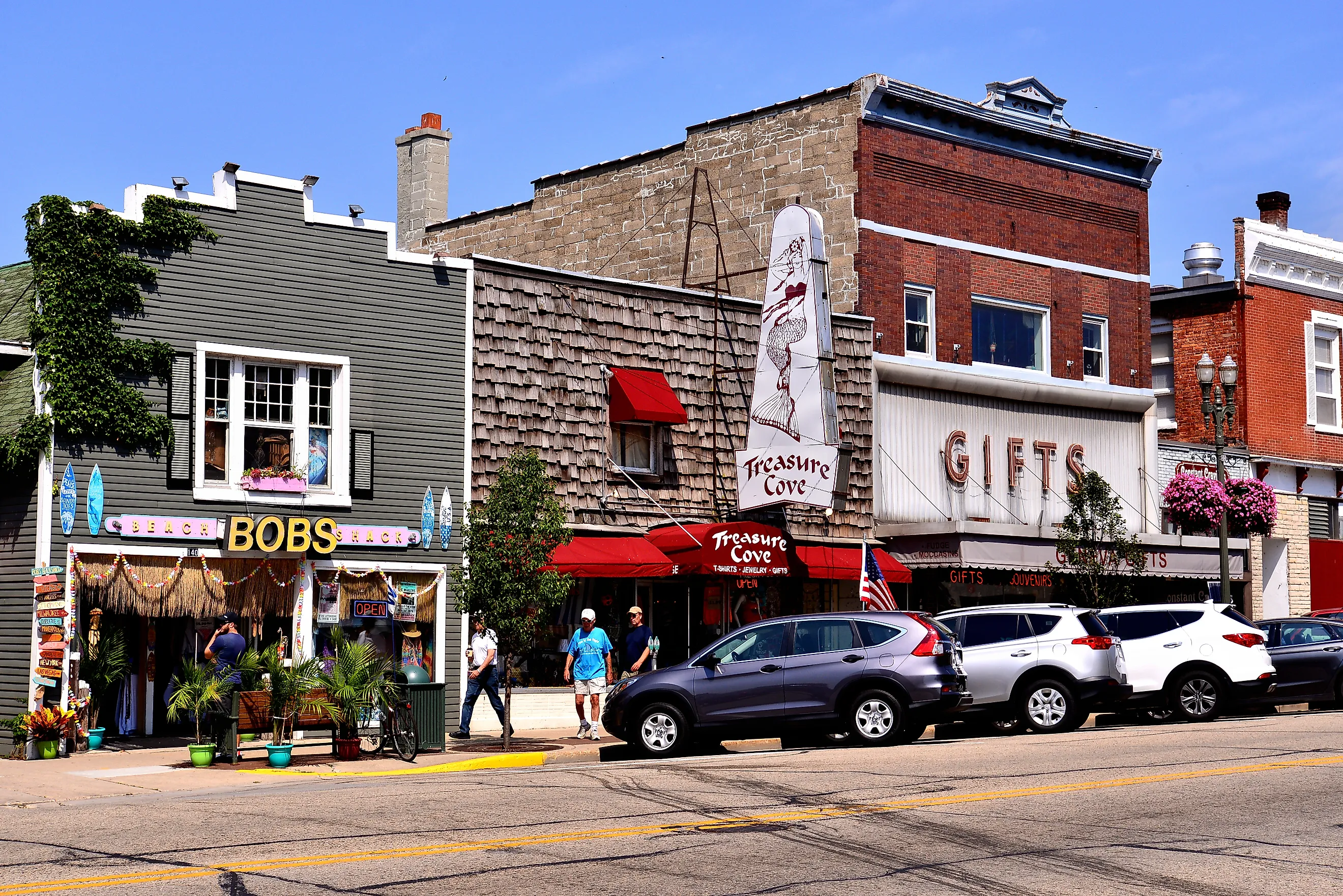
Lake Geneva, the main town on Geneva Lake in Walworth County, became the summer destination of choice for Chicago's wealthy in the late 19th century, and the Gilded Age estates those families built still line most of the 21 miles of lakeshore. The Geneva Lake Shore Path, a 21-mile public easement that predates Wisconsin statehood, runs directly through those estates' back lawns and is the best way to see them up close.
The Geneva Lake Museum covers the town's history with period clothing, boating, and furniture exhibits. Lake Geneva Cruise Line operates narrated tours of the estates and includes the country's last mail-delivery boat route, where a postal worker still leaps from a moving boat to deliver letters to lakefront docks through the summer.
Cedarburg

Cedarburg sits 20 miles north of Milwaukee and has kept its 19th-century downtown remarkably intact. The Cedarburg Cultural Center, in a restored 1864 building, and the Cedarburg Art Museum, in the 1898 John Wiesler House, cover local heritage and rotating exhibitions. The Wisconsin Museum of Quilts & Fiber Arts, housed in a restored 1850s barn north of town, holds more than 8,000 quilts in its collection and runs classes and workshops year-round.
The Cedarburg Covered Bridge, an 1876 Town lattice truss bridge over Cedar Creek just north of downtown, is the last remaining covered bridge in Wisconsin. The Rivoli Theatre, built in 1936, still screens films on Washington Avenue.
Sister Bay

Sister Bay, on the Door Peninsula's Green Bay side, has a year-round population under a thousand but fills up through the summer tourist season. The village's most photographed spot is Al Johnson's Swedish Restaurant, whose sod roof supports a herd of goats that graze on it from spring through fall, a tradition the restaurant has kept up since 1973.
Sister Bay Beach, on the village waterfront, has a swimming pier, a kayak launch, and picnic tables. The adjacent Sister Bay Marina handles the charter-fishing and sailing crowd. Country House Resort, north of town, occupies the former Ingebret Torgerson farm, the first homestead at Sister Bay, and traces its hospitality history to Forest Idyll, the original inn opened there in 1907.
Bayfield

Bayfield is the smallest city in Wisconsin by population, with 532 residents at the 2020 census, but it works as the primary gateway to the Apostle Islands National Lakeshore. The 22-island archipelago just offshore in Lake Superior holds the Apostle Islands sea caves, a set of sandstone wave-cut chambers accessible by kayak in summer and by foot over ice in suitably cold winters, though the ice caves are only safely accessible in years when Lake Superior freezes solidly enough.
The Apostle Islands Cruises' 55-mile Grand Tour narrated boat trip covers most of the islands from Bayfield harbor. The Bayfield Maritime Museum, on the waterfront, covers the region's commercial fishing, shipping, and lighthouse history. Bayfield's annual Applefest each October is one of Wisconsin's largest fall festivals and draws more than 50,000 visitors.
Ten Wisconsin Small Towns
Across these ten towns, Wisconsin's small-town character runs the full range: Cornish mining villages in the Driftless, spring-fed resort towns in the Kettle Moraine, Swedish-flavored Door County villages on Lake Michigan, and working harbor towns on Lake Superior. Each has its own specific draw, whether that's a 1866 stone cottage at Pendarvis, a 1876 covered bridge in Cedarburg, or a goat-roofed Swedish restaurant in Sister Bay. Any of them is worth the detour.