10 Best Towns In Scotland For A Two-Day Recharge
People have played golf on the Fife coast at St Andrews for more than 600 years, which is why the town is known as the "home of golf." That is one kind of Scottish weekend. Two hundred miles north, the Shetland and Orkney Islands are home to Neolithic tombs and Norse cathedrals worth the flight or the overnight ferry it takes to reach them. A Highland village has its own castle and the highest 18-hole golf course in the United Kingdom. Off the west coast, Islay is the source of the peated whisky behind the nickname "Queen of the Hebrides." Each of the ten towns below suits a two-day recharge, and the main variable is how much of the weekend you are willing to spend getting there.
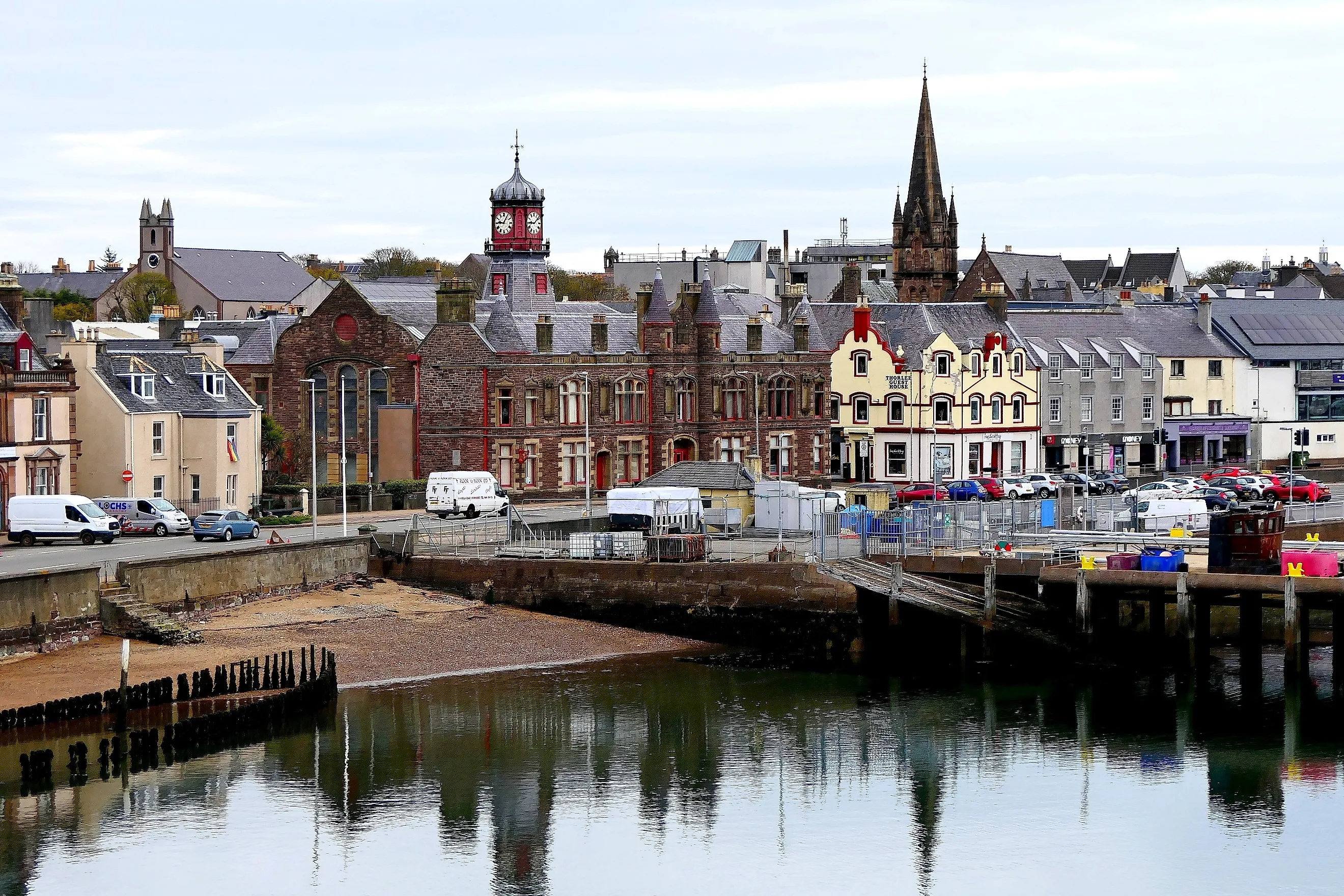
Lerwick

The Shetland Museum & Archives is the right first stop in Lerwick, the Shetland capital set on the North Sea coast of the islands' Mainland. Its collection runs from Neolithic archaeological finds through the baskets, farm tools, and other folklife goods of the Renaissance and early modern periods. A few blocks away stands Fort Charlotte, an artillery fort begun during the Second Anglo-Dutch War and finished more than a century later during the US War of Independence. Dutch raiders came ashore and burned its abandoned barrack block in 1673, and the rebuilt fort has seen no action since 1781. A little way west, Clickimin Broch is a well-preserved example of a traditional Scottish stone round house, or broch, with remnants of other structures on the site dating to roughly 1000 BCE through 500 CE. North of town, the Shetland Textile Museum is housed in the 18th-century Bod of Gremista, with handmade, often one-of-a-kind knitwear, woodwork, and jewellery from the islands' Shetland artisans on sale in its shop.
Back in town, the Alder Lodge Guest House is set in a vintage 1830s bank building, with homestyle rooms and a full breakfast in the morning.
Kirkwall

Kirkwall is the largest town of the otherwise sparsely populated Orkney Islands off the Scottish mainland, and its surroundings hold some of the oldest built structures in Britain. Just west of town, the Wideford Hill Chambered Cairn is a 5,000-year-old tomb still marked with rare surviving Neolithic scratch art. Farther west lies the UNESCO-listed Maeshowe Chambered Cairn, another 5,000-year-old tomb, best known for the days around the winter solstice, when the setting sun runs up the sloping passage and lights the back of the central chamber. Back in town, St Magnus Cathedral is a grand Romanesque church that the ruling Norse Vikings began in 1137 in honour of the fallen St Magnus, Earl of Orkney. South of Kirkwall, Waulkmill Bay empties at low tide into one of the biggest beaches in the islands, with the RSPB's Hobbister reserve alongside it for birdwatching.
On Bridge Street in the middle of Kirkwall, The Storehouse Restaurant with Rooms has farm-fresh Orkney cooking on the menu each evening, and guests can book one of its rooms upstairs and stay the night, breakfast included.
Durness

Smoo Cave is the reason many people make the long drive to Durness, at the northwestern edge of the British mainland. Open for tours from April through October, this combined sea cave and freshwater cave complex has the largest sea cave entrance in Britain, roughly 50 feet high and 130 feet wide. The village sits among some of Scotland's boldest coastal scenery besides. At its east end, Sango Sands is a white-sand bay below the cliffs, with sea stacks offshore. To the west, Balnakeil Beach is a broad white-sand beach with clear water and a long run of coastline in view. Durness Golf Club sits right by that beach, where visitors can book a tee time for nine or eighteen holes on the waterfront course.
For a weekend that feels like a proper escape, Mackay's is worth the splurge, with rooms in the main house and private cottages nearby.
Stornoway

Six of the walrus-ivory Lewis Chessmen sit on display at Museum nan Eilean in Stornoway, on long-term loan from the British Museum. The purpose-built gallery opened in 2016 on the grounds of Lews Castle and covers local Gaelic language, history, and culture, a good introduction to the eastern shore of Lewis and the wider Outer Hebrides. South of the castle, the Bonnie Prince Charlie Monument at Arnish is a stone cairn raised around 1860 to mark where Prince Charles Edward Stuart came ashore in May 1746 after the defeat at the Battle of Culloden ended the wider Jacobite rising. Lady Kildun sheltered him at Kildun House before he sailed south again toward Uist and Skye. In town, An Lanntair is the venue for a full programme of visual and performing arts, and the Harris Tweed Hebrides mill shop on North Beach is the place for goods made with locally sourced wool.
For a night at the castle itself, rooms are available in the restored Victorian estate at Lews Castle, with plush bedding, in-room coffee, wifi, flat-screen TVs, and full bathrooms.
Braemar

Braemar sits in the heart of Cairngorms National Park, around 58 miles west of Aberdeen, with a good share of the Highlands' peaks and trails within reach. West of town, Mar Lodge National Nature Reserve covers more than 29,000 hectares of wilderness that takes in four of Scotland's tallest mountains and stands of ancient pine forest. Ben Macdui rises at the edge of the reserve as the second-highest peak in the British Isles, at 1,309 metres (4,295 feet). To the south, the Glenshee Ski Centre lacks snow through summer and autumn, though its Cairnwell Chairlift runs into September for scenic rides and quick access to the Munro trails at the top. Closer in, Braemar Golf Club is the highest-elevation 18-hole golf course in the United Kingdom, laid out at 1,205 feet above sea level. The town's landmark is Braemar Castle, a 1628 hunting lodge and garrison open for tours, which came through several Jacobite risings in the 17th and 18th centuries.
There is a luxury option in Braemar too. The Fife Arms is a five-star hotel with two Michelin Keys, lavishly appointed rooms and suites, a large in-house art collection, a wilderness sauna, and several restaurants and bars.
St Andrews

Golfers know St Andrews as the historic "home of golf," yet this coastal town around 53 miles northeast of Edinburgh has plenty beyond its greens. West Sands Beach runs for nearly two miles and stood in for the opening scenes of the 1981 film Chariots of Fire. In town, the University of St Andrews' Wardlaw Museum has four galleries of art, historic artefacts, and scientific exhibits from a university founded in 1413. Steps away, St Andrews Castle is the bishops' stronghold, rebuilt around 1400, where the young James I of Scotland received part of his education and where, later, prisoners were dropped into a rock-cut bottle dungeon during the Scottish Reformation.
No visit skips St Andrews Links, the collection of golf courses that includes the Old Course, in play since the 1400s. Right beside it, the Old Course Hotel is a luxury base with the Kohler Waters Spa, a fitness centre, and several dining rooms on site, including a proper afternoon tea.
Helensburgh

Helensburgh sits on the north shore of the Firth of Clyde, about 25 miles northwest of Glasgow, just outside Loch Lomond & The Trossachs National Park. Scotland's first national park spreads across 720 square miles (1,865 square kilometres) of coastline and backcountry, with 21 Munros and 22 lochs. In town, Helensburgh Golf Club has up to 18 holes on a moorland course. A few blocks away, The Hill House is the work of architect and designer Charles Rennie Mackintosh, who combined traditional Scottish baronial architecture with early 20th-century design. Down on the waterfront on West King Street, the Scottish Submarine Centre is home to the original X51 Stickleback, a midget submarine that the British Royal Navy launched in 1954.
A short walk up from the Submarine Centre, Sugar Boat is a bistro built around locally sourced ingredients, and guests can book a room upstairs, fitted with quality furnishings, linens, and fast fibre internet.
Port Charlotte

Machir Bay is the standout near Port Charlotte, an Atlantic Ocean-facing beach west of the village, with wild dunes and strong currents. Port Charlotte sits on Islay, the southernmost island of the Inner Hebrides. On the way back to the village, Kilchoman Distillery is open for tours, whisky tastings, and lunch, a chance to sample genuine Scottish whisky at the source. In Port Charlotte itself, the Museum of Islay Life on Daal Terrace covers the island's history and native culture, and the Lochindaal Seafood Kitchen is the spot for the local catch.
For a night in the village, the Port Charlotte Hotel is a four-star boutique establishment with an on-site restaurant and live traditional music on some summer evenings.
Newton Stewart

Galloway Forest Park begins just north of Newton Stewart, a market town on the River Cree at the doorstep of the Galloway Hills. Britain's largest forest park covers 299 square miles (774 square kilometres) and includes the UK's first official dark sky park, prime ground for hikers and mountain bikers. South of town, Torhouse Stone Circle is one of Scotland's best-preserved Bronze Age stone circles, set in quiet countryside. In town, The Museum Newton Stewart is housed in a former church on York Road, where thousands of donated objects trace local life and agriculture. For a meal afterward, The Cree Inn is the place for classic Scottish pub fare.
Around the corner from The Cree Inn, the Creebridge House Hotel has the look of an old country house, with 17 en-suite bedrooms and a full bar and restaurant on site.
Eyemouth

Eyemouth is a longtime fishing port on the Berwickshire coast, a short drive north of the English border, and boats still bring the catch into its harbour. Eyemouth Golf Club has up to 18 holes on an award-winning course that tends to stay open year-round. Eyemouth Beach is a fine stretch of sand where visitors sometimes spot starfish, crabs, and seals. Out of Harbour Road, the crew at Eyemouth Rib Trips run boat tours with good chances of sighting seals, dolphins, and orcas out in the North Sea. For a plate of that same sea, The Tavern is a seafront spot for Scottish seafood and beer.
Close to the harbour, The Ship's Quarters is set in a restored 18th-century house with private bathrooms, wifi, and in-room coffee and tea, and The Ship restaurant sits a few steps away for more local seafood.
Relax and Recharge in These Refreshing Scottish Towns
The choice between these ten towns comes down to how much of the weekend you are willing to spend in transit. Lerwick and Kirkwall come with Neolithic tombs and Norse cathedrals at the far end of a flight or an overnight ferry, worth the effort for travellers who have the time. Stornoway and Port Charlotte sit behind a ferry crossing or a short flight, with Gaelic galleries and Islay whisky as the reward. The other five are drivable. Braemar, St Andrews, Helensburgh, Newton Stewart, and Eyemouth all leave more of the two days for the golf course or the coast path.
Durness sits in a category of its own. It is a long haul up the west coast by road, and the payoff is Britain's largest sea cave entrance and white-sand beaches that stay quiet even in August.