Why King Tides Flood Coastal Towns Every Fall
Three unrelated things have to line up, and every autumn they do. A full or new moon puts the sun and moon in a straight line with Earth, the moon happens to be at its closest approach in orbit, and the ocean itself is sitting several inches higher than it does in spring because warm water takes up more room. Stack those and you get the highest predicted tide of the year, which coastal communities call a king tide even though no tide chart uses the phrase. The water is not rising faster than it used to. The floor underneath it has come up, so a tide that was merely impressive fifty years ago now arrives in the street.
King Tide Is Not A Scientific Term

Before anything else, the vocabulary. King tide is a popular term, not a technical one, used to describe the highest seasonal tides of the year. NOAA and the National Weather Service call the underlying phenomenon a perigean spring tide.
The phrase spread from Australia, where a public photo-documentation project adopted it in 2009 to get people recording the highest tides they had seen in nearly two decades. It caught on because it is a far better piece of language than perigean spring tide, and state agencies now use it in their own public campaigns.
The First Ingredient Is Alignment

Tides come from the gravitational pull of the moon and, to a lesser degree, the sun. Most of the time those two are tugging from different angles, which partly cancels them out and produces an ordinary tide.
At a full moon or a new moon, the Earth, moon and sun fall into a straight line, an arrangement called syzygy. The two pulls combine rather than compete, producing a larger range between high and low water. That is a spring tide, and it has nothing to do with the season. It happens roughly twice a month, all year.
The Second Is Distance
The moon's orbit is not circular, so its distance from Earth varies across the month. About once every 28 days it reaches perigee, its closest approach, and the tidal force it exerts rises sharply as a result.
Gravitational effect falls off very quickly with distance, so a moon slightly closer produces a noticeably bigger tide. When perigee happens to coincide with a full or new moon, the two effects reinforce each other and you get a perigean spring tide, with high tides that NOAA notes can be significantly higher than at other times of year.
Those occur several times a year, in both spring and autumn. So far nothing here explains why autumn is the season that floods.
The Third Is The Season Itself

Here is the piece that makes the difference, and it is the one most people have never heard of. Mean sea level is not constant through the year. It has a seasonal cycle, and along much of the US coast it peaks in early autumn.
NOAA attributes that to warmer, expanding ocean water and shifts in weather patterns. Water takes up more volume as it warms, so a summer's worth of heating leaves the whole column standing higher by September and October. In the Southeast there is an additional factor, a typical short-term decrease in Gulf Stream transport during the fall, which lets water pile up against the coast.
The scale is not trivial. On the Outer Banks of North Carolina, sea level naturally runs six to ten inches higher in September and October than in spring, before any moon is taken into account.
Why That Combination Is So Effective

Put the three together and the arithmetic is straightforward. An autumn perigean spring tide starts from a baseline already several inches higher than usual, then adds the largest astronomical tide the calendar can produce on top of it.
The same alignment in March or April lands on a seasonal low point instead, which is why spring equinox king tides are generally less destructive despite being astronomically comparable. The moon is doing the same thing. The ocean is not sitting in the same place.
On the Outer Banks a king tide pushes water 15 to 20 percent higher than an average spring tide. In Charleston, South Carolina, where the average high tide range runs around 5.5 feet, a king tide can reach 7.
Autumn Is The Flooding Season

The National Weather Service office in Charleston states the pattern plainly for its area: fall is the most active season for coastal flooding, and during the period of record it has recorded far more flooding events than winter and spring combined. September and October are the most active months of the entire year.
NOAA's seasonal bulletins carry the same message up and down the coast. In October and November some Southeast and Northeast locations are predicted to exceed the high tide flooding threshold on tides alone, without any storm involved.
The stations flagged most often include Myrtle Beach and Charleston in South Carolina, Fort Pulaski in Georgia, and Fernandina Beach, Mayport and Port Canaveral in Florida.
The Tide Also Changes Shift
There is a small scheduling detail here with real consequences for anyone who parks near the water. Between October and early March the higher of the two daily high tides arrives in the morning. Between April and early September it arrives in the late afternoon or evening. The switch happens around the equinoxes, and in the weeks either side of them the two daily highs are close to equal.
So autumn is also the period when the timing rotates, and a street that has flooded at dinner time all summer starts flooding at breakfast instead.
Sea Level Rise Is The Multiplier

None of the astronomy above has changed. Perigean spring tides happened in 1925 exactly as they happen now, and they were forecast with the same confidence, because orbital mechanics are predictable decades ahead.
What has changed is where the water starts from. NOAA is careful to note that higher than normal high tides do not necessarily cause flooding by themselves, but that they are becoming increasingly impactful because of continued sea level rise. A tide that used to stop at the seawall now clears it, not because the tide grew but because the ocean did.
The numbers make the point. The Southeast is predicted to average seven more high tide flood days per year than it saw in 2000, an increase of more than 550 percent. The Northeast and the eastern Gulf have each seen close to a 200 percent rise over the same period.
What The Flooding Actually Looks Like
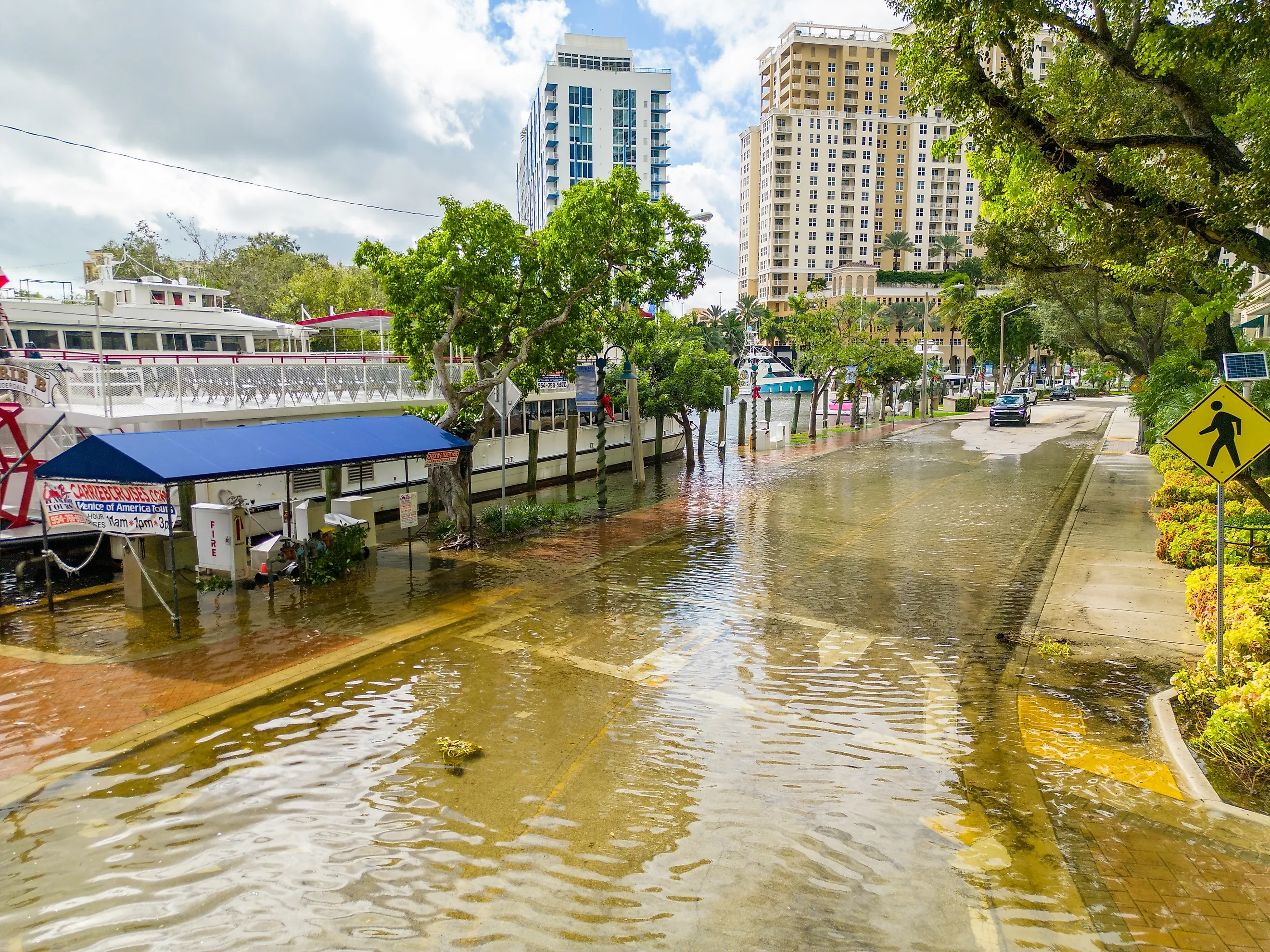
This is not storm surge, and the difference matters a great deal for how communities respond to it. High tide flooding is shallow, slow and predictable. Water comes up through storm drains rather than over a beach, streets fill for an hour or two around the peak, and then it drains away. The common names for it, nuisance flooding and sunny day flooding, capture both the scale and the strangeness of streets going underwater with clear skies overhead.
The cumulative effect is what does the damage. Repeated saltwater immersion corrodes vehicles and infrastructure, undermines road surfaces, kills landscaping and gradually makes low-lying property harder to insure.
When A Storm Arrives On Top
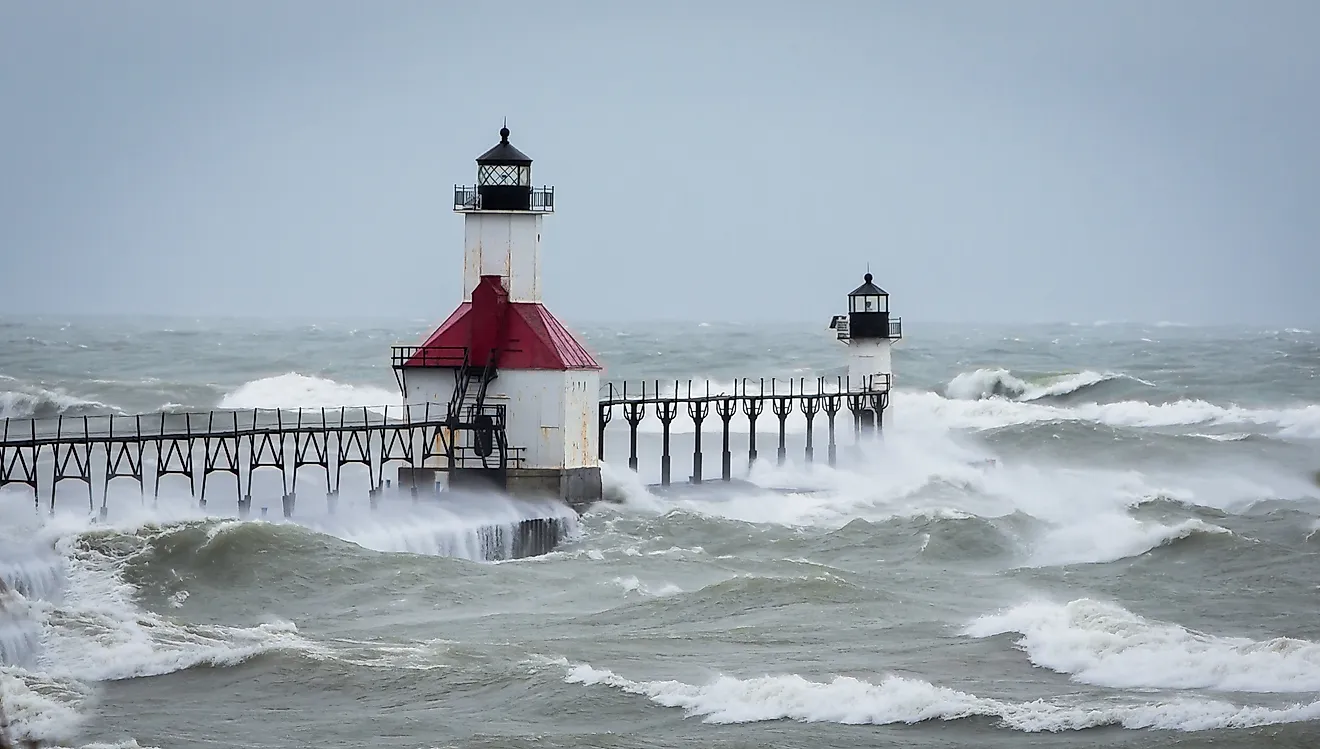
The genuine hazard is the combination of the two, and NOAA names it directly. If a storm strikes during a perigean spring tide, the flooding can be significantly worse than it otherwise would have been.
Storm surge is measured as a height above the predicted tide, so the same surge arriving at a king tide peak reaches considerably further inland than it would at an ordinary high. Autumn being both king tide season and the back half of hurricane season is not a helpful coincidence for the Southeast.
They Are On The Calendar

The useful thing about king tides is that they are entirely predictable, because they are astronomy rather than weather. NOAA publishes annual outlooks and seasonal high tide bulletins, and states run their own calendars.
South Carolina, for example, listed its 2026 king tides as September 29 to 30, October 10 to 11, and October 26 to 29. Those dates were known years in advance and will not move.
Several states also run photo initiatives asking residents to document the water on those dates, which produces a visual record of where the flooding reaches and, more usefully, a preview of what an ordinary high tide will look like once sea level catches up.
The Short Version
King tides flood coastal towns in autumn because three things coincide: the sun and moon aligning, the moon reaching its closest approach, and the ocean sitting at its seasonal high after a summer of warming.
That combination has always happened. What is new is that it now lands on top of a raised baseline, so a predictable astronomical event that used to be a curiosity for people who watch tide gauges has turned into water in the street a dozen times a year. The tides are behaving exactly as they always have. The coastline is the thing that moved.