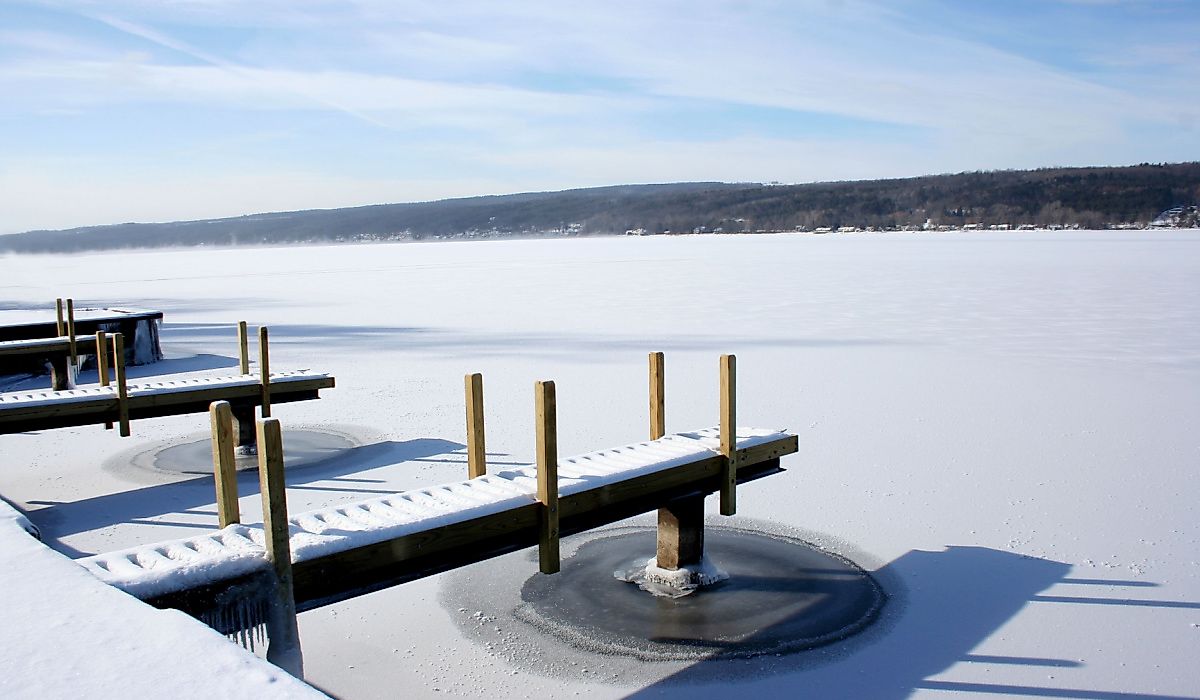
Why Docks Are Pulled Out Of Northern Lakes Every Fall
By late November, most docks on Minnesota and Wisconsin lakes are sitting on dry land. Their owners drag them out of the water every fall and stack them on the lawn, piece by piece. In some towns, it is the law. The reason is the ice that will soon cover these lakes. Lake ice keeps moving all winter, from the first freeze until the spring thaw. The Minnesota Department of Natural Resources says it can push hard enough to shove a house off its foundation. A dock weighs far less than a house. One left standing in the water faces that ice for months, and it can be wrecked in more than one way.
Expanding Ice Creeps Toward Shore All Winter

Lake ice starts to push once it is about 5 inches thick. On a cold night, the top of the sheet contracts faster than the bottom, and the ice cracks. Lake water rises into those cracks and freezes, so the sheet ends up slightly larger than before. When the air warms again, the bigger sheet expands and presses against the shore. Each swing in temperature repeats the cycle, and over a winter the ice creeps onto the bank, gouging it and shoving soil and rock into mounds. The Minnesota DNR lists docks and boat lifts among the things this creeping ice damages. The cycle runs hardest in winters with little snow on the lake, since snow insulates the ice from the temperature swings.
Across a whole lake, the small changes add up. A mile-long sheet grows about 2.75 feet with a 10°F rise in temperature, according to a 1963 article in Minnesota's Conservation Volunteer magazine. The same article traced the damage on Minnesota's Cotton Lake, where air temperatures swung 25 to 30°F a day through December and January. The ice at the lake's southwest end may have expanded a total of 18 feet, and 13 of the 19 cottages in the area were damaged.
The same push hit Forest Lake, north of St. Paul, in the winter of 2024 to 2025. Ice ridges formed almost overnight at the city's Lakeside Park, tipping light poles and pushing up about 350 feet of paved path. Damage to the poles and to the dock of a members' boat club came to $23,100, and the city put the full repair bill at $175,000.
Ice Freezes Onto Dock Legs and Lifts Them

Out in the water, a dock faces a second problem. Its posts can end up feet higher than where they were set. The U.S. Army Corps of Engineers' cold-regions research lab documented a mooring pile that several cycles of freezing had lifted 5 feet.
This is called ice jacking. Water freezes around a post and grips it, and from then on the post moves with the ice sheet. The water under that sheet rises and falls slightly through the winter. When it rises, the floating ice lifts whatever it holds, and the post comes up with it. Each freeze can raise it a little more. Light pieces go first, so a single post holding up a boat lift jacks sooner than a heavy pier.
Spring Wind Drives Loose Ice Onto Land

On May 11, 2013, the ice on Mille Lacs Lake came ashore. Sustained winds near 20 mph, with gusts near 40, drove it onto land in piles that the DNR said reached 30 feet high along about 10 miles of shoreline. Some slabs were a foot thick. The ice broke windows in lakeside homes and reached the doors of Izatys Resort in Onamia.
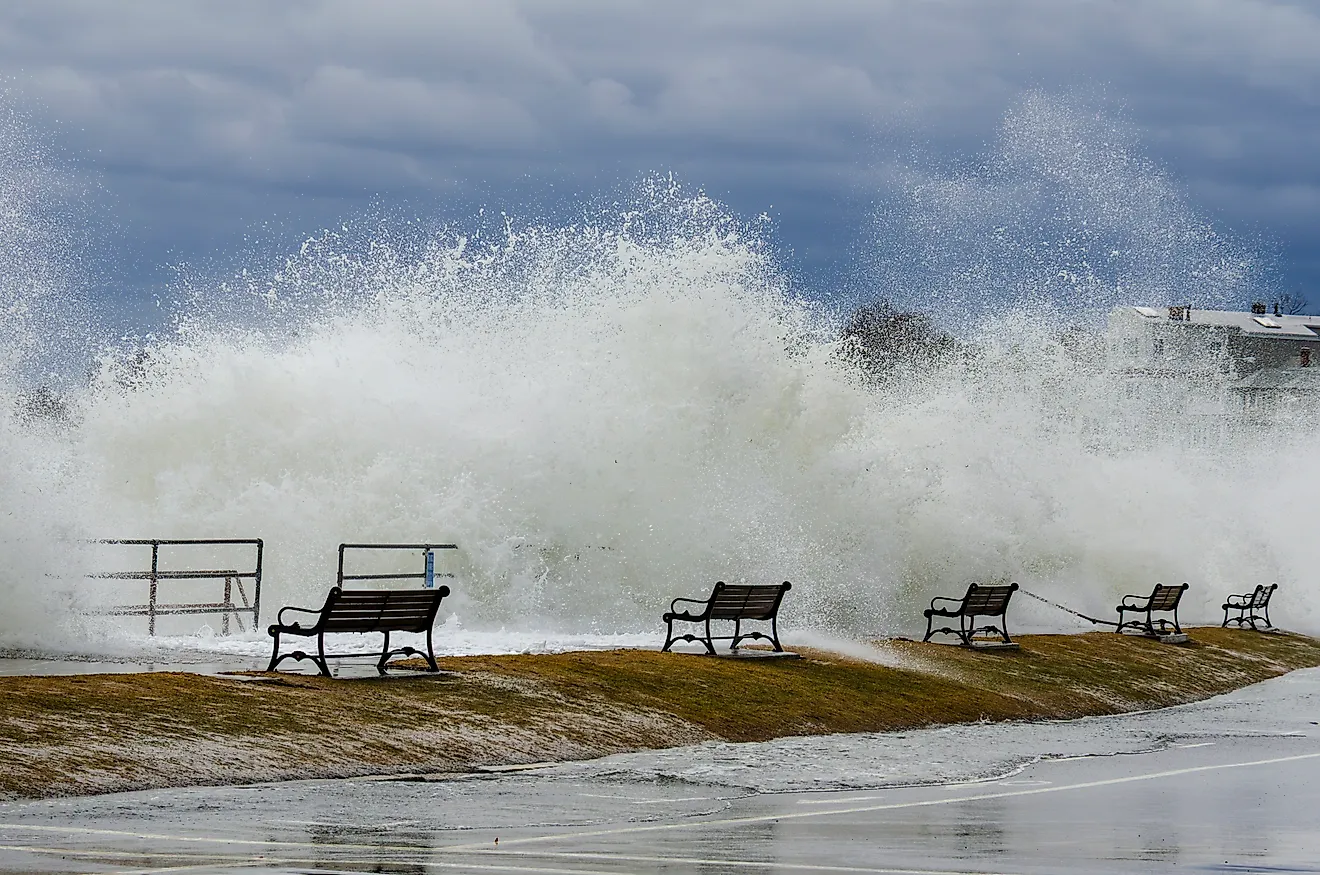
This is an ice shove, and it works differently from the slow winter push. The winter push takes weeks of temperature swings. A shove needs only wind and a loose sheet. In spring, lake ice melts first along the shore, leaving the main sheet floating free, and a steady wind can drive the whole sheet into the bank, where it breaks and stacks up. The same shoreline can be hit in back-to-back springs. Mille Lacs had another shove on April 29, 2014, when WCCO reported docks there "taking a beating." In Wisconsin, Lake Winnebago, which the state DNR calls prone to ice heaves and pressure ridges, had a shove on April 10, 2013.
State Rules Are Written for Docks That Come Out

The Minnesota DNR prefers temporary docks to permanent ones and states that permanent structures are more likely to sustain ice damage. Minnesota and Michigan both let owners put in a removable dock without a state permit, as long as it meets their other conditions. Michigan's law spells out what removable means, counting any dock or boat hoist placed in an inland lake and "removed at the end of the boating season" as a seasonal structure.
New Hampshire writes the removal into the design. A seasonal dock there must be built so the whole thing, supports included, can come completely out of the lake. To qualify for the state's permit exemption, which still requires notifying regulators, it has to stay out at least 5 months a year, among other conditions.
American Family Insurance lists ice that damages a dock among the freeze-related losses a homeowners policy may not cover. A removable seasonal dock can fall under personal property coverage instead.
Crews Have to Finish Before the Water Freezes

The removal itself is simple work on a deadline. Sectional docks come apart and are carried up the bank, and roll-in docks are pulled out on their own wheels. HomeAdvisor's cost guide puts seasonal removal of a sectional or floating dock at $150 to $500 or more, depending on its length. Big Lake, northwest of Minneapolis, requires docks out of the water by November 1, and Worthington requires every dock on Lake Okabena to be out by October 15.
State crews work against the same clock. Minnesota DNR crews generally start removing docks at state public water accesses after the third weekend of October and usually finish by early November, aiming to "get it all done before the water begins to freeze." In 2006, the DNR's northwest region had nearly 500 accesses with docks across 24 counties, and the job meant hauling out 30-foot, one-ton docks. A department release that fall called a quick freeze-up before the removals were done "the absolute worst possible scenario." A dock still standing when the lake locks up stays there until spring, through the whole winter of pushing and lifting.
Only a Dock Heavier Than the Ice Can Stay In

Some docks do stay in all winter, and they are built to outweigh the ice. A crib dock sits on timber boxes bolted together and filled with rock. A single crib can take 10 to 50 tons of stone, which holds the dock in place by weight alone, with no driven pilings for the ice to jack.
Central Insurance says a permanent crib dock can cost as much as $50,000, against the few hundred dollars it costs each time a sectional dock is hauled out. In Minnesota, a crib dock can go in without a permit only on waters where the bed is mostly bedrock that cannot take pilings. Anywhere else, the owner needs a permit to build one.
Keeping Ice Off a Dock Means Keeping the Water Open

The other way to leave a dock in is to keep solid ice from forming around it. Bubblers and circulators keep water moving near the dock, and that current weakens the ice, so a patch of open water or thin ice lasts all winter. The Minnesota DNR says the thin area gives the expanding sheet room, and its rules list protecting shoreline from ice expansion as one reason to run such a system.
That open patch is dangerous to anyone else on the ice. Minnesota's aeration law requires thin-ice signs 4 to 6 feet high around it, posted no more than 100 feet apart. In New York, the town of Lumberland in Sullivan County requires warning lights and signs on dock de-icers from December 1 to March 15. On Lake George in February 2021, a 35-year-old firefighter from the Bronx died after his snowmobile crashed into a dock. "You get in close to these docks, and they have the de-icing systems, so it's open water," the county sheriff said.
Once the ice is gone, the stacked sections go back into the water, and some towns make owners wait for it. Worthington's code bars docks from Lake Okabena before April 15 or until all the ice is out, whichever comes later, so a dock there spends at least half the year on shore. When ice-out comes late, installers have less time. Lake Minnetonka's ice did not go out until May 5 in 2018, and installers who normally get at least 45 days to set docks had about half that. One company still had 350 docks and 200 boats to put in. Through all those months on the lawn, a dock has nothing for an expanding sheet to push against and no legs in the water for the ice to grip.