The US Waters Where Gray Whales Pass Closest To Shore
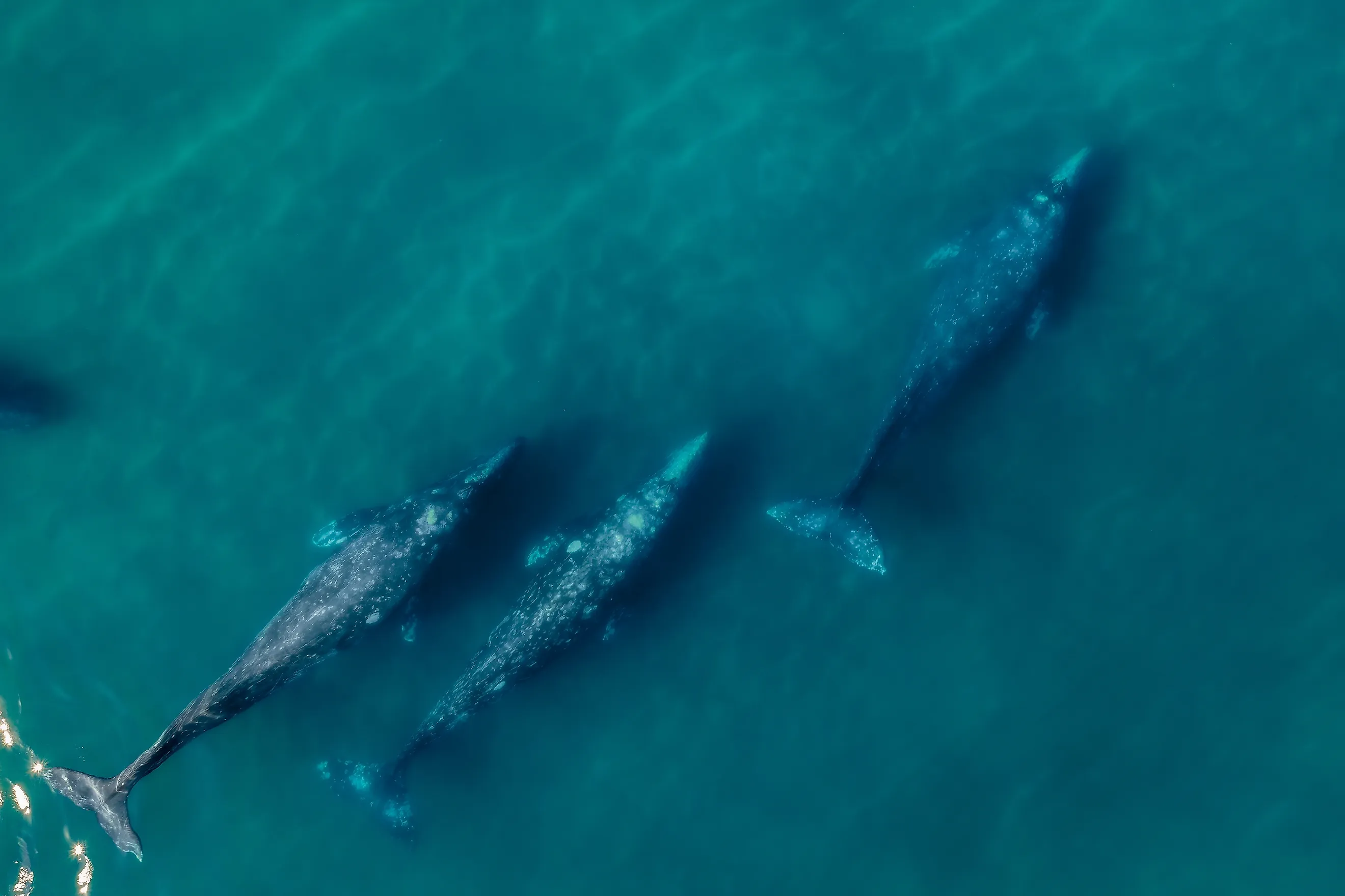
We normally don't imagine whales swimming so close to shore, but on parts of the Pacific Coast, gray whales can pass just a few hundred feet from the beach. Point Reyes and Point Lobos in California, and Depoe Bay in Oregon are just a few of the places where these massive animals regularly make an appearance close enough that they can be seen from overlooks along the coast. We may think a special whale-watching boat trip is needed to see gray whales, but that isn't always the case. Research has shown that some of the closest sightings are in the waters of the places on this list, and we don't even have to leave the shore.
Point Reyes National Seashore

On Point Reyes National Seashore, there's a peninsula that reaches about 10 miles out into the Pacific Ocean, and the Point Reyes Headlands are right along the route that gray whales follow during their annual migration. According to the National Park Service, the peninsula is a great spot for people to get a closer view of the whales than at most other areas along the California coast.
In 2024, an assessment in Frontiers in Marine Science found that along the central and northern California coast, gray whales averaged about 1.4 miles offshore when migrating south. During the northern migration, that number didn't change much, with the average at 1.5 miles. When it came to mother whales traveling with their calves, they stayed about 1.8 miles offshore. Although the assessment covered a longer stretch of the coastline, the numbers support the fact that whale sightings are common around Point Reyes.
Point Lobos State Natural Reserve

On a small peninsula on the central coast of California, Point Lobos State Natural Reserve is another area where gray whales pass by and are seen regularly. The California State Parks Foundation says that the whales are usually seen just over one mile from the shore. During their migration south, whales tend to swim roughly a mile or more from the shore at spots like Sea Lion Point. When migrating north, mother whales and their calves swim a bit closer to shore to protect themselves from killer whales and strong ocean currents.
For those interested in whale-watching, Point Lobos is one of the better spots to watch from because it has high coastal bluffs and two great overlooks, Sea Lion Point and the Cypress Grove trails.
Klamath River Overlook

The Klamath River Overlook in Redwood National and State Parks is one of the best places to see gray whales close to the shore. They usually swim between one to three miles offshore, but can also be seen past wave breaks and near shallow waters.
The Klamath River Overlook is about 650 feet above the Pacific Ocean, making it a great place to see gray whale spouts, breaches, and mothers with calves. Some of the whales in this area are part of the Pacific Coast Feeding Group, a group of about 200-250 Eastern North Pacific gray whales. Instead of just passing through during migration to the Arctic like most gray whales, this group is a resident population that spends the summer and fall searching for food in shallow areas close to shore.
Depoe Bay

Gray whales are the most commonly seen whales on the Oregon Coast. When migrating south, they follow a route about five miles offshore. But on the way back north, they stay closer to shore, often within half a mile, according to Oregon State Parks.
The Whale Watching Center in Depoe Bay is one of the best locations on the Oregon Coast to spot gray whales. From June to November, a resident population stays in Depoe Bay instead of migrating to Alaska. Oftentimes, these whales find mysid shrimp and krill right up along the shoreline. When the spring migration happens in late March to June, mothers and calves swim within half a mile to a couple miles off the coast. At both times of the year, gray whales are often spotted from the Depoe Bay seawall and other local state parks.
Gray Whale Cove State Beach

If gray whales can't be seen at Gray Whale Cove State Beach, they should probably change the name. California State Parks says that gray whales often swim very close to shore at this sheltered cove in Montara, frequently passing within just a few hundred yards of the cliffs and surfline.
Like other areas on this list, gray whales tend to swim close to the shallow waters during their annual migration. The best times to spot them are from December to January when they head south, and from March to April during their return trip. Their closeness to the shallow shelf of the coastline makes it easy to spot them from the bluffs above, the Devil's Slide trail, or the beach.
Where Gray Whales Come Close

After learning more about the places above, it's exciting to know where exactly gray whales pass closest to the shore. Each year on a round-trip migration, they travel between 10,000 to 14,000 miles, and these locations give the best chance of seeing them from land. Some gray whales are just passing through, while others are hanging around an area long-term. Either way, it's nice to know a boat trip isn't necessary to see one closer up.