Why Southern Rivers Run The Color Of Tea
Across the South's coastal plain, many rivers run the color of iced tea, and some run darker still. The Suwannee leaves Georgia's Okefenokee Swamp a brown so dark that it borders on black, according to NASA, and it is still stained dark when it reaches the Gulf about 250 miles later.
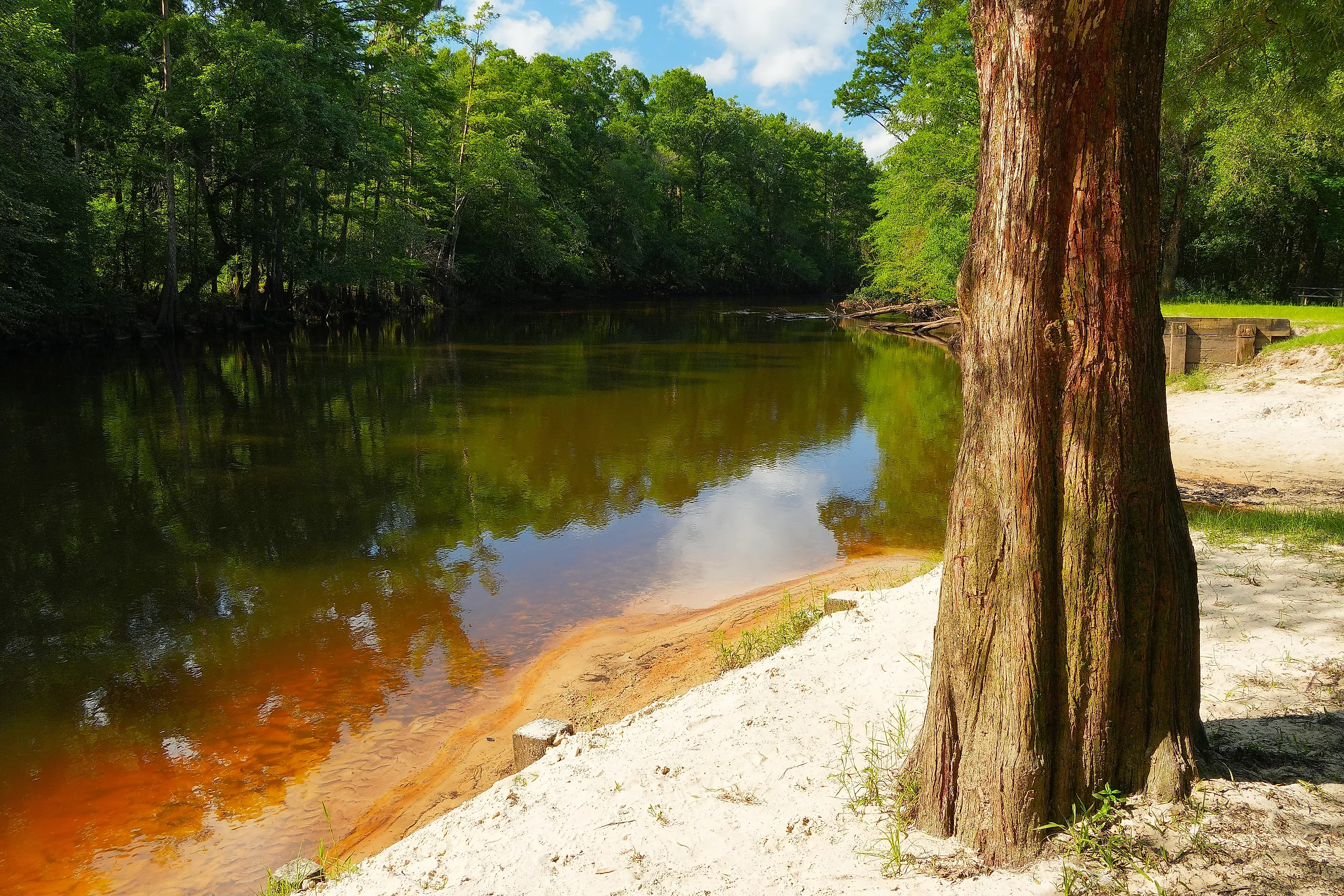
The water under that stain is clean enough to swim in, and at Blackwater River State Park in the Florida Panhandle, visitors do exactly that off white sandbars. North Carolina's tea-colored Black River even holds the state's highest water-quality rating. The color is natural, brewed right where these rivers begin much the way tea is brewed in a pot, and the brewing starts with what falls from the trees.
Rotting Leaves and Bark Brew the Tea Color

The stain begins in standing swamp water, where decaying leaves, branches, and bark release the tannins that once protected the living plants, along with phenols and humic acids. The same process gives tea its yellow or brown color, according to NASA. Together these compounds are known as colored dissolved organic matter, and they absorb blue light so well that sunlight passing into the river and back out comes in shades of amber and brown.
Cypress and gum swamps line the floodplains of many of these rivers, and the trees along their banks keep adding leaves and bark to the supply. On North Carolina's Black River, the tea-colored channel runs between bald cypress that have been shedding into the same swamp for a very long time. Researchers reported in 2019 that one tree in the river's Three Sisters Swamp is at least 2,624 years old, the oldest known living tree in eastern North America.
Sandy Soil Lets the Tea Color Reach the River

About 14 miles above Wilmington, the Black River empties into the Cape Fear, and the two carry very different water. The main Cape Fear begins in the Piedmont and carries silt and clay, which makes it a brownwater river, and its suspended solids have measured 2 to 4 times the levels in the Black and the Northeast Cape Fear, two blackwater tributaries that drain the coastal plain.
The difference comes from the ground each river drains. Blackwater rivers rise in the sandy parts of the coastal plain, where the soils are sandy or mucky, acidic, and infertile, according to the USDA's Natural Resources Conservation Service. Clay minerals hold onto colored humic compounds, so water draining clay-rich ground leaves much of its stain behind, while water seeping through sand keeps the stain and picks up very little suspended clay. A blackwater river can therefore be dark and clear at once. The Waccamaw, one of North Carolina's largest blackwater rivers, is nearly free of sediment and would be clear if not for the stain of decayed organic matter.
Flat Swamps Let the Water Steep Longer

Peat up to 15 feet thick covers much of the floor of the Okefenokee, at the headwaters of the Suwannee and St. Marys rivers, and it is soft enough that the ground quivers underfoot, which is why the swamp is known as the Land of the Trembling Earth. The peat slows water from soaking downward, and the swamp gets nearly all its water from rain, with little from groundwater, so the water stays in the swamp among the decaying plants instead of draining quickly away. The same slow pace holds across the region. Blackwater rivers on the Southeastern coastal plain have gentle slopes and minimal flow, and they draw much of their water from wetlands, often by seeping underground.
Water leaving the Okefenokee is heavily loaded. The Suwannee's load of dark dissolved organic matter is nearly ten times that of typical streams around the world, according to NASA, and the river supplies 60 percent of the fresh water reaching the Gulf near Florida's Big Bend. The St. Marys carries the same stain 130 miles east to Cumberland Sound on the Atlantic.
Acidic Swamp Water Keeps the Tea Strong

Tannins and the other organic acids that leach from decaying plants turn swamp water sour. Okefenokee water is close to the acidity of cola, according to the U.S. Fish and Wildlife Service, and scientists have measured its pH at roughly 3.3 to 4, while Florida's blackwater streams generally fall between pH 4 and 6, according to the Florida Natural Areas Inventory. That acidity helps keep the brew strong. In Okefenokee water, acidity is an important reason algae decompose more slowly, and slow decay in waterlogged, acidic water is how peat piles up many feet deep. The result is a loop in which the stain makes the water acidic, the acid slows the rot, and the half-rotted plant matter stays in the swamp as peat, where it keeps feeding stain into the water that drains toward the rivers.
Heavy Rain Turns the Rivers Darker

Because so much stain sits stored in the swamps, the strength of a blackwater river rises and falls with the weather. The Withlacoochee River of west-central Florida, which shares its name with a Suwannee tributary farther north, runs clear during low-water periods, when groundwater supplies most of its flow, and darkens as rain raises the river and washes runoff in from the wetlands and swamps beside it. After Hurricane Sally's rains in 2020, stained floodwater flushed out of the swamps along the Waccamaw and the other rivers that empty into Winyah Bay at Georgetown, South Carolina, and on October 1, satellite readings put the bay's colored dissolved organic matter about 50 percent above its long-term average for that date.
High water can also push the stain into places that are normally clear. At Madison Blue Spring, on the northern Withlacoochee that flows into the Suwannee, tannic water from a high, fast river can cover the entire spring run and head spring, cutting visibility to less than 4 feet in what is known at the park as a complete brownout.
Springwater Thins the Tea in Dry Spells

At Suwannee River State Park, where that northern Withlacoochee flows into the Suwannee, the water visibly changes color at the confluence. Above that point, the Suwannee is fed mostly by runoff from its watershed, and below it the river becomes increasingly spring-fed, drawing on a basin where 197 springs have been reported. During droughts, groundwater supplies nearly all the inflow to the middle Suwannee, and at low flow, alkaline groundwater can raise the pH of a Florida blackwater stream to neutral or slightly alkaline.
The same mixing happens in stages on the Santa Fe, the Suwannee's major tributary in Florida. The clear, cool Ichetucknee runs about 5.5 miles from its springs before meeting the darker, tannic Santa Fe, which then merges with the dark Suwannee near the town of Branford.
Upstream, where the Suwannee carries mostly swamp water, anglers find warmouth, flier, chain pickerel, and bullhead catfish, and few of the redbreast sunfish, bluegill, and bass common in other south Georgia rivers. In the spring-fed Suwannee and Santa Fe downstream, fish grow fast and redbreast sunfish are abundant. The Suwannee bass, which occurs naturally only in the Suwannee and Ochlockonee river watersheds, has one of the smallest ranges of any black bass.
The darkest water in the South comes from places with the most swamp and the least groundwater. Water draining the rain-fed peat of the Okefenokee leaves the swamp heavily stained, and the springs along the Suwannee's middle stretch lighten the river most when rain is scarce and groundwater makes up nearly all the flow. In either case, the shade of the water records where it has been. South Carolina's Edisto, which runs about 250 miles with no dam in its way, is one of the longest free-flowing blackwater rivers in North America, and its tea-colored water is habitat for shortnose and Atlantic sturgeon. The Suwannee is home to the Suwannee alligator snapping turtle, which lives nowhere else on Earth. It also holds Florida's largest population of Gulf sturgeon, and each fall, between mid-September and early November, those sturgeon leave the river for the Gulf, swimming out through the same dark water that carries the Okefenokee's stain to the coast.