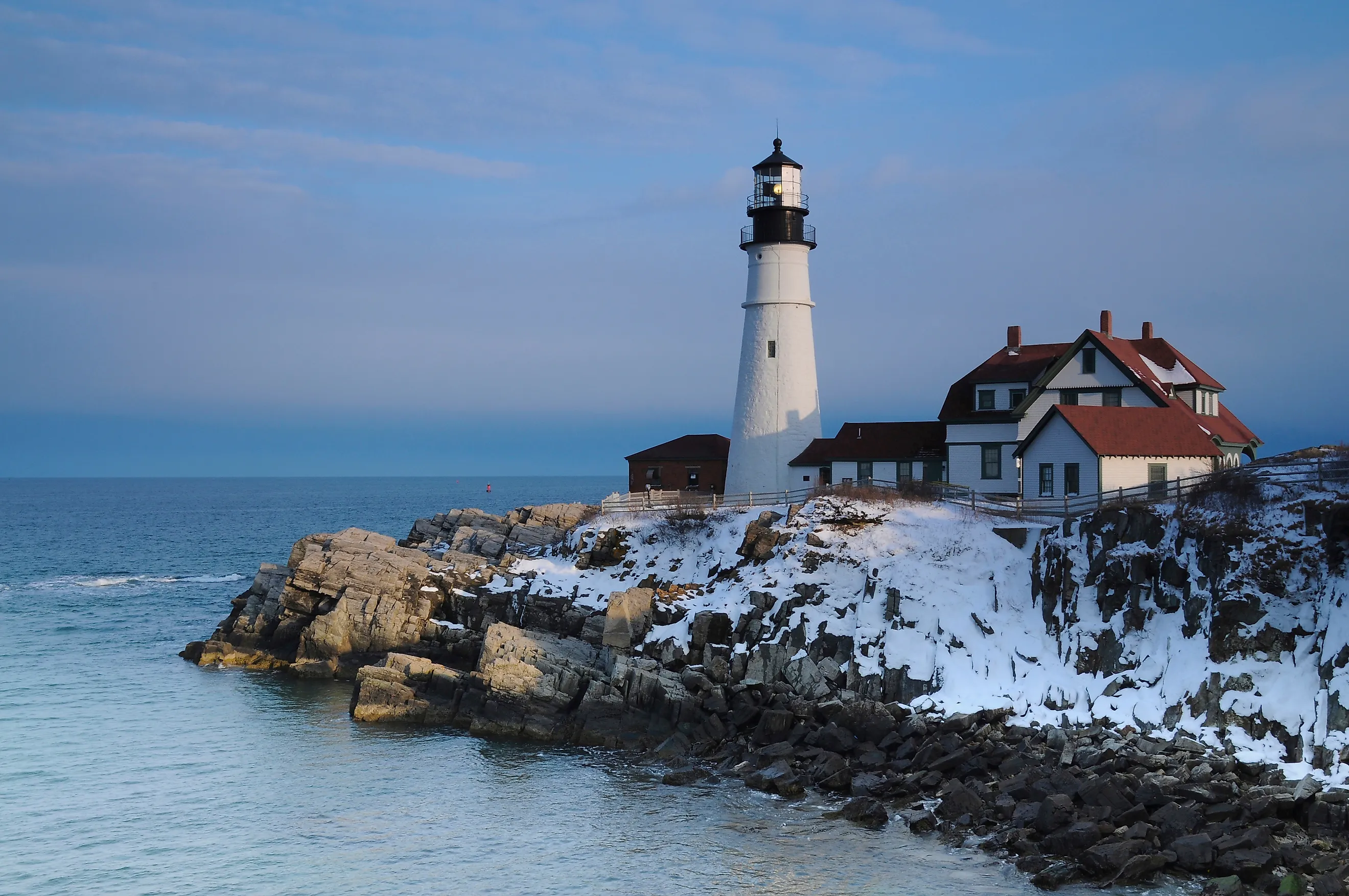
The Atlantic Off Maine Gets Within 5 Degrees Of Freezing
The Atlantic Ocean off New England can get cold enough in winter to bring water temperatures close to freezing, with some Maine beaches averaging just 33 degrees Fahrenheit in February. From the rocky coast of Maine to the beaches of Massachusetts and Rhode Island, winter brings a dramatic drop in ocean temperatures, making the region's water far less inviting than its summer appearance suggests. Most coastal locations see average temperatures fall into the 30s and low 40s between January and March, although conditions vary depending on location and distance from shore. The Gulf of Maine also has an interesting relationship with winter: its waters mix more deeply during the colder months, helping fuel the spring marine ecosystem.
Winter Ocean Temperatures in the Atlantic

Temperatures along New England's Atlantic waters in the winter generally range from the low-to-mid 30s to the low 40s, with northern coastal locations often experiencing the coldest conditions. NOAA's nearshore water temperature normals show just how chilly the water becomes. Portland, Maine, averages 39 degrees Fahrenheit in December, 34 degrees in January, and 33 degrees in February. Bar Harbor averages 44 degrees Fahrenheit in December and 36 degrees in February, while Boston Harbor averages 42 degrees in December and 36 degrees in February.
These are long-term monthly averages rather than daily forecasts, so actual temperatures can fall above or below those figures. However, it still gives a useful picture of what to expect during a typical winter. By March, the water begins a gradual recovery, with Portland, Maine, averaging 37 degrees Fahrenheit and Boston Harbor reaching around 41 degrees.
The northern coast generally stays colder, but the difference isn't always dramatic. Wind, tides, coastal circulation, and changing weather patterns can all influence local readings. Even southern New England's relatively milder waters remain cold enough to make an unprotected winter swim extremely uncomfortable.
When Does the Atlantic Reach its Coldest Point?

February is generally the coldest month for nearshore ocean water around much of New England, although some locations reach their lowest averages in January or remain near their winter minimum into early March. The reason is that ocean water responds to seasonal changes more slowly than the air above it. Even after the shortest days of the year have passed, the water continues losing heat accumulated during warmer months.
In Maine, Portland's average falls to approximately 33 degrees in February, while Bar Harbor averages 36 degrees. Farther south in Boston Harbor, the average is around 36 degrees during the same month. These temperatures sit just above seawater's freezing point, which is lower than freshwater's because dissolved salt changes the temperature at which water freezes. Average seawater freezes at around 28 degrees.
By March, increasing daylight and warmer weather gradually begin reversing the cooling process. However, the ocean doesn't warm immediately, so early spring can still bring some of the coldest swimming conditions of the year.
Why the Gulf of Maine Gets so Cold

The Gulf of Maine, which stretches between Cape Cod, Massachusetts, and Nova Scotia, plays a major role in New England's winter ocean conditions. Its underwater landscape, along with complex circular patterns and exposure to cold weather, helps to create a seasonal temperature cycle.
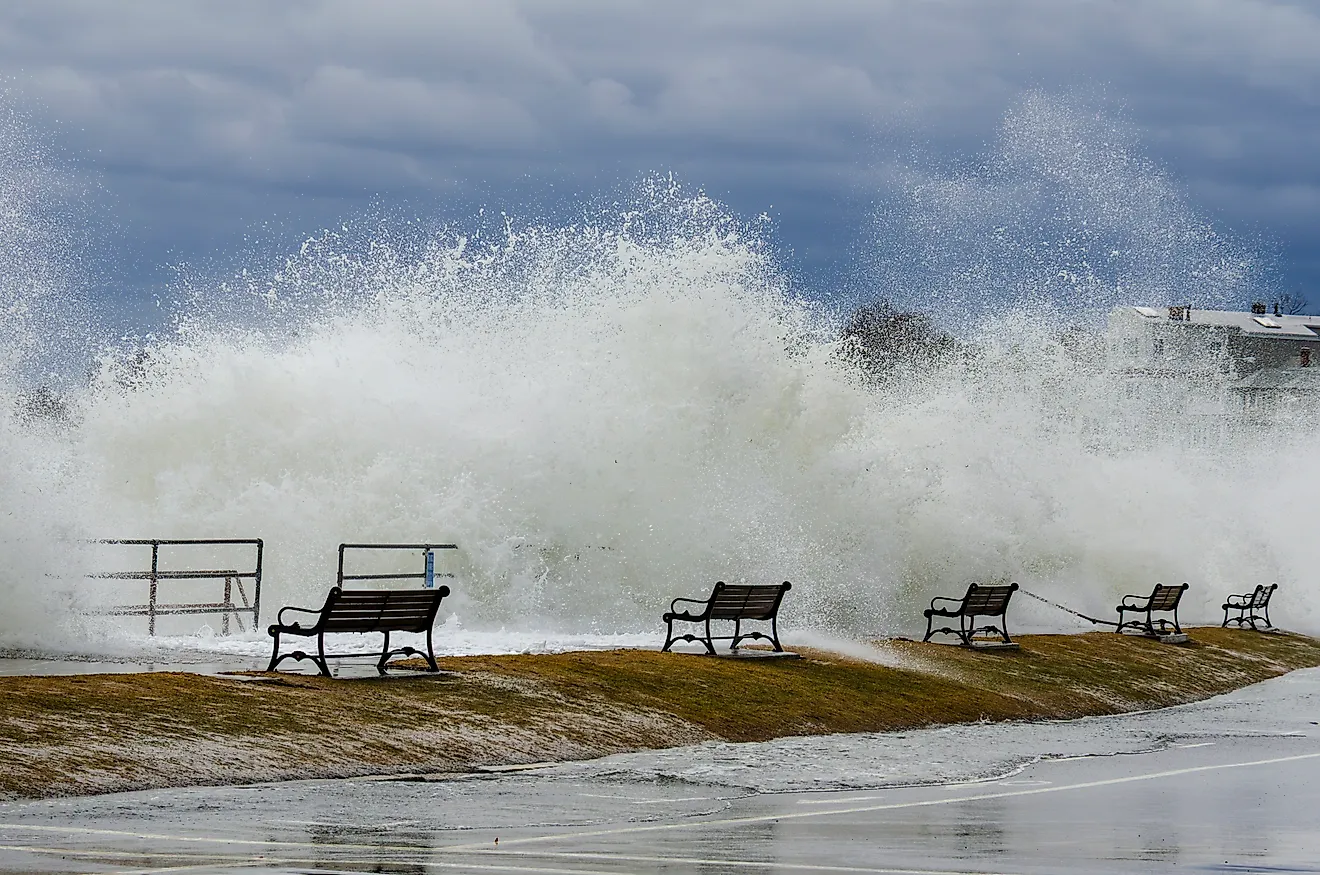
Winter also changes how water moves beneath the surface. During warmer months, surface water tends to separate from colder, deeper layers, creating stratification. As the surface cools in winter, that separation weakens, allowing wind and storms to mix the water column more thoroughly. Northeastern winds can intensify this process by stirring up the sea with strong winds and rough waves.
This mixing brings nutrients from deeper water toward the surface, helping support the spring phytoplankton blooms that form the foundation of the Gulf of Maine's productive marine food web. In other words, winter's cold conditions play an important role in preparing the region's waters for the following growing season.
How the Gulf of Maine's Winter Temperatures are Changing

Although New England still experiences very cold winter ocean conditions, the Gulf of Maine has undergone substantial warming over recent decades. Scientists have paid particular attention to this region because its surface waters have warmed faster than the global ocean average. According to the Gulf of Maine Research Institute, winter sea surface temperatures warmed at approximately 0.66 degrees Fahrenheit per decade over the period examined in its long-term analysis, around three times the global winter ocean warming rate. That doesn't mean every winter is warmer than the last, however. Natural variations in ocean circulation and atmospheric conditions can still produce unusually cold seasons.
Winter 2024-2025 is a good example. The Gulf of Maine averaged 43.16 degrees Fahrenheit, which was 0.88 degrees below the average from 1991-2020. Despite being cooler than the reference average, it ranked as the 26th warmest winter in the 44-year satellite record. This illustrates how a season can feel cold while still ranking relatively high against historical observations.
NOAA has also been monitoring changes beneath the surface. In June 2025, NOAA Fisheries reported that bottom temperatures across much of the Gulf of Maine were 0.9-3.6 degrees below normal in March of that year. Scientists noted that these cooler conditions could affect groundfish such as cod and haddock, which live on or near the ocean floor. Surface and bottom temperatures don't always follow the same pattern, making it important to distinguish between the two when discussing how cold the Atlantic gets.
What Makes New England's Winter Ocean So Different

New England's Atlantic waters experience much more dramatic seasonal temperature changes than tropical waters. Summer brings relatively comfortable swimming conditions to many beaches, but winter transforms the same coastline into a much colder marine environment. The transition is especially noticeable in Maine, where some coastal locations average temperatures only slightly above freezing.
The region's position in the northwestern Atlantic exposes it to cold winter weather, while ocean circulation influences how heat moves through coastal waters. The Gulf of Maine also has a complex underwater landscape, with deep basins, shallow banks, and channels that influence circulation and mixing.
These conditions help support a productive marine ecosystem, including commercially important fisheries and a variety of marine species. The cold season isn't simply a period when the ocean becomes less inviting to swimmers. It's also an important part of the natural cycle that sustains life beneath the surface.