The Ocean Animals That Survive Being Frozen Solid
A barnacle clinging to a rock along Alaska's coast can freeze when temperatures plunge, yet survive to become active again after thawing. For most animals, ice forming inside the body can be deadly. Ice crystals can damage cells, while freezing disrupts the balance of water and salts in their tissues. But certain mussels, marine snails, and even microscopic tardigrades have developed ways to survive freezing conditions that would kill other animals.
Acorn Barnacles

Acorn barnacles (Balanus glandula) are small crustaceans that spend their adult lives cemented to rocks, pilings, and other hard surfaces along the Pacific coast of North America. Their tough shells protect them from waves and predators, but once a barnacle attaches to a surface, it stays put for life. When the tide goes out, it can withdraw its soft body and close the plates at the opening of its shell, helping protect itself from exposure. Along Alaska's coast, however, it still has to endure repeated winter freezes.
In 2004, University of Alaska researcher Heather Kristine Patterson studied how marine animals in Kachemak Bay survived winter temperatures. Her experiments showed that acorn barnacles could withstand repeated freezing at 14°F. Their shells help protect them from the cold, but a shell alone cannot prevent ice from forming inside their bodies. Scientists still do not know exactly how these barnacles survive repeated freezing.
Bay Mussels

A long freeze can be more dangerous to a bay mussel (Mytilus trossulus) than several shorter ones, even when the total time spent frozen is identical. These common shellfish cling to rocks and other surfaces along the Pacific coast, often packed together in dense clusters. Like barnacles, they cannot escape when the tide recedes, and freezing air takes over. These mussels can survive ice forming within their bodies because the ice develops in the spaces between cells. As the ice develops, water moves out of the cells, reducing the risk of damaging ice crystals forming inside them.
In a 2023 study, Lauren Gill, Jessica Kennedy, and Katie Marshall at the University of British Columbia examined whether the length of a freeze affects a bay mussel's chance of survival. They found that mussels exposed to several short freezing episodes had better survival rates than those subjected to one continuous freeze. The breaks between freezes appeared to give them a chance to recover from some of the damage. For a mussel spending winter in the intertidal zone, a little time to thaw can make a significant difference in its chance of survival.
Antarctic Icefish

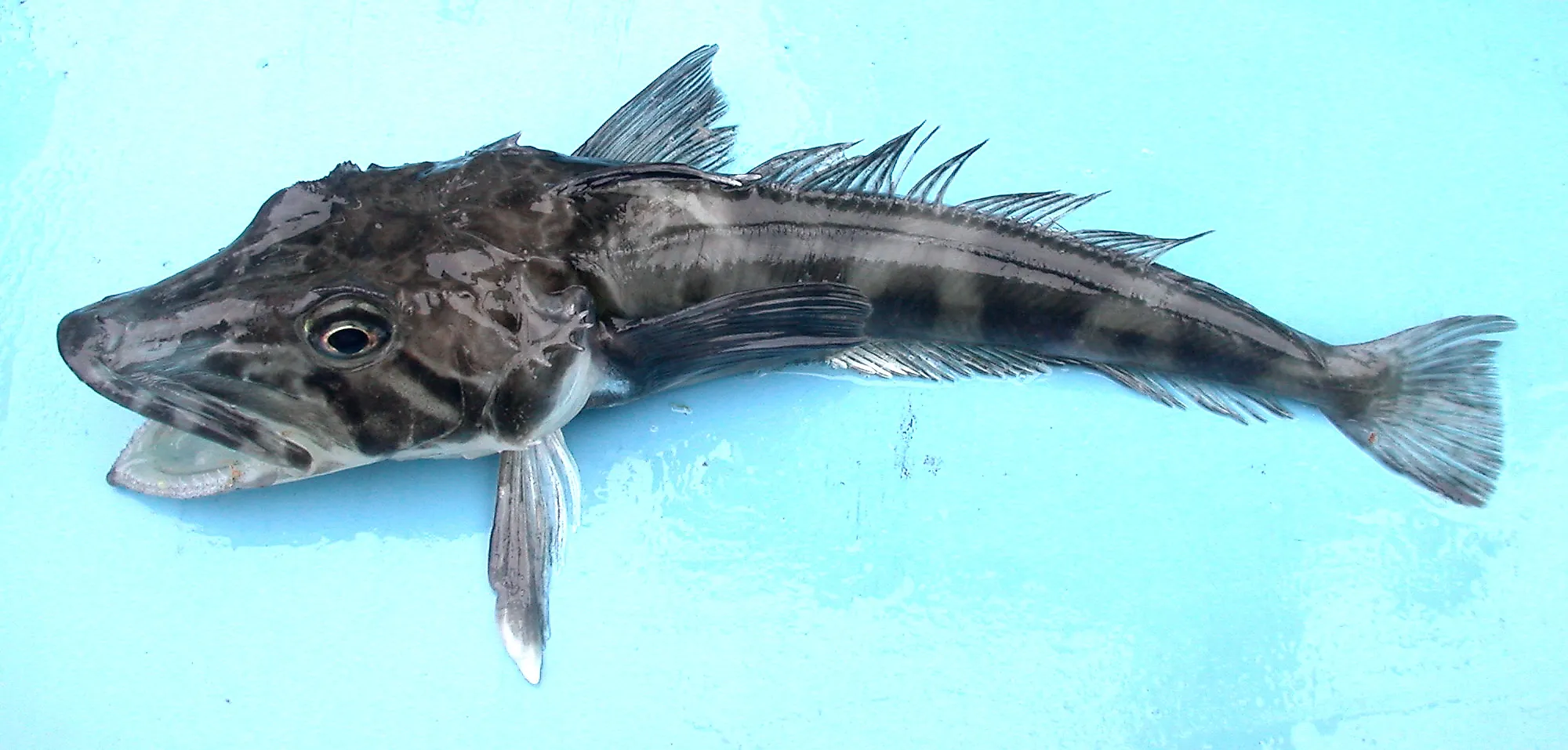
Antarctic icefish (family Channichthyidae) have found a different way to survive the cold: they prevent their bodies from freezing. Depending on the species, these unusual fish can grow from several inches to more than two feet long. They inhabit the Southern Ocean, where seawater temperatures can hover around 28°F, cold enough to freeze the body fluids of most fish.
Antifreeze glycoproteins in their bodies bind to tiny ice crystals and prevent them from growing. In 2014, Paul Cziko of the University of Oregon, along with Christina Cheng and Arthur DeVries of the University of Illinois, discovered an unexpected side effect: these proteins can also prevent ice crystals from melting. Some crystals may remain inside Antarctic fish without causing them to freeze solid.
Icefish have another unusual feature: they lack red blood cells and hemoglobin, the protein that gives vertebrate blood its red color. Instead, their nearly transparent blood carries oxygen dissolved directly in the plasma. They have large hearts and extensive blood vessels that help circulate that oxygen through their bodies in the frigid, oxygen-rich waters surrounding Antarctica.
Sitka Periwinkles

The Sitka periwinkle (Littorina sitkana) is a small marine snail found along rocky shores from Alaska to the Pacific Northwest. These little snails with spiral shells often live higher on the shoreline, where they spend more time exposed to winter weather than species living closer to the water.
In a 2015 study at Bridget Cove and Sunshine Cove near Juneau, Alaska, William Stickle, Mandy Lindeberg, and Stanley Rice compared the freezing tolerance of three marine snail species. They found that Sitka periwinkles could tolerate freezing temperatures around 11°F, considerably colder than the temperatures tolerated by the two species living lower on the shore. The researchers also found that Sitka periwinkles became more resistant to freezing during winter, a change associated with seasonal shifts in their body chemistry.
File Dogwinkles

The file dogwinkle (Nucella lima) might look like an ordinary marine snail, but it has a rather gruesome way of getting dinner. Unlike the Sitka periwinkle, which grazes on algae, this snail is a predator that feeds on barnacles and other shellfish. It uses chemical secretions to help soften a victim's shell, then scrapes through it with a ribbon of tiny teeth called a radula. Once it makes a hole, it extends a feeding tube to reach its prey inside.
Winter brings a change in behavior. During a study at Bridget Cove and Sunshine Cove in southeastern Alaska, scientists observed that file dogwinkles stopped feeding and retreated into crevices, beneath boulders, or into sediment as temperatures dropped. Their bodies also underwent seasonal changes. William Stickle and his colleagues found that dogwinkles accumulated higher concentrations of certain amino acids, including taurine and glycine, during the colder months. These compounds may contribute to the snails' increased freezing tolerance. The dogwinkles essentially prepare for winter twice: by seeking shelter and by changing their internal chemistry.
Marine Tardigrades

Tardigrades, nicknamed "water bears" for their plump bodies and eight stubby legs, are microscopic animals with an extraordinary talent for survival. Although many live in freshwater or damp moss, some species inhabit marine environments. One of them, Halobiotus crispae, lives among sediments and algae in northern coastal waters.
Their ability to survive freezing depends on their life stage. In a 2009 study, Kenneth Agerlin Halberg and his colleagues investigated how Halobiotus crispae responds to freezing. They found that tardigrades could tolerate freezing during a special resting stage called "pseudosimplex 1," when their bodies undergo changes that help them withstand freezing temperatures and other environmental stresses. In laboratory experiments, ice began forming at approximately -4°F. But while tardigrades in the resting stage could survive freezing, those in other stages did not show the same tolerance. For an animal famous for surviving just about anything, being in the wrong stage of life can make all the difference.
Surviving The Deep Freeze
A barnacle frozen to a rock, a mussel with ice forming between its cells, and a microscopic tardigrade in its resting stage all have something in common. They can survive conditions that would destroy the tissues of most animals. Then they resume their lives as though winter had merely interrupted them.