5 Most Snake-Filled Bodies Of Water In Iowa
Most people mistake Iowa's northern water snakes for cottonmouths, a species that does not actually live in the state. These nonvenomous swimmers show up around nearly every body of water on this list. The rivers along Iowa's borders also support venomous species. Eastern massasauga rattlesnakes turn up in the wetlands along the Mississippi corridor, and prairie rattlesnakes live in the grasslands bordering the Missouri. At Lake Red Rock, black rat snakes can reach seven feet along the rocky shoreline. The five bodies of water ahead are where reptile encounters are most likely.
Missouri River

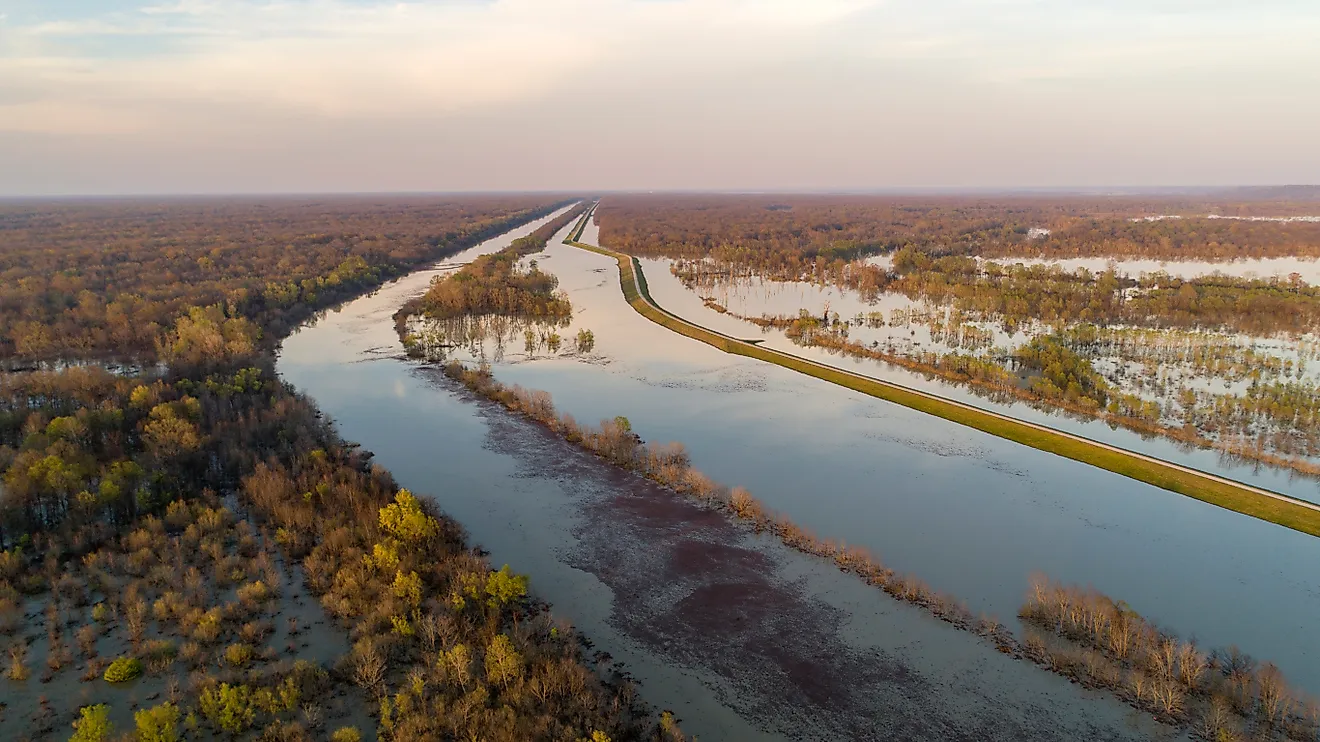
The Missouri River flows along Iowa's western border with Nebraska. With its source in the Rocky Mountains of southwestern Montana, it flows south for 2,341 miles, making it the longest river in the United States, before joining the Mississippi River near St. Louis. The Lower Mississippi begins at the confluence of the Ohio River. The Missouri's large basin, which includes plains, hills, Great Plains landscapes, upland plateaus, and till plains, creates habitat for both semiaquatic water snakes and a few venomous snakes.
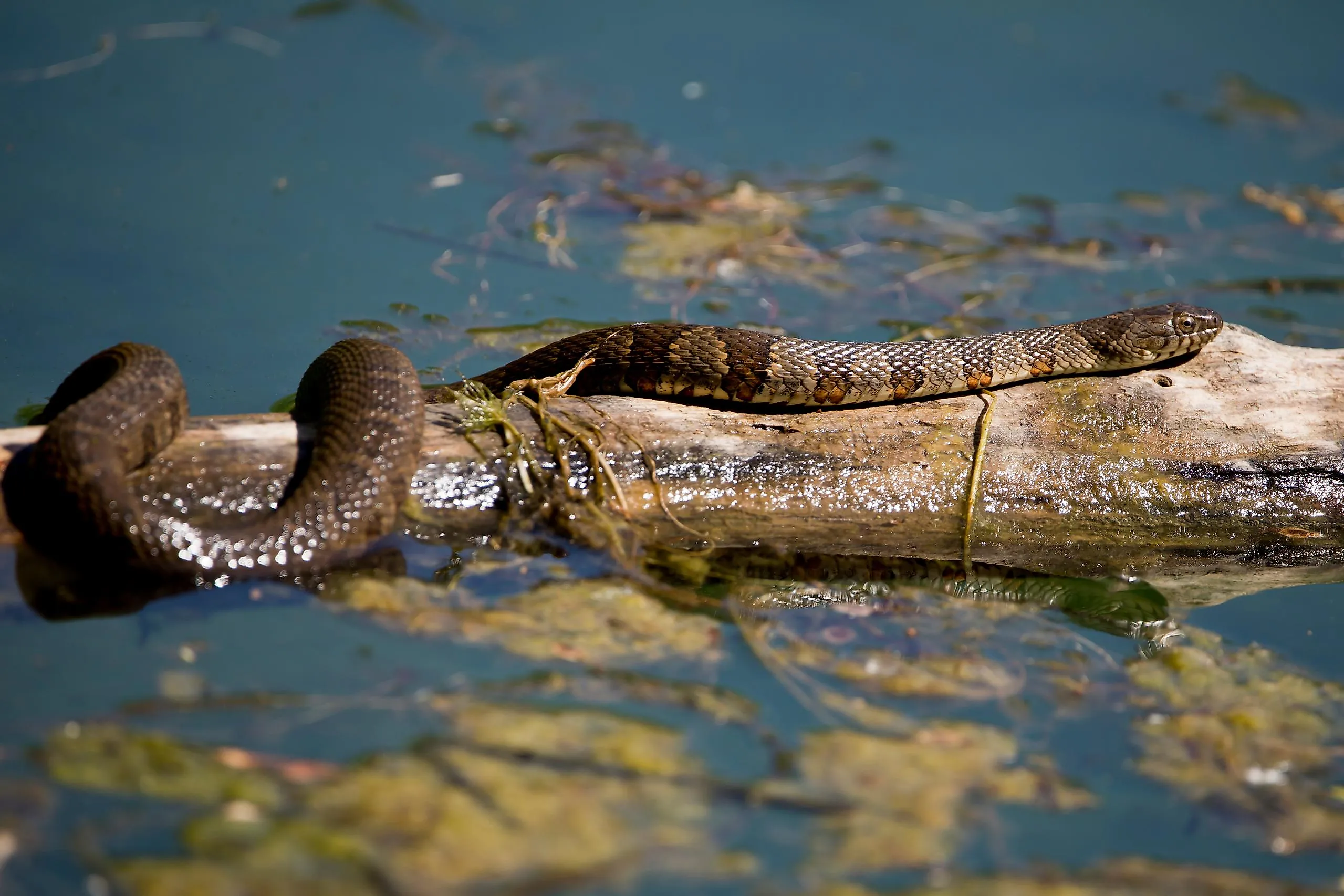
The most common snakes one might find in or around the river are harmless water snakes, such as the northern water snake. It is sometimes called the common water snake and ranges in color across gray and brown, with dark bands. Due to their semiaquatic nature, they are often mistaken for cottonmouths, but cottonmouths are not native to Iowa.
The prairie rattlesnake is known to live in western Iowa, in the prairie grasslands along the Missouri River. This venomous snake typically grows up to 3 feet long but can reach 5 feet. They hide in the grasses and feed on small mammals such as rabbits and prairie dogs. Although it prefers grassy environments, it can swim in rivers or other bodies of water. It may do so to hunt for prey or to escape threats.
West Okoboji Lake

West Okoboji Lake is part of a lesser-known network of lakes in northwestern Iowa called the Iowa Great Lakes, which includes East and West Okoboji, Big Spirit Lake, and other water bodies. The lake is designated as an Outstanding Iowa Waters site because it is a high-quality water of state significance. In the past, boaters have reported seeing massive serpents in the water, including one in 1903 who reported a creature resembling Nessie. Regardless of the truthfulness of this story, northern water snakes are known to move through these waters and nearby shorelines.
These semiaquatic snakes can easily navigate the waters and marshes around West Okoboji Lake. Garter snakes are also common in the grassy shoreline surrounding the lake. Both of these snakes are nonvenomous.
In Dickinson County and the surrounding region, there are other nonvenomous snakes, including garter snakes and western hognose snakes.
Mississippi River

The Mississippi River flows for 2,340 miles from its source in Lake Itasca in Minnesota down to the Gulf of Mexico. It forms the entire eastern border between Iowa, Wisconsin, and Illinois, and is used for commerce, recreation, and drinking water. It is also home to some of Iowa's rarer venomous snakes, including the copperhead and eastern massasauga rattlesnakes.
Eastern massasauga rattlesnakes have been scattered about eastern and southeastern Iowa. They are small, at only 30 inches long, and can lose rattle segments. They live in damp lowland habitats such as swamps, bogs, fens, marshes, sedge meadows, and wet prairies, and are particularly strong swimmers.
Copperheads have been reported in Lee County on the very southeastern tip of the state. Growing up to 36 inches, they have a distinctly copper color and a triangular head. They are adaptable and can venture into residential areas to live under debris, leaves, or sticks. They are involved in many venomous snakebite cases in the U.S. because they are widespread and populous.
Lake Red Rock

Lake Red Rock is a 15,520-acre reservoir that was formed by a 1969 dam on the Des Moines River. It is the largest lake in Iowa and provides several recreational facilities for tourists and residents, including Elk Rock State Park and Cordova Park. Paved hiking trails include a trail along part of Lake Red Rock, including rockier areas such as Elk Rock. With so many visitors, there have been several run-ins between humans and snakes across Lake Red Rock.
Around Lake Red Rock, visitors are more likely to find nonvenomous snakes such as northern water snakes and racers, which can range across brown, green, and blue. Racers can hide in the rocks or underbrush around the lake. One of the largest snakes visitors might find is the black rat snake, which can grow up to 7 feet long. All of these snakes are nonvenomous.
Lake Geode

Lake Geode is a 187-acre lake within the larger Geode State Park. It gets its name from the state rock of Iowa. Trails wind around the northern and western sides of the lake, with access to largemouth bass, crappie, and red-eared sunfish in the waters. Snakes have been spotted in the lake and the surrounding woodlands, including along the steeper, scenic cliffside views that reach up to 639 feet in elevation.
Water snakes live here, along with prairie kingsnakes. These light brown snakes can grow up to 43 inches long and will capture prey by constricting them and then eating them. They can sometimes eat other smaller snakes and reptiles.
In the higher elevations of the park, timber rattlesnakes can live. In fact, there have been reports of timber rattlesnakes in Henry County. These snakes may shake their rattle if threatened, but others might choose to freeze in place. Although they prefer higher elevations and rocky outcrops, they also tend to stay close to bodies of water.
How To Stay Safe Around Iowa's Snakes

Most snakes on this list are harmless to humans, and even Iowa's venomous species usually avoid people when left alone. Even the one responsible for the most snake bites, the copperhead, is rare in Iowa, and its bites are very rarely fatal. In fact, copperheads are known for dry bites that do not inject any venom into humans. Bites can still be quite painful, even from venomous snakes. In all cases, travelers and residents should seek medical attention if bitten by any snake, give snakes plenty of space, and avoid handling or harming snakes found in or around these waters.