10 Iconic Animals That Live Only In North America
A bison nearly 6.5 feet tall at the hump grazes the Lamar Valley in Yellowstone. A four-pound fox endemic to six islands off the California coast hunts beetles in the scrubland. Twenty-eight to thirty-one red wolves (the entire wild population of the species) live on a single peninsula in eastern North Carolina. North America's landscapes hold a striking range of animals found nowhere else on Earth. The ten species ahead live in deserts, forests, mountain meadows, coastal scrublands, and freshwater swamps. Some are conservation success stories like the California condor, which dropped to 22 individuals in the wild in 1982 and now numbers over 600 worldwide. Others, like the red wolf, sit at the edge of extinction.
American Bison

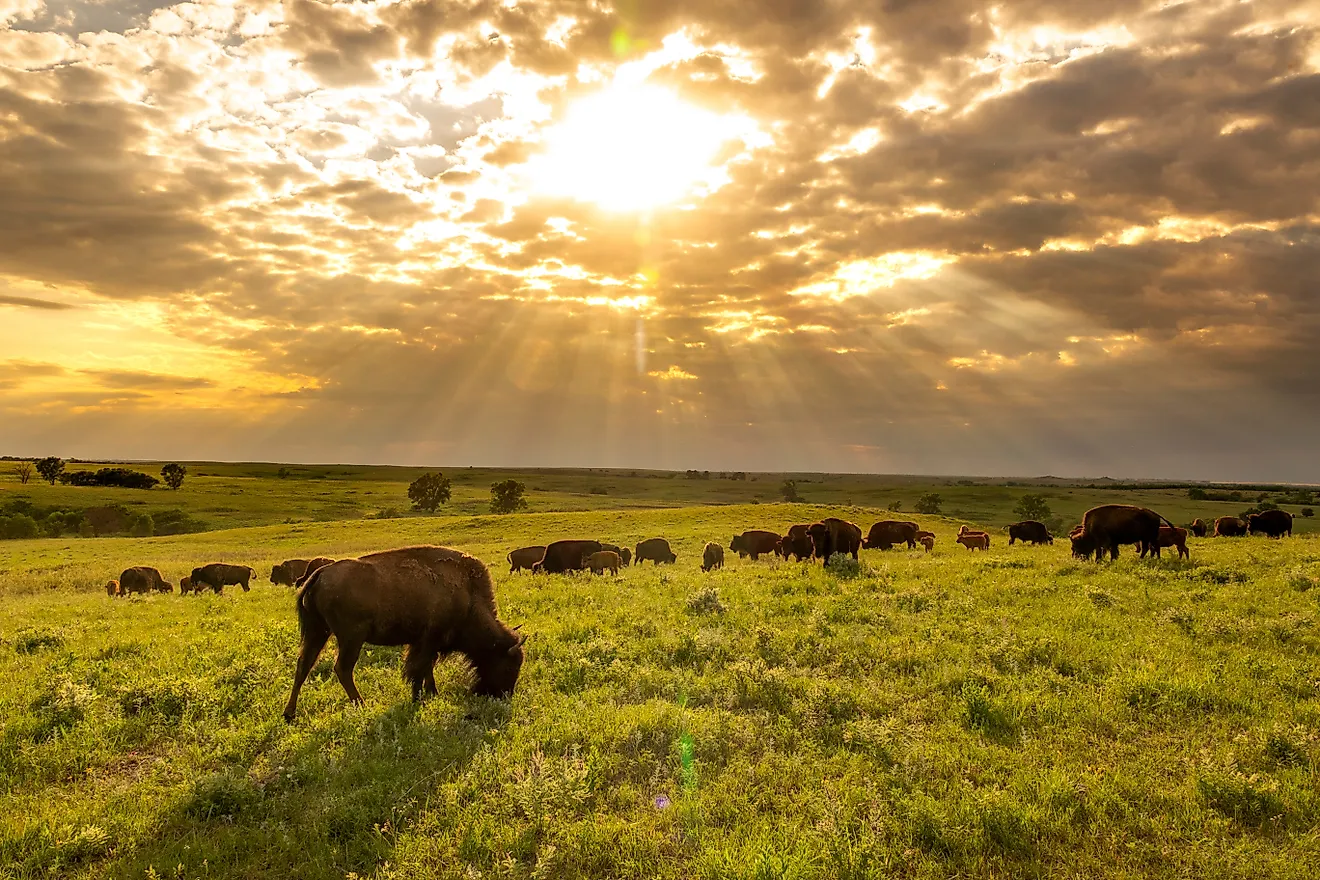
The largest land animal in North America, the American bison (Bison bison) is found across the Great Plains, with sizable populations in the Lamar and Hayden Valleys of Yellowstone National Park, where bison have lived continuously since prehistoric times. The species has historically provided food, clothing, and spiritual significance to Indigenous peoples across the Plains. Bison diets run predominantly on grasses and flowering plants.
This huge mammal has a distinctive humped back, long shaggy fur, and short pointed horns. Males can reach 6.5 feet tall at the hump and 9 to 12.5 feet in length. Females are smaller at around 5 feet tall at the hump and closer to 7 to 10 feet in length. Despite their size (sometimes exceeding 2,000 pounds) American bison are fast and agile. They run up to 35 miles per hour, jump fences, and swim well. The protruding shoulder hump lets them clear snow in winter for foraging by swinging their massive heads side to side.
The American bison is listed as Near Threatened on the International Union for Conservation of Nature (IUCN) Red List. Threats include habitat loss and hybridization with cattle. Roughly 11,000 bison live on public land managed by the US Department of the Interior, and the total population in North America (including private commercial herds) sits around 500,000. The bison was designated the national mammal of the United States in 2016 under the National Bison Legacy Act.
Red Wolf
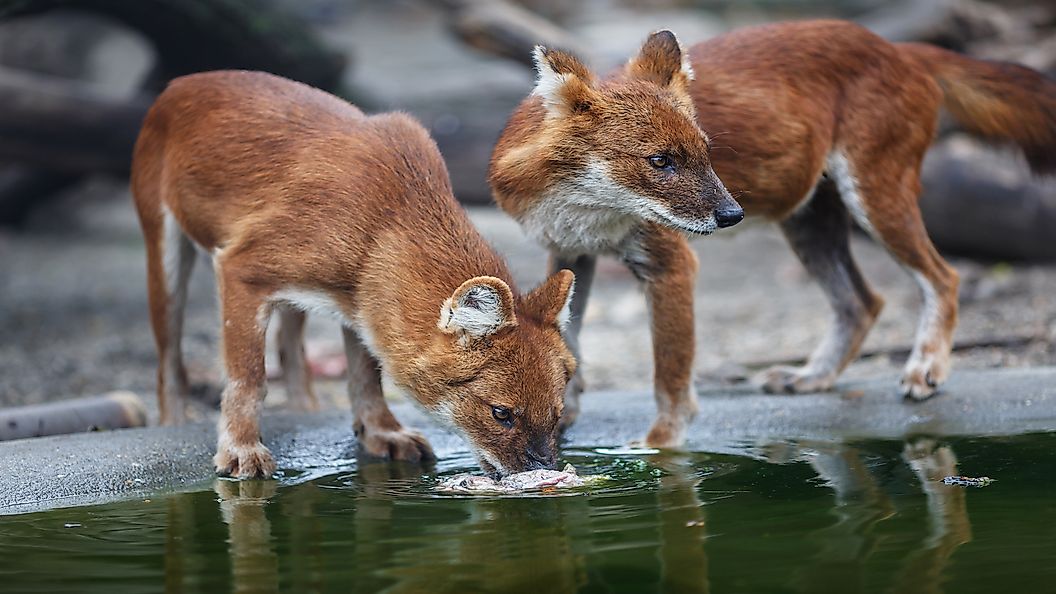
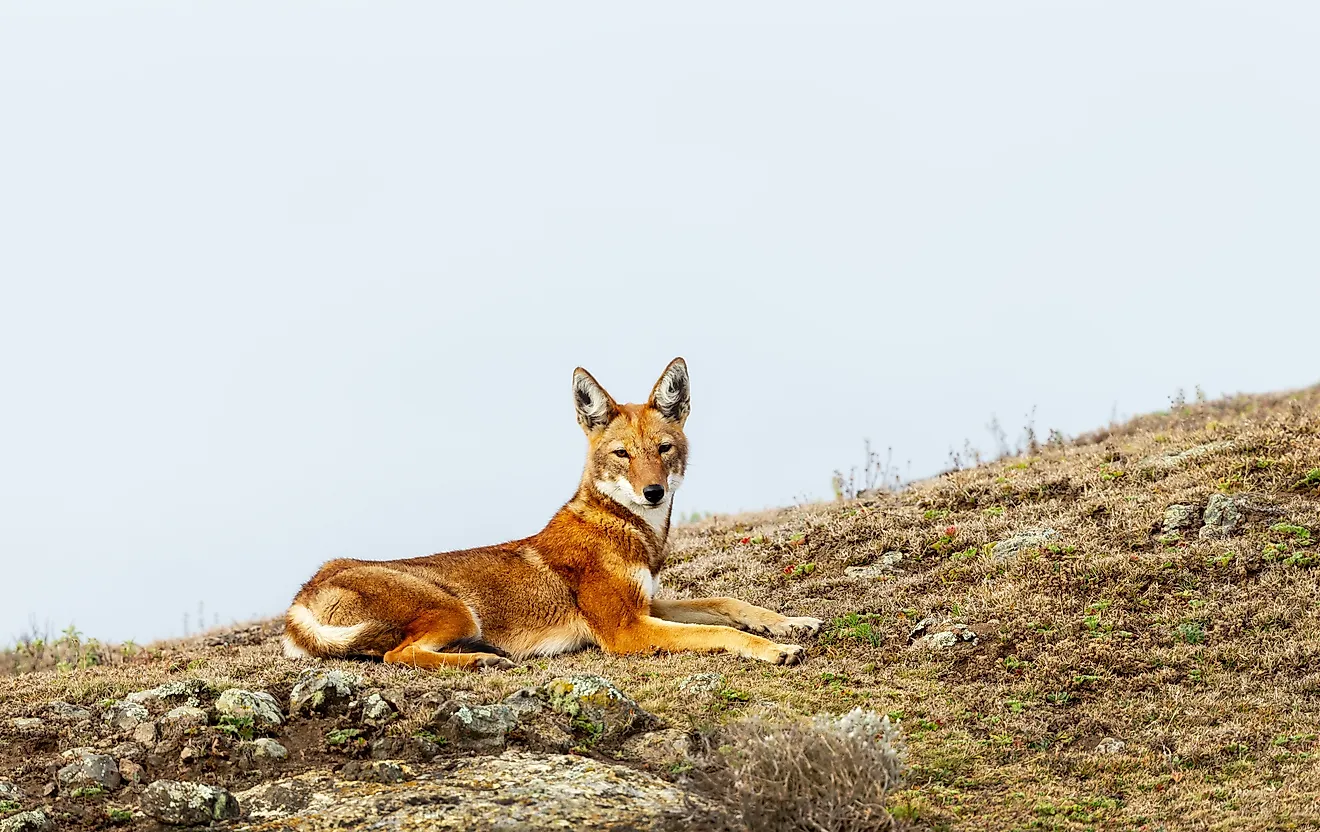
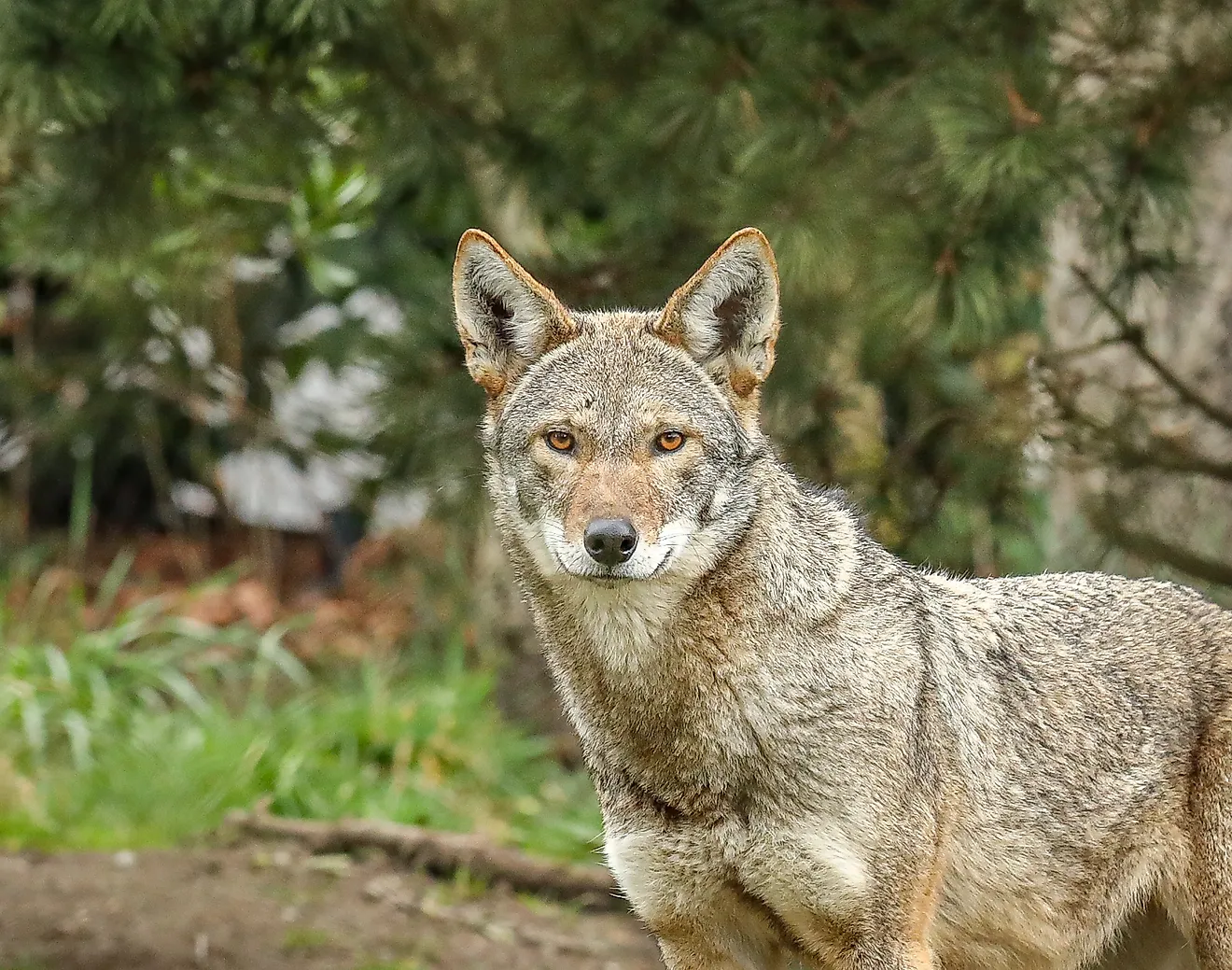
The red wolf (Canis rufus) was historically found across the southeastern United States, with a range extending into eastern Texas and as far north as the southern Atlantic states. The species is now found only on the Albemarle Peninsula in North Carolina, where it survives in forests, coastal prairies, and wetlands. Red wolves carry cinnamon and reddish coloration with a black-tipped tail. They weigh between 45 and 80 pounds, stand about 26 inches at the shoulder, and run about four feet long from nose to tail tip. They are smaller than gray wolves and live in smaller packs.
Red wolves mate for life, and older offspring often help raise younger pups. They are carnivores that hunt small animals like raccoons and rabbits. Red wolves were declared extinct in the wild in 1980 and reintroduced to the Alligator River National Wildlife Refuge in eastern North Carolina starting in 1987. Threats include habitat loss, vehicle collisions, illegal shootings (with hunters sometimes mistaking them for coyotes), and hybridization with coyotes. The US Fish and Wildlife Service confirmed 28 to 31 red wolves in the wild as of September 2025, up from a low of about 16 in early 2025, with an additional 284 in the Saving Animals From Extinction (SAFE) breeding program at 52 partner facilities across the country. The red wolf is the most endangered canid species in the world.
Island Fox

The island fox (Urocyon littoralis) lives on six of the eight Channel Islands off the coast of Southern California, having evolved from mainland gray foxes after the populations were isolated during the late Pleistocene. The semi-arid environment runs across Santa Cruz, Santa Rosa, San Miguel, Santa Catalina, San Clemente, and San Nicolas islands, each holding a distinct subspecies of the fox. They eat crickets, mice, and beetles on Santa Rosa, and sea figs and cactus fruits on other islands. Near the shoreline they also feed on crabs and other invertebrates.
Weighing between four and five pounds, the island fox is one of the smallest canine species in the world. They are about one-third the size of their gray fox ancestor and are not found anywhere else on Earth. Similar in appearance to the gray fox, they have a gray back and deep tan sides, with black, white, and reddish-brown markings on the face. They communicate by barking and sometimes growling.
The island fox is listed as Near Threatened on the IUCN Red List. Numbers crashed in the late 1990s due to canine distemper transmitted from pet dogs and predation by golden eagles, which displaced the bald eagles that had historically dominated the airspace. Conservation efforts including captive breeding, golden eagle relocation, and bald eagle reintroduction drove a rapid recovery. An estimated 4,000 island foxes currently live across the Channel Islands. The four subspecies on Santa Cruz, Santa Rosa, San Miguel, and Santa Catalina were removed from the US Endangered Species List in 2016 in the fastest mammal recovery in the history of the act.
American Alligator

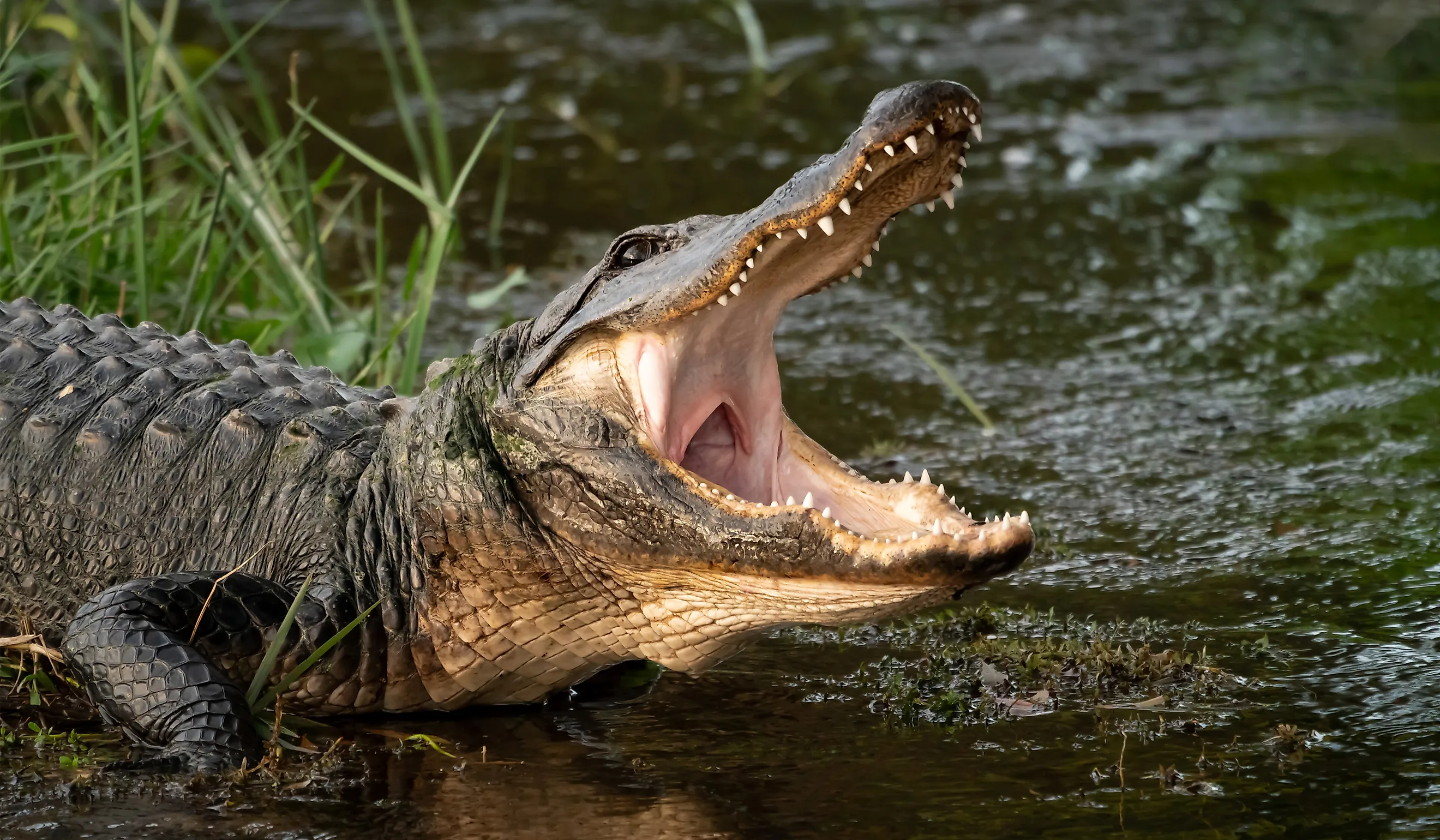
Sometimes called a "living dinosaur," the American alligator (Alligator mississippiensis) carries an armor-covered body, powerful jaws, and incredibly sharp teeth that signal its prehistoric lineage. The species has remained largely unchanged for tens of millions of years. A broad, rounded snout differentiates them from the narrower snout of the American crocodile. The two species coexist in southern Florida, the only place in the world where alligators and crocodiles share a habitat. Typically found in freshwater swamps and rivers in the Southeastern US, alligators also live in lakes and brackish coastal wetlands.
Adult male American alligators average 11 feet in length, while females average around eight feet. They are carnivores that will eat nearly anything including fish, birds, and turtles. As their teeth wear down they are continuously replaced, with some individuals going through as many as 3,000 teeth across a lifetime. Their front feet have five toes and the back feet have four webbed toes.
Semiaquatic and a keystone species in the Everglades ecosystem, American alligators regulate populations of other animals and maintain ecological balance. They also dig "alligator holes" that hold water through the dry season and become important habitat for birds and fish during drought periods. The main threats are habitat loss and human activity. The species was listed as endangered in 1967 but recovered so successfully that it was delisted in 1987. The total population now exceeds five million across the Southeastern US.
California Condor

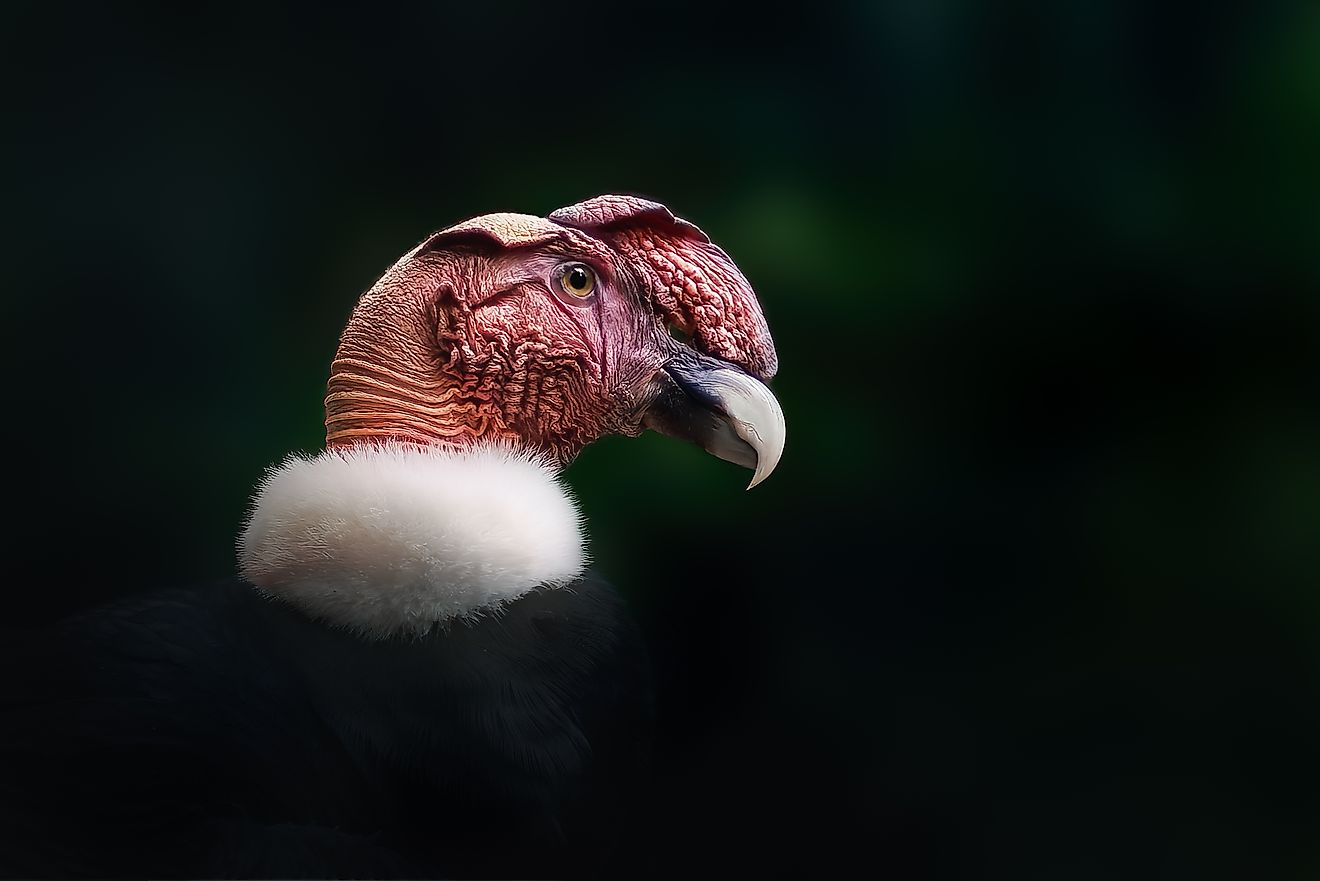
The California condor (Gymnogyps californianus) is North America's largest flying bird and a recognized symbol of conservation work and ecological recovery. Part of the family Cathartidae with roots in the Pleistocene era, condors have a black body, white markings under the wings, and a bald, pinkish head and neck. They stand 3 to 3.5 feet tall and reach wingspans of 9 to 9.5 feet. Weighing approximately 20 pounds, they can fly at speeds up to 55 miles an hour and ride thermal currents to altitudes above 15,000 feet.
Non-migrating birds, they live across large areas of open grassland and oak savanna foothills, nesting in rock crevices and in the cavities of giant sequoia trees. They are scavengers that feed on carrion, consuming the carcasses of dead animals like deer and even beached whales, performing an essential cleaning role for the local ecosystem. California condors hold cultural significance for several Native American peoples, playing central roles in creation stories and ceremonies of the Chumash, Yokuts, and Wiyot among others.
The California condor is classified as Critically Endangered by the IUCN due to habitat destruction and lead poisoning from ingesting bullet fragments left in carcasses. The species nearly went extinct in the 1980s, with the entire wild population reduced to 22 birds in 1982 and the last wild bird captured for breeding in April 1987. The remaining 27 birds were placed in a captive breeding program at the San Diego Zoo and Los Angeles Zoo. Since 1992, captive-bred condors have been released back into the wild in California, Arizona, and Utah, with release sites including Big Sur, Pinnacles National Park, Bitter Creek National Wildlife Refuge, and the Vermilion Cliffs near the Grand Canyon. The US Fish and Wildlife Service confirmed in December 2025 that the global population had surpassed 600 birds for the first time since the recovery program began, with 392 free-flying in the wild by year's end.
Gila Monster

One of only two venomous lizards native to the US (the other being the closely related Mexican beaded lizard, found only across the border), the Gila monster (Heloderma suspectum) is native to the Sonoran and Mojave Desert regions of northwestern Mexico and the southwestern US in Arizona, Nevada, Utah, and New Mexico. The reptile reaches about 22 inches in length with a distinctive pattern of black and orange-pink stripes and beaded scales. Contrary to its menacing appearance and name, the lizard is typically slow-moving and rarely attacks. The bite is painful but the venom is not normally fatal to a healthy adult.
Gila monsters have played an important role in medicine. A 1992 study by John Eng at the Bronx VA Medical Center identified exendin-4, a peptide in Gila monster saliva that helps regulate blood sugar. The discovery led to the development of exenatide (marketed as Byetta and Bydureon), a GLP-1 receptor agonist drug used to treat type 2 diabetes and a forerunner to the broader class of GLP-1 agonists now used for diabetes and weight management.
The name comes from the Gila River Basin, a watershed that mainly spans Arizona and New Mexico. The species is listed as Near Threatened on the IUCN Red List due to traffic mortality, habitat loss, and the illegal wildlife trade. Exact population estimates remain difficult to verify, with figures generally suggesting between 2,000 and 5,000 wild Gila monsters.
Alaska Peninsula Brown Bear

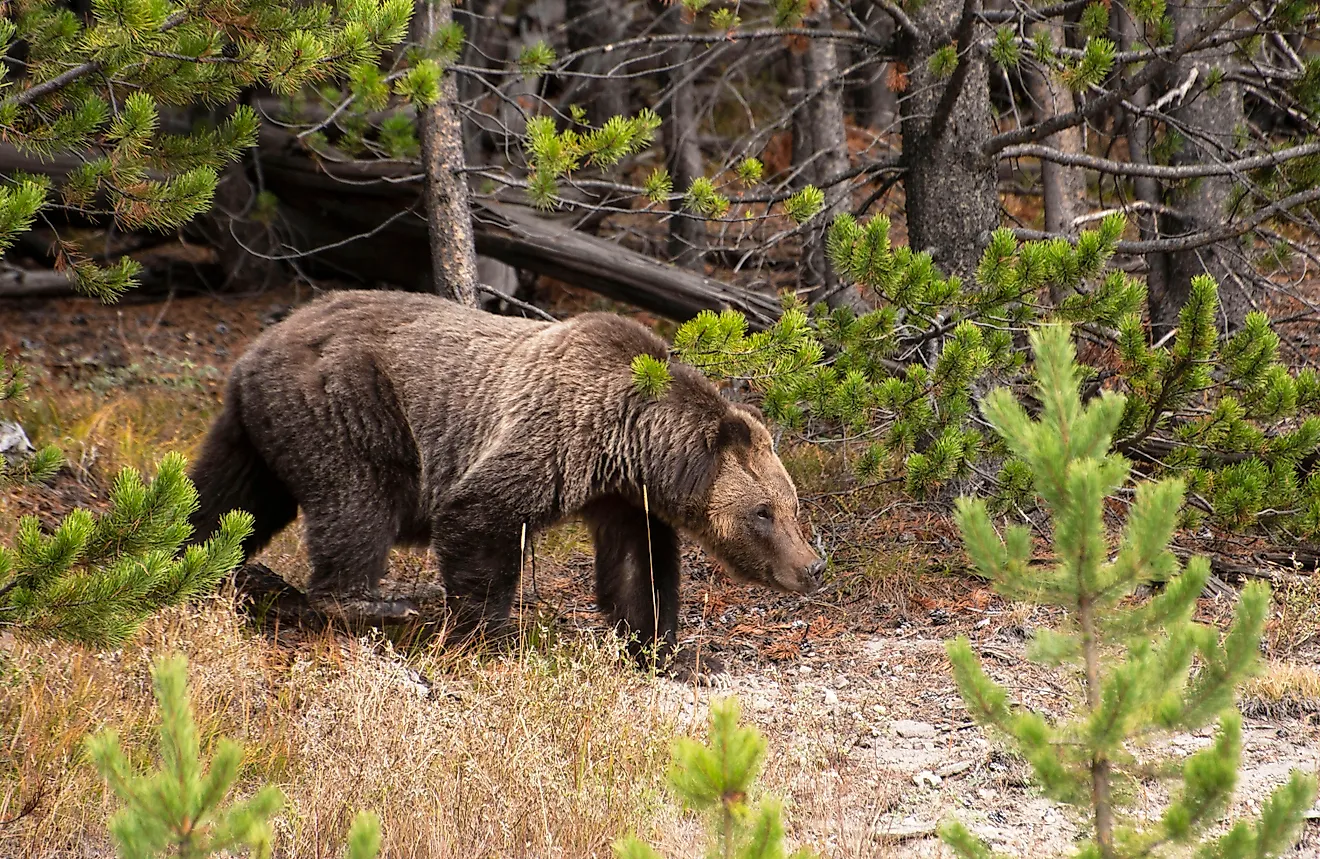
The Alaska Peninsula brown bear (Ursus arctos gyas) is native to the Alaska Peninsula wilderness and the Kodiak Archipelago, moving between mountain and coastal habitats. A subspecies of brown bear and one of the largest bear species, adult males can weigh up to 1,500 pounds and measure about eight feet in length. The generally solitary land animal carries thick fur in shades of brown that provide insulation through harsh weather and rugged terrain.
A distinct shoulder hump is characteristic of all brown bears, while long, curved claws help with digging and catching prey such as spawning salmon. The bears also eat berries, grasses, and sometimes other mammals. An important part of the local ecosystem, they help disperse seeds and regulate prey populations. About 30,000 brown bears live in Alaska across all subspecies, with the Alaska Peninsula brown bear population estimated at around 6,000 across the McNeil River area, the Katmai region, and the surrounding Bristol Bay watershed.
Olympic Marmot

Part of the squirrel family, the Olympic marmot (Marmota olympus) is endemic to the Olympic Peninsula in Washington, with more than 90 percent of the population residing within Olympic National Park. The marmots range in coat color among dark gray, deep tan, and yellowish. Between 18 and 32 inches in size, they weigh anywhere from nine to 20 pounds.
Social rodents, Olympic marmots live in colonies and have a sharp, whistle-like call that researchers have identified as carrying at least four distinct alarm patterns. They have evolved over tens of thousands of years to occupy mountain meadows above 4,000 feet and rocky slopes above the tree line. Their diet runs on flowers and grasses, with a particular preference for glacier lilies and lupines. Threats come from habitat loss and predation, particularly by coyotes that have expanded into the Olympic high country. There are currently between 2,000 and 4,000 Olympic marmots in the wild. The Olympic marmot was designated the official endemic mammal of Washington state in 2009.
Utah Prairie Dog

The smallest of the five prairie dog species, the Utah prairie dog (Cynomys parvidens) is found only in a localized area of southwestern Utah including Bryce Canyon National Park. A keystone species, their burrow systems benefit the surrounding ecosystem by aerating the soil and supporting plant growth. They have reddish-brown to buff or clay-colored fur with a black stripe above each eyebrow. They range from 12 to 16 inches long. Adult males weigh 1.7 to 3 pounds, while adult females are closer to 1.4 to 2.5 pounds.
Utah prairie dogs live in meadows and short-grass prairies in colonies that can reach into the thousands. Hibernation typically runs in burrows underground from October to March. As herbivores, they feed on grasses, seeds, and occasionally insects.
They remain at risk of extinction due to habitat loss, human activity, and sylvatic plague (a flea-borne bacterial disease). By the 1970s their population had plummeted to just 3,000 individuals, though numbers have since recovered to roughly 20,000 to 30,000 individuals through federal protections under the Endangered Species Act and active habitat management by the US Fish and Wildlife Service.
American Green Tree Frog

Found in the Southeastern US in states such as Florida, Louisiana, Georgia, and Texas, the American green tree frog (Dryophytes cinereus, formerly Hyla cinerea) carries a lime green color with a white stripe along its side. The coloration acts as camouflage while the frog is perched in trees and hiding in vegetation. The species is the state amphibian of Louisiana and Georgia.
These small and slender amphibians, approximately 1.25 to 2.5 inches in length, are tree dwellers that prefer the wetland habitats of cypress swamps and marshes. The frog's large, sticky toe pads help it climb. Nocturnal by nature, the frogs have also been seen in residential areas where they hunt insects near water and porch lights.
Mating season runs from April to October, when their short, high-pitched chirps can be heard across wetlands. The males produce a distinctive nasal "quonk-quonk" call repeated up to 75 times per minute to attract females. Because they eat mosquitoes, flies, and other insects, American green tree frogs serve as natural pest control in residential areas where they shelter.
North America's Distinctive Animals
These species span the continent from the Albemarle Peninsula in North Carolina to the Channel Islands off Southern California, the Olympic Peninsula in Washington, the Alaska Peninsula, and the Sonoran Desert of the southwest. Highly social colony dwellers like the Utah prairie dog and the Olympic marmot live alongside solitary predators with prehistoric lineages like the American alligator and the Gila monster. The Southeastern US holds armor-plated reptiles and tree-dwelling amphibians that thrive in warm wetland ecosystems. On the other side of the continent, the Pacific Northwest hosts alpine rodents with a preference for wildflowers above the tree line. Together these species reflect the ecological diversity, the conservation challenges, and the gradual recoveries that define North American wildlife in the 21st century.