Are There Copperhead Snakes In The Everglades?
There are no copperhead snakes in the Florida Everglades. The eastern copperhead (Agkistrodon contortrix) is broadly distributed across much of the eastern and central United States, but its Florida range is limited to seven counties in the western Panhandle. South Florida, including the 2,357 square miles of Everglades National Park, sits well outside that range. The question keeps coming up partly because the Everglades does hold a juvenile snake that looks remarkably like a copperhead: the Florida cottonmouth (Agkistrodon conanti), a closely related pit viper whose patterned young are routinely misidentified. Five venomous snake species in total live in the Everglades, plus the well-documented invasive Burmese python population. None of them are copperheads.
A Bit About The Copperhead

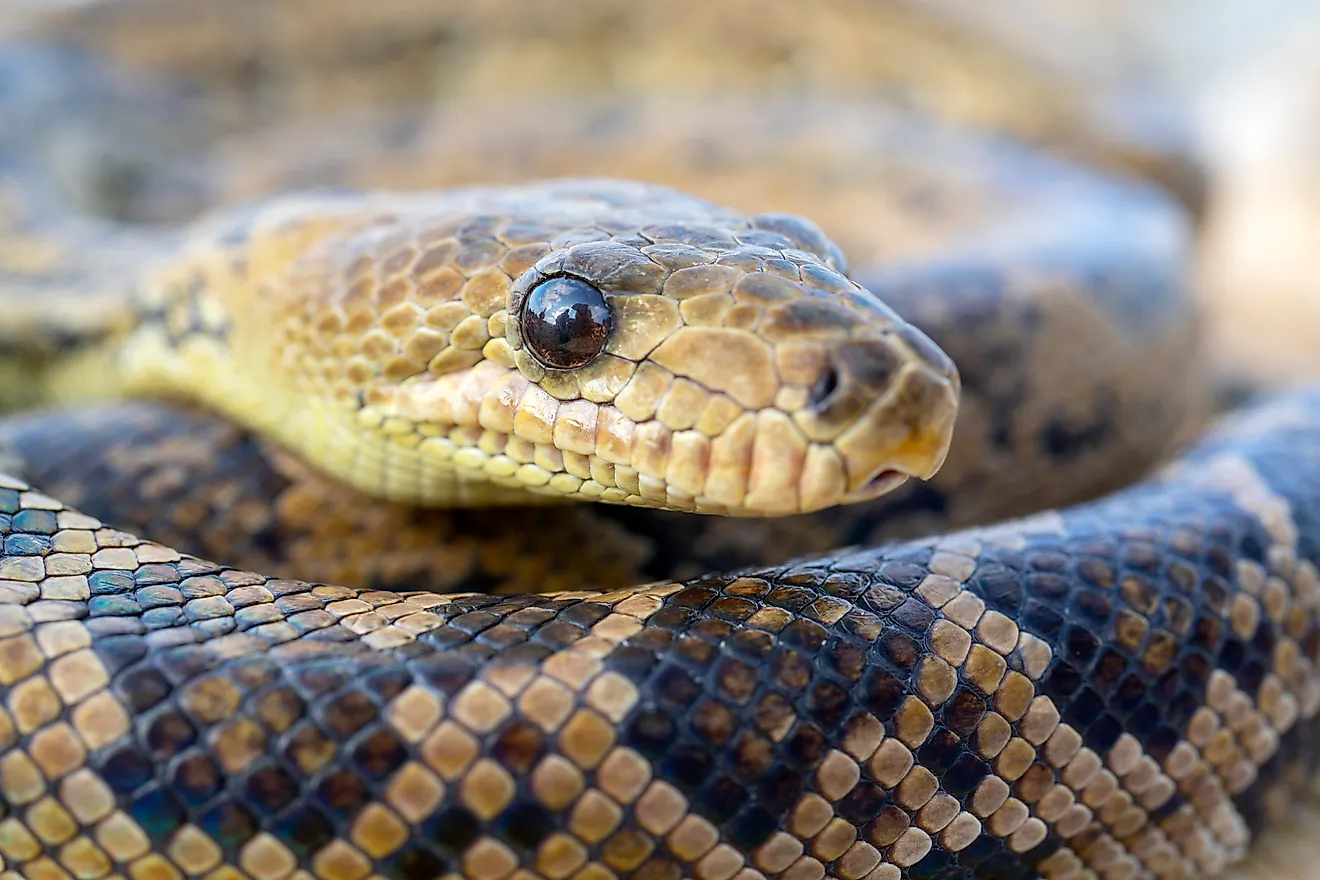
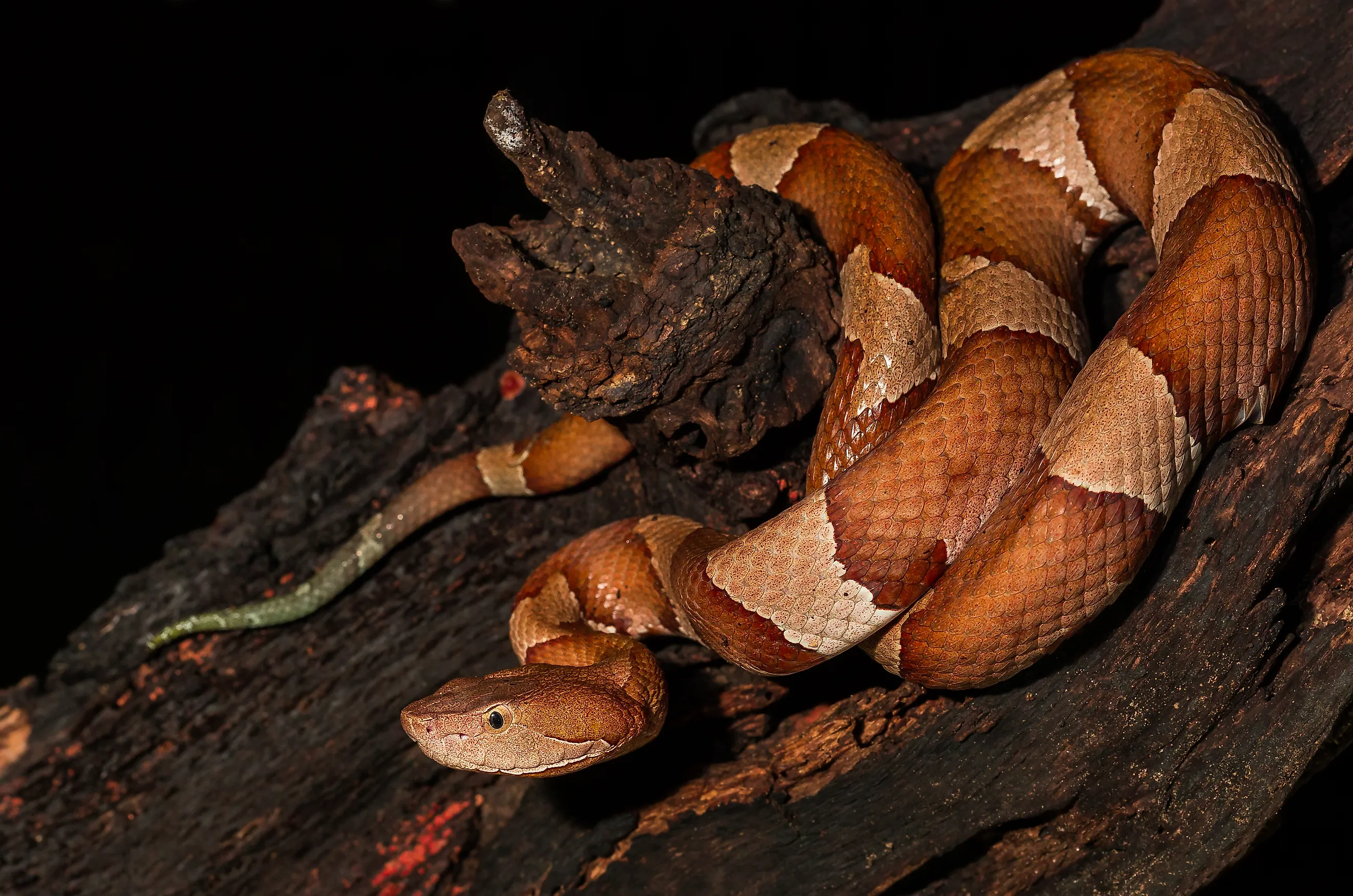
The eastern copperhead (Agkistrodon contortrix), also called the southern copperhead, is a moderately long (24-40 inches) and heavy-bodied venomous snake with a triangular head, elliptical pupils, and dark, hourglass-shaped crossbands across a tan or reddish-brown body. Copperheads give birth to live young, with clutch sizes between 1 and 21. Juveniles initially possess a bright yellow tail that acts as a lure for small prey, but the feature fades as hunting skills develop with maturity.
As pit vipers (subfamily Crotalinae within the family Viperidae), copperheads use heat-sensing facial pits to detect both predators (birds of prey, other snakes, coyotes, opossums) and prey (amphibians, other snakes, rodents, birds, large insects). The hemotoxic venom is devastating to small animals but rarely fatal to humans, though bites are painful and can require significant medical treatment. Children, the elderly, the immunocompromised, and small pets face higher risk. Copperheads are not an aggressive species, and bites typically occur when the snake is accidentally stepped on or deliberately handled. Anyone bitten by what appears to be a copperhead should seek immediate medical attention.
Copperheads In Florida

The eastern copperhead occupies most of the eastern and central United States across woodland, swamp, cave, rocky hillside, and suburban habitats. Two notable gaps in its range are south-central Georgia and nearly all of Florida. Within Florida, native copperhead populations exist only in the western Panhandle, concentrated along the Apalachicola River Basin and the northwesternmost corner of the state. Florida Museum and FWC records document copperheads in seven counties: Santa Rosa, Okaloosa, Liberty, Jackson, Gadsden, Escambia, and Calhoun. Within those counties, copperheads seek shady hardwood forest with heavy leaf litter and woody debris. Everglades National Park, hundreds of miles south, sits entirely outside the documented Florida range.
What Venomous Snakes Live In The Everglades
The Everglades holds 23 native snake species, four of which are venomous. None are copperheads, though the Florida cottonmouth that does live there is the close relative most often misidentified as one.
Florida Cottonmouth

The Florida cottonmouth (Agkistrodon conanti), also called the water moccasin, was split from the broader cottonmouth species in 2015 and now holds its own taxonomic standing. It is a semi-aquatic pit viper that resembles the eastern copperhead in size and (sometimes) coloration, particularly in juveniles. Cottonmouths use shallow and slow-moving waterways across much of the Everglades. Misidentifications of juvenile cottonmouths as copperheads are common and explain a meaningful share of the "copperheads in the Everglades" reports that turn up in citizen science records.
Eastern Coral Snake

The eastern coral snake (Micrurus fulvius) is elusive and unmistakable. Despite its banded pattern of black, yellow, and red, it spends most of its time hidden beneath foliage or underground. It carries the most potent venom of any snake in North America, but human fatalities are essentially nonexistent because bites are extremely rare and antivenom is widely available. Anyone moving through Everglades wooded habitats should wear boots and watch foot placement.
Rattlesnakes

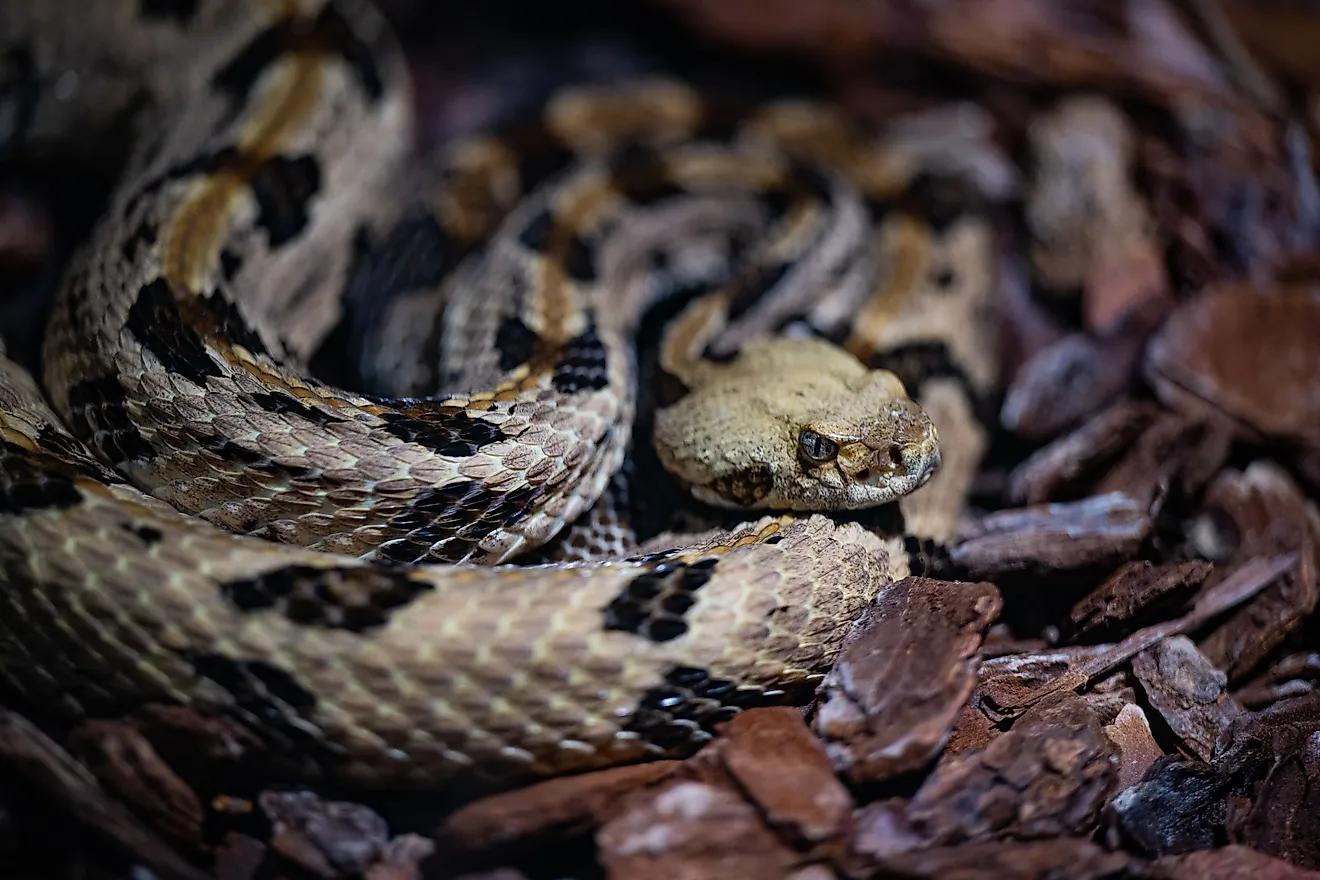
Two rattlesnake species inhabit the Everglades: the dusky pygmy rattlesnake (Sistrurus miliarius barbouri) and the eastern diamondback rattlesnake (Crotalus adamanteus). The pygmy is small (two to three feet) but defensive, with a gray body, dark dorsal spots, and white ventral specks. The eastern diamondback is the largest rattlesnake species and the largest venomous snake in the United States, reaching lengths up to about 8 feet. It is not particularly aggressive and relies on its namesake warning system, but its size and venom yield make it the most dangerous snake in the park. The dark diamond-pattern dorsal scales give the species its common name.
Invasive Snakes In The Everglades

No conversation about Everglades snakes can skip the invasive species story. Two pathways drove the introduction: escape during natural disasters (most notably the destruction of an exotic-reptile breeding facility during Hurricane Andrew on August 24, 1992, which released roughly 900 pythons into the surrounding swampland) and the long-running deliberate release of unwanted exotic pets, historically a substantial trade out of South Florida.

The Burmese python (Python bivittatus) is the dominant invasive snake in the Everglades. The first recorded Everglades python was a 12-foot snake found dead on Tamiami Trail in 1979, and biologists officially documented a breeding adult and a hatchling in 1995. By 2000, US Geological Survey and National Park Service biologists had recognized an established reproducing population. Estimates of the current Burmese python population in South Florida range widely, with figures spanning roughly 30,000 at the low end and over 300,000 at the high end, because the species is exceptionally difficult to detect; one study found that even experienced herpetologists located only about 1% of pythons housed in a semi-natural setting. Roughly 23,000 Burmese pythons have been removed from Florida since 2000, and the US Fish and Wildlife Service banned their importation in January 2012. The ecological damage is severe: a 2012 study tied python proliferation to declines in Everglades raccoon populations of 99.3%, opossums of 98.9%, and bobcats of 87.5% since 1997, with marsh rabbits, cottontail rabbits, and foxes effectively extirpated from the most heavily invaded areas. Other invasive constrictors also occur, including the green anaconda (Eunectes murinus) and the yellow anaconda (Eunectes notaeus), though at much lower numbers than the Burmese python. Occasional cobra sightings have been reported near the park.
The Short Answer Still Holds
Given the size of the Everglades, the density of its habitat, and the documented history of invasive snake introductions, no biologist would rule out the future possibility of a copperhead turning up. But as of 2026, no stable copperhead population is known to exist anywhere in South Florida, and any individual sighting would almost certainly be a misidentified juvenile cottonmouth or a deliberately released captive animal. The native range stops in the western Panhandle, and there is no documented evidence of natural southward expansion. Anyone certain they have spotted a copperhead in the Everglades has very likely seen something else.