The 10 US States With the Most Dust Storms
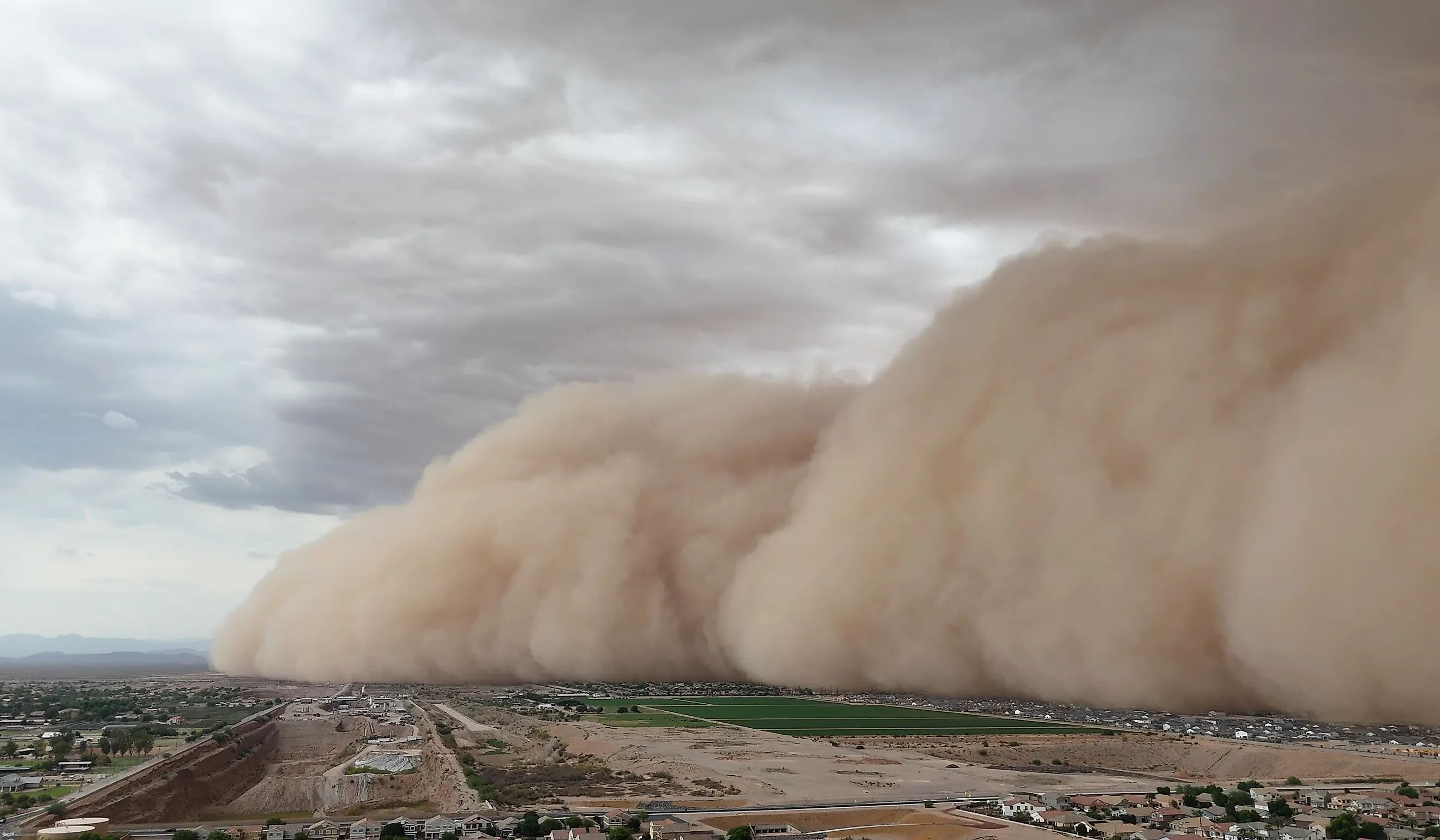
Imagine an intense wall of particles and/or debris driven into an area or region via strong winds, often originating from thunderstorms, and wreaking havoc on US cities. Add to that, airborne powder that stretches up several thousand feet in terms of height, and for miles in every direction, blanketing entire regions. That is indeed the case: dust storms are becoming an increasing threat as part of a host of alarming, escalating weather trends, and over the last 30 years, there has been a significant increase in the occurrence of severe dust storms in the hardest-hit region, the Southwest. The "dust storms in the region have more than doubled between the 1990s and the 2000s", according to scientists at NOAA analyzing the US's deserted regions. As for specific examples backed by hard data, dust storms have increased by 240% from the 1990s to the 2000s. The Southwest is not the only place affected; however, the plains region, as well as the Intermountain West, are also coping with these same storm events in greater regularity.
So what is the cause or source of such intense dust storms? Thunderstorm outflows (or Haboobs, as they are colloquially known in the Southwest) create downdrafts that generate strong, 50-80 mph winds which hit the ground, resulting in a massive sweeping wall of dust. Additionally, heatwaves and/or drought can greatly contribute to the development of lighter, more powdery soil, which is much easier for air currents to lift. As far as the mechanics, strong surface winds will develop where high and low pressure systems meet. Similarly, farming can also contribute to the formation of dust storms (loss of soil stability). One need only look to the "Dust Bowl" of the 1930's (the practice of the time was deep plowing of millions of acres of farmland, etc.) as evidence for man-made ecological disasters of this type.
Here's a closer look at several US states that have been dealing with more frequent dust storms, and also why these areas might be more prone to such escalating problems.
Arizona

Arizona leads the nation in dust storm activity, and this has been the case for quite a long time. In fact, according to NOAA, these strong dust events, also known as haboobs (from Arabic, haab, meaning "wind"), have been active in the region for years. The Phoenix area, which is the main target in most instances, typically experiences one to three massive haboobs annually. A recent analysis found that 189 dust events have occurred in Phoenix over 13 years. Moreover, most of these dust storms typically occur south/east of Phoenix, with storm outflows that begin above higher terrain both east and north of the city. Research seems to indicate that warmer sea surface temperatures in the North Pacific, in tandem with colder waters off the California coast, have allowed for cooler and drier winds to push into the southwestern U.S., which in turn has helped to dry the soil, further exacerbating the aforementioned haboobs.
California

Next in line is California, which is certainly no stranger to these types of events either. In a typical year, dust storms will affect an area that is larger than 55,000 square miles. This area can encompass a population of nearly 5 million according to ucmerced.edu sources. Moreover, in the central valley, dust events have risen by ~0.41% per decade between 2008 and 2022. However, unlike other areas where haboobs might be generated more naturally, California's increasing dust storm issues seem to be stemming from the mass fallowing of land. The result of this is the formation of desert-like landscapes - it is estimated by scientists that 88% of dust events emanate from fallow farmland.
Texas

Similarly, Texas has also seen dramatic increases in the frequency of dust storms in specific regions. In fact, El Paso in 2025 experienced nearly as many dust storms as during the infamous Dust Bowl period. Specifically, 2025 stands out as the worst season of dust storms since the 1930s, according to NASA. But it's not just El Paso, it's also Lubbock (609 events), Midland (with 545 events), and Amarillo (227 events). If one major culprit were to be identified, it would likely be prolonged drought intensified by La Niña patterns, which ultimately results in dried-out soil across the Panhandle and West Texas.
New Mexico

Given its location in the Chihuahuan Desert and elevation, etc., it should come as no surprise that New Mexico would be a US state rife with dust storms. With regard to that, the surrounding topography will sometimes fuel the wind that creates massive storms. Similarly, NOAA reports that between January 1 and March 31, 2025, there were 50 reported dust storm events in New Mexico, with one of the major threats here being the contribution to fatal highway accidents due to reduced visibility. Specifically, at least 41 vehicle-related fatalities have occurred since 1967 (more or less localized to the Interstate 10 corridor near Lordsburg Playa).
Utah

Utah statistics seem to indicate that historical occurrences of haboobs are not as common as in other regions; however, in keeping with the national upward trend in dust events, that's all changing. Science seems to point toward Utah's dust storms being primarily driven by the receding water levels of the Great Salt Lake, indicating a burgeoning set of environmental challenges. In fact, dry lake beds (which are in no short supply in the state) seem to be a primary source for many such events. This is becoming a vitally important topic because a shrinking Great Salt Lake is leading to elevated arsenic levels, with concentrations easily exceeding EPA residential soil standards and ultimately creating highly toxic dust storms.
Colorado
Dry and windy spots in the San Luis Valley are prime locales for dust storms in Colorado, as well as other regions like the Eastern Plains. This state, however, will typically get more warnings than actual storms, only having to deal with between 3 and 8 serious events per year (and they primarily occur in the spring). Colorado is also similar to New Mexico in its dust storm-related lethal traffic incidents. For example, official news reports describe that a single 2026 pileup occurred on I-25 in Pueblo County, resulting in five deaths and involving over 30 vehicles. This happened as a result of sudden visibility loss.
Kansas
While avoiding all temptations to make a Wizard of Oz reference, Kansas has also been dealing with a spate of dust storm-related highway accident events as of late. Eight fatalities were confirmed in a massive interstate pileup in March of 2025, which directly stemmed from low visibility during a severe dust storm. Such events hearken back to the fabled April 1935 Dust Storm (aka Black Sunday), which saw apocalyptic darkened dust clouds roll over the region as part of the infamous Dust Bowl.
Nevada

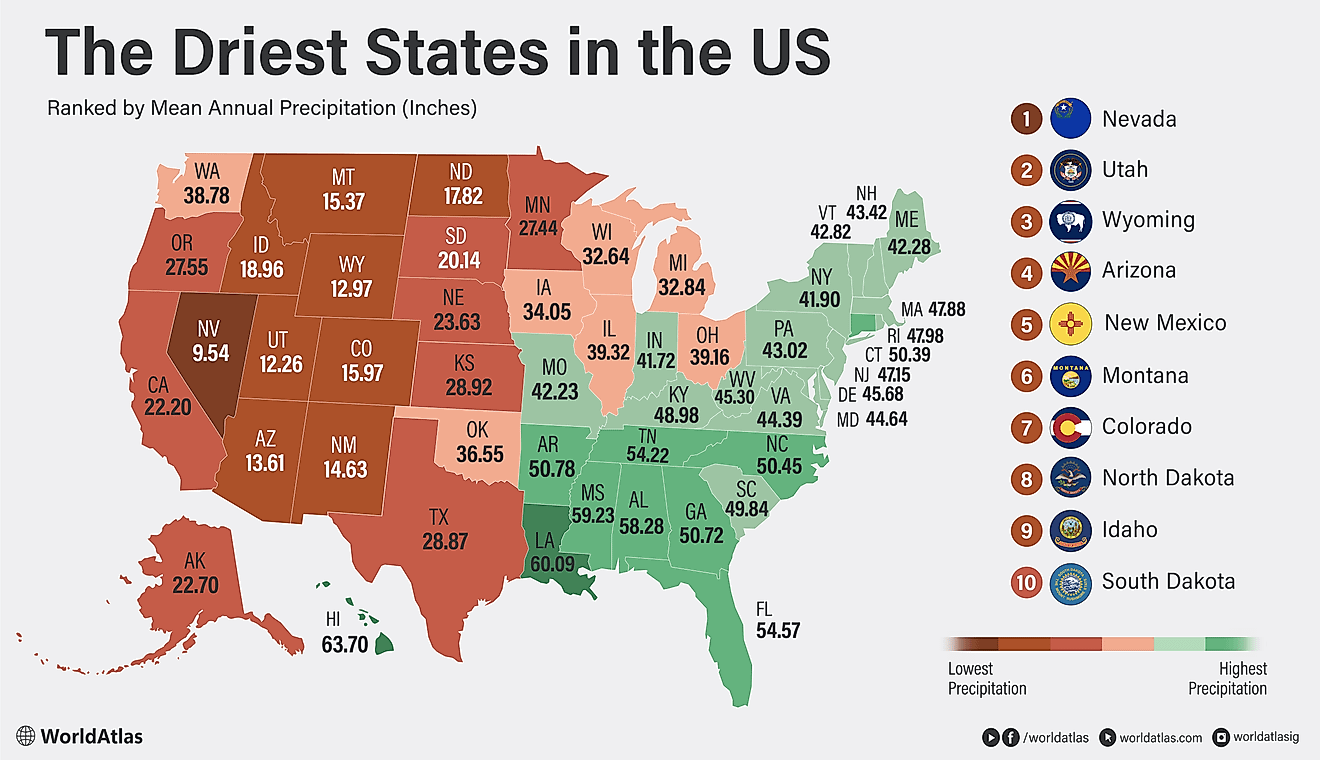
It should be noted that Nevada is officially known as the driest state in the US, with only around 10.3 inches of precipitation annually, according to unr.edu. Armed with this data alone (and being aware of the typical conditions that cause dust storms to rise), surely it's no surprise that Nevada experiences multiple reported incidents annually. Once again, this is a state that's part of the upward trend of such meteorological activities (e.g., "large dust storms in the Southwest increased by roughly 240% between the 1990s and 2000s," according to ScienceDirect researchers. The primary issues related to dust storms in this state appear to be disruptions to major urban areas like Las Vegas, as well as power delivery systems in general.
Oklahoma

The Oklahoma panhandle is a hotbed of intense storm activity, with a long storied history with regard to intense dust storms (it is largely considered to be the very seat of the Dust Bowl itself) as well as other radical events like tornadoes and snowstorms. While things have certainly calmed down since the 1930's, there is no shortage of modern storms to point at, with many dust events in the Southern Great Plains (which includes Oklahoma). Residents will certainly want to watch out for the spring and summer months as these are the common target windows for dust storms (likely emanating from La Niña periods and synoptic disturbances).
Illinois
Finally, there's Illinois, whose addition to this list might come somewhat unexpectedly to most. The year 2025 (once again, as with many others) was a banner year for dust storm events in the state. Just consider the fact that, on May 16, 2025, there was a historic and one-of-a-kind dust storm starting in central Illinois and moving towards Chicago, which also prompted the city's first-ever dust storm warning, as reported by the National Weather Service. One could point a finger at natural trends, but Illinois' issues seem to stem from vulnerable dry croplands, particularly in April and May.
What's behind the increase in US dust storms?
Scientists at both Yale and NOAA seem to agree that the overarching culprit with regard to the dramatic increase in US dust storms is likely climate change itself (and drought, which could be a result of the aforementioned). Specifically, NOAA reports that "research indicates that dust storms in the Southwest doubled between the 1990s and 2000s," which is a blatant trend that cannot be ignored. Adding to this, scalar changes in Pacific Ocean temperatures (for example, being warmer in the North Pacific, cooler off the California coast) will ultimately cause the entire Southwest to become drier via drastically altered wind patterns. Moreover, both of the above factors tend to lead to more of the same - negatively altered farmland, which only exacerbates the formation of additional severe dust storms.