10 Iconic Animals That Live Only In Tanzania
Tanzania is noted as one of Africa’s best locations to view the iconic Big 5 species coveted by safari-goers, but there are plenty of African countries that can say the same. What really makes Tanzania a wildlife-watcher’s paradise is the surprising range of Tanzanian species found nowhere else. While not as well known as your lions, wildebeest, and giraffes, they’re fascinating creatures that offer insights into the aspects of Tanzania’s ecosystems found nowhere else. Here are ten such endemic species equally worthy of your bucket list.
Yellow-Collared Lovebird

The yellow-collared lovebird is one of the most recognizable endemic Tanzanian species, and that’s all thanks to the pet trade. These small, colorful birds are recognizable by their green bodies, yellow necks, and brown faces, which have made them a very popular pet, and as such, escapees have set up shop in some very far-flung locations worldwide. But if you want to see the bird on its home turf, you’ll have to go to Tanzania, which is the only country in which it naturally occurs. They’re native to the Arusha region in the northeast of the country.
Pemba Flying Fox

Tanzania has a few hotspots for endemic species, and one of them is the island of Pemba off Tanzania’s coast. And if you happen across a tree that seems to have some hanging decorations on the island of Pemba, you’ve found one of them: these large fruit bats roost upside-down in trees. They’re one of the largest fruit bat species on earth, with a wingspan that can exceed five feet, and a common sight in the island’s forests. Oh, and one more spooky fun fact about the Pemba flying fox: they often roost in trees in graveyards because social taboos keep people from approaching, guaranteeing them undisturbed roosting spots.
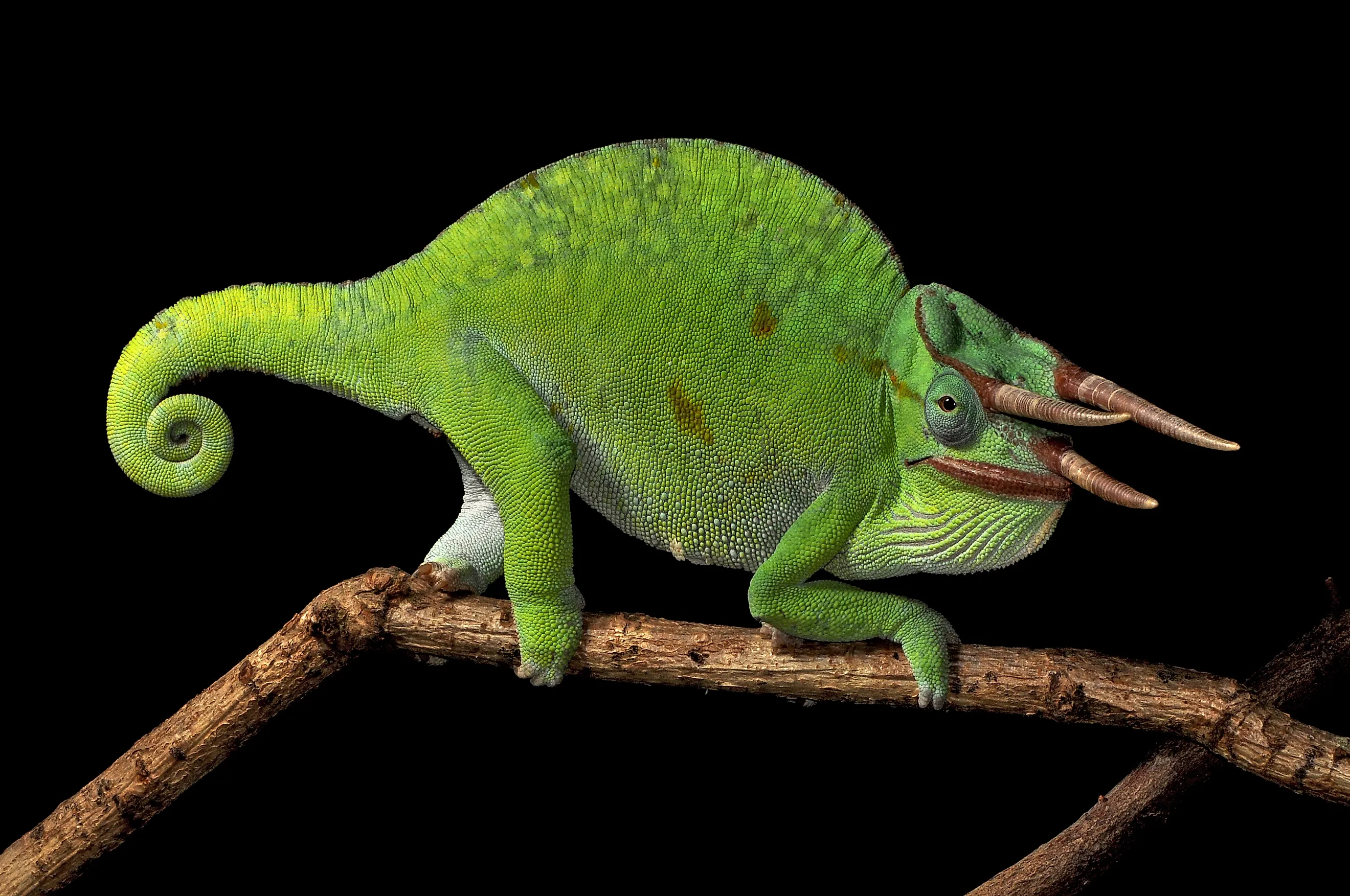
Usambara Three-Horned Chameleon

This is far from the only endemic chameleon species in Tanzania, but it’s definitely one of the most striking. The Usambara three-horned chameleon is notable for the three long protrusions from its face: think “triceratops in miniature.” Otherwise, it’s a small, green-bodied, and fairly typical-looking chameleon that blends in well with the leafy vegetation of the forest habitats it prefers. It’s found only in isolated patches of montane tropical rainforest, which are widely scattered throughout the country, and might be hard to spot: it prefers the dense cover of the thickest parts of the rainforest, far from the forest’s edges.
Kipunji

The kipunji is a primate species endemic to Tanzania with a crazy discovery story. Until its identification in the wild in 2003, scientists weren’t even sure whether it was a mythical creature or a real-but as-yet-unidentified species. Though they might look somewhat ordinary, these small, long-tailed monkeys with tan coats and black extremities were thought to be mythical for some time because the Nyakyusa people on whose land they’re found alternately described them as both real and mythological in different stories. It obviously turned out that the species was real, and lives in Tanzania’s montane forests — though they’ve also been known to descend to lower elevations to feast on agricultural crops.
Hyperolius Puncticulatus

Zanzibar (also called Unguja), also an island off the country’s east coast, is another of Tanzania’s endemic species hotspots. One less conspicuous Zanzibar (Unguja) native is this small orange tree frog that you might miss if you weren’t looking closely enough to see it perched on a leaf. They live around ponds, are highly social, and, though they’re a common sight on Zanzibar, they’re classified as endangered due to the precarity of their very small habitat. The Hyperolius Puncticulatus as yet does not have a common name in English, hence the use of its taxonomic name.
Fischer’s Lovebird

Even if you didn’t know it, you’ve almost certainly seen a Fischer’s Lovebird before: at one time, they were the most-traded wild bird in the world and extremely popular pets for their bright plumage, cheerful appearance, and endearing habit of mating for life. (Hence the name.) In their natural habitat, they’re native only to the savannas of Tanzania and eat a diet of primarily fruits and seeds, though they’ve also been known to eat crops from time to time. They’re very social and talkative, so you’ll likely hear them before you see them if you happen across a flock on the savanna.
Tanzanian Red-Billed Hornbill

As its name suggests, you’ll likely recognize this hornbill species by its eye-catching red beak. The Tanzanian red-billed hornbill, also called the Ruaha red-billed hornbill, is found in the forests and savannas of central Tanzania and, were it not for that beak, might not stand out very much: they’re relatively small for a hornbill species, and their plumage is a fairly nondistinct mottled white. But you’ll definitely hear them if they’re nearby. Another identifying mark of this endemic bird species is its cacophanous “barking” call, and once you hear it, it would be hard to mistake it for any other bird.
Swynnerton’s Bush Squirrel

Readers in North America might pause at the mention of a squirrel in an article about African wildlife: "But I have those in my backyard!" Yes, they really are everywhere - but for all their ubiquity in the temperate climes of the Northern Hemisphere, squirrels aren’t by any means restricted to them. The Swynnerton’s Bush Squirrel may physically resemble the squirrels you see every day, but it makes its home only in the moist montane forests of Tanzania. You can recognize it by its fluffy tail and grey body with tawny extremities.
Abbott’s Duiker

Duikers are a group of diminutive deer species found throughout sub-Saharan Africa, and though there are slight variations between species, they’ve all got a few things in common. They’re extremely small, with short legs, wedge-shaped heads, and a slightly nervous look that endears them to many wildlife viewers. They also tend to live in densely vegetated areas with lots of places to hide. The Abbott’s Duiker is one species native only to Tanzania, stands about two feet tall, and is so secretive that the first photographs of the species were only taken in 2003. This is largely due to the fact that the Abbott’s Duiker is nocturnal, making it much harder to spot in the dense undergrowth when it’s most active. One of these rare creatures' enclaves is in the area surrounding Mount Kilimanjaro.
Atherias Ceratophora

Tanzania has many endemic species of lizards and quite a few frogs, but not nearly as many snakes. This is one of them, and a very unique one: the Atherias ceratophora is one of only two tree-dwelling horned viper species in Africa. It’s recognizable by its black and yellow markings and the “eyelash”-like protrusions over its eyes. Atherias ceratophora is found in several scattered montane areas of Tanzania; scientists believe it’s likely that additional, undiscovered populations exist in similar areas throughout the country, but have yet to confirm this. As this indicates, the species is not especially well-understood yet.
Untold Diversity in Tanzania
Okay, so maybe a chameleon or a tiny, elusive deer don’t have the same star power as a lion or a giraffe — but they tell us much more about the huge range of unique habitats that exist in Tanzania. Filling surprising niches with equally surprising bodily adaptations, these ten endemic Tanzanian species are every bit as biologically awe-inspiring as their more famous counterparts.