The Elite Special Forces of Ancient Celts
The Celts of ancient Europe are remembered as the warriors who made Rome nervous. Between roughly 500 BC and 100 AD, Celtic peoples spread across most of central and western Europe, splintering into countless local cultures along the way. The label "Celt" is a broad and frankly messy one, a bit like "Native American," which files the Cherokee and the Lakota under one banner while erasing everything that set them apart.
They left almost no written records of their own, so nearly everything we know comes secondhand, from the Greek and Roman chroniclers who usually met them on the battlefield. Take some of it with a grain of salt. One thing those enemies never disputed was Celtic ferocity in a fight. And at the cutting edge of that reputation stood an elite: the armored nobles, the dueling champions, and the naked shock troops who served as the ancient world's answer to special forces.
The Celtic Warrior

Greek and Roman writers sized up the Celts as tall, muscular, and physically imposing. The men wore their hair long, often to the shoulder, and kept a well-tended mustache, beard, or goatee. According to the historian Diodorus Siculus, some washed their hair in lime water until it stiffened into a pale, swept-back mane, an effect that doubled as intimidation. Grooming was no afterthought either: tweezers and razors turn up regularly in Celtic graves.
Gear was a personal affair. Every warrior bought and paid for his own weapons and armor, and most marched to war with little more than a tall wooden shield and a spear. In the British Isles, some tribes went a step further, painting their near-bare bodies with a blue dye that Julius Caesar identified as woad and working patterns across the torso, limbs, and face. The markings likely carried religious weight, believed to shield the wearer once the fighting began.
There was no such thing as a professional Celtic army. Every able-bodied man was expected to take up arms when war came, so a typical war band was a patchwork of weapons and skill. The aristocracy, though, was another matter entirely. Celtic nobles ranked among the best-equipped fighters of their age, and they are the real subject here.
The Gaesatae: Rome's Naked Nightmare
If the Celts had anything resembling special forces, it was the Gaesatae. These were elite Gallic warriors drawn from the Alpine country near the Rhone, hired blades whose very name pointed both to the spear and to fighting for pay. In 225 BC, a coalition of Celtic tribes brought them across the Alps to take on the Roman Republic.
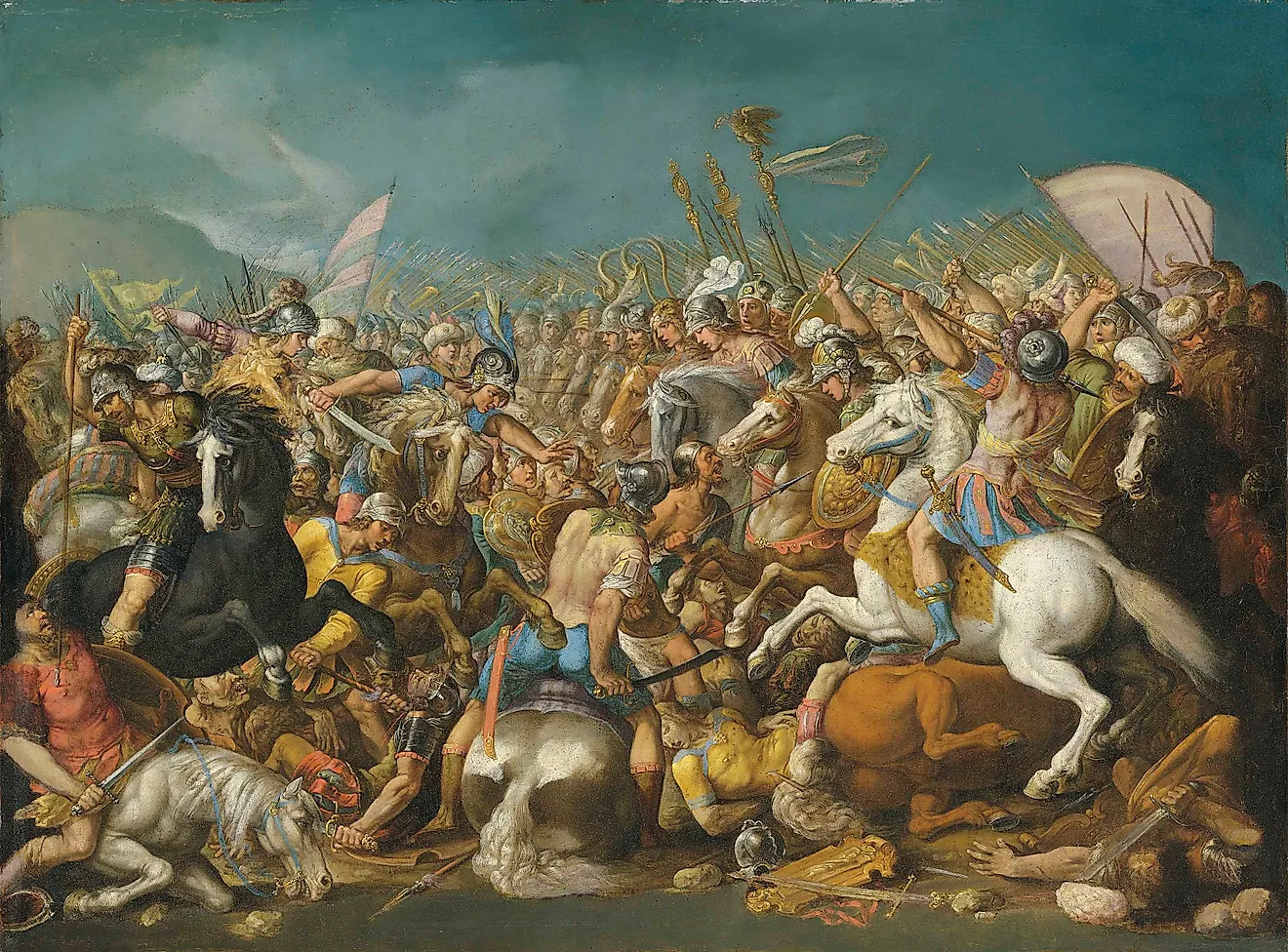
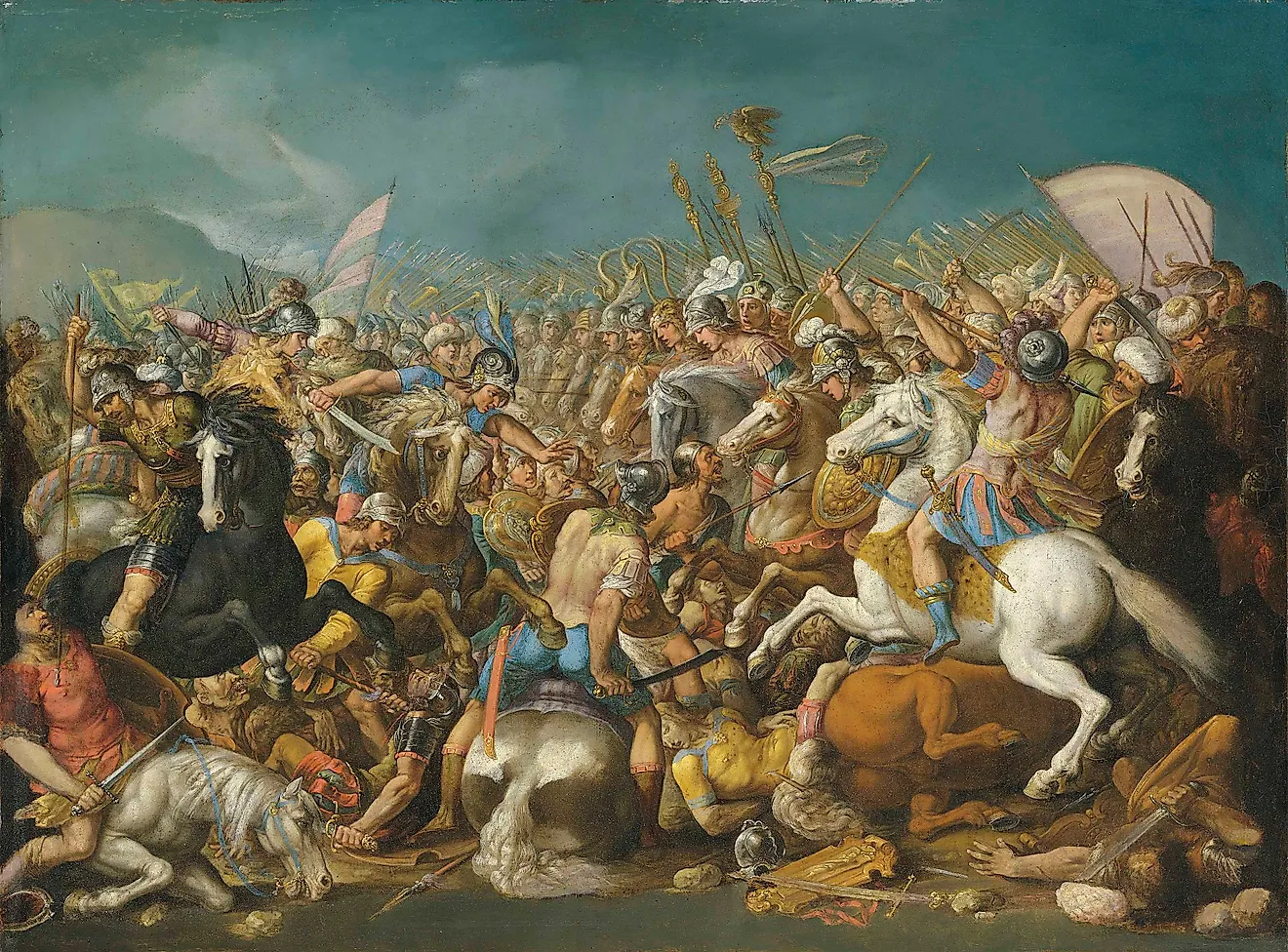
At the Battle of Telamon, the Gaesatae did something that rattled the legions. They stripped off their clothing and took the front rank wearing nothing but their gold torques and armlets. The Greek historian Polybius, writing within a century of the battle, described them as men of magnificent build whose sheer appearance was unnerving. The nakedness was part bravado, part ritual, and part practicality, leaving nothing for a blade or a bramble to catch.
It did not save them. The Gallic shield did not cover the whole body, and the Roman javelin volleys tore the exposed front ranks apart. The Gaesatae broke, and the Celtic coalition was crushed. But the image endured: for centuries afterward, the naked Celtic warrior stood as the ancient world's symbol of courage pushed to the brink of madness.
Unrivaled Craftsmen

Roman and Greek propaganda painted the Celts as backward barbarians, but their workshops told a different story. The Celtic world turned out some of the finest smiths in ancient Europe, and they are widely credited with a battlefield revolution: chainmail. Weaving thousands of tiny iron rings into a flexible shirt was brutally slow work, but the finished garment draped over its wearer and turned aside the slashing blows of swords and axes. Rome was impressed enough to copy it wholesale.
That protection came at a staggering price. A mail shirt could cost more than an ordinary man earned in a lifetime, which kept it out of reach for all but the wealthiest. In practice, the only Celts wearing mail were the nobles and the chieftain himself, the same elite who led from the front.
Heads of the Tribe

Celtic society answered to its chieftains, and beneath them sat the high-ranking nobles who held land granted by the chief, whether a village, hunting grounds, or both. That land meant wealth, and wealth meant access to the finest weapons and armor money could buy.
It was a culture built around war. Skirmishes between tribes were near constant, and the men who excelled at fighting were honored above almost all others. The fiercest warriors rose to the top of the power structure, and in battle they fought beside their chief or led bands of tribesmen into the fray.
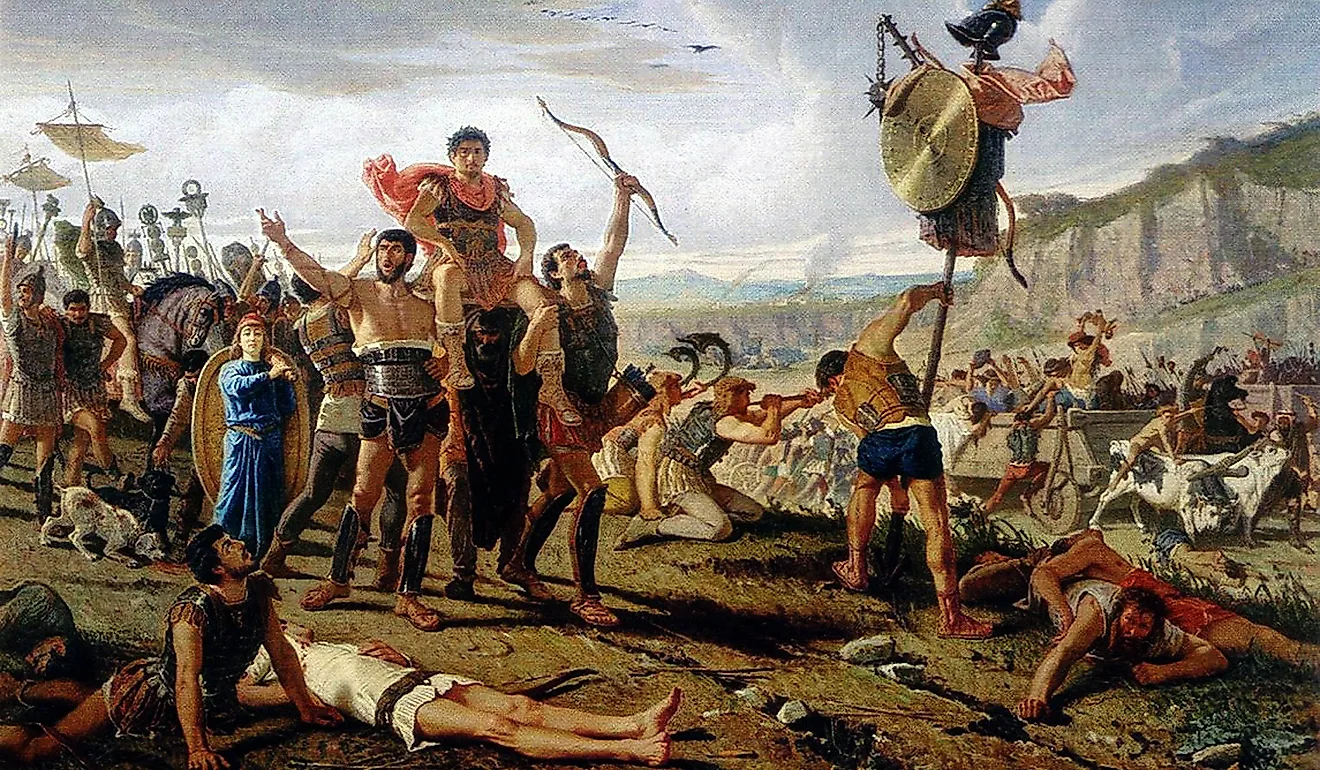
In Gaul, these heavily armored elites earned a fearsome name against the legions of Julius Caesar. Caesar and his fellow Roman historians wrote, with something close to admiration, of how stubbornly these warriors fought even when a battle was clearly lost.
Strategy and Tactics

Celtic battles often turned on single combat. Warriors prized the ability to beat a rival one-on-one, and a champion would frequently step out to challenge the other side before the main lines ever clashed. Entire disputes between tribes could be settled this way, one chosen fighter against another, sparing both sides the cost of a full battle and heaping honor on the winner.
Set against the drilled ranks of Rome and the Greek city-states, the Celts looked wild and unpredictable, and their enemies dismissed them as a mob that simply charged. That charge was real, and it was terrifying, but the caricature sold them short. In Gaul especially, commanders held troops in reserve and used cavalry and skirmishers to outflank Roman armies, fighting with far more cunning than the legions cared to admit.
A Martial Lifestyle
An elite warrior was made, not born. The sons of the warrior aristocracy began formal combat training in adolescence, though most had already been around weapons for years, tagging along on hunts with the men of the tribe. A boy learned from his father or another male relative, serving as a kind of apprentice and absorbing not just how to fight but how to lead. When his mentors judged him ready, he received his own weapons and armor and took his place among the tribe's best fighters, expected to answer the call whenever war or a feud arrived.
Summary

The Celtic way of war was largely extinguished by Julius Caesar and the Roman conquerors who followed, and by the end of the 1st century AD most of the old Celtic heartlands, Gaul and northern Italy among them, had been thoroughly Romanized. Yet the culture never disappeared entirely. It held on in the far corners, in Ireland, Scotland, Wales, and Brittany, where its languages and identities survive to this day. The hardy, no-nonsense streak the Celts were famous for still runs through the national character of the nations that descend from these ancient and storied people.