The Barbarian Successor Kingdoms of the Western Roman Empire
Founded in 27 BC, the Roman Empire emerged as one of the most powerful political entities in history. At its height, it dominated the Mediterranean world, stretching from the Iberian Peninsula in the west to Syria in the east, and from Britain in the north to Egypt in the south. Although its influence endured for centuries, the empire did not remain unified indefinitely. In 395, following the death of Emperor Theodosius I, the Roman state was permanently divided into the Western Roman Empire and the Eastern Roman Empire, the latter of which is commonly known today as the Byzantine Empire. This final division built on earlier administrative experiments, including the Tetrarchy introduced by Emperor Diocletian in 293, which temporarily split imperial authority to improve governance of the empire’s vast territories.
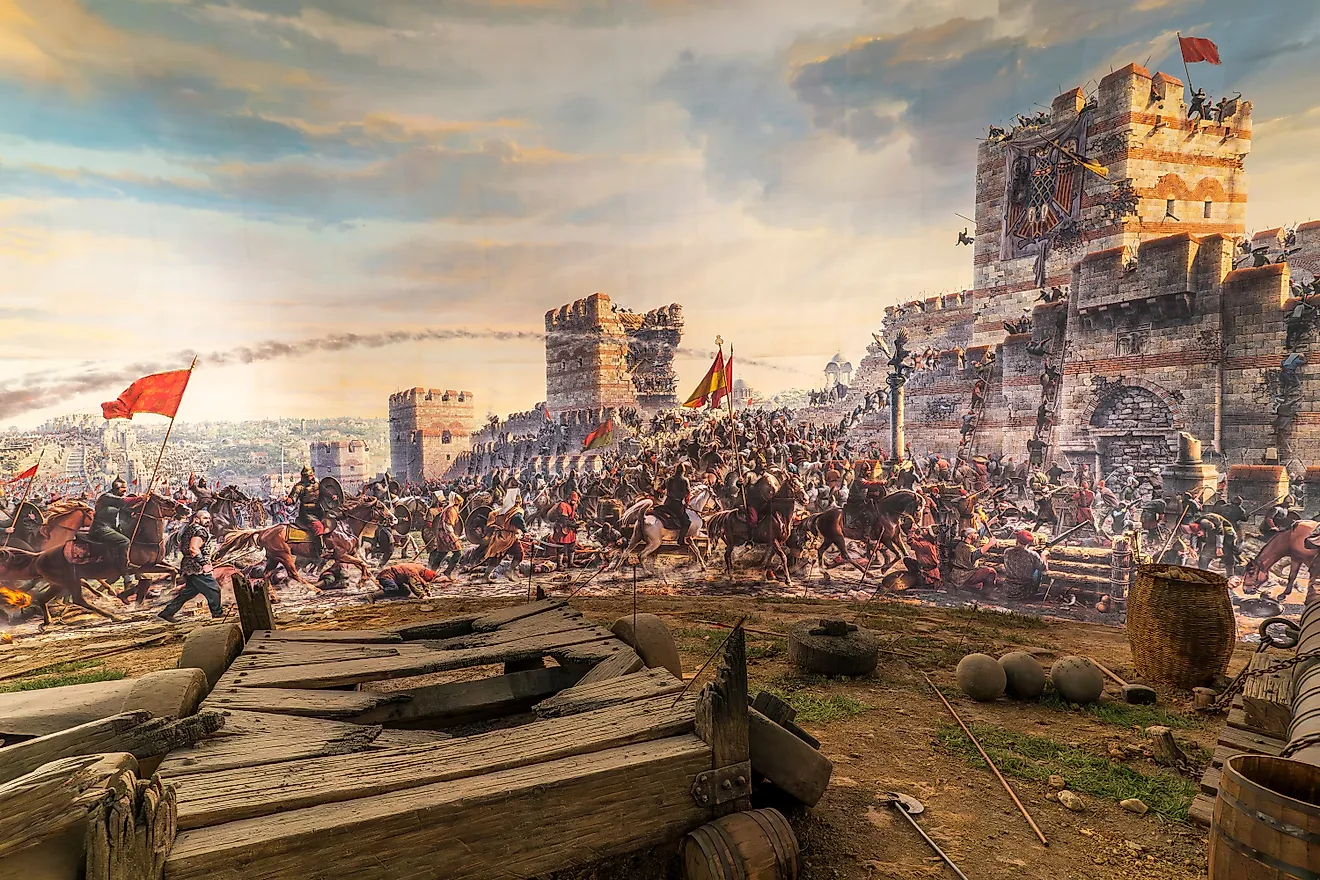
The two halves of the Roman state met very different fates. The Western Roman Empire collapsed in 476, following the deposition of its final emperor. In contrast, the Eastern Roman Empire endured for nearly a millennium longer, preserving Roman political traditions and institutions until 1453, when the Ottoman Empire captured its capital, Constantinople, bringing the last remnants of Roman rule to an end.
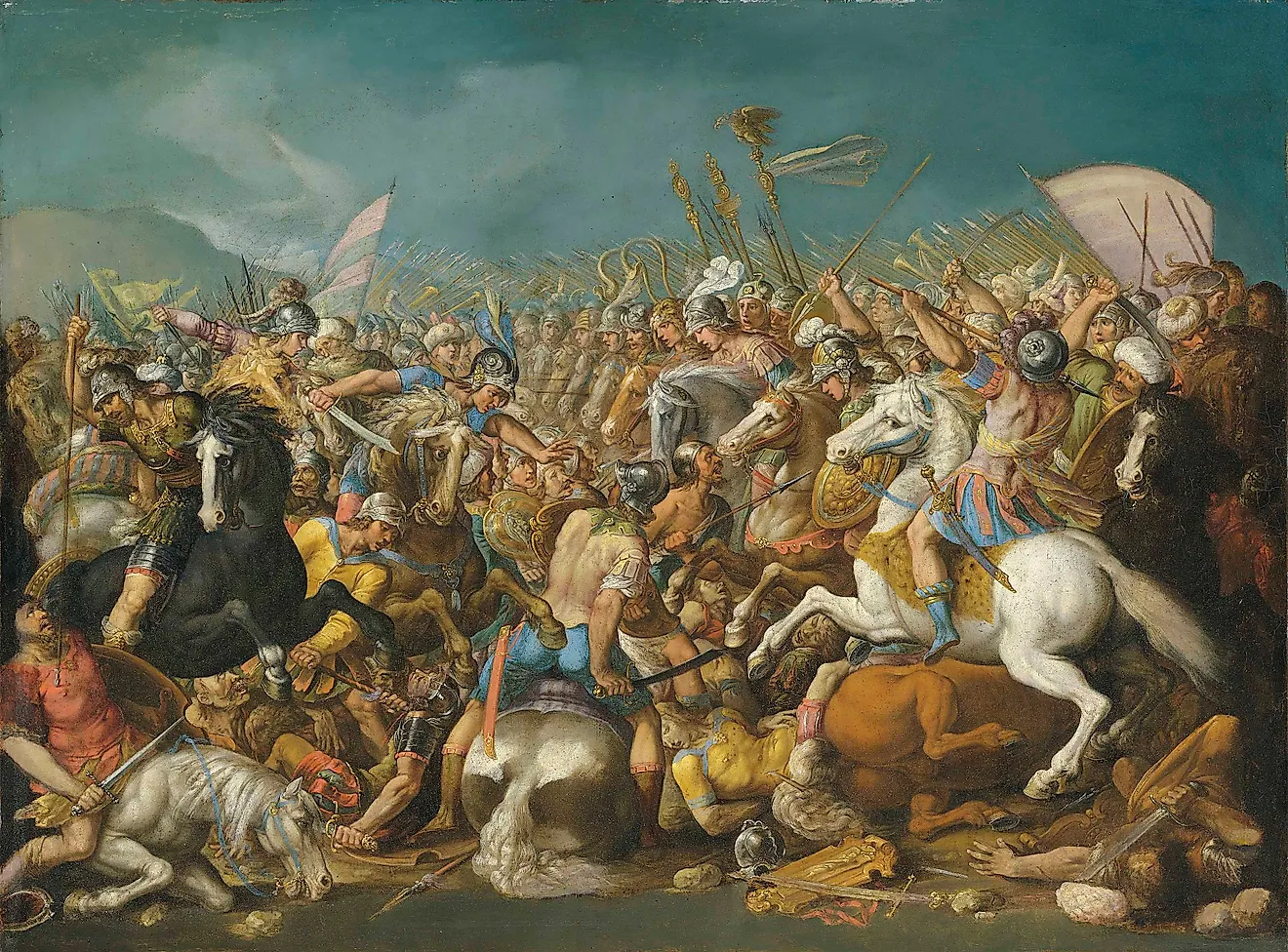
The collapse of the Western Roman Empire resulted from several overlapping pressures, but one of the most visible was the arrival and settlement of non-Roman peoples in the late fourth and fifth centuries. Labeled “barbarians” by Roman writers, groups such as the Visigoths, Vandals, and Franks moved into imperial territory and gradually established their own kingdoms. These polities, known as the Barbarian Successor Kingdoms, replaced Roman authority across much of western Europe. Despite their reputation in Roman sources, many of these rulers preserved key elements of Roman governance, including legal systems, taxation practices, and administrative customs, helping sustain Roman traditions long after imperial rule had ended.
Ostrogothic Italy: 493 to 554

Following the fall of Rome in 476, Italy came under the control of Odoacer, a Germanic military leader who deposed the last western emperor and ruled as king. Rather than claiming the imperial title himself, Odoacer sent the western imperial regalia to Constantinople, signaling that Italy now fell under the authority of the Eastern Roman emperor.
The Ostrogoths, long a presence on Rome’s borders and occasionally employed as mercenaries, soon replaced Odoacer as rulers of Italy. Their leader, Theodoric, had been raised at the Eastern Roman court and was well acquainted with Roman political traditions. After relations with the empire deteriorated, Emperor Zeno dispatched Theodoric and his followers to Italy to remove Odoacer. A prolonged conflict followed from 488 to 493, ending with Theodoric’s victory and the establishment of the Ostrogothic Kingdom of Italy.
During his reign from 493 to 526, Theodoric governed as a Roman-style monarch. He upheld existing administrative systems, practiced religious tolerance among competing Christian traditions, and incorporated Roman elites into his government. Among those at his court was Boethius, whose later work The Consolation of Philosophy would become one of the most influential texts of the early Middle Ages. Theodoric’s effective rule earned him the lasting title “the Great.”
His successors proved less capable. Beginning in the mid-6th century, Justinian I launched a determined campaign to restore imperial rule in the west. The resulting Gothic War, fought from 535 to 554, ended with an Eastern Roman victory but left Italy deeply scarred by decades of warfare. The Ostrogothic Kingdom was destroyed, and although Roman authority was restored, Italy never fully recovered from the devastation.
Vandal Africa: 435-534

It is from the Vandals that we get the name vandalism or wanton destruction of property. This Germanic group began migrating west from Central Europe due in large part from attacks by the Huns. They made their way across Western Europe, eventually reaching modern day Spain.
In 429, under the leadership of Genseric, the Vandals crossed over into North Africa. They came at an ideal time as the Western Roman Empire was in the middle of one its many internal conflicts, involving the Governor of Africa Bonifatius.
By 439, the Vandals had taken over much of modern day Morocco, Algeria and Tunisia. The group gained a bad reputation among Catholic Christians due to persecution. The Vandals were Arian Christians, which disagreed about the nature of Jesus.
In 455, Genseric's son Huneric was engaged to a Roman Princess Eudocia, but the Romans backed out of the deal. In response, he invaded and sacked Rome. One source suggests that the Vandals were allowed to steal the wealth of the city but they avoided killing civilians due to a deal with Pope Leo I.
The Vandal Kingdom continued to exist until 534 when Justinian I sent out Belisarius to conquer the region as part of a campaign to reconquer the lost territories of the Western Roman Empire.
Visigoth Spain 418 to 720

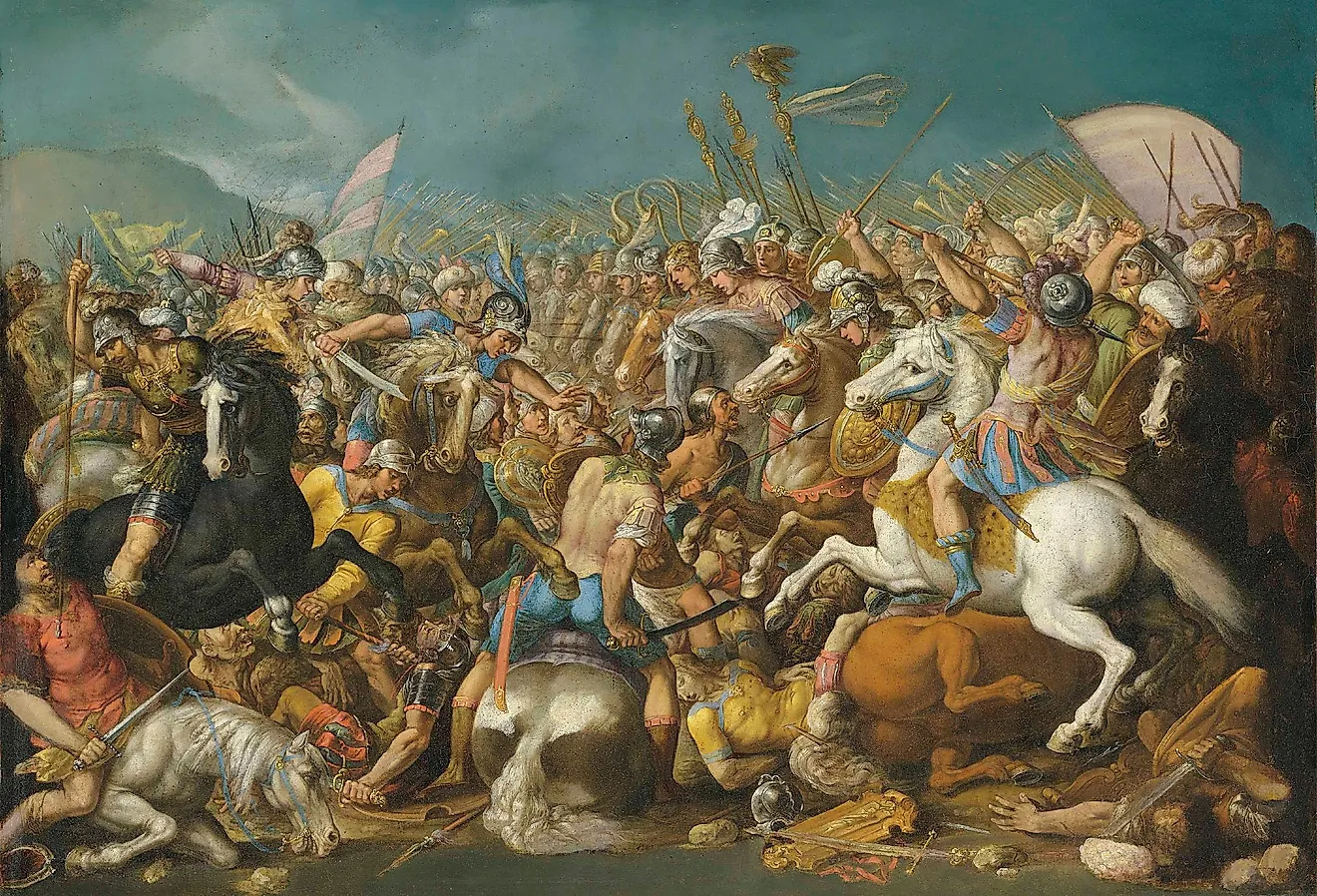
The Visigoths were the western tribe of the larger Goth group, while the Ostrogoths were the eastern tribe. They began to cross the Danube in the 370s into the Eastern Roman Empire. After mistreatment by the local Roman officials, the Goths would rebel against the Romans and dealt them a stern defeat at the Battle of Adrianople.
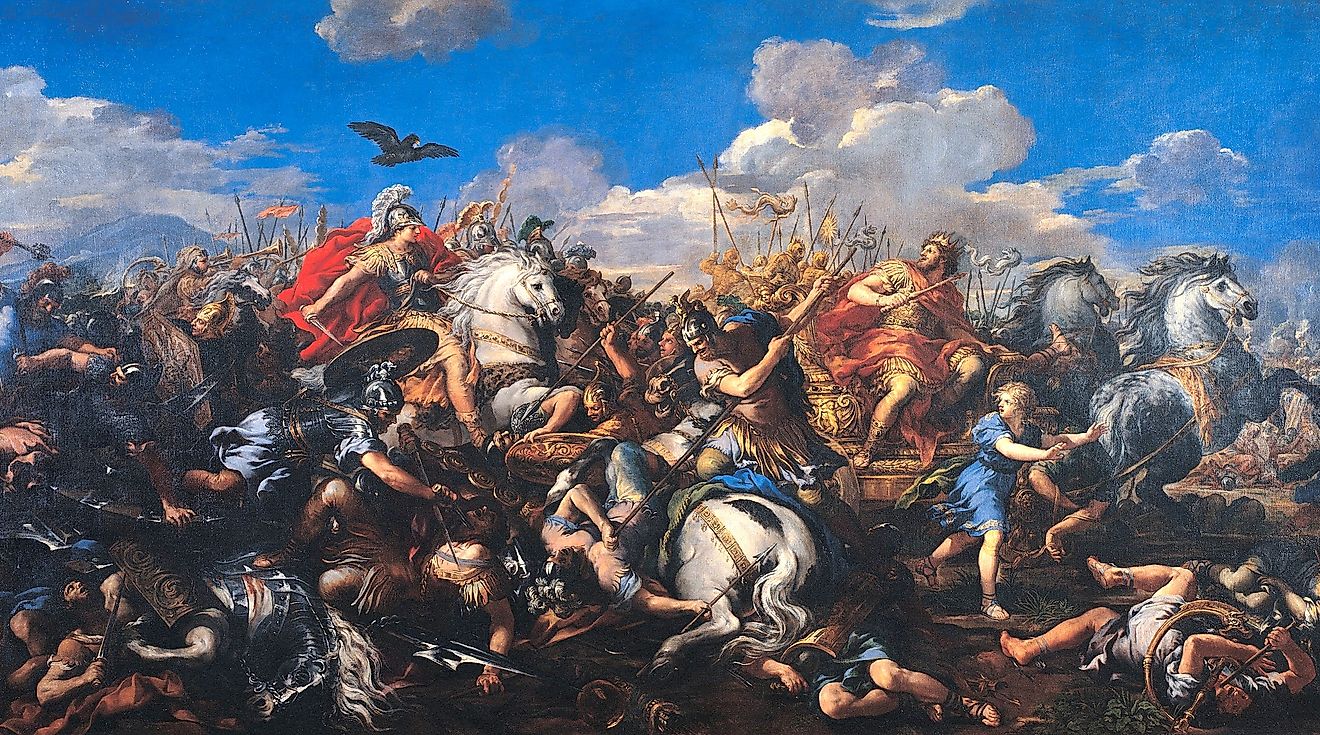
Following this attack, the Western Romans would curry favor with the Visigoths, using them as mercenaries under their leader Alaric I. However, after a variety of failed deals with the Romans, Alaric invaded Italy in 410 and for the first time in the Empire's history, Rome itself was sacked.
In 418, the Western Emperor Theodoric gave King Wallia land in then Southern France. As the decades went on, through both deals with the Romans and invasion, the Visigoths slowly absorbed the Iberian peninsula completing the conquest in 472.
Although the Visigoths were Arian Christians like the Ostrogoths and Vandals, in 589, King Reccard I converted to Chalcedonian Christianity(Catholicism). The kingdom had its own legal code and largely adopted Latin as a language.
However, in 711, Tariq ibn-Ziyad, the governor of Islamic Africa under the Umayyad Caliphate invaded Spain and crushed the Visigothic forces, which established Al-Andalus. Despite this conquest, a small portion of Northern Spain would persist under Christian rule and would eventually reconquer the Iberian Peninsula as part of the Reconquista.
Anglo-Saxons: 410 to 1066

It is difficult to determine a precise date for the Anglo-Saxons rise to power in England, due in part to the sparse documentation from the period.
Unlike other regions, Rome itself had largely abandoned Britain in 410 due to troops leaving to confront a mixed group of barbarians crossing the Rhine.
Anglo-Saxons had lived in Britain as mercenaries but they began to arrive in greater numbers from modern day Denmark, Belgium, and the Netherlands in the 400s and 500s. The Romano-British did fight against the Anglo-Saxons. One account by a monk named Gildas states that a man named Ambrosius led a brave defense. Some have suggested this man was the inspiration for King Arthur of legend.
By 650, the Anglo-Saxons had established several independent kingdoms in Britain: Northumbria, Mercia, Wessex, Sussex, Kent, Essex, and East Anglia.

The Anglo-Saxons made a variety of cultural contributions such as the beautiful Lindisfarne Gospels, made by the monastery in Lindsifarne, and the story of Beowulf.
The Anglo-Saxons would bear the brunt of multiple Viking incursions, beginning with the sacking of Lindisfarne in 798 and continuing through the 11th century. In the mid 800s, a Norse confederation called the Great Heathen Army conquered all of England save for Wessex under the rule of King Alfred, who would defend his kingdom and throw back much of the Viking invaders, eventually dividing England between him and the Danelaw.
His grandson Athelstan would conquer all of Danelaw in 927 becoming the first King of England. The Anglo-Saxons troubles were far from done, as they would be conquered by the Danes in 1013 by Canute the Great, whose descendants ruled England until 1042, when Edward the Confessor took the throne.
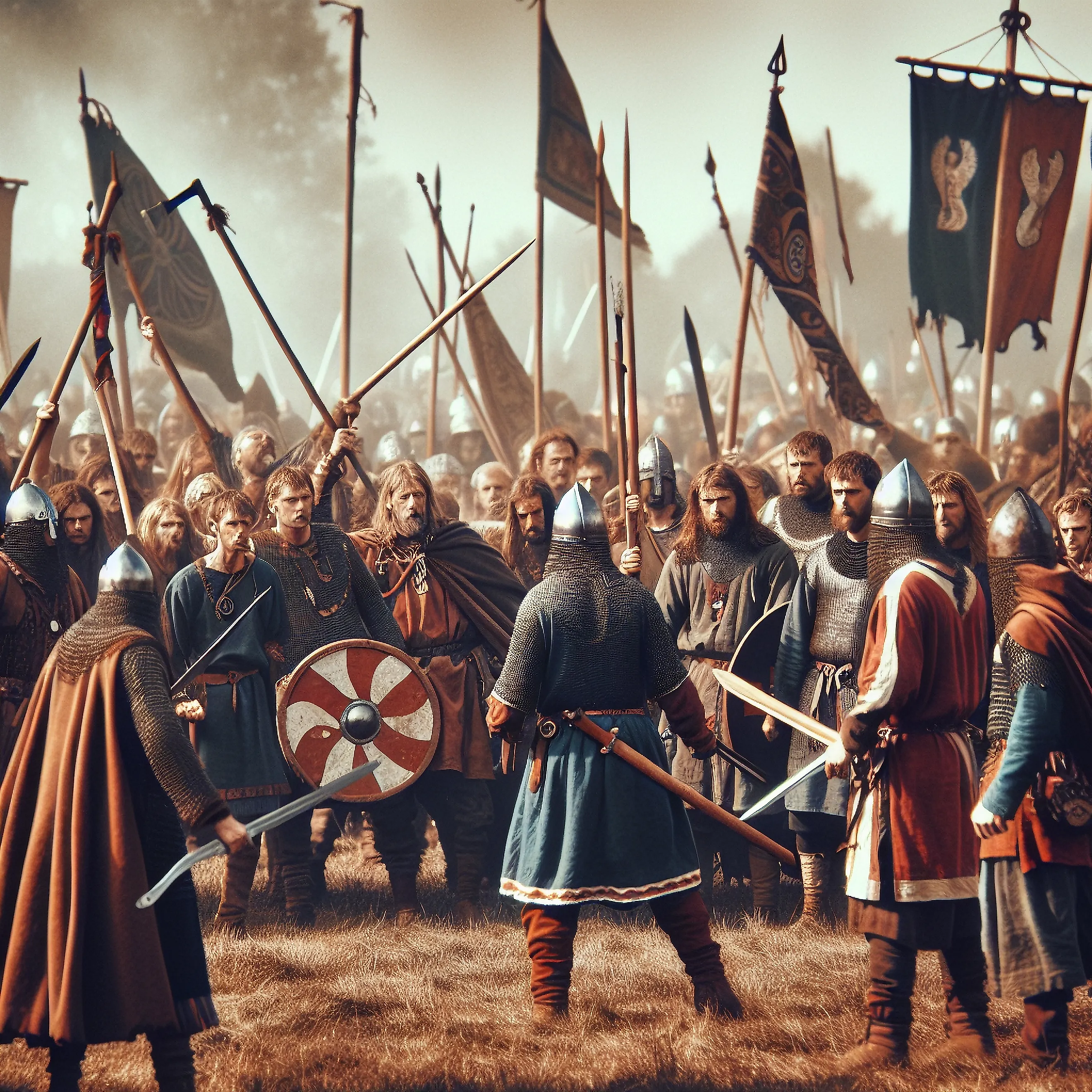
With the death of Edward the Confessor, the throne of England was contested by Harold Godwinson, a Saxon noble, Harald Hardrada, King of Norway and William, Duke of Normandy. At the battle of Hastings in 1066, William defeated Harald Godwinson, putting an end to nearly 4 centuries of Anglo-Saxon rule.
Kingdom of the Franks: 509 to 888

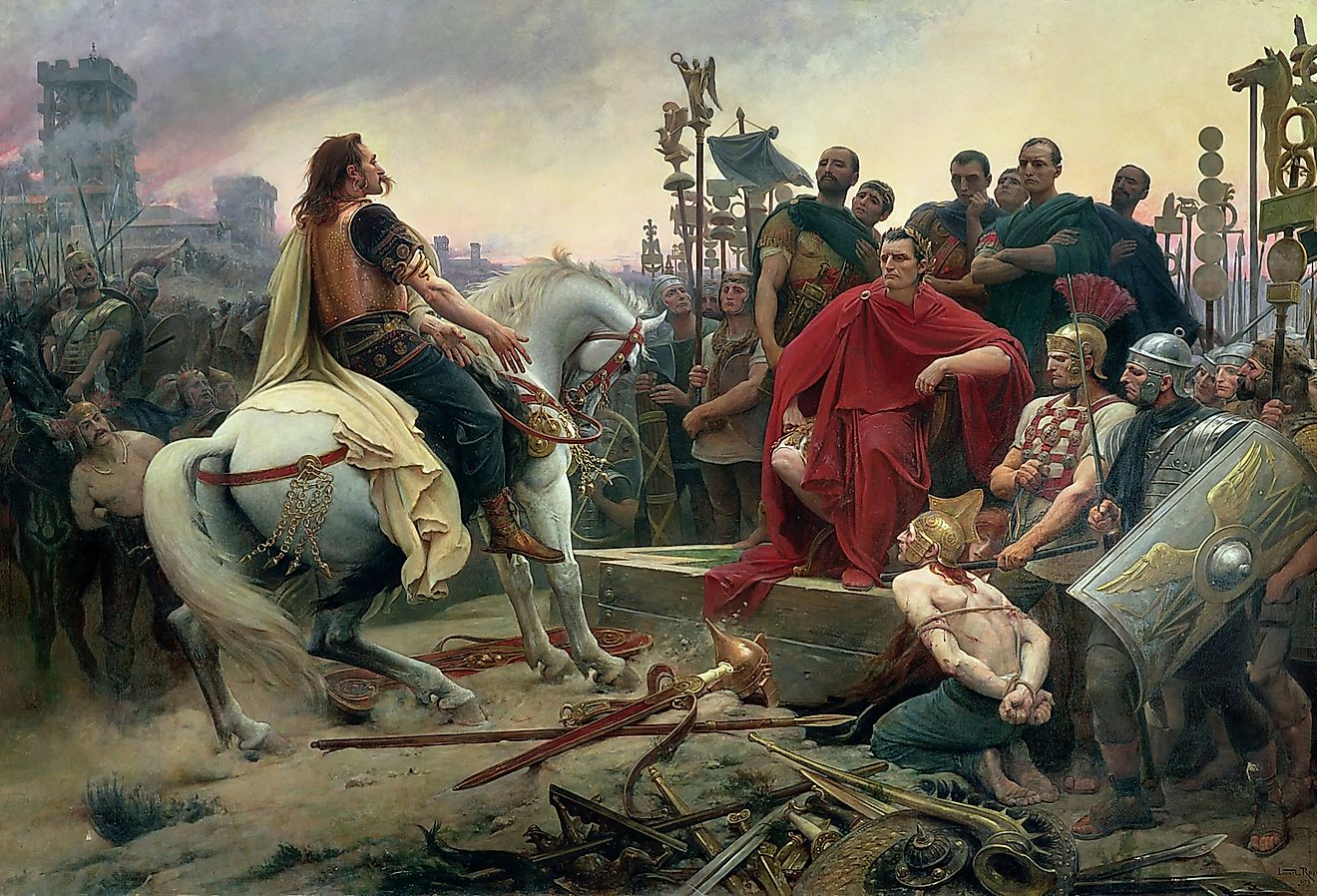
The Franks were a Germanic group that would initially serve as foederatis(allied mercenaries) for the Romans in the late 5th century. They would settle closeby to the Rhine River for some time until 486 when the Frankish King Clovis went to war against a rump state of the Western Roman Empire in then Northern France and conquered it.
Clovis would continue expanding into the area as well as converting to Chalcedonian Christianity by baptism on Christmas 508. This baptism would set the tone for the Franks as a major force for Christianity.
Due to Frankish succession laws, the kingdom would often end up split up between various sons, which were part of the Merovingian dynasty, named after a legendary figure called Merovech.
In the 700s, a rival group to the throne called the Carolingians emerged led by Charles Martel, who in 732 would defeat an attack by the Umayyad Caliphate at the Battle of Tours.
Over time, the Carolingians would gain complete control of the kingdom under Pepin the Short. His son Charlemagne would rise to become the greatest ruler in Frankish history, expanding the kingdom in all directions including Spain, Germany and Italy. In 800, Pope Leo III would crown Charlemagne as Emperor of the Western Roman Empire.
His reign would lead the Carolingian Renaissance, which transformed the region with legal reforms, educational reforms, and writing. Charlemagne was a particular renowned patron of schools for clergy and nobility.
In 840, the realm was split into three: West Francia, Middle Francia: and East Francia. The middle region would be conquered quickly but West Francia eventually became the Kingdom of France with East Francia developing into the Holy Roman Empire, centered in modern day Germany and other countries.
Summary
It's tempting to view the collapse of the Western Roman Empire as a major setback for civilization as a whole as Rome was replaced by barbarians. However, as with much of history, who you consider to be civilized vs. barbaric depends on your point of view.
By looking closely as these successor kingdoms, you can see that they preserved Roman laws, religion, and in many cases the legacy of Rome. They also left us great works of literature such as Beowulf, recreations of the Bible and more.
These successor kingdoms represent a transitory period in European history, where the military might of the Western Roman Empire disappeared but its cultural legacy continued, with some, such as Charlemagne attempting to revive it.
It was said Rome wasn't built in a day, but it also wasn't torn down in a day. We can still feel echoes of the old empire in our world today, if we know where to look.