7 Strange Discoveries About the Lost City of Pompeii
A whole city perfectly preserved in volcanic ash: it’s no wonder that the city of Pompeii has fascinated scholars, travelers, and curious history buffs alike for centuries. But even with all that publicity, Pompeii has much to reveal — and some of the things archaeologists have uncovered in the eerily pristine ruins of the world’s most famous buried city are difficult to believe. These seven surprising discoveries go to show that Pompeii hasn’t given up all of its strangest secrets just yet.
1. A jet-black party room covered in Trojan War murals that look freshly painted

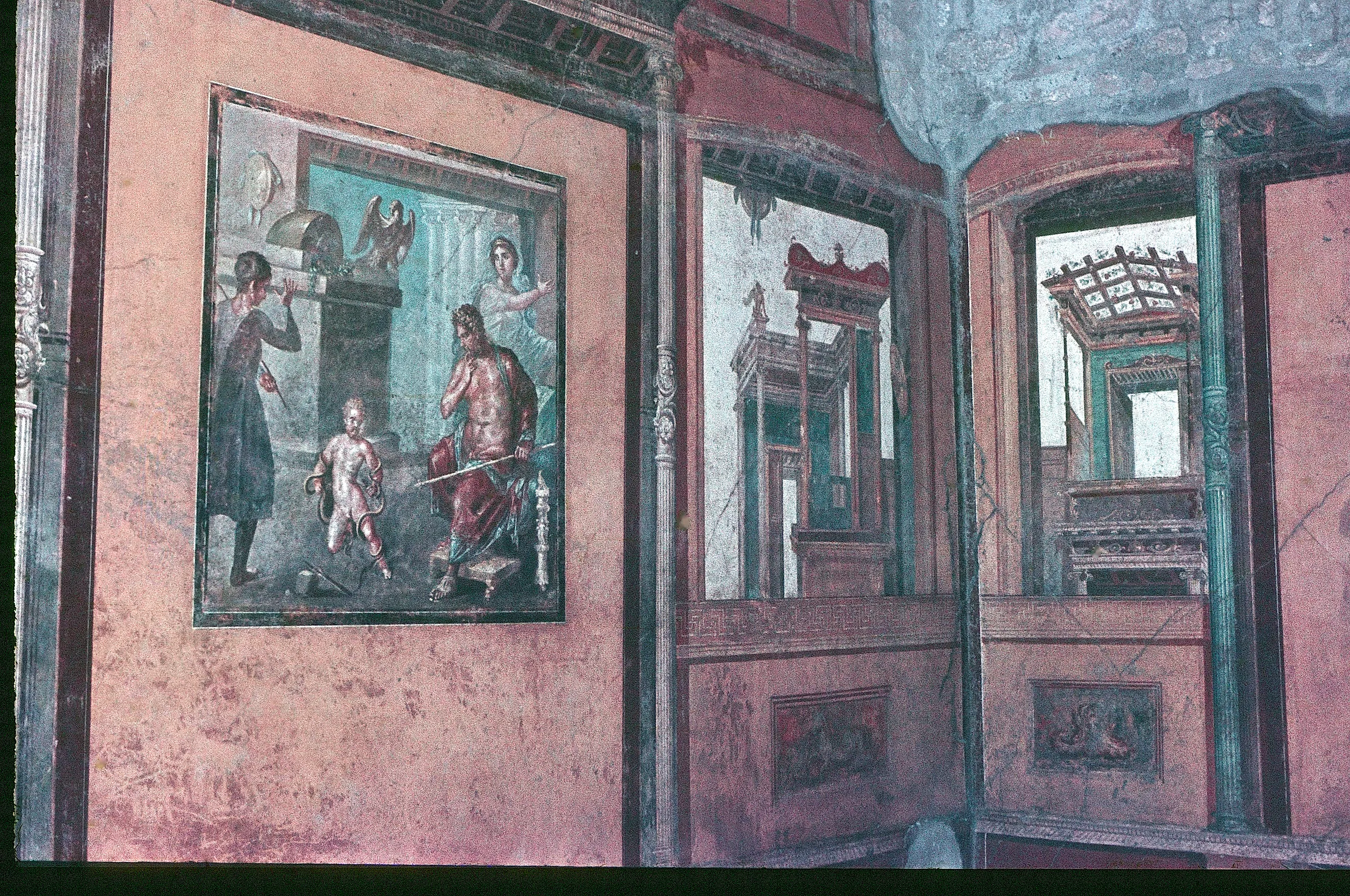
The Trojan War has played an outsized role in Western popular culture for millennia, so it’s no surprise that the Pompeiians were as fascinated by its heroes, villains, triumphs, and tragedies as we are; and this is more concretely suggested by a recently-discovered banquet hall adorned with frescoes depicting scenes from the Trojan War in a Pompeiian villa.

The dining room was painted black, likely so stains from oil lamps wouldn’t show on the walls, and featured a spectacular mosaic floor. On the walls, frescoes of famous Trojan War figures and events would have entertained guests. And thanks to the villa’s two-thousand-year slumber under a blanket of volcanic ash, many of these frescos are remarkably vivid and well-preserved, no mean feat for a painting style that notoriously decays quickly.
2. A human brain turned to glass by the volcano’s heat

One very recent find that has scholars buzzing across disciplines: the heat produced by the eruption of Mt. Vesuvius was so intense that it turned part of a man’s brain to glass. In Pompeii’s lesser-known but equally annihilated sister city of Herculaneum, a young man was lounging in bed when disaster struck, and when he was found centuries later by scientists, they were puzzled to find fragments of what looked like glass in his brain.
It took decades to realize what had really happened to him: the ash cloud produced by the eruption heated and cooled parts of his brain and spine so rapidly that they turned to glass. Because extremely specific circumstances are needed to heat and cool tissue so rapidly without its being totally destroyed, this is the first-ever verifiable instance of soft body tissue being turned to glass.
3. A giraffe bone in a drain, indicating exotic diets

Giraffes weren’t exactly an everyday sight in first-century Italy, so it baffled archaeologists when a giraffe’s butchered leg bone was found in the drain of a Pompeiian restaurant. Though evidence of a wide-ranging trade in exotic delicacies has been found in Pompeii, the giraffe bone is notable for being the only known giraffe bone to be unearthed at a Roman-era site in Italy. It’s a bizarre find that implies a cosmopolitan, prosperous Pompeii whose citizenry had a taste for the exotic.
4. Street design showing evidence of thoroughly modern traffic jams

Pompeii was a happening place. Foot, cart, and animal traffic was hectic, and the city needed to control the flow of traffic to keep things up and running. How do we know this? Because Pompeii’s streets show evidence of design strategies that are surprisingly similar to the ones in use today.

Thanks to the patterns of ruts that carts carved into the roads over time, we can roughly tell which direction they tended to be heading. Those patterns largely indicate a sophisticated system of one-way traffic flows that closely resemble the rules of the modern road. This would have kept Pompeii’s traffic under control in a bustling city that saw constant activity in its streets.
5. Empty shells around bodies preserved exactly as they died

Volcanic heat is so intense that it tends to kill on the spot. That was the sad story of many of Pompeii’s victims, who were so suddenly struck by the heat of the erupting volcano’s pyroclastic flow that they died on the spot and were then covered in calcified ash. This ash retained the shapes of the victims even after all of the bodily tissues had decayed, and the “casts” provide some of the most vivid and haunting images of the disaster that archaeology has uncovered so far.
6. First-century fast food stands where locals took their lunch breaks

Apparently, workers have sought out places to have a quick bite in the middle of their workday since time immemorial — at least, that’s what evidence found in Pompeii suggests. Food-service counters called thermopolium that served hot food and drinks to paying customers, often in the middle of their workdays, have been found all over Pompeii and are the city’s answer to modern-day fast food. Your midday Taco Bell run might not be quite so distant from the habits of ancient Pompeii’s everyday citizens as you think!
7. Evidence that the traditional date of Pompeii’s destruction was wrong all along

Based on the writings of Roman historian Pliny the Elder, scholars have traditionally set the date of the eruption that destroyed Pompeii as August 24th, 79 A.D. But archaeological finds are starting to call that date into question. Multiple kinds of evidence, from the warmer clothes that residents were wearing when they died to the presence of autumn crops like pomegranates, wine, and chestnuts in the city’s markets, indicate that a summer eruption was unlikely. Archaeologists now believe it’s more plausible that the volcano erupted in October or November of the same year.
Both Fantastical and Familiar
The ruins of Pompeii are a world away in era, culture, and setting from anything that we’re accustomed to, and in some ways, it shows. Try a brain turned to glass or giraffe on the dinner menu on for size. But it’s also strikingly familiar in some ways that you wouldn’t expect, and that’s what makes it all the more fascinating. When we learn about the ways Pompeiians weren’t as unlike ourselves as we might think, the tragedy of their destruction is all the more human.