6 Weird Discoveries About the Vikings
Few civilizations have captured our collective imaginations like the Vikings. The name alone conjures up images of horned helmets, longships, and terror for all whose paths the people of Medieval Scandinavia crossed. Much of what we imagine about the Vikings, though, isn’t really supported by archaeological evidence or historical records.
So what were these fierce northern raiders actually like? We can’t entirely know what the Vikings, who didn’t make many written records of their lives and adventures, were really like. But these six little-known archaeological discoveries shed light on aspects of the Vikings’ life, culture, and customs that you probably never knew about.
1. A group of Viking men who filed grooves into their front teeth

Archaeologists have long noticed something strange in the Viking-age remains of adult men in the Nordic countries: typically horizontal grooves in the front teeth. There are variations in these marks, but they all have one thing in common: they are almost certainly manmade. Since the first such discovery in 2005, the phenomenon has been well-studied, and archaeologists have puzzled much over the reasons the Vikings might have filed their teeth this way.
Based on studies of the remains these skulls came from, there’s no reason to think these were warriors trying to look intimidating in battle, elites trying to denote their status, or slaves whose masters used the markings as a mark of ownership. It’s more likely that the custom was rooted in geography, not occupation or status: most skulls were found on a single island in the Baltic Sea, and it’s thought that it might have been a regional custom that spread when residents of that island migrated elsewhere. Even so, we have yet to figure out for sure just what the grooves meant.
2. Women buried with swords and shields who might have been real Viking fighters, not just legend

There are plenty of lady warriors in Viking films and television shows, so it probably won’t seem too surprising that there’s a chance those images might have had some truth to them. But for much of the history of Viking archaeology, there wasn’t a significant amount of evidence to back them up. That’s begun to change with recent discoveries of women buried with weapons and shields in the same fashion as their male warrior counterparts.
In 2017, archaeologists conducted DNA tests on the remains of a Viking warrior buried in an opulent grave full of weapons uncovered in 1878. When they did, they proved a hypothesis that had been floating around since the 1970s: the warrior was a woman. Although this discovery remains largely singular, it shook up the predominant archaeological image of Viking raids as a male-only pursuit. Time will tell whether future discoveries show this female raider to be the exception or the norm.
3. Meticulous cleanliness and hygiene practices that defy stereotypes

Modern media tends to treat the Vikings as bloodthirsty barbarians who couldn’t possibly have had time to bathe. Not so: actually, one of the most prominent and surprising archaeological discoveries about the Vikings is the abundance of personal care items discovered in their possession. Many excavations have turned up tweezers, razors, and combs, and records indicate that the Vikings bathed once a week, much more frequently than other Europeans of their era. Their well-kept appearances even allegedly made Viking men attractive to women of other cultures in the region.
4. Horned helmets were probably never a real Viking fashion statement

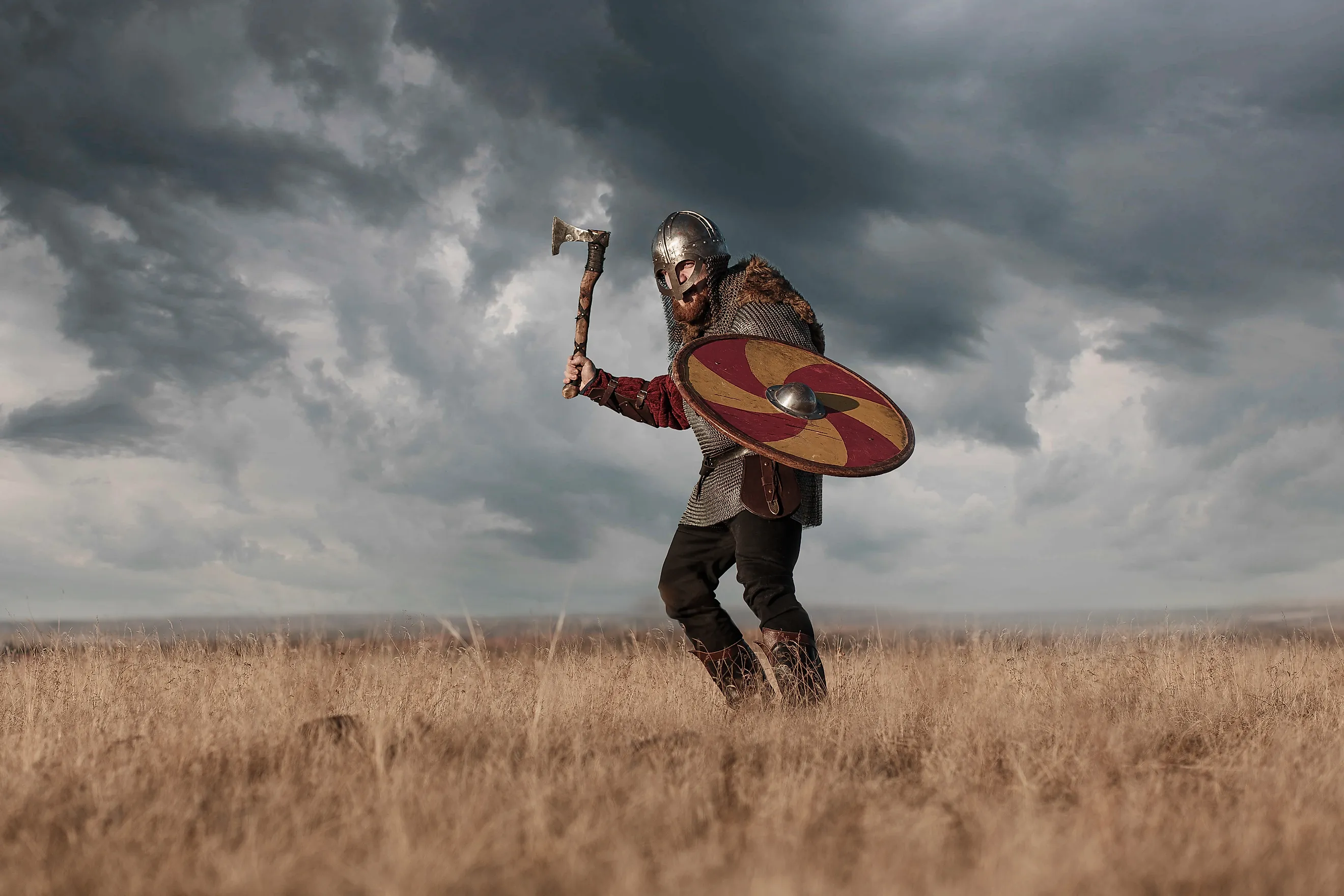
No image of the Vikings is more iconic than the horned helmet - and we have no evidence at all that the Vikings ever wore them. No horned battle helmet has ever been found, and while there may have been helmets worn for ceremonial purposes that looked more like the ones we imagine, archaeologists have yet to dig one up. Some posit that 19th-century artists invented the look, inspired by Greek and Roman depictions of earlier European cultures that really did wear horned helmets.
5. An extremely active slave trade

The Vikings are pretty well-known for their brutality in battle, but what many don’t know is that said brutality extended to their business dealings, too. Raids would often lead to the capture of local people, who were then sold at slave markets, and many Viking slave traders became enormously wealthy in the trade of captives.
And there’s plenty of external support for the centrality of the slave trade to Viking raiding practices. Written sources from many of the areas the Vikings sacked often report prisoners taken as slaves, and population studies have shown that huge numbers of women in Viking societies were genetically tied to the British Isles. Many historians believe that this pattern, which doesn’t hold for Viking men, indicates a preference for female slaves, but archaeological evidence has not yet determined why this might have been so.
6. Skiing before it was cool

Skiing as a sport and hobby originated in the mid-1800s in Norway, but that wasn’t the Nordic world’s first brush with the act of shredding powder. Not even close, actually: the earliest skis in the region date back at least 6,000 years and are some of the earliest in the world. So it’s no surprise that the Vikings adopted them around the 9th century AD as an efficient way to get around. The Viking pantheon even included a god called Ullr, who was associated with winter and thus typically depicted on skis.
Defying Expectations
The Vikings weren’t any less larger-than-life in reality than they are in the movies. But they weren’t quite the bloodthirsty helmet-sporting marauders we know them to be, either. As in any historical case, there’s much more nuance to the history and culture of this most memorable of seafaring societies than meets the eye. And with so much we still don’t know, who’s to say how future discoveries will continue to redefine our understanding of the Vikings? Only time will tell.