10 Small Towns in Texas with the Best Downtowns
A two-story mural of nearly 200 fish species covers the front of the 1899 Champion Building in Port Isabel, a block from a lighthouse that has stood since 1852. In Fredericksburg, the national historic district bars chain stores, so the storefronts along the Magic Mile remain locally owned. Granbury set its limestone square on high ground above a reservoir, a few blocks from the marina, and in Bandera, riders still tie up outside the Main Street saloons. The 10 Texas towns below have the state's most distinctive downtowns in 2026, each one compact enough to cover on foot in a single afternoon.
Port Isabel

Situated in the Rio Grande Valley on the Laguna Madre, the hub of this seaside community stands out for its unique culture and aesthetics. With a population of around 5,000 people, Port Isabel strikes a balance between the active maritime commerce economy and its historic fishing-village roots. Before it was a port, the area was said to be a notorious haven for pirates. Much of this history can be learned at the Treasures of the Gulf Museum, which is centered in a tight, highly walkable 3-block historic district right by the waterfront.
Another town landmark that sits directly adjacent to the aforementioned treasure museum is the 1899 Champion Building, a visually distinct building with a 1906 mural depicting over 200 painted fish species along its brick façade. What originally served as a general goods store and private residence for the family of a famous local pioneer merchant, Charles Champion, now serves as the locality's official Port Isabel Historical Museum. Both of these cultural institutions are located a short block away from one of the town's main attractions, the 1852 Port Isabel Lighthouse and Keeper's Cottage, showcasing the original stone tower and a replica cottage made to function as a visitor's center.
Fort Davis

Fort Davis was founded around a military post established in the mid-19th century. The wide streets, designed to accommodate cavalry units and massive freight wagons, serve as a direct artifact of the military logistics behind its origin. Many of the vintage commercial buildings constructed from locally quarried pink granite and volcanic stone are still visible in the area today.
With about 1,000 inhabitants, most people who visit Fort Davis do so to explore the town's heritage, the first stop often being the Fort Davis National Historic Site, situated at the northern end of the commercial district. It preserves several key structures from the 1800s, including officers' quarters and military barracks equipped with a hospital, kitchen, authentic 1880s furniture/equipment, and decor to simulate active military living. A mile away, there's the Jeff Davis County Courthouse, which has the distinction of being the highest-elevated courthouse in the entire state of Texas and sits at an altitude close to 5,000 feet. A short walk from the square, the Old Overland Trail Museum occupies a late-1800s house and holds artifacts from the decades when stagecoach traffic, mail contracts, and freight wagons moved past the fort on the San Antonio road.
Fredericksburg

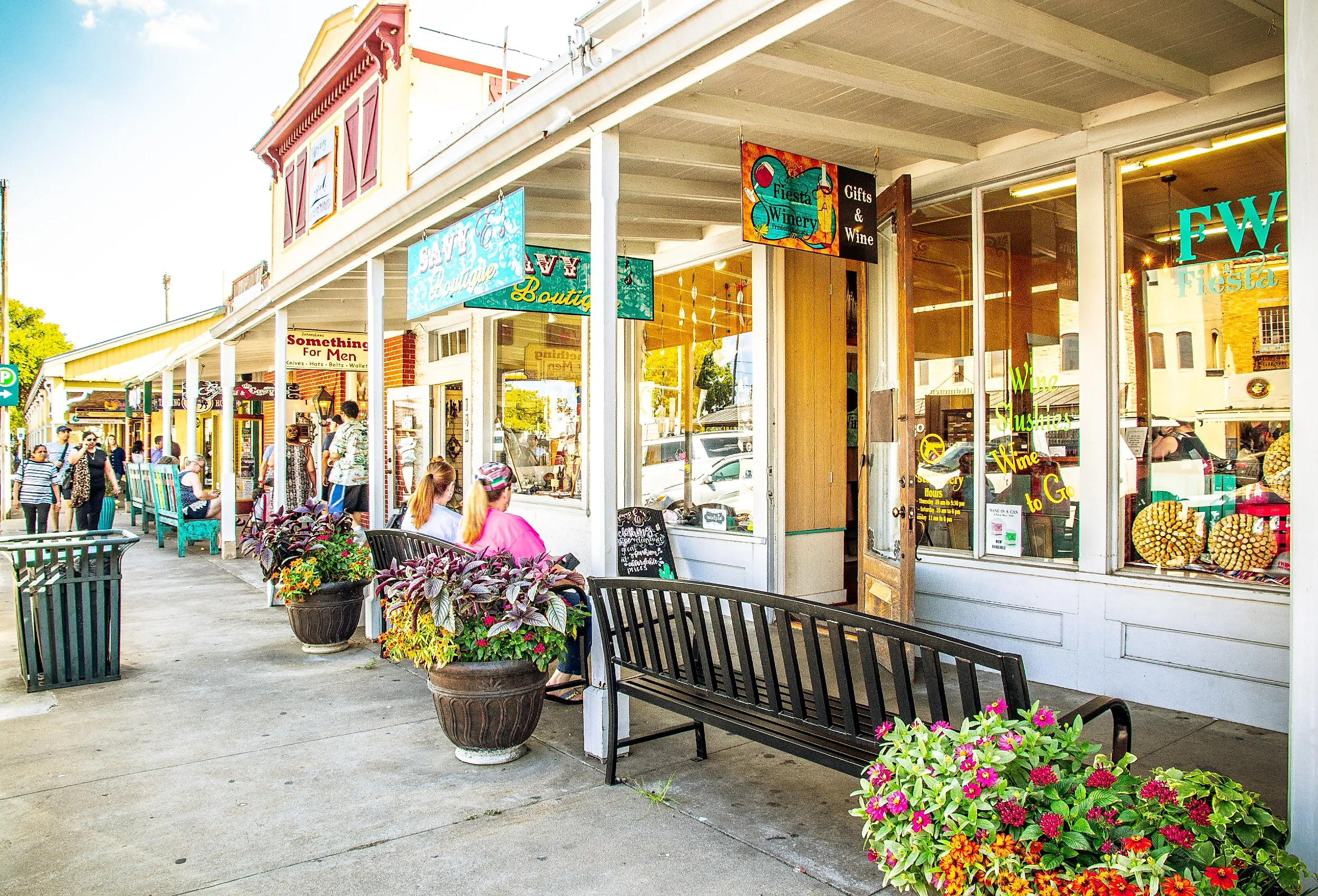
What makes this area stand out among others in Texas is the obvious, strong European influence evident in the architecture. The limestone masonry and timber-framing techniques used in its buildings make the European heritage of this town undeniable. Fredericksburg was established by immigrants from Germany during the mid-19th century, and plenty of planning went into the downtown area, which the approximately 12,000 inhabitants enjoy to this day. For example, rather than the traditional courthouse square associated with American-style town centers, surveyor Hermann Wilke laid out a plan centered on a wide and lengthy central thoroughfare known today as Main Street, with its core shopping stretch called "The Magic Mile". The structure mimics the community layout of the Rhineland villages of Germany, and the street has functioned as the core of the neighborhood and its primary market for centuries.
Beyond that, the primary tourist draw for the entire Texas Hill Country region is the thriving wine culture. Some key tasting spots sit right on the Magic Mile, including the Cuvée Wine & Piano Bar, housed in one of the street's 19th-century buildings. Within the same area, there is also the National Museum of the Pacific War. Its exhibits paint a holistic, comprehensive narrative of a unique period during World War II. Within the grounds, the restored Nimitz Hotel, built in the 1850s and known locally as the "Steamboat Hotel" for the steamboat-shaped facade added in the 1870s, now houses the museum's Admiral Nimitz Gallery, so visitors enter through the same doorway that once welcomed stagecoach travelers.
Jefferson

This town feels more like a 19th-century Texas river town than a modern community. The port that built it depended on "the Great Raft", a logjam more than a hundred miles long on the Red River downstream in Louisiana and Arkansas. The raft acted as a natural dam, backing water up into Big Cypress Bayou deeply enough for steamboats to carry goods between Jefferson and New Orleans. Federal engineers finished clearing it in 1873, which drained the bayou and ended the water-based economy, but the town's grid was already angled toward the landings, and its aesthetics had absorbed the Louisiana style that came upriver with the trade. Jefferson's Greek Revival architecture is the most outward sign of it.
One of the most notable attractions is the Jefferson Historical Museum, which is located in a Federal Building/Post Office built in 1888. This museum houses crucial collections, artifacts, and lore about the aforementioned economic downturn and other major cornerstones of the town's history. The city center is also home to The Grove, an active historical landmark from 1861 with tours focusing on the home's history and the lifestyle of its tenants, whose major claim to fame is its reputation for being haunted, albeit well-preserved. The town even houses one of the few operational Carnegie libraries in Texas, built in 1907 and funded by Andrew Carnegie, who famously funded library construction across the United States during the early 20th century.
Granbury

Although traditional in its classic Texas courthouse-square layout, what stands out about this downtown is also a major attraction: Lake Granbury. This artificial reservoir dates to 1969, when the De Cordova Bend Dam impounded the Brazos River southeast of town for water supply and recreation. The lake is not located in the urban center per se; rather, the downtown was built on high ground overlooking the reservoir. The Historic Granbury Square is situated just a few blocks from the waterfront, making it easy to walk out of the downtown shops and over to the lakeside parks and marina.
The downtown itself is defined by two-story stone storefronts that are uniform in appearance and built from stone native to the territory. The cohesive look gives the square a 19th-century feel, so valuable that it became the first town square in Texas listed on the National Register of Historic Places, added in 1974. Most of the town's attractions are located directly in, if not in close proximity to, the town's square, including the Granbury Opera House and the Hood County Jail Museum, both of which were built in the 19th century and have remained central social pillars for the community since.
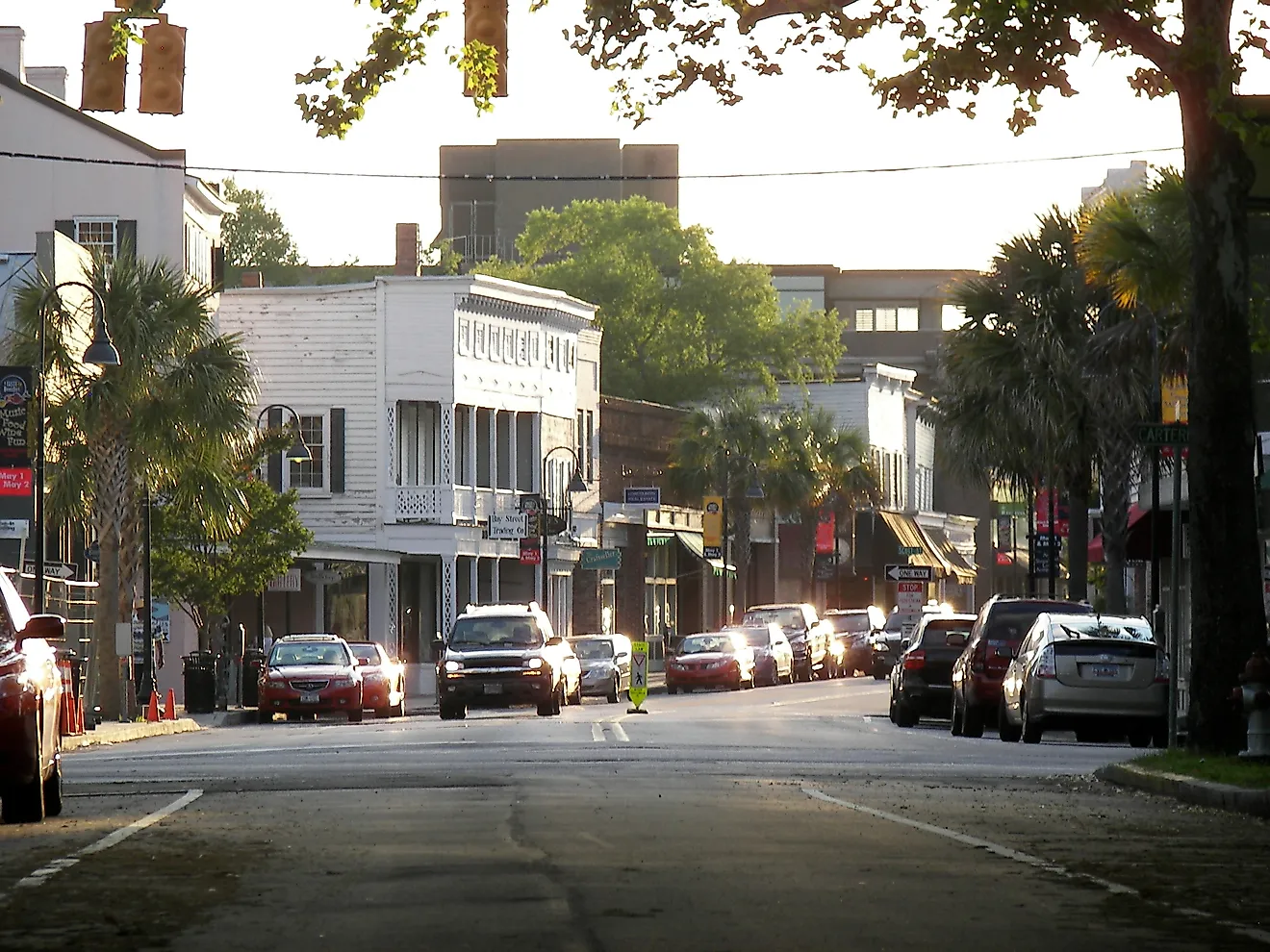
Bastrop

Bastrop is known not just for its aesthetic but for its resilience. The territory has been repeatedly tested by the nearby Colorado River and, more recently, by wildfires that damaged the Lost Pines, the isolated forest that frames the town. Despite these natural disasters, the core of its downtown remains a well-maintained relic of the town's 19th-century roots. The district is highly walkable and compact, cradled in the river valley, which makes it feel more similar to a hidden enclave than the typical open prairies often associated with Texas.
The Bastrop County Museum and Visitor Center is located right on the city's main street and is a great starting point for learning more about why Bastrop was built the way it was, documenting the town's Spanish colonial roots and its later development into a trading hub. The town is also known for the Bastrop Opera House, a classic and intimate venue that has been said to be a crucial part of the sociocultural fabric of the greater Bastrop area since the late 1800s. Given the nature that encapsulates the area, Bastrop State Park is just a 5-minute drive from the downtown area.
Nacogdoches

Arguably, the town on this list with the most prominent cultural heritage, Nacogdoches, calls itself the Oldest Town in Texas. Spanish settlement here dates to 1779, decades before the Republic of Texas existed, and the town passed through Spanish, French, and Mexican influence long before Anglo settlers arrived. Unlike the aforementioned towns, which were mostly planned and blueprinted during the mid-to-late 19th century, Nacogdoches arose organically around indigenous trails. Because of its origins, the downtown feels more like a labyrinth than a rigid grid, and the geography is dominated by pine forests and red clay soil.
Visitors can explore the Stone Fort Museum on the Stephen F. Austin State University campus to learn more about the town's colonial identity and merchant heritage, or the Durst Taylor Museum to see one of the city's oldest standing structures. The nearby Pecan Street is popular because it runs parallel to the city's main commercial street and showcases the architectural differences between businesses and residences.
Brenham

Located in the heart of Washington County, Brenham's downtown is defined by its density. The most iconic visual landmark in the downtown district is Ant Street Inn, a multi-story Victorian-era building built in the 1800s, at the height of Brenham's economic success. Nearby, in a beautifully preserved and historic building, is the Brenham Heritage Museum, which houses records and artifacts that analyze the German pioneer families and settlers who farmed the nearby prairies. There are more things to be discovered hidden throughout the city, like the restored cisterns in Toubin Park, rare pieces of public infrastructure from the momentous wild-west era, or Glissmann's Gift Gallery & Historic Drug Store, which houses original items from the store that occupied the space in the 1860s.
Bandera

This "Cowboy Capital of the World" has a deep Western heritage that is extremely visible, trading the formality and elegance of places like Brenham or Jefferson for a more rugged aesthetic. It is not uncommon to see locals riding their horses down Main Street and "parking" outside local saloons. Before it became known for its cowboys, Bandera started out as a settlement for Polish immigrants. This cultural undercurrent sits beneath the outward wild-west exterior, but is still widely visible in local landmarks such as the St. Stanislaus Catholic Church.
As for its cowboy veneer, Arkey Blue's Silver Dollar has occupied the same Main Street basement since the building opened as a nightclub in 1921, and it is widely described as the oldest continuously operating "honky-tonk" in Texas. The 11th Street Cowboy Bar, a few blocks away, draws the bigger crowds for live music. Beyond that, the Frontier Times Museum, founded by J. Marvin Hunter in 1933, contains a massive collection of more than 40,000 Old West artifacts, memorabilia, and oddities that capture the folklore of the wild west.
Alpine

Alpine's urban area is framed by a striking backdrop of mountains, specifically Mitre Peak and Hancock Hill, giving it an earthy feel. In more recent years, its streets have embraced the emerging public art scene and striking murals on historic buildings that celebrate the local desert ecology and ranching heritage have become the norm, blending its history with its modern Southwest culture. Art Alley is an alleyway that serves as a dedicated space for murals and street art by local artists.
At the center of the downtown district, the Holland Hotel, designed by El Paso architect Henry Trost and completed in 1928, serves as a testament to the ambition of the town at that time. A block off the same avenue, the Big Bend Gallery serves as a community space featuring rotating works of painting and photography from regional West Texas artists, reflecting the culture of the town and its evolution from its railroad roots.
Small-Town Texas, Block by Block
Every one of these downtowns fits inside a few blocks, which is what makes them worth a full day rather than a stop on the way to somewhere else. Port Isabel holds two museums and an 1852 lighthouse inside the same three blocks of waterfront. Bastrop's main street sits five minutes from a state park, Alpine's galleries and murals are a short walk from the Holland Hotel, and Granbury's storefronts lead straight down to the marina.