Escaping Into The Cultural Capital Of Transylvania
I've always been a fan of escapism. Perhaps it's a psychological defect or an innate pull towards novelty and adventure, but every so often I need to flee the city, opt out of my own mind, and take refuge in a completely different culture and landscape.
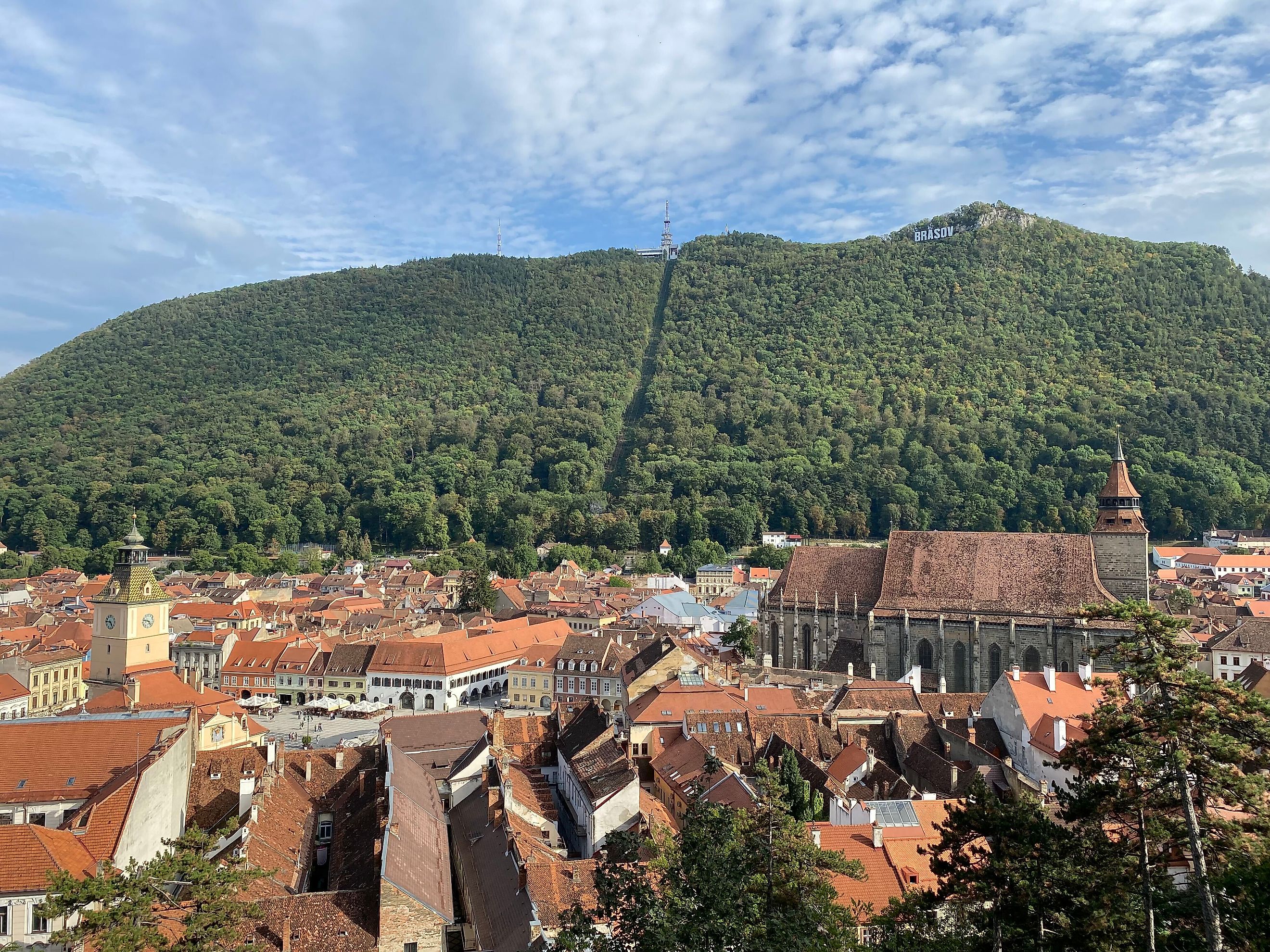
For years, Romania's medieval mountain town of Brașov has supplied such a sanctuary. This cultural capital of Transylvania (think vampire territory) has a fortified Old Town with a Carpathian peak at its core. The summit of Tâmpa, as with the opposing White Tower, offers high-angle views of the red-shingled roofs, domineering Black Church, and tourist-gathering plazas below.
Brașov serves as a base for "Dracula's Castle," the spell-binding Transfăgărășan drive (Romania's version of the Going-to-the-Sun Road), and the neighboring ski-town of Poiana Brașov. But more often than not, I simply take the three-hour train up from Bucharest and commit to losing myself in the gothic streets, switch-back trails, and dim cafe nooks where I can read, write, and watch the ominous fog, and the occasional brown bear, descend into this sliver of old Europe.
Touring the Town

The northbound train lumbers through Brașov's industrial periphery into a station that sits in the midst of a plainly residential and generically commercial middle layer. All ancient European cities seem to have developed outward in this ever less inspiring manner. But alas, I always appreciate the walk past the secondhand clothing shops, sports betting joints, pharmacies, and grab n' go bakeries because it makes entering the walled Old Town that much more of a captivating contrast. Do stop to try the traditional "chimney cake" along the way.
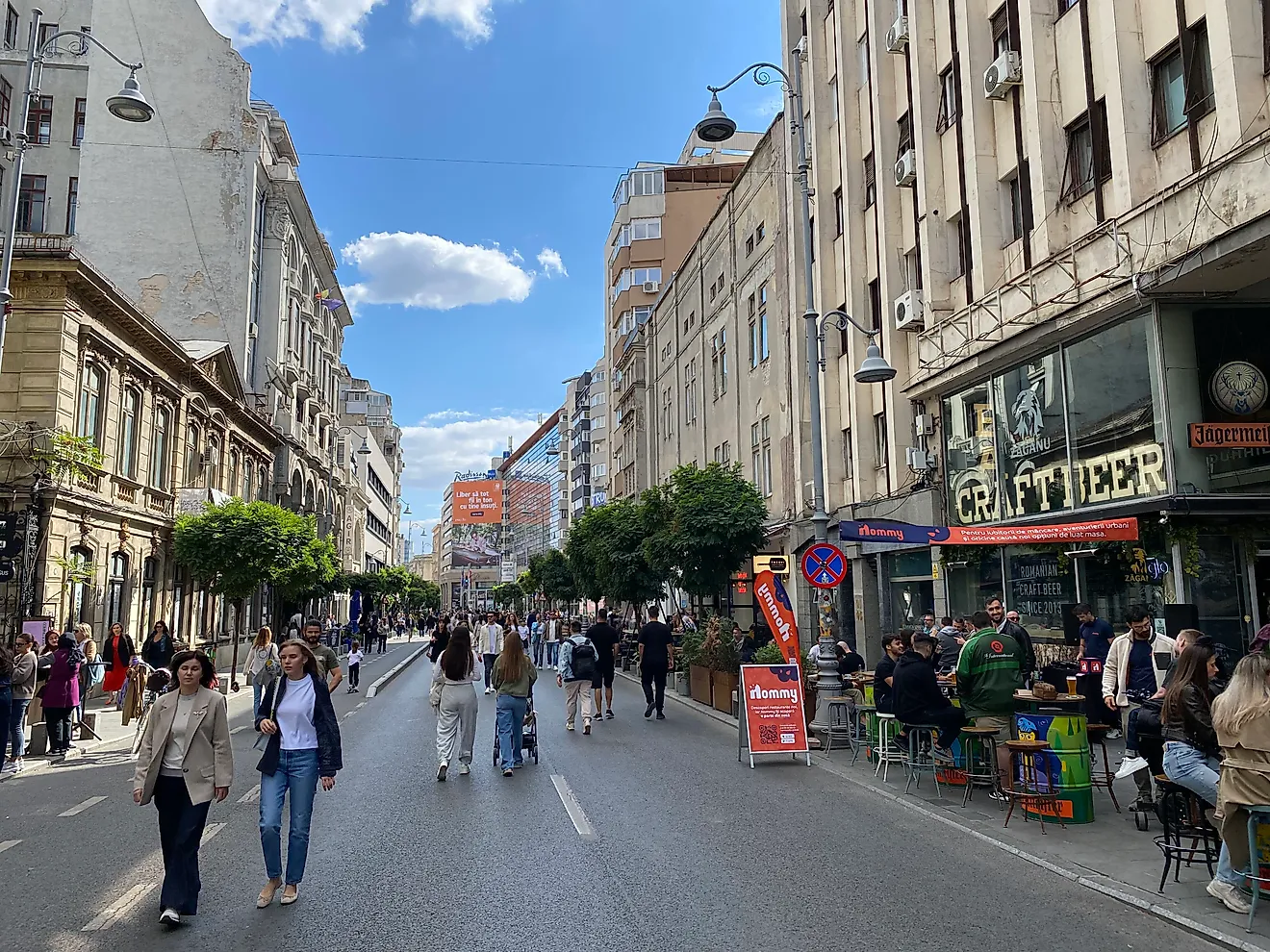
After a dozen or so visits, my reacquainting routine takes a slightly different path each time, but once I've dropped my luggage off, I might do a lap along these lines. First, I'll walk the length of Strada Republicii, or Republic Street, Brașov's de facto tourist street. No matter the season, umbrellaed restaurant tables occupy the middle of this brick-lined commercial strip, augmented in the off-season with those gas-powered fire towers. I've never had a bad meal or beverage here, and the social atmosphere is infectious, but these days, I usually just walk by for amusement and wait to patronize my favorite side-street spots.

In the meantime, Piața Sfatului, or Council Square, unfurls from the west terminus of Strada Republicii, revealing the once battered, burned, petitioned, and now restored 15th-century Council House, its accompanying fountain, and a wealth of colorful baroque structures that are home to modern establishments. I'm not blind to the Starbucks, KFC, and Dracula Restaurant. I just find it easy enough to focus on the historic and authentic sides of the square. Case in point is Biserica Neagră, or the Black Church, which lurks just off the plaza's southwest corner.
The Black Church is another of Brașov's many fortified structures whose origins date back in excess of 600 years, or about two and a half times the age of the United States. But being the largest gothic church in Romania, this one is by far the most arresting. Its lasting colloquial name stems from the "Great Fire" of the 17th century, which leveled much of the Old Town and left a charred ring around parts of the cathedral's lower reaches.

From here, I like to zip over to Brașov's northside Bastion and up to Turnul Alb, or the White Tower. The steep staircase tends to weed out non-committal tourists, leaving never more than a minute or so queue to the railing that overlooks the Old Town, as featured in the title image.
Conversely, if I'm on my way to the base of the Tâmpa hike, I'll always sneak down Strada Sforii to get there. As the English translation implies, "Rope Street" is one of the narrowest streets in Europe. Currently undergoing restoration, this historical novelty has thus-far been covered in graffiti. Personally, I thought this gritty aesthetic accented the gothic feel of the place, but I understand if they want to freshen it up with some coats of paint. Maybe what looks like artistic squiggles to me are actually unfashionable sentiments in Romanian. Who knows? Well, the locals I suppose.

Exiting Rope Street, I'm often compelled to make one last sightseeing detour to the ornate gates of Brașov's west end before rounding over to Mount Tâmpa. In addition to fire, Brașov had to stave off several sieges over the centuries. As such, some of its ramparts, watchtowers, and gates have long since been reduced to rubble. The yellow Schei Gate and the castle-like Catherine Gate are the best glimpses into what a 16th-century traveler would have seen upon approaching the city.
Bear Aware On Tâmpa

Standing 3,150 feet above sea level, and about 1,150 feet above the city, climbing Tâmpa is a manageable grunt. Often, I'll run up it a couple of times in the same session. The main trail follows long switchbacks, making it approachable for anyone with reasonable fitness, while steeper side trails spice up the ascent/descent for local trail runners and seasoned hikers. With that said, there is also a cable car that can whisk 25 people to the top in two minutes.
However you get there, the false summit sports a Hollywood-style Brașov sign on a photogenic viewing platform. One more short push above, the true summit boasts even wider panoramas of the wild Carpathian Mountains.
I've yet to visit Brașov without summiting Tâmpa. On some occasions, such as when I'm training for a trail race, I'll take the train to Brașov expressly for this purpose. Why Tâmpa? Well, Romania has something of a bear problem. In fact, when the brown bear population was estimated at 8,000, that was already the largest in Europe outside of Russia. Then, in 2025, a genetic study raised that estimate to as many as 13,000!

This means that traversing alone through Romania's wilderness comes with significant added risks, or at the very least, a level of anxiety that sours the experience. On one particular visit, my Romanian girlfriend, Irina, and I waded into the woods, only about a mile outside of downtown Brașov, and were confronted by a growling brown bear in the midst of a kill. It happened when we approached a fork in the trail. We went right, and then to our left, came the guttural warning.
"What was that?" Irina timidly asked.
"Uhhh, I think it was just a dirt bike." I unconvincingly replied.
Another, much louder growl erupted through the trees.
"Don't run," I said to Irina as I tried not to soil myself. Because the growl was coming from behind us, along with the moans of some unfortunate creature, we couldn't just tip-toe back the way we came.
"Let's just walk slowly up this trail and try to find another way out."
Doing so took three hours and we were both checking over our shoulders the whole time.

Tâmpa strikes this balance of being right in the heart of town and well-trodden on almost any day of the week, while still offering a network of legitimate mountain trails. Sticking to these slopes gives me at least the illusion of safety-in-numbers. Bears still can and do waddle through here on occasion, and sometimes they even broach the streets of the Old Town, but it's less likely to be a problem when other people are around. For this reason, I also enjoy doing a day-trip to the Bucegi Mountains atop the town of Bușteni, an earlier stop along the Bucharest-Brașov train line.
Cafe Chillin' and Bar Hoppin'

As much as I love Brașov's active and social side, it is the Old Town's lesser-known nooks that round out the escapism. Here, in the lantern-lit windows of Shakespeare Coffee & Poetry, the youthful fervor of Tipografia, the chalet-style attic of CH9 Specialty Coffee, locally-patronized and delightfully understated Stil Caffe, or in the unexpectedly colorful interior of Astrology Coffee, I'm always able to strike a creative chord. I've written many travel articles and poems, and gotten lost in more than a few Hermann Hesse novels while sipping on a cafea lunga in these, and many other unique venues.
So when you come to Brașov, bring your hiking boots and cultural curiosity, for sure, but also make sure to pack a good book and maybe a little notepad. There are countless book stores throughout the Old Town in case you need to resupply.

Given Europe's lax approach to alcohol, many of the coffee shops double as bars. But if you're curious about Eastern Europe's budding craft beer scene, Berăria Mustață is the place to be. Following the Brașov Half Marathon, my crew beelined for this brewery, and so did many of the other race participants, as it happened. It, like other neighboring Black Church establishments, serves Meniul Zilei, which literally translates as "the menu of the day," but functionally refers to a multi-course, price-reduced meal experience that goes until about 5 pm, before the dinner rush. If you don't know what to do for lunch in Brașov, definitely scan around for these Meniul Zilei chalk boards. There'll be another one right next door at ORDO 1493, for instance.
Epic Side Quests
Bran Castle

Marketed as the home of Vlad the Impaler, the infamous inspiration for Bram Stoker's Dracula, Bran Castle, or Castelul Bran, is a dyed-in-the-wool tourist attraction, but I still think it's a must for first-timers. I've long been a proponent of checking off a region's major tourist attractions, since they're usually popular for a reason, and then shifting into the fringes. Bran Castle is just half an hour away, doesn't take long to tour, and won't break the bank, so why not? During my first visit to Brașov, my in-laws took me here, thereby setting the tone for what has become one of my favorite towns in Europe.
Transfăgărășan

A longer but even more worthwhile excursion for those visiting Brașov by car is the Transfăgărășan. This 94-mile mountain pass thoroughfare connects Transylvania with the neighboring province of Muntenia. Spellbinding switchbacks, alpine lakes, foggy ridgelines, roadside vendors, and sheep traffic jams make this road-trip feel as much of a timeless cultural affair as it does a geographical undertaking.
Poiana Brașov

Just a twenty-minute drive from Brașov, Poiana Brașov, or Brașov Meadow, is a go-to spot for skiing in the Carpathians. Or, given that the trails of Tâmpa ultimately connect to this alpine resort, an additional playground for hikers undeterred by my bear story, or runners of the Brașov Marathon, another opportunity to explore Romania's exceptional mountain trails in the safety of numbers.
Besties For Life

Ever get that feeling that you've met a stranger before? What about that sense, deep in your soul, that you've been to a foreign place? That's what happened to me five years ago when I touched down in Brașov, Romania. Now, with each subsequent visit, I feel like I'm returning to a long-forgotten home.
The feeling of belonging always strikes me in the mountains, but Brașov goes above and beyond its attractive topography. This Transylvanian town has an embracing aesthetic, whether seen from the historic streets, watchtowers above, or Tâmpa's summit. It has a cozy vibe around each offshoot alley and corner cafe that invites relaxed indulgences. And it is wrapped in centuries-old cultural layers spanning empires, religions, architectural styles and cuisine. That's why when I need a break from Bucharest's high-octane streets, or Western Europe's cliches, I always flee to Brașov.