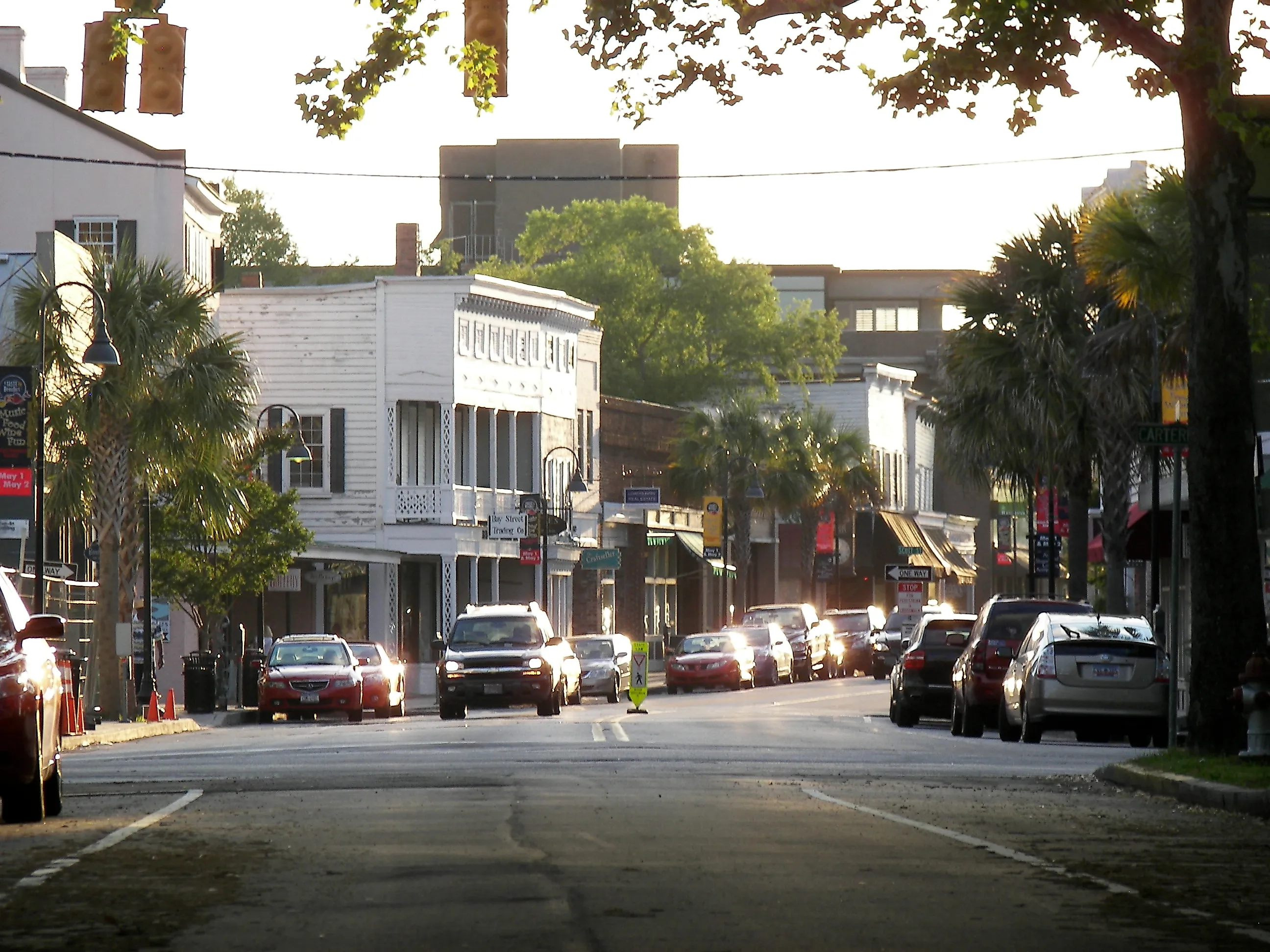
10 Underrated South Carolina Towns Worth the Drive in 2026
Everything that gives South Carolina its reputation shows up in these ten towns at full strength. The Lowcountry oyster roast is a Bluffton ritual, with the clusters coming out of the May River a short walk from the tables. The winter horse colony that made Aiken famous still works its Thoroughbreds on a dirt track at first light, and the peach crop that outgrows Georgia most years has a 135-foot monument in Gaffney.
Camden, Gaffney, and Sullivan's Island hold Revolutionary War ground from a campaign that, by most counts, left more battlefields in this state than in any other. None of the ten is more than about two hours from one of the state's larger cities, so these underrated South Carolina towns worth the drive in 2026 fit inside a Saturday.
Edisto Beach

There is no high-rise resort scene at Edisto Beach, only wild shoreline. At Botany Bay Heritage Preserve, fallen trees and bleached trunks cover stretches of beach where erosion continues to reshape the coast. At low tide more sand is exposed around the driftwood, and without beachfront development the scenery is especially raw. Nearby, the Pockoy Island Shell Ring Complex holds circular shell deposits built by Indigenous communities thousands of years ago.
Fossil hunting is another reason to watch the sand at Edisto Beach State Park. Shark teeth and other small fossils occasionally appear along the shoreline, while trails cross maritime forest behind the beach.
Big Bay Creek is best seen from the water. Kayaks can slip through tidal channels bordered by marsh grass, where egrets and herons hunt along the edges and dolphins sometimes surface farther out. Archaeology, fossils, forest, marsh, and an undeveloped Atlantic beach all fit into a remarkably small corner of the Lowcountry.
Aiken

Morning in Aiken can start with Thoroughbreds. Racehorses have been prepared at the Aiken Training Track for generations, and early workouts are a close look at the equestrian culture behind the city's long run as a winter base for wealthy horse owners and trainers. The story continues at the Aiken Thoroughbred Racing Hall of Fame in Hopelands Gardens, set among paths and mature trees on the grounds of a former estate.
Hitchcock Woods is the bigger surprise. Roughly 2,100 acres of privately owned forest sit beside the city, crossed by sandy trails used by hikers and riders. The Aiken Horse Show has taken place within the woods for more than a century, so horses here are not decorative window dressing; they remain part of everyday life.
For a change of scale, public programs at the DuPont Planetarium at the University of South Carolina Aiken take place beneath a 30-foot dome. A single day in Aiken can hold racehorses on a dirt track, pine-shaded trails, and a night sky presentation.
Georgetown

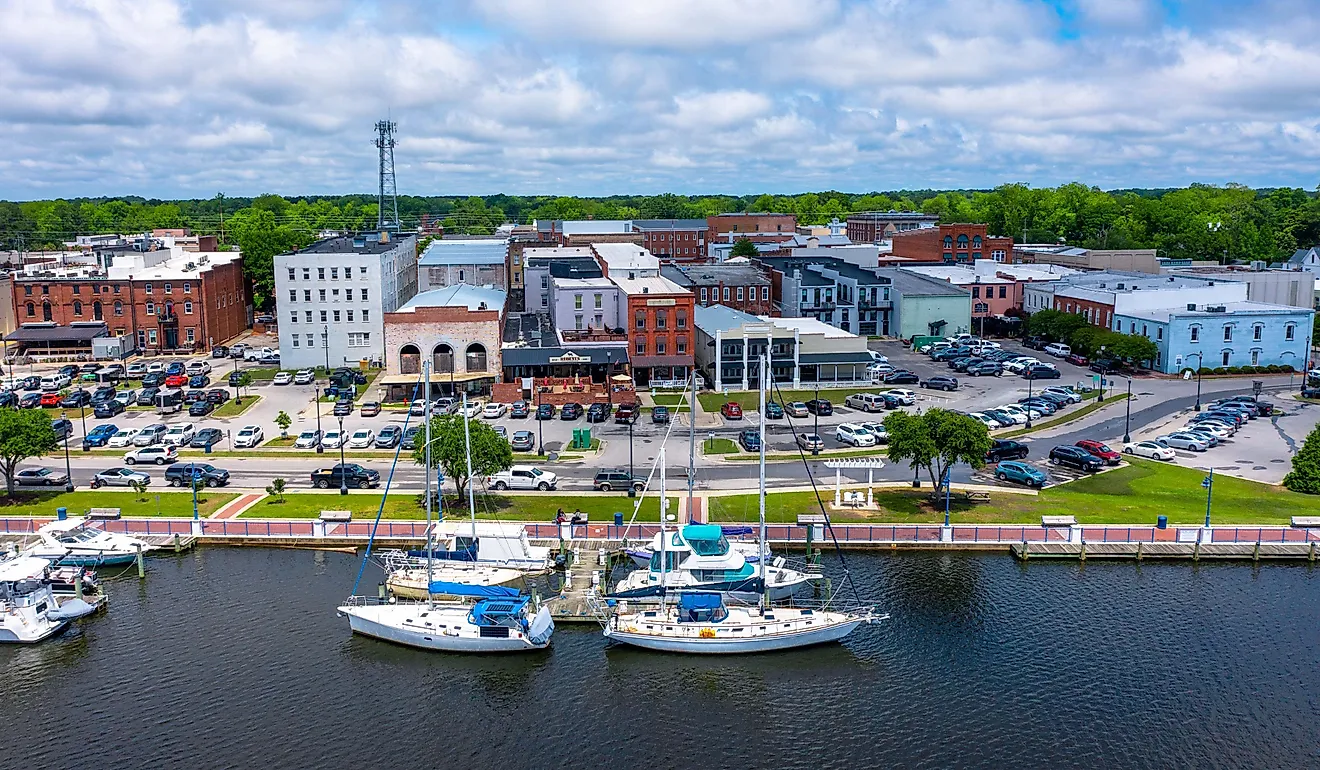
The Sampit River runs right along Georgetown's historic center, and the Harborwalk follows it behind Front Street past docks, boats, and old commercial buildings. The Rice Museum sits inside part of the Old Market Building beneath its familiar clock tower. Its exhibits cover the immense wealth built on rice in the surrounding Lowcountry, and the enslaved labor and African agricultural knowledge behind that economy.
The Kaminski House Museum is a closer look at domestic life, a preserved riverside home filled with period furnishings. The biggest excursion lies outside downtown at Hobcaw Barony, a roughly 16,000-acre reserve spread across former plantation lands, marshes, forests, and wildlife habitat. Guided tours can reach Bellefield Plantation, the home of Belle Baruch, whose father, Wall Street financier Bernard Baruch, assembled Hobcaw Barony as a winter retreat in the early 1900s and kept his own home at Hobcaw House. The wider property is now used for environmental research. Georgetown's waterfront is photogenic, but the rice history and enormous protected landscape are far more than a stroll past pretty buildings.
Camden
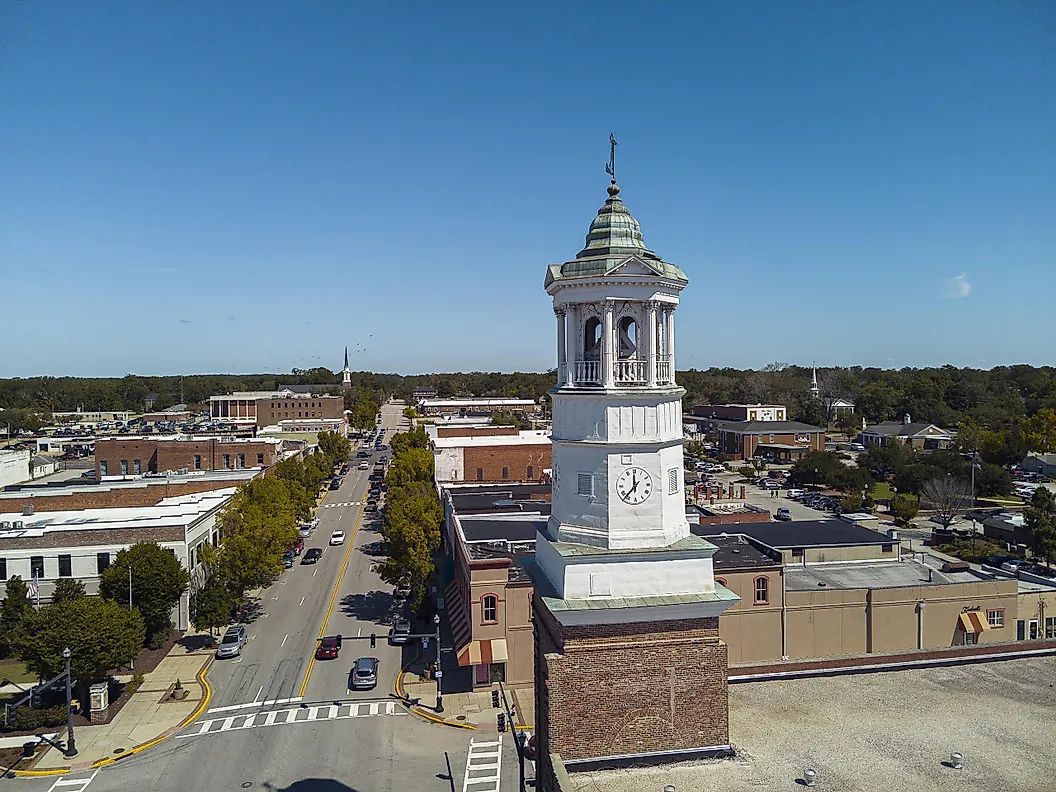
Revolutionary War history is hard to miss in Camden. Historic Camden, a preserved site tied to the British occupation of the town, has reconstructed defenses and the Kershaw-Cornwallis House. A short drive away, Camden Battlefield marks the ground where American forces suffered a major defeat in August 1780 during the southern campaign. The scale of the engagement is far clearer on foot than on any roadside marker.
Then there are the horses. Camden is one of the country's longstanding steeplechase centers, and the National Steeplechase Museum covers the sport through racing silks, trophies, photographs, and equipment. The Carolina Cup, a spring event with decades of crowds behind it, runs at Springdale Race Course.
Downtown Camden sits neatly between those two worlds, with historic buildings and local restaurants for an easy break between battlefield trails and racing history. On few South Carolina day trips can a visitor study an 18th-century military defeat and then spend the afternoon surrounded by steeplechase memorabilia.
Sullivan's Island

Fort Moultrie covers an unusually long stretch of American military history in one compact site. Different sections of the fort represent different periods of coastal defense, from the Revolutionary War through World War II. The original position was central to the Battle of Sullivan's Island in 1776, when South Carolina troops repelled a British naval attack at the entrance to Charleston Harbor.
Charleston Light rises nearby with a triangular profile that looks nothing like a traditional round lighthouse. Completed in 1962, it was the last major lighthouse built by the federal government in the United States. Its black-and-white tower is one of the easiest landmarks to spot from the island's streets.
Even the library has an unusual address. The Edgar Allan Poe Library occupies part of former Battery Gadsden, close to the beach. Poe served on Sullivan's Island while in the U.S. Army and later used the island in "The Gold-Bug." A Toni Morrison Society Bench by the Road also marks the island's connection to Africans brought through Charleston during the transatlantic slave trade.
Conway

Conway sits only a short drive inland from Myrtle Beach, but the scenery changes quickly. The Conway Riverwalk follows the Waccamaw River beside dark water, cypress trees, docks, and shaded banks. From the river, it is an easy walk into downtown, where brick storefronts stand beneath some seriously impressive live oaks.
The Horry County Museum has one of the area's best indoor surprises: a large freshwater aquarium filled with species found in local rivers and swamps. Nearby galleries cover Native American history, agriculture, natural history, and the rise of the Grand Strand. At the L.W. Paul Living History Farm, the focus is rural Horry County in the early 20th century. Seasonal demonstrations may involve blacksmithing, plowing, traditional cooking, tobacco work, or harvesting with period equipment. Anyone who knows this corner of South Carolina only through beachfront hotels gets a very different picture after a few hours in Conway.
Gaffney

The Peachoid is exactly as ridiculous and delightful as a 135-foot peach-shaped water tower sounds. It rises beside Interstate 85 with a giant leaf and a deep center crease, built as a tribute to the region's peach industry. Drivers have been photographing it for decades, and there is really no dignified way to resist joining them.
Cowpens National Battlefield sits nearby, and the day turns sharply toward Revolutionary War history. Daniel Morgan's troops defeated British forces under Banastre Tarleton there in January 1781, a victory that changed the course of the southern campaign. The battlefield trail follows the ground where Morgan arranged his lines and carried out the tactics that produced the American win.
Back in Gaffney, the Cherokee County History and Arts Museum occupies a former school and covers local military history, textile production, farming, and community life. The Peachoid may get the first photo, but Cowpens is the substance of the trip.
Newberry

Wells Japanese Garden is an unexpected sight in the middle of a small South Carolina city. Created in the 1930s, the garden holds a torii gate, pond, arched bridge, stonework, and a little teahouse in a compact space only a few blocks from downtown. It does not take long to explore, which makes its sudden change of scenery even more fun.
A few streets away, the Newberry Opera House rises over the historic center with its clock tower and ornate 19th-century exterior. The restored theater remains active, with concerts, comedy, stage performances, and community events still on the calendar, rather than surviving only as an architectural relic.
Outside downtown, Carter and Holmes Orchids has spent decades breeding and cultivating orchids in extensive greenhouse collections. Serious plant fans can encounter varieties well beyond the usual grocery-store phalaenopsis. A Japanese garden, a working Victorian-era theater, and specialist orchid greenhouses make for a surprisingly colorful day in a town many drivers pass without a second thought.
Bluffton

Old Town Bluffton sits high enough above the May River for broad views of water and marsh, and the Church of the Cross occupies one of the prettiest spots along the bluff. Built in the 1850s, the Gothic Revival church stands beneath live oaks with the river visible beyond its grounds. The nearby Heyward House dates to Bluffton's antebellum period and now serves as the entry point to the historic district.
The Garvin-Garvey House has a different story. Cyrus Garvin, a formerly enslaved man, built the home around 1870 on a bluff above the May River, where a planter's house had burned during the Civil War. It is considered the oldest surviving dwelling built by a freedman in Bluffton, and it is a rare physical link to Black homebuilding and community life during Reconstruction in the Lowcountry.
Down at Oyster Factory Park, the May River is the main attraction. Boats launch beside tidal marsh, and Bluffton's long relationship with fishing and oyster harvesting remains visible along the shoreline. In oyster season, local roasts mean piles of steaming clusters on communal tables, usually with plenty of napkins and no concern for neat fingers.
Beaufort

Beaufort looks every bit the Lowcountry classic, with live oaks arching over historic streets and the Beaufort River visible between old homes. The Point is the place to wander without rushing, especially around streets lined with antebellum houses and Spanish moss. From there, Henry C. Chambers Waterfront Park runs along the river with swings facing the water and downtown restaurants only steps away.
The history is as much of a reason to come as the scenery. Reconstruction Era National Historical Park is devoted to the period when formerly enslaved people in the Sea Islands established schools, communities, businesses, and political institutions after Union forces occupied the region during the Civil War. Beaufort was also the birthplace of Robert Smalls, who escaped slavery by commandeering a Confederate vessel and later served in Congress. On nearby St. Helena Island, Penn Center is the site of one of the earliest schools created for formerly enslaved people. Both the mossy waterfront streets and some of the most important Reconstruction sites in the country fit into a single day here.
Revolution, Rice, and Racehorses
Three threads run through these ten towns. The Revolutionary War is on the ground at Camden, Cowpens near Gaffney, and Fort Moultrie on Sullivan's Island, where the southern campaign turned on fights that rarely get a second look. The Lowcountry's layered past is on view at Beaufort's Reconstruction sites, Georgetown's rice museum, and Bluffton's Garvin-Garvey House. Horses are the third, at Aiken's training track and Camden's steeplechase course. The right pick depends less on mileage than on the mood of the weekend, a battlefield one week and a plate of oysters the next.