9 Small Towns on the Gulf Coast with the Best Downtowns
There is one block in Tarpon Springs that is the whole Gulf Coast at once. Sponge boats tie up a few doors down from a Greek bakery, the harbor is right there, and the beach is somewhere else entirely. That is the pattern up and down this shoreline. The towns were built on the water that sheltered boats, with the sand a few blocks or a short drive away, and that is why their downtowns still feel like the center of something. From Naples to the Mississippi Sound, nine of them have main streets worth the whole trip.
Apalachicola, Florida

Apalachicola's downtown looks like a piece of Old Florida that escaped the march of time. The city's historic district contains a collection of 19th- and early-20th century buildings, including former cotton warehouses, shops, restaurants, galleries, and preserved homes. The original town plan also included six squares, several of which remain important green spaces within the district.
An afternoon in Apalachicola can include browsing independent shops and galleries, and stopping for fresh seafood or oysters. The David G. Raney House Museum offers a glimpse into a life in Apalachicola during the 19th century. Nearby, Lafayette Park has a waterfront setting with a fishing pier and views of Apalachicola Bay. The Apalachicola National Estuarine Research Reserve features exhibits, aquariums, and trails that explain the relationship between the Apalachicola River, the bay, and the Gulf of Mexico. For another look at the town's working waterfront, Scipio Creek Boat Basin sits just north of downtown and remains a commercial fishing marina.
Century-old warehouses, 19th-century buildings, old town squares, and a working waterfront give Apalachicola the feel of a working Gulf port rather than a conventional beach town.
Cedar Key, Florida

At Cedar Key, the water is part of the downtown. Located on a cluster of islands along Florida's Nature Coast, the small community has Old Florida charm with its cottages, seafood restaurants, art galleries, and a waterfront lined with boats. Its compact size makes the central area easy to explore on foot, with Dock Street and the surrounding roads providing some of the town's most distinctive views.
Visitors can walk the waterfront and browse the art galleries before visiting the Cedar Key Historical Society Museum, which traces the community's history from its earliest inhabitants through its railroad, fishing, and pencil-manufacturing eras. Downtown also has a quirky public-art attraction in the form of the Cedar Key Clam Sculpture Trail, with decorated clams scattered around town. The Cedar Key Arts Center is another worthwhile stop for rotating exhibitions and work by local artists. For a dose of nature, Cemetery Point Park winds through mangroves along its scenic boardwalk, or spend time at the public beach, where they can relax beside the tranquil waters of the Gulf of Mexico.
Cedar Key's downtown has a distinctly weathered, island-town appearance, with waterfront buildings, docks, boats, and Old Florida cottages creating a look that is worlds away from the Gulf's larger resort communities.
Tarpon Springs, Florida

About 14 miles north of Clearwater, the town of Tarpon Springs has a distinctive downtown shaped by its Greek heritage and long connection to the sponge industry. Historic buildings line the streets around Tarpon Avenue, and the nearby Sponge Docks add another layer of character with Greek restaurants, bakeries, shops, and sponge boats. The city's heritage remains an important part of its identity, making the downtown visually and culturally different than most beach towns.
The downtown is easy to explore on foot, with locally owned boutiques, galleries, restaurants, and breweries lining the way. Guided and self-guided walking tours offer a closer look at the period buildings. For a deeper dive into Tarpon Springs' history, the Heritage Museum and the Safford House provide more insight. Along the Anclote River, the Sponge Docks showcase Tarpon Springs' sponge-diving heritage, with boats dotting the waterfront near Greek restaurants, bakeries, and pastry shops. St. Nicholas Greek Orthodox Cathedral is a striking expression of the community's Greek heritage, with a Byzantine-influenced style that sets it apart from the surrounding buildings.
Tarpon Springs combines old-Florida charm with Greek heritage and a working sponge industry, creating a distinctive character along the Gulf Coast.
Dunedin, Florida

Dunedin's downtown has lively, walkable streets that set it apart from the quieter, more heritage-focused towns along the Gulf Coast. Main Street and the surrounding streets are filled with colorful storefronts, restaurants, breweries, and galleries, while palm trees and nearby waterfront parks reinforce its Florida setting. The city also has a strong Scottish influence that appears in street names, festivals, and community traditions.
Main Street is lined with independent shops, galleries, restaurants, and craft breweries, and is home to the Dunedin History Museum housed in an original railroad depot. The Pinellas Trail runs directly through downtown, making it easy to explore the area on foot or bicycle. Pioneer Park provides a central gathering place for community events and the downtown market, and Edgewater Park at the western end of Main Street offers a shaded waterfront setting beside the Dunedin Marina.
Dunedin combines a vibrant, energetic Main Street with a strong arts vibe, brewery, cycling, and Scottish cultural scene, giving it a modern small-town appeal.
Fairhope, Alabama

Fairhope's downtown has one of the prettiest settings on the Gulf Coast, with its streets leading toward Mobile Bay. Mature trees, flowers, boutiques, galleries, restaurants, and preserved buildings give the central business district a polished small-town appearance, while the bayfront adds an expansive coastal backdrop. The downtown is designed for strolling, with plenty of places to shop, eat, and linger.
Independent shops and galleries fill Fairhope Avenue and the surrounding streets leading to the Fairhope Museum of History, where exhibits explore the community's past. A walk along the Fairhope Municipal Pier provides views across Mobile Bay and is especially appealing around sunset. The town's creative spirit comes alive at Arts Alley, where murals, sculptures, and other public art form a pedestrian connection between areas of the business district. Visitors can also spend time at the bayfront parks where the trees and gardens provide a quieter contrast to the activity downtown.
Fairhope's downtown is distinguished by its lush landscaping, flowers, mature trees, and direct visual connection to Mobile Bay, giving it a garden-like quality that separates it from the more rugged Gulf Coast towns.
Ocean Springs, Mississippi

Ocean Springs has an artistic personality that is visible everywhere downtown. Storefronts line the streets, but it's the galleries, public art, and independent shops that give the area an eclectic quality as opposed to the appearance of a meticulously maintained historic district. The town's connection to artist Walter Anderson is especially important to its identity and gives the downtown a strong creative character.
Galleries and independent shops line the downtown streets where the Walter Anderson Museum of Art showcases the work of one of Mississippi's best-known artists. More of Anderson's work, in the form of murals, can be seen at the nearby Ocean Springs Community Center. The creative spirit of Ocean Springs is also alive and well at the Mary C. O'Keefe Cultural Arts Center, which hosts exhibits, performances, workshops, and other events in a 1927 school building.
Downtown art markers point to public art throughout the district, with Little Children's Park providing a quiet place to relax before an evening of local dining and live music.
Ocean Springs is an artsy Gulf Coast town where galleries, public art, a mosaic of downtown shops, and the legacy of Walter Anderson are as important to the town's identity as its landmarks.
Bay St. Louis, Mississippi

Bay St. Louis has a slightly bohemian downtown that feels more like a relaxed Gulf Coast neighborhood than a traditional Southern Main Street. Carefully preserved buildings and cottages mix with boutiques, galleries, restaurants, and music venues, creating a lively district that extends to the waterfront. Local businesses and regular events give the streets an active vibe.
A self-guided walking tour leads through Old Town and the Depot District, passing historic sites such as the Hancock County Courthouse and Masonic Temple Building along the way. The original L&N Depot houses the Alice Moseley Folk Art Museum and the Bay St. Louis Mardi Gras Museum, with additional shops and restaurants in Depot Row across the street. At the waterfront, the Jimmy Rutherford Fishing Pier extends into the bay, offering a place to fish, watch boats, or just take in the views. The circa-1922 100 Men Hall also hosts live music and cultural events. If the timing is right, Second Sunday brings entertainment, community activities, and shopping throughout Old Town and Depot Row.
With its artsy, lively beach-town atmosphere, Bay St. Louis has created a downtown that embodies a more eclectic than formal and more relaxed than traditional.
Port St. Joe, Florida

Nestled between Apalachicola and Panama City, Port St. Joe has the feel of a genuine working Gulf Coast town rather than a purpose-built beach resort. Its compact downtown is lined with independent shops and restaurants, while St. Joseph Bay provides a coastal backdrop just beyond the streets. The small-town business district, cultural sites, and working waterfront give Port St. Joe a distinctly local character.
The downtown is easy to explore on foot, with boutiques and locally-owned restaurants along the way. The Constitution Convention Museum State Park tells the story of how 56 delegates gathered in Port Joseph to draft the state's first constitution. Nearby, George Core Park is home to the 130-year-old Cape San Blas Lighthouse, which people can climb for remarkable views of St. Joseph Bay and the Gulf of Mexico. For a ground-level view, the Bay Walk Trail follows the waterfront.
Port St. Joe retains the look and feel of a working Panhandle community with a walkable downtown, local businesses, landmarks, and a bayfront setting rather than a heavily developed resort atmosphere.
Naples, Florida

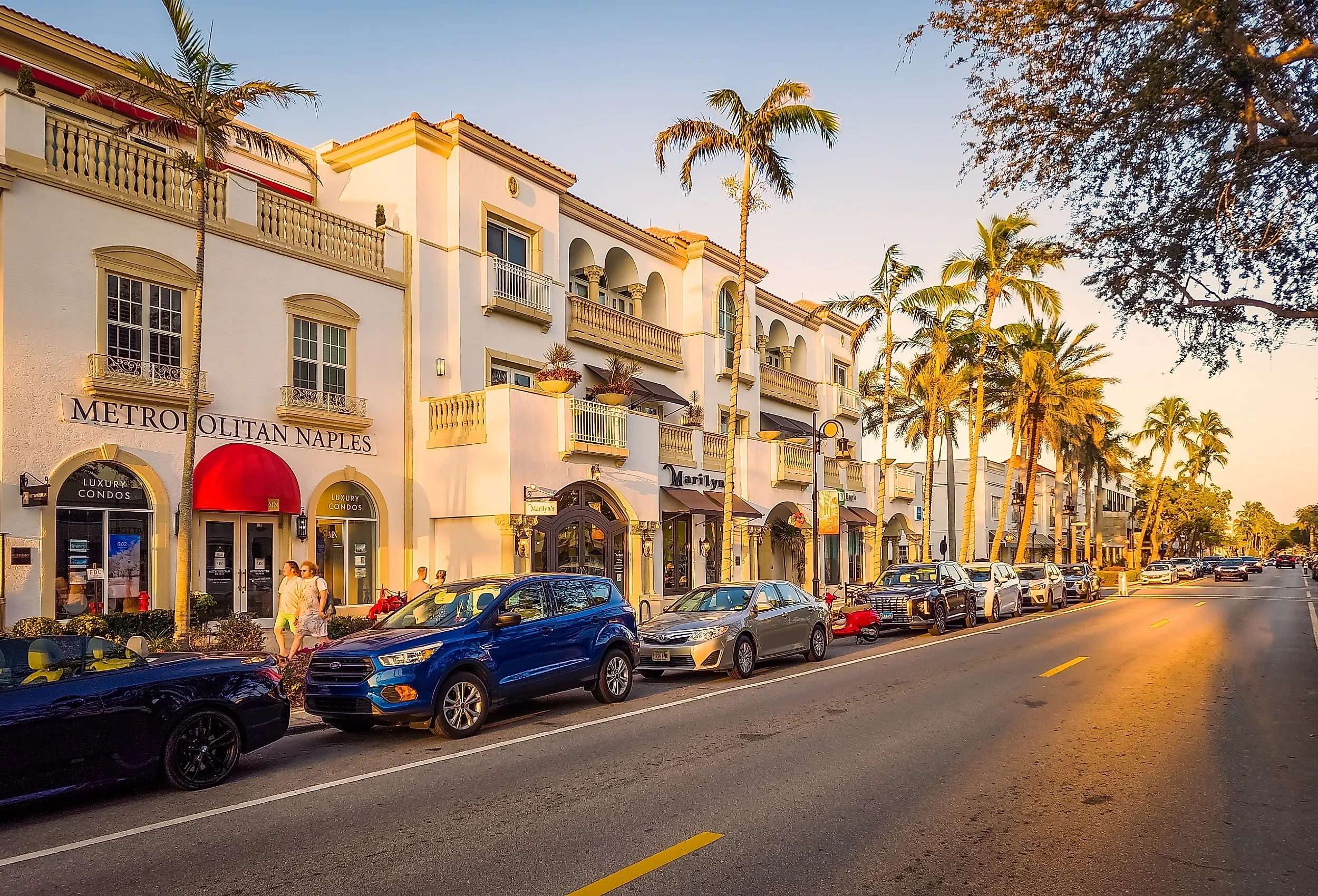
About 40 miles south of Fort Myers, Naples has a downtown that runs from the beach to Naples Bay along two main streets. Fifth Avenue South is lined with royal palms, Mediterranean Revival storefronts, sidewalk cafes, galleries, and boutiques, while Third Street South, a few blocks closer to the water in Old Naples, is the older commercial district. The whole central area is walkable from end to end.
A Saturday morning downtown can begin at the Third Street South Farmers Market before a short walk to Palm Cottage on 12th Avenue South. Built in 1895 and now the headquarters of the Naples Historical Society, it is the oldest house in the city and offers guided tours of its rooms and gardens. The Naples Depot Museum, housed in the 1927 Seaboard Air Line Railway station at the eastern end of Fifth Avenue South, covers the arrival of the railroad and the early growth of the town. Cambier Park, a block off Fifth Avenue, hosts concerts and art shows around its bandshell, and Tin City, a cluster of 1920s clam and oyster shelling buildings on Naples Bay, now holds waterfront shops and seafood restaurants. The Naples Pier, which first reached into the Gulf in 1888, is being rebuilt after Hurricane Ian and is expected to reopen in 2027, though the beach at its foot remains open.
Naples' downtown is larger and more formal than the others on the Gulf Coast, with landscaped avenues, a historic cottage district, and a working bayfront all within a short walk of each other.
A Gulf Coast with Nine Different Looks
These nine towns show just how much personality can be found along the Gulf Coast. The water has shaped each community, but its impact takes a different form in every town.
Cedar Key reflects its deep connection to the water through its weathered waterfront and working-town character. Port St. Joe retains the feel of a community built around the Gulf, Ocean Springs puts its thriving arts scene at the center of downtown, and Bay St. Louis combines colorful homes with a lively beach-town atmosphere.
For travelers who want their Gulf Coast trip to include more than sand and surf, these downtowns offer plenty of reasons to get out of the car and explore. Each has its own vibe and its own story to tell.