The Best of the Balkans
As prices climb ever higher in Western Europe, and as some of its most popular destinations push back on tourism, it might be time to look elsewhere for that coveted European experience. The Balkans, which is to say, the eleven core nations, and parts of four peripheral countries that occupy Southeastern Europe's Balkan Peninsula, offer a cultural convergence, and a density of mountains, beaches, and cobblestone Old Towns comparable to the continent's touristically favored hemisphere. Plus, some of these countries only opened their doors to the outside world at the cusp of the new millennium, so there is a wealth of novel and budget-sparing destinations to discover. Let's get acquainted with some of the best that the Balkans have to offer.
Albania
Tirana

Albania's capital surprised me. Unlike some major cities in the Balkans, Tirana (or Tiranë) offered a warm welcome, colorful streets, and a healthy dose of nature. Staying in an apartment near Tirana Lake Park introduced me not only to Albanian hospitality but also to a city center that blends Ottoman architecture with the graffiti-covered buildings of its Soviet era, as well as the cafes and storefronts of an ever-modernizing European nation. Beeline for the expansive Skanderbeg Square and then fan out to other unique attractions, such as Bunk Art and the Pyramid of Tirana. Finally, join the sunset crowd for a lap of the lake, where you’ll find a mix of paved and dirt perimeter trails to choose from.
Gjirokastra

From Tirana, visitors might be tempted toward the Adriatic Sea, but after my own love-hate tour of Albania, I suggest migrating into the mountains. From a distance, Gjirokastra (Gjirokastër), aka "The Stone City," tastefully blends into the yellow-gray hillsides of Southern Albania. But up close, its history is decidedly more conspicuous. The Castle of Gjirokastra is the undeniable focal point of this UNESCO World Heritage Site, but below, the labyrinth of cobblestone streets stacked with 17th-century homes invites endless exploration, while high above (if you can muster the steep hike), Ali Pasha Bridge further cements the historical significance and architectural prowess of Gjirokastra. Last but not least, the core of the Old Town features authentic rug dealers, stonemason workshops, and rows of Albanian restaurants.
Bosnia & Herzegovina
Mostar

This former outpost of the Ottoman Empire and historical capital of Herzegovina is immediately recognizable by its Stari Most Bridge (i.e., "Old Bridge," from which the name Mostar is derived). This 16th-century creation forms a gentle apex high above the Neretva River, connecting both sides of Mostar's UNESCO World Heritage Old City in the process. Unfortunately, Stari Most and much of the surrounding infrastructure were bombed during the Bosnian War of the 1990s. Thankfully, the magic of Mostar has long since been restored. Now, well-shod tourists can wander the raised cobblestone streets, shopping for copper crafts and enjoying Bosnian coffee (similar to Turkish coffee) along the way. On top of being a prime photo-op, the peak of the emblematic bridge assembles local divers who carry out the city’s machismo tradition, outdone only by the professional Red Bull divers who stop here during their high-octane summer circuit.
Bulgaria
Tryavna

Like Albania, Bulgaria's coastline is highly developed in parts. Thankfully, its centralized mountain towns are as striking as they are charming. Having just taken the train up from the casinos and tightly packed umbrellas of Sunny Beach, the town of Tryavna offered a breath of fresh air. Perched on the northern slopes of the Balkan Range (specifically Stari Planina, or "Old Mountain"), this understated cultural hub is centered around a 21-meter-tall, circa-1814 Clock Tower. Complimenting the surrounding streetside patios are such popular museums/artistic outlets as: Daskalov's House (home to the Museum of Wood-Carving), Slaveykov's House (an exhibit dedicated to the namesake father-and-son poets), the Old School (circa-1839), the Museum of Asian and African Art (the only such installation on the Balkan Peninsula), and more. The streets of Tryavna are pleasant and walkable, and having participated in the Tryavna Ultra, I can vouch for the prowess of the surrounding nature trails.
Plovdiv

Bulgaria's second-largest city and 2019's European Capital of Culture bursts with eclectic history. With archeological evidence dating back 7,000 years, Plovdiv is considered to be the oldest continuously inhabited city in Europe. The UNESCO-designated Ancient Plovdiv sector exhibits a diverse array of ancient structures - spanning from prehistory through the Thracian, Hellenic, Roman, and Ottoman eras, mixed in with Communist constructions and polished 21st-century additions. Given the septet of minor mountains at its core, Plovdiv is also known as "The City in the Hills." I recommend making the grunt up Bunardzhika Hill, where you'll find the stalwart Monument of the Red Army, as well as panoramic views of the Central District and six adjacent peaks.
Croatia
Split

Croatia's second-largest city is also something of a cultural mecca, not to mention a gorgeous destination along the Adriatic Coast. Situated on a scenic (and strategic), wing-shaped peninsula within the historical region of Dalmatia, Split underwent seemingly endless regime changes - passing from one empire, kingdom, and republic to another from the 2nd century BCE until the fall of Yugoslavia in 1991. But like Plovdiv, this left Split with an enchanting and eclectic mix of architectural styles — leading to its World Heritage designation in 1979 (i.e., Historical Complex of Split with the Palace of Diocletian). Whether you take a formal tour or simply wander the narrow alleyways, you'll eventually need to peel yourself away from the historical core and work your way to the beaches, nature trails, and sweeping viewpoints of Marjan - a forested hill park that occupies Split’s entire western flank.
Rijeka

Northern Croatia's seaport city of Rijeka is informally divided into two tourist parts: the Old Town and the hilltop (i.e., Trsat) above the Rječina River gorge. Along the waterfront, visitors can experience the Art Neighborhood, City Market, Ivan Kobler Square, and other landmarks and commercial assets of Rijeka's core. Up top, the circa-1288 Trsat Castle represents not only an alternative Old Town and sunset viewpoint, but one of the first fortifications on the Croatian coast. The neighborhood atop Trsat is far from a one-trick pony. In fact, it has its own microcosm of cafes, bistros, and pubs. I wouldn't say this area is "undiscovered," but the steep climb (or extended drive) does thin out the crowd somewhat.
Greece
Thessaloniki

Continuing the second-largest-city trend, Northern Greece's Thessaloniki (Saloniki) captured my heart after a month-long stay in its Old Town. Contrary to most of the Balkan beauties discussed today, Thessaloniki's cobblestone core hasn't undergone the same kind of restoration, leaving it a graffiti-filled, cat-filled, and predominantly residential district — one that, given its steep and narrow streets, isn't particularly accessible by car. All of this amounts to an authentic neighborhood that, despite its edge, is incredibly peaceful to inhabit. Watching the day drift by from an unbranded restaurant, accompanied by a bit of table wine, feta cheese, and a bowl of olives- well, it doesn't get much better than that.
Walking down to the waterfront, particularly between the White Tower and Aristotle Square, dramatically increases the energy. Whereas pushing skyward (be forewarned, Thessaloniki is a rather vertical city), past the Ottoman (Trigonion Tower), Byzantine (Heptagyrion), and Greek (Acropolis of Thessaloniki) fortifications, brings avid hikers into a lovely network of dirt roads and single-track trails in the hills above.
Legrena

At the tip of the Attica Peninsula, about an hour and a half south of Athens, the blink-and-you'll-miss-it village of Legrena is a great spot for a quiet coastal vacation. There are no overcrowded resorts or vendors here, just raw beaches, a few villas, and a handful of mom n' pop restaurants at which to close out the day. Legrena Beach sits front and center and is best suited for introspective strolls. But for a refreshing swim in the Aegean Sea, follow the goat path on the west side of the shoreline to a series of unnamed (as far as I can tell) soft beaches that you may very well have to yourself. Just note, the furthest hidden beach is nudist-friendly, so approach, or evade, as you wish.
A few clicks east of town, the 5th-century Temple of Poseidon draws people by the busloads from Athens. With that said, staying in Lagrena gives you a sizable head start on those morning crowds. Lastly, adventurous types will want to wade immediately north of Legrena, deeper into Sounio National Park. Here, hilly hiking/hunting trails (be mindful of the morning quail hunters), serene country roads, and ancient silver mining sites await discovery.
Italy
Trieste

Fun fact: the extreme northeastern sliver of Italy just sneaks under the Balkan umbrella. As such, the underappreciated seaport city of Trieste blends the history, culture, and architecture of both European hemispheres. Aesthetically, Trieste reminded me of a scaled-back Nice, France, but also so much of the Eastern European cities thus far visited (and a few more still to come). This makes sense, given its Austo-Hungarian, Hellenic, Germanic, and Jewish influences (to name a few) that underlie this quintessentially Italian cosmopolitan. Drink in the Grand Canal (Canal Grande di Trieste), marvel at the Unity of Italy Square (Piazza Unità d'Italia), and relish that last bit of Italian coffee prowess (the rest of the Balkans can be a little hit or miss in that department).
Montenegro
Kotor & Budva

It's too hard to choose between these ancient waterfront cities, so since they're only 30 minutes apart on Montenegro's Adriatic Coast, let's take Kotor and Budva as a combined experience. Based at the bottom of the Bay of Kotor's stunning eastern fjord, Kotor is recognized by UNESCO for both its natural and cultural significance. The walled, orange-roofed Old Town can be enjoyed at the cobblestone street-level, with its narrow corridors and repeating commercial/monumental squares, or by doing a lap of the perimeter from atop the medieval bulwarks.
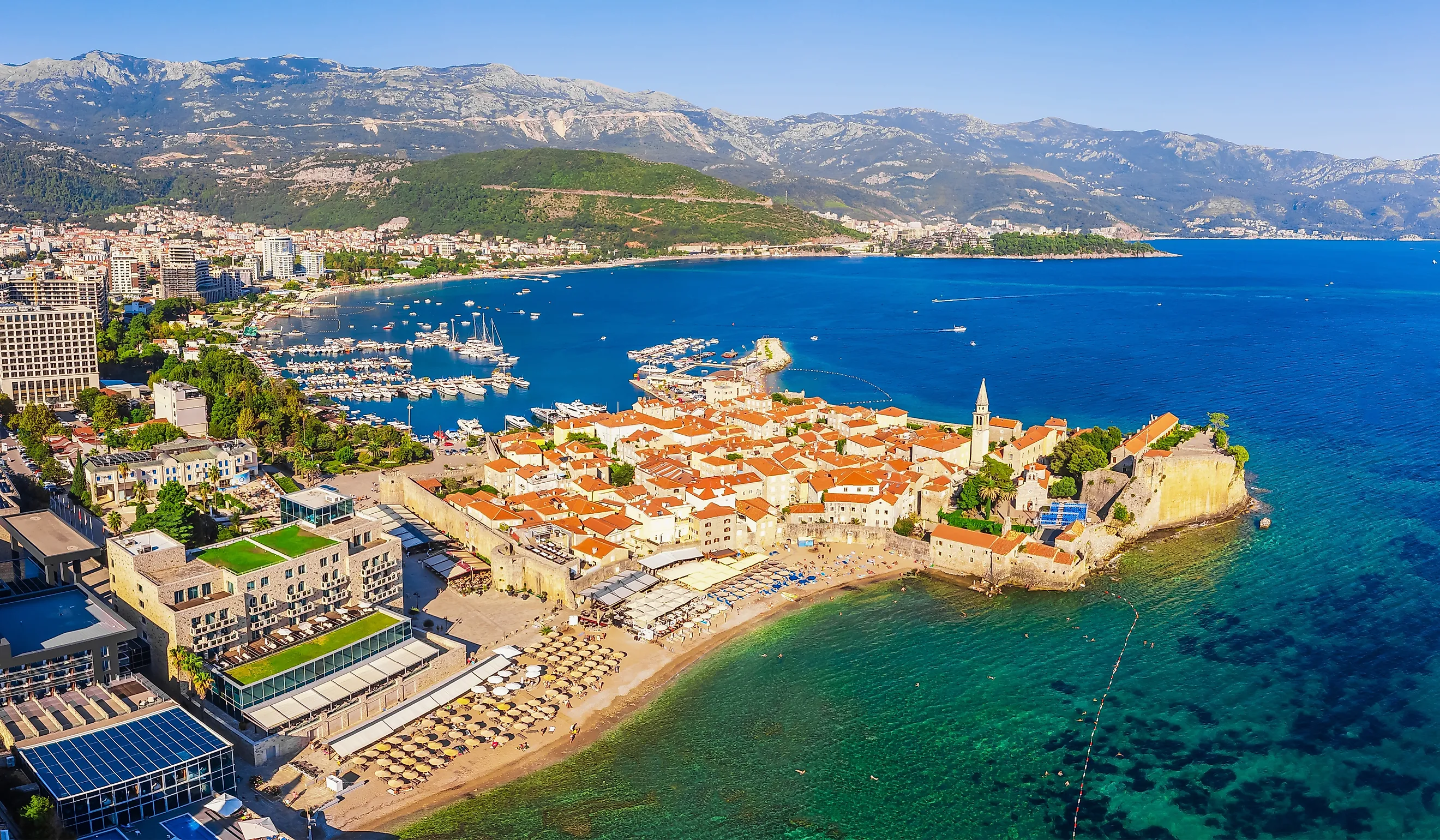
Budva is positioned directly on the Adriatic Sea with an ancient citadel, dazzling riviera, and Dinaric Alps backdrop of its own. Budva's Old Town is a bit more compact than Kotor's (though no less arresting), but it gains a point over its neighbor in terms of its beachfront.
Kolašin

Much of the time, traveling abroad involves checking off pre-planned destinations. But every once in a while, the road gives you a little gift. During a multi-day family drive from Albania to Romania, the ski town of Kolašin presented itself as a perfect layover for the evening. Having thoroughly enjoyed Montenegro's summery coastline, it was refreshing to witness the bounty of Bjelasica Mountain from 3,000 feet above sea level, and get a sense of this base of adventures during its off-season repose. Enjoy the pure mountain air, get to know the band of playful street dogs, and treat yourself to some traditional mountain grub at one of Kolašin's surprisingly plentiful restaurants. Depending on the season, you can then hit the slopes of the two nearby ski resorts (Kolašin 1450 is best for beginners, whereas Kolašin 1600 goes bigger and badder), or launch into Biogradska Gora National Park — home to one of Europe's last remaining primeval forests.
Romania
Timișoara

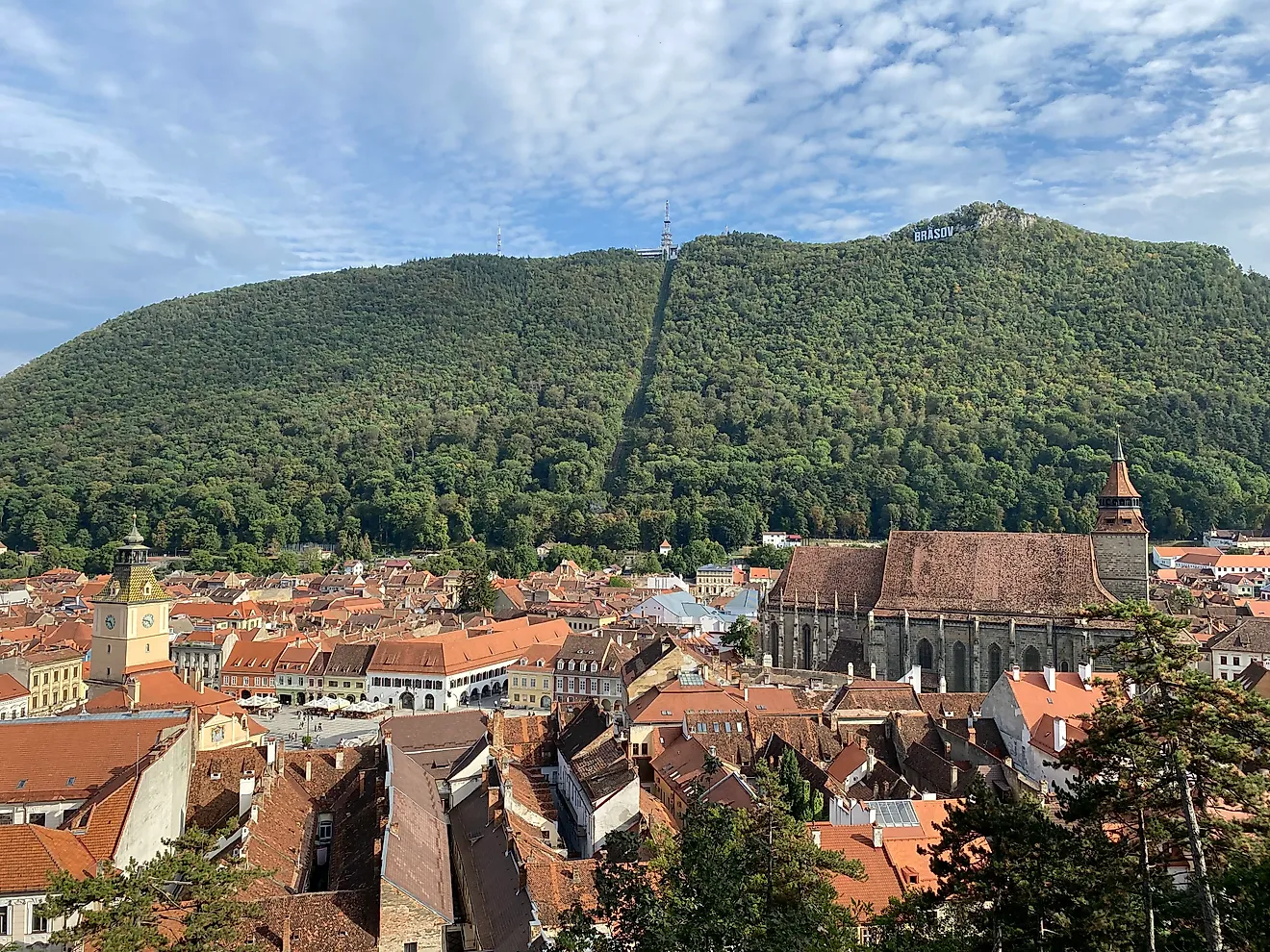
The first mainland European city to receive electric lighting (1884) lit another major spark in 1989, when it kicked off the Romanian Revolution (1989). Timișoara has long since settled into a tranquil, hopeful, and artistic college town — one that was named a European Capital of Culture in 2023. Victory Square (Piața Victoriei) is the newest of its monumental gathering points, but Liberty Square (Piața Libertății) and Union Square (Piața Unirii) are also centrally located and showcase row after row of colorful Baroque buildings. Complimenting its regal architecture are a plethora of peripheral parks. No wonder Timișoara has been dubbed "Green City," as well as the "City of Roses." Make for the Bega River in the evening, and you'll be able to dine at floating restaurants or join the studious youth on its grassy banks. Whatever you do, be sure to sample the town's namesake brew (Timișoreana), which, established in 1718, was the product of Romania's first brewery.
Serbia
Belgrade

If you've had your fill of eloquent architecture and pristine natural settings, then Serbia's capital city (formerly the capital of Yugoslavia) will deliver a healthy dose of that Balkan grit. Owing to sustained conflicts through the 1990s and into the new millennium, Serbia was one of the last countries in this cluster to open to tourism. Belgrade(Beograd), therefore, still bears some scars. With that said, plenty of historic sites are still standing, and the people certainly know how to have a good time. Case in point, the Belgrade Beer Fest, with its free admission, 90+ beer brands, and constant stream of concerts, draws half a million people here each August. It's been a few years since I attended (ok, ten!), but I still remember this rowdy communal event fondly.
Turkey
Istanbul

Istanbul (formerly Constantinople and before that, Byzantium) is, by far, the most visited of all aforementioned Balkan destinations. In fact, this Turkish metropolis consistently ranks as one of the top cities in the world in terms of international tourism. This is no fluke or passive trend. Istanbul transcends continents (meaning that only the European half qualifies as Balkan, not its Asian hemisphere), melds empires (i.e., Greek, Roman, Byzantine, Latin, Ottoman), and develops ever onwards as one of the great global hubs. Underlying its eclectic visitor base is a population of 16 million, predominantly Sunni Muslim, residents. As such, and just like in Mostar, minarets pierce Istanbul's low-lying skyline, and amplify adhans (i.e., the five times daily call to prayer) throughout its countless neighborhoods, and across the Bosphorus Strait — briefly overpowering the honking of horns and solicitations from menu-wielding waiters and eager shopkeepers.

It's tough to know where to begin as a greenhorn visitor. The Historic Areas of Istanbul UNESCO World Heritage Site covers four sizable areas on the city's northwestern peninsula. Then you've got places like Galata, with its titular 14th-century tower, Taksim Square (Taksim Meydanı) — the focal point of modern Istanbul, the Grand Bazaar, and literally countless other wide-ranging attractions. So fuel up on Turkish coffee and doner, and get hustling!
Bring on the Balkans
I hope that I was able to realign some dated connotations for certain major cities, and I also hope to have introduced you to some entirely unknown lands. Having visited nearly every country in the Balkans (including the ones in its political and geographical gray areas), I can confidently state that it is one of the most well-rounded regions for budget-conscious and novelty-seeking travelers. The Balkans is beautiful, but a little edgy; sufficiently developed, but not overdone; welcoming, but culturally unwavering (you'll see what I mean). I won't lie, not every spot is a slam dunk, but if you're yearning to clear the classic Eurotrip orbit, then this list should set you up for success.