Britain’s National Archives Mark 250 Years of American Independence
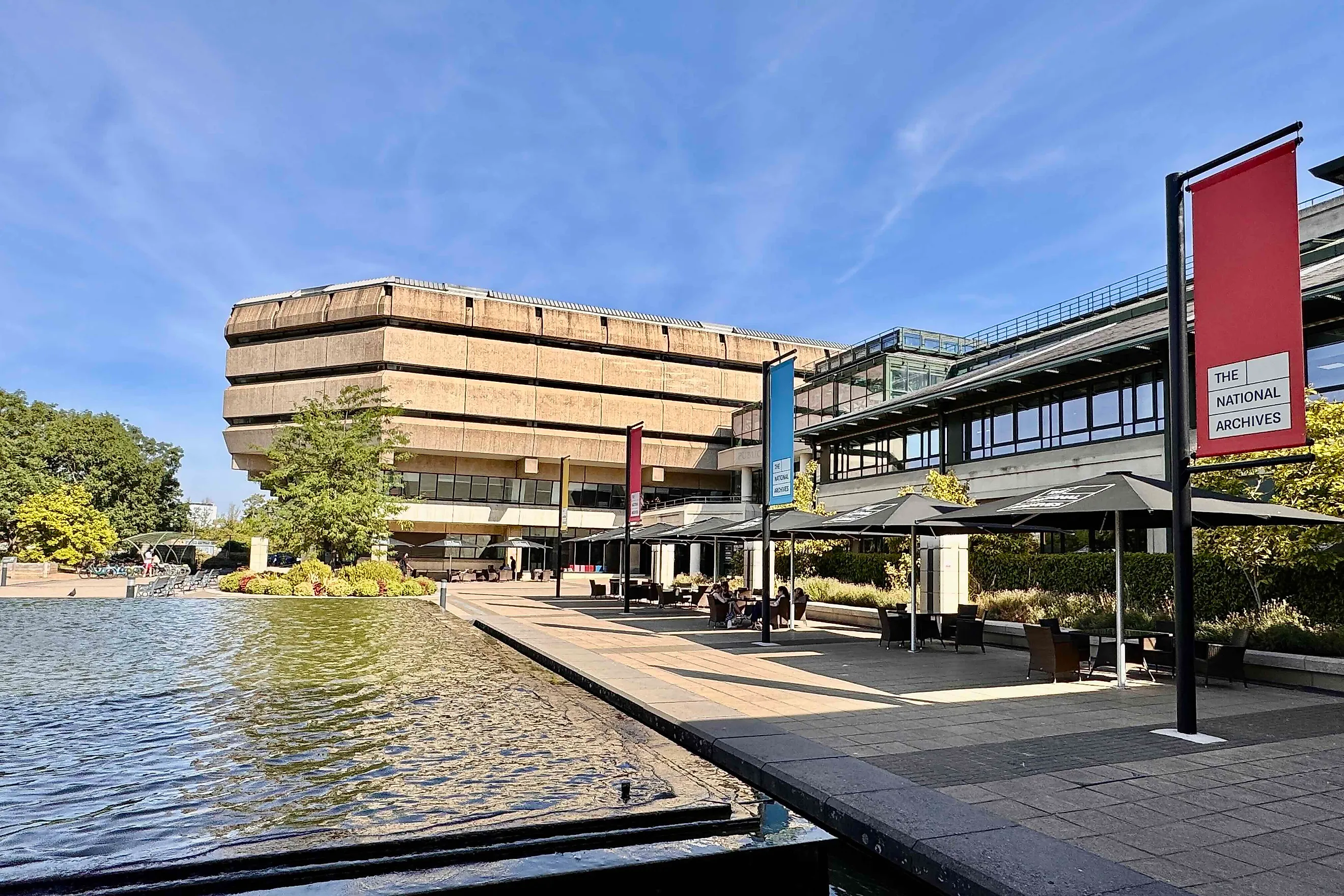
The paper trail left behind by both sides during the American Revolution was extensive. And not all of it stayed in America. A great deal of paperwork crossed the Atlantic before, during, and after the war, and was filed away by the British government. Now kept at The National Archives at Kew, in the London Borough of Richmond upon Thames, some of the most important documents from this period are now on public display and make for a fantastic outing. Revolution 250, subtitled America's Independence Story 1763-1783, marks the 250th anniversary of the Declaration of Independence and traces the causes of the conflict, the fighting itself, and the consequences.
What To Expect

The 20 years the exhibition covers opens with the Treaty of Paris of 1763, which ended the Seven Years' War and left Britain in control of most of the Atlantic seaboard of North America. It closes with the Treaty of Paris of 1783, in which Britain recognized the United States as a nation.
In between are Acts of Parliament that provoked the colonies, the intelligence reports and intercepted letters that circulated during the fighting, and even the ledgers that recorded the cost of the war. This fascinating story is told in three sections, covering causes, conflict, and consequences.
Admission is free, and a free audio tour can be downloaded before arrival or by scanning the handy onsite QR codes. Numbered headphone symbols tell you which track to play, and the commentary comes from the curators themselves. Tours of the exhibition are also available on select dates through to 13 November.
The Road to Rebellion

The first room features a large, framed map of North America showing the colonial boundaries in 1763 and the locations of Indigenous nations after France ceded its mainland territories. On paper at least, the British Empire ruled the continent's Atlantic colonies. In practice, the Europeans controlled port cities and waterways, with forts holding key positions inland. The original 1763 treaty is displayed nearby, setting out the transfer of Florida from Spain, and of Canada and the lands east of the Mississippi River from France.
The troubles all started with paperwork. The Stamp Act of 1765 required a fee, receipted by a stamp, on official printed material produced in the colonies. Wills, deeds, contracts, mortgages, and newspapers all fell under it, which made it almost impossible to avoid. It was also imposed directly from London, cutting through the authority of each of the Thirteen Colonies to pass their own laws and raise their own taxes.

Boycotts of British goods followed, and the Act was repealed in under a year. But the calm before the storm didn't last long, as Parliament soon after passed the Declaratory Act of 1766 stating that Britain reserved the legal right to tax the colonies regardless. Both original Acts are on display.
This section also includes one of the earliest surviving accounts of the event that became known as the Boston Tea Party. Filed by a British officer, the report is placed next to a colonial newspaper account of the same night. There's also a document listing the destroyed cargo ship by ship, with a total value of £9,659 (more than £1,250,000 today).
For American Eyes Only

Several documents deal with intercepted correspondence, among them a letter from Benjamin Franklin, then living in London. Addressed to the Speaker of the Massachusetts House of Representatives, Thomas Cushing, it was sent in September 1774, and in it, Franklin states plainly that he believes their letters are being intercepted. As a result, he states he's being careful not to name the people he's been meeting with in case the letter falls into the wrong hands. Which, of course, it did.
In 1778, Adrienne de Lafayette wrote from Bordeaux to her husband, the Marquis de Lafayette, who was serving with the American forces. The ship carrying the letter was captured by a British privateer and brought into a vice-Admiralty court in New York, where its cargo and paperwork were seized. The letter was never delivered, and Revolution 250 is its first public showing.
Codes and ciphers appear once the fighting starts. A deciphered letter from Henry Clinton, the British commander-in-chief in North America, to Charles Cornwallis on 6 September 1781, warns of a rebel advance towards Yorktown. While the British couldn't know it, those advancing rebels were to be their undoing.
The Declaration of Independence

Two documents on display explain how the point of no return was reached. The Olive Branch Petition of July 1775 was the Continental Congress's last attempt at a settlement, offering peace as faithful subjects if the offending Acts were repealed. This remarkably preserved document carries the signatures of many of the men who would later become America's Founding Fathers.
George III never saw it. By the time it arrived in London, he had already issued the Proclamation for Suppressing Rebellion and Sedition, declaring the colonies in open revolt and justifying a military response. Both are on display, a few feet apart, in the order events happened.
The big news here, though, is the copy of the Declaration of Independence. Printed overnight in Philadelphia by John Dunlap on 4 July 1776 and known as the Dunlap broadsides, it is one of roughly 200 copies sent to cities and towns across the Thirteen Colonies. The heading reads "In Congress, July 4, 1776", followed by the text and, at the foot, the signatures of John Hancock as President with Charles Thomson as Secretary. It's the version most Americans would have read in 1776.
The National Archives holds four Dunlap broadsides, the largest collection anywhere, after work on this very exhibition led curators to reattribute a fourth sheet as the 27th known survivor. The copy you will see was the first to have reached Britain. It came into the hands of Richard Howe, the vice-admiral commanding the Royal Navy fleet in North America, and was forwarded to the Admiralty Secretary in London on 28 July 1776.
The End of the War

The turning point of the war is marked by a short note sent in October 1781, at Yorktown in Virginia, by Cornwallis to George Washington. In it, the leader of the besieged British forces asks for a ceasefire to negotiate terms. Washington's reply, dictated and signed by him, accepted a two-hour halt and expressed his desire to prevent "further effusion of blood."
It's a brief, businesslike document that set in motion the negotiations that ended British rule in America. Cornwallis kept the letter and took it home to England, where it stayed in the family archive for a century before being given to the Public Record Office, the predecessor of The National Archives, in 1880.
Also of interest is a long ledger recording what it took to keep British forces in New York going during 1782 and 1783. Its columns include bushels of coal, cords of wood, pounds of candles, and gallons of oil, with the running totals reaching into the thousands.
The final documents are the 1783 Treaty of Paris, in which Britain recognized the United States and gave up its claim to the Thirteen Colonies, and an early American map of the continent showing the new nation's flag. For Britain, the treaty was a reversal of everything it had won 20 years earlier. Seeing the Stars and Stripes marked on a map filed in a British government archive is a fitting conclusion to this must-see exhibition.
Research, Reading Rooms, and Other Displays

While Revolution 250 is one reason to visit The National Archives, the building is so much more than an exhibition hall. Entry is free, and permanent displays include a replica of the British Cabinet Table where you can sit and read documents relating to 20 prime ministers of the 20th century, beginning with Lord Salisbury and ending with Tony Blair.
The Research and Enquiries Room and Library is also open to the public, is free, and includes computers with access to digitized records and staffed help desks. To see original documents in the reading rooms, you need a reader's ticket, which is also free. You must be 16 or over, register online in advance or on arrival, watch a short video on handling documents, bring two forms of ID, and have your photo taken at the "Start Here" desk on the first floor.
Records are found through the Archive's online catalogue (Discovery), which covers over 27 million records held at Kew and should be requested in advance of your visit, as some material may be stored offsite. For those wanting to trace American or Canadian ancestors, passenger lists, records of births and deaths at sea, passport registers, naturalization papers, and even Loyalist claims are all kept here.
Tips and Tactics
- The National Archives is located at Kew, Richmond, TW9 4DU, on the south bank of the River Thames in southwest London.
- The nearest station is Kew Gardens on the London Underground's District line and London Overground; it's under 10 minutes on foot via Ruskin Avenue. Kew Bridge station is a 20-minute walk. The R68 bus from Richmond terminates at the entrance.
- Admission to Revolution 250: America's Independence Story 1763-1783 is free and needs no ticket. Groups of 10 or more must book at least seven days ahead.
- The café and shop keep their own hours, so check the opening times page before you travel.
- Allow two hours for the exhibition alone, or a full day if you also want to use the reading rooms.
- To save time, register for a reader's ticket online before your visit and order documents in advance.
- Kew Gardens, the Royal Botanic Gardens, is a 10-minute walk away.
- Parking is available but can get busy, so try to arrive early. Don't forget to pay at the kiosk in the lobby before leaving.
- For information about this and other exhibitions, visit nationalarchives.gov.uk.
A Remarkable Historical Journey
Revolution 250 runs until 29 November 2026 and is one of the few places where the American Revolution can be seen from the other side of the argument. The Dunlap broadside alone justifies the journey, but the intercepted letters, the ledgers and the Acts of Parliament around it are what make the exhibition so worth the time. The facility itself remains free and open long after the exhibition closes, with reading rooms that anyone over 16 can use. For those with American or Loyalist ancestry or an interest in American (and British) history, a visit to The National Archives is hard to beat.