Visiting the London Townhouse Where Benjamin Franklin Helped Make America
For 16 years, Benjamin Franklin lived in a modest Georgian townhouse on Craven Street in London. Remarkably, it's the only surviving home of one of America's best-known Founding Fathers. I visited that house, now a museum near the River Thames and Trafalgar Square. There I saw the very rooms where he ran experiments and entertained intellectuals while pursuing the political path that turned a once-loyal British subject into an American revolutionary.
Franklin's Home on Craven Street

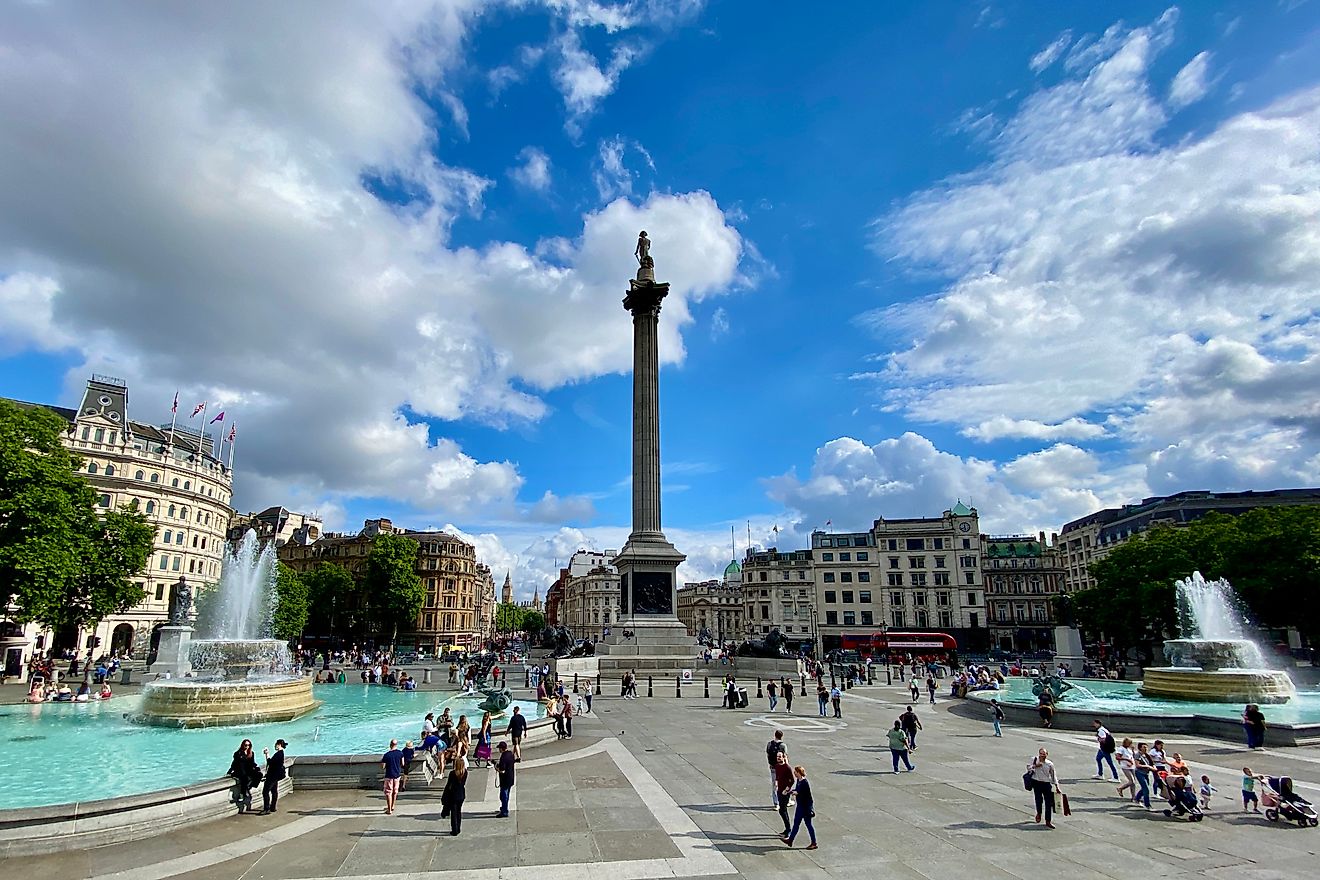
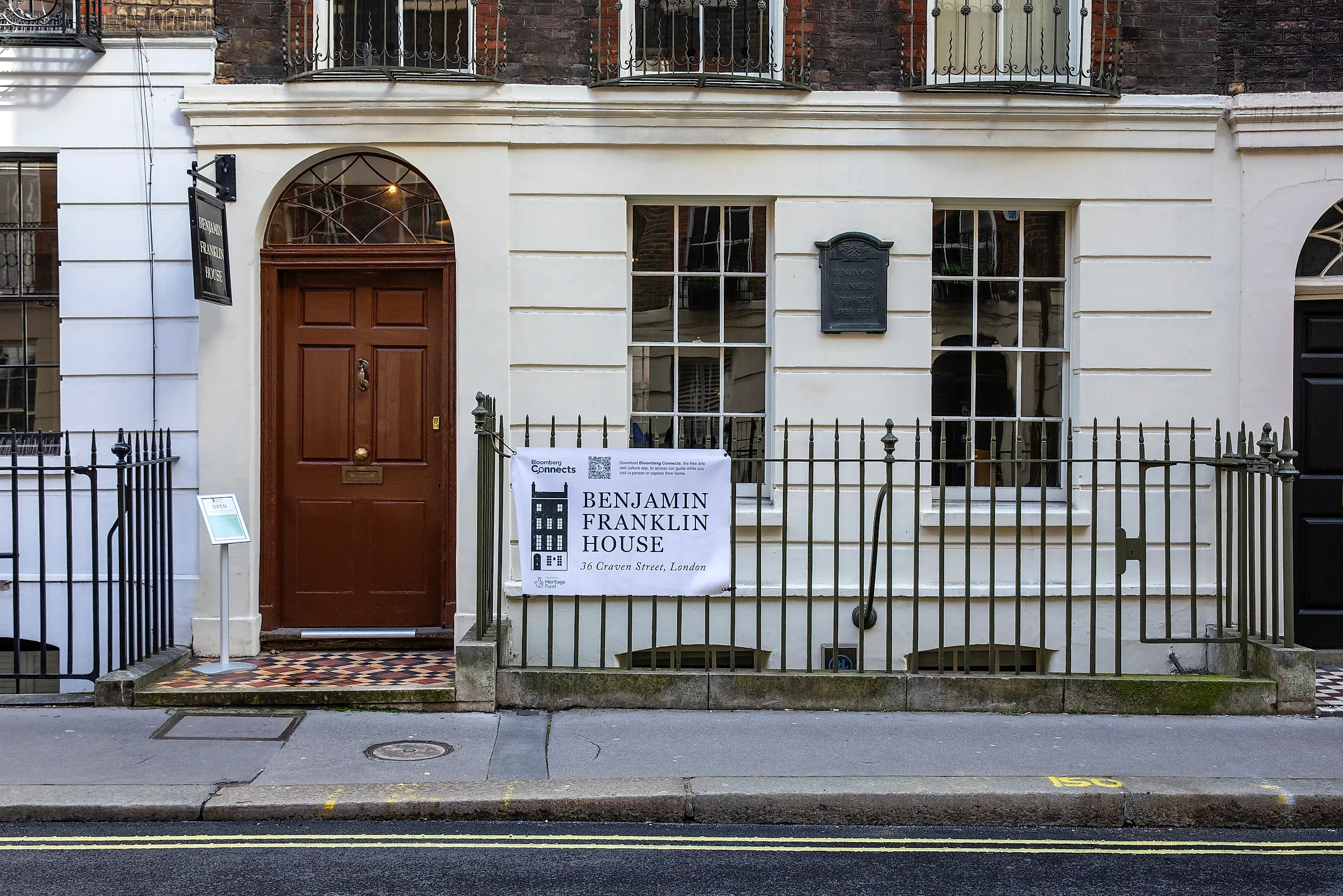
Thirty-Six Craven Street dates to the 1730s and stands on a quiet road connecting the Strand to the Victoria Embankment. Despite its proximity to attractions like Trafalgar Square and the National Gallery, entering the street is like being transported to another place and time.
I learned that Franklin was an agent for the Pennsylvania Assembly, arriving in London in 1757 to settle the colony's dispute with the Penn family over taxation. The Craven Street address he took rooms in was a lodging house run by a widow, Margaret Stevenson. Although he initially only intended to stay for six months, Craven Street was to be his home from 1757 to 1775, broken only by an 18-month spell back in Philadelphia.
It was interesting to hear how Franklin grew close to the Stevenson family, particularly Margaret's daughter, Mary "Polly" Stevenson, with whom he developed a lifelong friendship. From these same rooms, he penned letters to great philosophers and scientists, ran an unofficial diplomatic office, and pursued the scientific experiments that brought him fame across Europe.
Pursuing American Interests in London

My visit revealed that Franklin's years on Craven Street were anything but dull. While he originally made the journey to argue that Pennsylvania's elected assembly should control taxation in the colony, he proved to be so good at it that soon Georgia, New Jersey, and Massachusetts sought out his services.
And when Franklin argued a case, his high standing in London meant people listened. Elected a Fellow of the prestigious Royal Society, Britain's national academy of sciences, in 1756, he moved as easily among circles of leading scientists as he did among writers and politicians.
The mood changed sharply after the British Parliament passed the Stamp Act in 1765, a move that placed a direct tax on the American colonies. Matters came to a head in February 1766 when Franklin was called to testify before a committee of the whole House of Commons. Questioned for several hours before a packed chamber, he explained that the colonies had always taxed themselves through their own assemblies and warned of the consequences if the new taxes weren't repealed. It would, he said, lead to "A total loss of the respect and affection the people of America bear to this country."
The Conflict Between Crown and Colony

The act was repealed the next month, and Franklin was widely credited on both sides of the Atlantic for having made it happen. Despite this, however, the decade that followed widened the rift between the colonies and the Empire. Working from Craven Street, Franklin tried his best to prevent a complete breakdown of the relationship, but a further round of colonial taxes and the Boston Tea Party of 1773 meant confrontation was inevitable.
Things came to a head in January 1774 when Franklin was publicly condemned before the Privy Council, the monarch's senior advisers. The hearing followed his role in leaking letters in which the royal governor of Massachusetts had urged the Crown to curb colonial liberties. Verbally attacked for an hour, the statesman stood in silence, a true sign of not only his strength of character but also his political prowess.
Franklin left London for good in March 1775, just weeks before the first battle of the American Revolutionary War at Lexington and Concord. After 16 years of calling Craven Street home, it must have been an emotional farewell.
Franklin's London Legacy

With 2026 marking the 250th anniversary of American Independence, there's never been a better time to visit Franklin's London home. Now owned and managed by the Friends of Benjamin Franklin House, careful restoration has uncovered many original features that would have been familiar to Franklin. Walking the original stairs that were once used by him, treading the same floorboards, and even passing the original front door he would have opened on countless occasions, is a truly remarkable experience.
One of the quirkier items on display is a playable replica of a glass harmonica. Designed by Franklin in 1761, this unique musical instrument produces notes from a row of spinning glass bowls touched with wet fingers. Other artifacts include Franklin's leather wallet, inscribed "B. Franklin, Craven Street, Strand, London," and the home's original ram's-head door knocker.

The most unusual discovery during restoration was the unearthing of the bones of at least 10 people. Buried beneath the building, researchers linked them to William Hewson, the anatomist who married Polly Stevenson, and who ran a small anatomy school at the house in the early 1770s. Hewson is thought to have used the basement for dissections, a common practice among doctors and scientists at the time. While Franklin no doubt knew of the school, he's not believed to have taken part.
America's 250th Anniversary

July 4, 2026, marks 250 years since Benjamin Franklin and the other signatories added their names to the Declaration of Independence. In fact, Franklin is the only individual who signed all of America's founding documents: the Declaration of Independence (1776), the Treaty of Paris (1783), and the U.S. Constitution (1787). That he did so is a testament to the man's influence and his important role in shaping the history of the United States.
The Semiquincentennial, as the anniversary has been dubbed, gives Franklin's London townhouse particular significance. It was here that his transformation from loyal British subject to revolutionary took place. To mark the occasion, the museum is hosting special two-hour walking tours from Craven Street that visit several London sites that would have been known to Franklin.
A podcast, Finding a Founder, traces his life across Boston, Philadelphia, and London through interviews with experts at institutions in all three cities. The house also runs an online exhibition, Ink and Independence, which examines 13 documents Franklin wrote between 1774 and 1776 as he shifted from imperial mediator to colonial revolutionary.
Visiting Benjamin Franklin's London
Here's what you need to know:
- Benjamin Franklin House is located at 36 Craven Street, London WC2N 5NF.
- The nearest train station, Charing Cross, is literally around the corner.
- The nearest Underground stations are Charing Cross and Embankment.
- The museum opens on Wednesdays and Thursdays for self-guided tours. Architectural Tours are offered on Fridays, while a live Historical Experience with costumed guides is available on weekends. Private tours can be arranged on weekdays by request. Advance booking for all tours is recommended.
- For further details, visit the official Benjamin Franklin House website at https://benjaminfranklinhouse.org/.