11 Most Breathtaking Towns on the Gulf Coast
For the first time in five years, there are oyster boats working Apalachicola Bay. The wild harvest reopened to permit holders on the first of October after a closure that ran from 2020, imposed when a fishery that once supplied a tenth of the nation's oysters collapsed almost completely.
That is the Gulf Coast in miniature: places that take a beating and come back, usually smaller and stranger than before. These eleven towns run from the Texas barrier islands around to Florida's Forgotten Coast, and every one of them has something you will not find in the resort strips.
Port Aransas, Texas

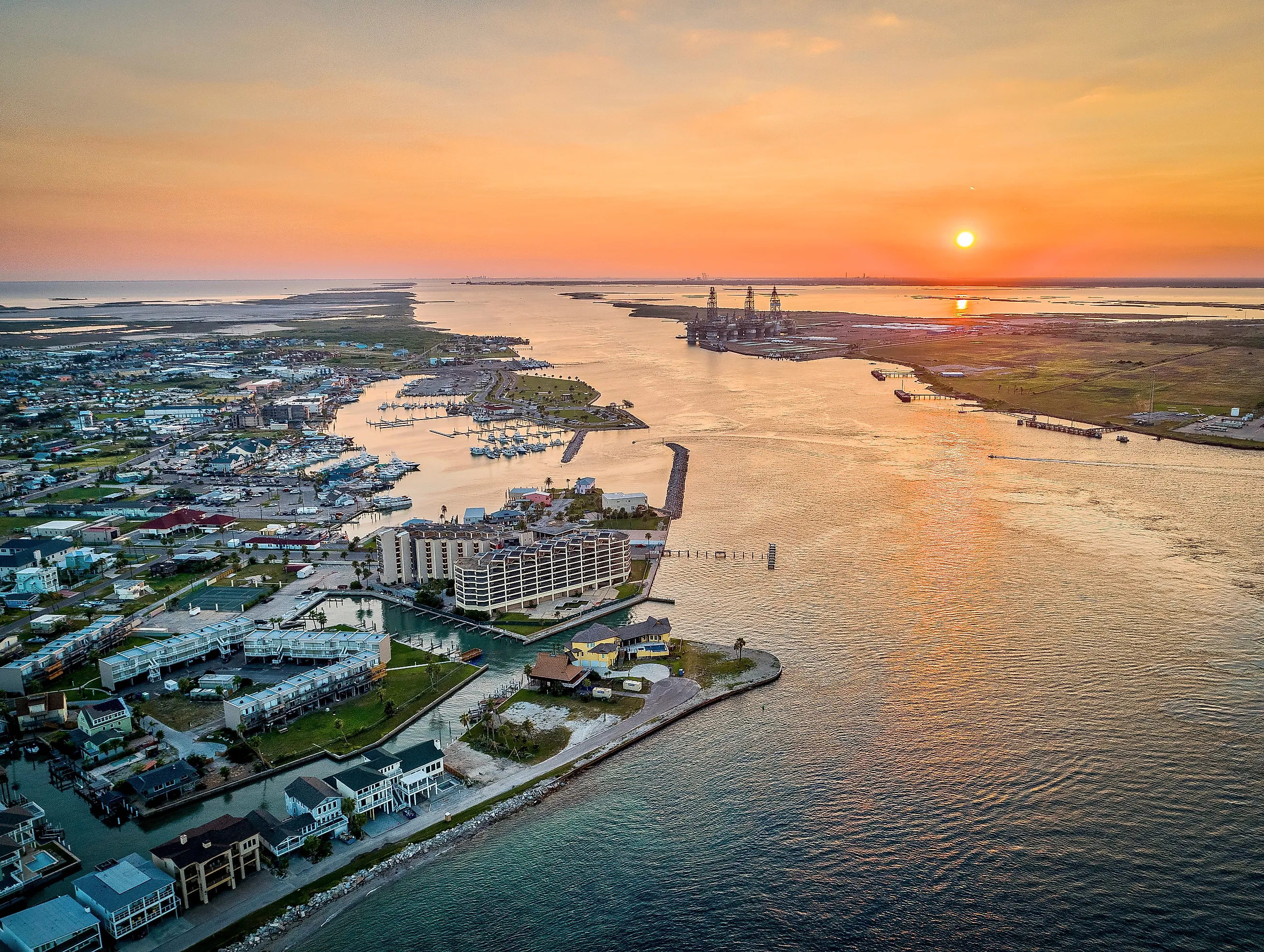
Golf carts outnumber cars here, and the only ways onto the island are a causeway or a free ferry that runs around the clock. Port Aransas sits at the north end of Mustang Island with the Gulf on one side and the Corpus Christi Ship Channel on the other, close enough that tankers pass the beach.
The Leonabelle Turnbull Birding Center is the quiet standout: a boardwalk over a wastewater marsh, which sounds unpromising and is in fact one of the best birding spots on the Texas coast, with roseate spoonbills, reddish egrets, and a resident alligator. The University of Texas Marine Science Institute runs public tours of its labs.
Mustang Island State Park has five miles of undeveloped beach at the southern end, good for surf fishing and shelling. You can drive on much of the sand, though you will need a beach parking permit, sold locally.
Rockport, Texas

There is a live oak at Goose Island State Park, ten minutes north of town, that was already a century old when Columbus sailed. The Big Tree is estimated at around a thousand years, has a trunk circumference of 35 feet, and has survived every hurricane on record, Harvey included.
Harvey made landfall here in 2017 as a Category 4 and took much of the town with it. Rockport has rebuilt, and the arts community that drew painters and sculptors here for decades came back with it. The Rockport Center for the Arts reopened in a purpose-built facility, and the Texas Maritime Museum covers shipwrecks, offshore drilling, and coastal commerce.
Rockport Beach was the first Blue Wave certified beach in Texas, a mile of protected shoreline on Aransas Bay with no surf, which makes it unusually good for small children. Charlotte Plummer's has been serving the harbour since 1983, and brown pelicans dive for their own dinner outside the windows.
Abbeville, Louisiana

Every November, volunteers crack more than 5,000 eggs into a twelve-foot skillet in the middle of town. The Giant Omelette Celebration comes from a legend about Napoleon ordering an omelette large enough to feed his army, and Abbeville is one of a handful of towns worldwide in the Confrérie that stages it.
About twenty miles inland from the Gulf, this is the seat of Vermilion Parish and the cultural centre of Cajun country, where Cajun French is still heard on the street and the accordion is the dominant instrument. The town square is anchored by the courthouse and ringed by cast-iron galleries under Spanish moss.
St. Mary Magdalen Catholic Church went up in 1910 in French Gothic style, and its spires are visible from most of town. The Abbeville Cultural and Historical Alliance runs a museum in the old Southern Pacific depot covering the town's founding in 1843 by a French priest.
Bay St. Louis, Mississippi

Hurricane Katrina's eye passed almost directly over Bay St. Louis in 2005 and destroyed most of what stood here. What came back is a genuinely different town, rebuilt around the arts rather than around the casinos that reshaped the coast further east.
Old Town runs along Main Street in restored cottages, with murals on the walls and the Second Saturday Artwalk each month. The Alice Moseley Folk Art Museum sits in the old train depot and shows the work of a woman who did not start painting until she was 65.
The 100 Men Hall is the one not to skip. Built in 1922 as a benevolent society hall, it became a stop on the Chitlin' Circuit, with Etta James, James Brown, and Big Joe Turner all playing the room. It still books live music. The municipal harbour and the public beach handle the rest of an afternoon.
Pass Christian, Mississippi

Scenic Drive runs for miles along the water past antebellum houses that somehow survived both Camille in 1969 and Katrina in 2005, two of the most destructive storms ever to hit the American coast. Locals call the town The Pass, and the drive is the single best stretch of road on the Mississippi coast.
The harbour is a working one, with the shrimp fleet alongside the sailboats. Pass Christian claims the second-oldest yacht club in the country, founded in 1849, and the Gulf sailing tradition here predates most of what is around it.
The public beach runs the length of town and is wide, quiet, and free, which is increasingly unusual. War Memorial Park has the picnic tables and the fishing. For oysters pulled from the Mississippi Sound, the shops along the harbour sell them by the sack.
Ocean Springs, Mississippi

Walter Anderson used to row a skiff twelve miles out to Horn Island alone and stay for weeks, painting, with no way to call for help. He was once found lashed to a tree on the island during a hurricane because he wanted to see it properly. The Walter Anderson Museum of Art holds what he brought back.
His presence still defines this town. Live oaks arch over the residential streets, and Ocean Springs runs more galleries and studios per block than anywhere else on this coast, in buildings over a century old. The Mary C. O'Keefe Cultural Center, a restored 1920s school, programs concerts and theatre.
The Davis Bayou section of Gulf Islands National Seashore is minutes from downtown, with trails, a fishing pier, and launches for kayaks. Vestige, in a restored 1902 house, built the town's culinary reputation on Japanese technique applied to Gulf ingredients.
Fairhope, Alabama

A few nights each summer, the bay gives up. Oxygen-depleted water drives flounder, crabs, and shrimp into the shallows in such numbers that people wade out with buckets and gig lights at two in the morning. The jubilee happens reliably in only two places on earth: here and Tokyo Bay.
Founded in 1894 as a single-tax colony by followers of the economist Henry George, Fairhope still leases much of its land through the original corporation. That founding idealism left a town of oak-lined streets, year-round flower beds, and a bluff that drops to the water.
The Municipal Pier runs 1,448 feet out into Mobile Bay and is the place to be at sunset. Page and Palette has been an independent bookshop since 1968 and draws national authors. The Eastern Shore Art Center occupies a historic schoolhouse.
Seaside, Florida

Seaside was an argument before it was a town. Robert Davis inherited 80 acres of scrubland on the Panhandle in 1978 and set out to build somewhere people could live without a car, with a strict code governing porch depths, picket fences, and roof pitch. It launched the New Urbanism movement and has been copied, badly, across the country ever since.
It also looks uncanny, which is why The Truman Show was filmed here in 1997 with almost no set dressing. The pastel cottages, the white picket fences, and the central square are all real and all original.
The town sits on Scenic Highway 30A, with sugar-white sand and a run of rare coastal dune lakes nearby, a landform found in only a handful of places worldwide. The Airstream food trucks on the square are an institution, and Bud and Alley's has been on the beach since 1986.
Apalachicola, Florida

This bay once produced 90 percent of Florida's oysters and a tenth of the nation's. Then the water wars upstream, drought, and overharvesting brought the fishery down, a federal disaster was declared in 2013, and the state closed the bay outright in 2020. Habitat fell from 10,000 acres of reef to under 500, a 95 percent collapse.
After more than $38 million in restoration, Apalachicola Bay reopened to a limited wild harvest in January 2026 and again this month, on a handful of restored reefs with permits capped by lottery. Oystermen are back on the water for the first time in five years, and the town knows exactly how fragile that is.
The historic district holds over 900 buildings, Victorian and Greek Revival, on brick streets sloping to the river. The John Gorrie Museum honours the physician who built the first mechanical ice machine here in the 1840s while trying to cool yellow fever patients, inventing refrigeration and air conditioning as a side effect. Up the Creek Raw Bar serves oysters with pelicans going past the window.
Cedar Key, Florida

Cedar Key once supplied half the pencils in America. The cedar forests that gave the islands their name were cut out by the 1890s, the industry collapsed, and the town has spent the century since being quietly one of the last places in Florida that looks like Florida used to.
Clams replaced cedar. The waters around these islands now produce a large share of the nation's farmed clams, a deliberate retraining programme after Florida's net ban ended commercial fishing here in the 1990s, and it is the reason the town survived at all.
About 700 people live here, three hours from the nearest theme park. The Cedar Key National Wildlife Refuge protects offshore islands where thousands of birds nest, and kayaking the channels puts you among manatees and roseate spoonbills. One caution: this is a low, exposed coast, and recent hurricanes have hit the town hard, so check what has reopened before you book.
Matlacha, Florida

Hurricane Ian cut the bridge to Pine Island in September 2022 and left Matlacha unreachable by road. The island is barely wider than its main street, and the storm took most of what was on it. The galleries have reopened in repainted buildings, brighter than before, which is roughly how this place handles everything.
Say it Mat-la-SHAY. Matlacha is a fishing village turned art colony, a few hundred people on a strip of land in Pine Island Sound, and the painted buildings along the main drag are the reason photographers come.
It is also a serious fishing destination. Matlacha Pass Aquatic Preserve is an estuary known for snook, redfish, and tarpon, and the bridge through town is nicknamed the Fishingest Bridge in the World. Matlacha Community Park has a public kayak launch and pier for anyone who would rather go under their own power.
Working Out A Route
The Gulf shore runs about 1,600 miles across five states, so this is not a single trip. The Texas pair of Port Aransas and Rockport sit half an hour apart on Aransas Bay. The Mississippi three, Bay St. Louis, Pass Christian, and Ocean Springs, string along 60 miles of coast with Fairhope a short hop east into Alabama, which makes that the easiest multi-town weekend on the list.
Florida's four are spread across the entire state and need separate trips: Seaside and Apalachicola on the Panhandle about two hours apart, Cedar Key on the Nature Coast, and Matlacha far south near Fort Myers. Abbeville sits inland in Cajun country and works best paired with Lafayette. Two practical notes: hurricane season runs through November, and several of these towns are still rebuilding, so check current conditions rather than assuming.