9 Slow-Paced Towns To Visit On The Gulf Coast
The Gulf Coast's subtropical climate supports a different pace of life than almost anywhere else in the country. The nine small towns below span Florida, Alabama, Mississippi, and Texas, and most of them were built around water: working harbours, fishing piers, bird sanctuaries, and barrier-island beaches. They have preserved historic downtowns, bird-watching spots, and Gulf views in common, but each town has its own specific history and identity.
Fairhope, Alabama

Fairhope, Alabama, was founded in 1894 and incorporated in 1908 as a single-tax colony based on the economic theories of Henry George. The original utopian experiment gave the town its progressive character, and it has drawn artists, writers, and thinkers ever since. The Fairhope Pier on Mobile Bay is the most-used public gathering place in town, anchoring the bayfront with walking, fishing, and sunset-watching. Weeks Bay Reserve, a protected estuary just south of town, preserves hardwood forests, salt marshes, and freshwater wetlands with interpretive boardwalk trails. The Marietta Johnson Museum honours the educator who founded the Organic School in Fairhope in 1907, an early progressive education model that still operates today. The Eastern Shore Art Center, established in 1952, runs rotating exhibitions and public programs year-round.
Ocean Springs, Mississippi

Ocean Springs sits on the Mississippi Sound just east of Biloxi and has built its reputation on an active arts community. The Walter Anderson Museum of Art preserves the work of the reclusive Mississippi painter who spent much of his life at Shearwater on the Ocean Springs waterfront, producing thousands of nature studies of Gulf coastal life. The Ocean Springs Historic District includes over 80 buildings with 19th-century architecture within walking distance of downtown. Gulf Islands National Seashore's Davis Bayou Area, on the edge of town, preserves coastal marshlands and sits as a gateway to the barrier-island section of the park. Fort Maurepas Park on Biloxi Bay marks the 1699 French landing site that makes Ocean Springs one of the oldest European settlements on the Gulf Coast.
Port St. Joe, Florida

Port St. Joe sits on St. Joseph Bay in the Florida Panhandle, with a working waterfront and deep fishing and boating culture. St. Joseph Peninsula State Park, on the narrow barrier peninsula sheltering the bay, combines white-sand Gulf beaches on one side with bay marshes on the other, with some of the whitest sand in the state. Constitution Convention Museum State Park commemorates the 1838 convention in St. Joseph where delegates drafted Florida's first state constitution, with interpretive exhibits at the site. The Cape San Blas Lighthouse, relocated to Port St. Joe after coastal erosion threatened its original site, is open for climbing with panoramic Gulf views from the top.
Pass Christian, Mississippi

Pass Christian was established as a town in 1848 and is known locally as "The Pass." The town had a strong Gulf Coast summer-resort identity in the 19th and early 20th centuries, though Hurricane Katrina destroyed much of the historic waterfront in 2005. Pass Christian Harbor remains an active commercial and recreational fishing port with nearby paddling access on the Wolf River. War Memorial Park sits at the centre of town with centuries-old live oaks, a classic gazebo, and Gulf views. The surviving historic homes along Scenic Drive, many rebuilt after Katrina, continue the town's antebellum architectural tradition.
Dauphin Island, Alabama

Dauphin Island is a 14-mile barrier island at the mouth of Mobile Bay, connected to the mainland by a three-mile bridge. The Audubon Bird Sanctuary covers 137 acres of maritime forest and is a major stopover on the trans-Gulf migration route, hosting hundreds of species each spring and fall. Fort Gaines, a Civil War fort at the eastern tip of the island, was captured by Union forces during Admiral Farragut's 1864 Battle of Mobile Bay (the famous "Damn the torpedoes" engagement). The fort is open for tours with panoramic views of the bay mouth. Indian Shell Mound Park preserves large Mississippian-period shell middens built up by Indigenous peoples over centuries.
Apalachicola, Florida

Apalachicola sits at the mouth of the Apalachicola River on Apalachicola Bay, a long-standing oyster fishing town where the local seafood industry has defined life for generations. Downtown Riverfront Park runs along the waterfront with picnic tables, views of the shrimp and oyster fleets, and a quiet pace of life year-round. The John Gorrie Museum State Park honours the 19th-century Apalachicola physician who patented a mechanical ice-making machine in 1851, laying the foundation for modern refrigeration and air conditioning. The 1838 Orman House Historic State Park preserves an antebellum cotton-merchant's mansion overlooking the bay. Dr. Julian G. Bruce St. George Island State Park, just offshore, has quiet beaches and salt marsh trails on the barrier island of St. George.
Bay St. Louis, Mississippi

Bay St. Louis, a seaside community on the Mississippi coast about an hour from New Orleans, has an arts colony identity and an eclectic, bohemian downtown that rebuilt itself after Hurricane Katrina destroyed much of the town in 2005. Old Town Beach has the calm swimming conditions typical of the Mississippi Sound, and the Bay St. Louis Harbor marks the centre of Old Town's walkable shopping and restaurant district. The Alice Moseley Folk Art Museum on South Toulme Street houses the work of the self-taught folk artist. The Historic Depot District includes the Mardi Gras Museum and the L and N Train Depot, a 1929 building that serves as the city's visitor centre.
Port Aransas, Texas

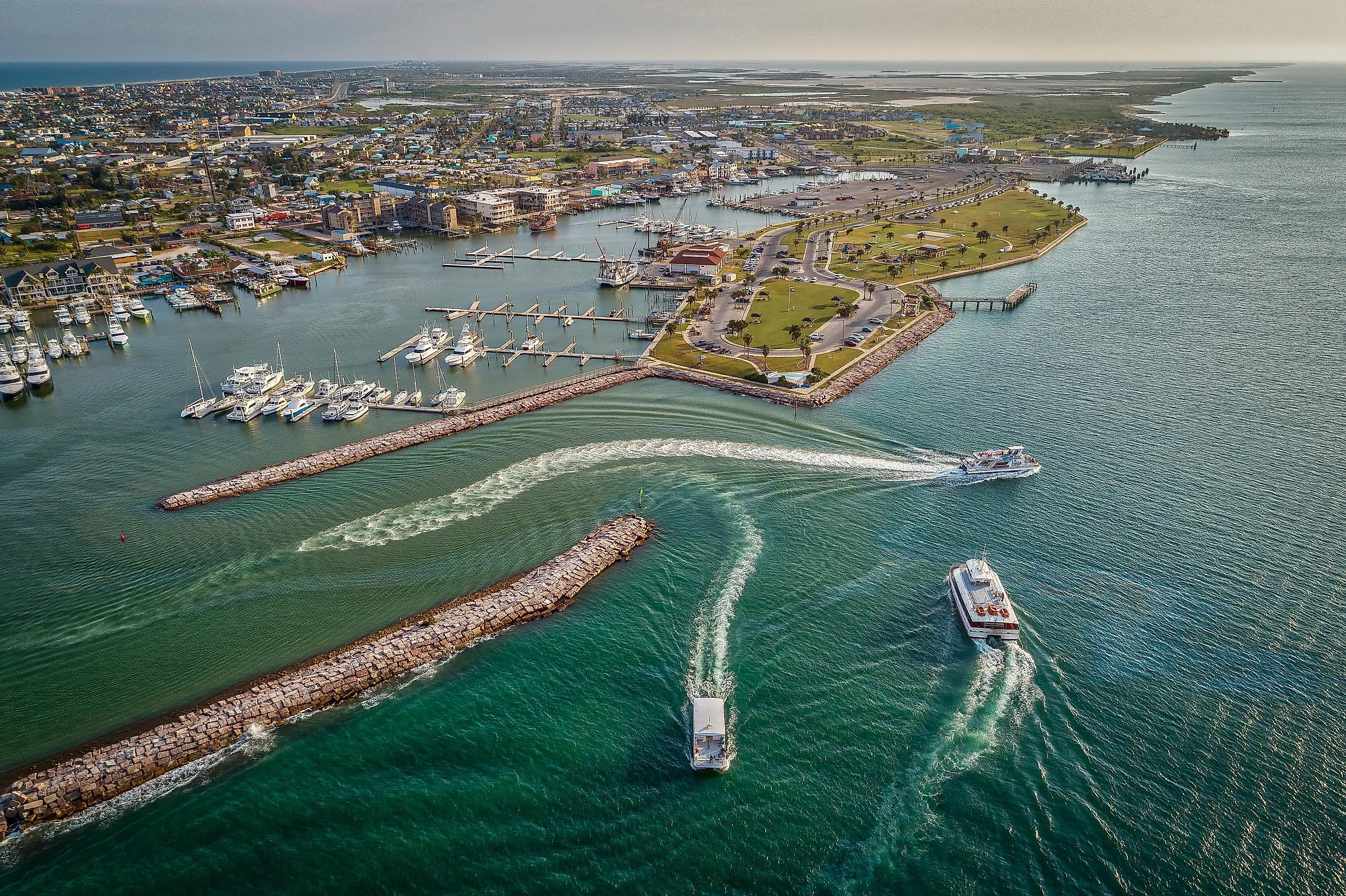
Port Aransas sits on Mustang Island, a 14-mile barrier island off the Texas Gulf Coast. Mustang Island State Park preserves over five miles of coastline with active sea-turtle conservation programs. The spring migration brings exceptional birdwatching, with Port Aransas positioned as a key stop on the Great Texas Coastal Birding Trail. The Leonabelle Turnbull Birding Center has boardwalks over wetland habitat for viewing waterfowl and wading birds. The Port Aransas Preservation and Historical Association, founded in 2002, runs both the local museum and the Farley Boat Works project, where traditional wooden boatbuilding is kept alive through classes and demonstrations.
Seaside, Florida

Seaside is a master-planned community on the Florida Panhandle, designed by architects Andrés Duany and Elizabeth Plater-Zyberk in the early 1980s as one of the founding examples of the New Urbanism movement. The town's pastel-coloured cottages, narrow streets, public gathering spaces, and walkable design became so iconic that Seaside served as the filming location for the 1998 film The Truman Show. The beach itself is one of the community's biggest draws, with white sand and emerald-green Gulf water typical of the Panhandle. Grayton Beach State Park nearby offers coastal dune lakes (a rare ecosystem found in only a handful of places on Earth), scenic trails, and preserved dune systems. The Seaside Amphitheater hosts community events, and Ruskin Place Artist Colony houses independent galleries in a central courtyard.
Nine Gulf Coast Towns, One Shared Coastline
These nine towns differ in state, climate microzone, and specific identity, but all benefit from a similar Gulf Coast pace: subtropical temperatures, seafood-driven food culture, bird migration routes, and historic downtowns that kept their 19th- and early 20th-century architecture. Apalachicola runs on oyster boats. Seaside runs on master-planned cottages. Dauphin Island runs on bird sanctuaries. The common thread is that the Gulf of Mexico shapes the economy, the architecture, and the culture of all of them.