The State Parks With The Most Moose Encounters
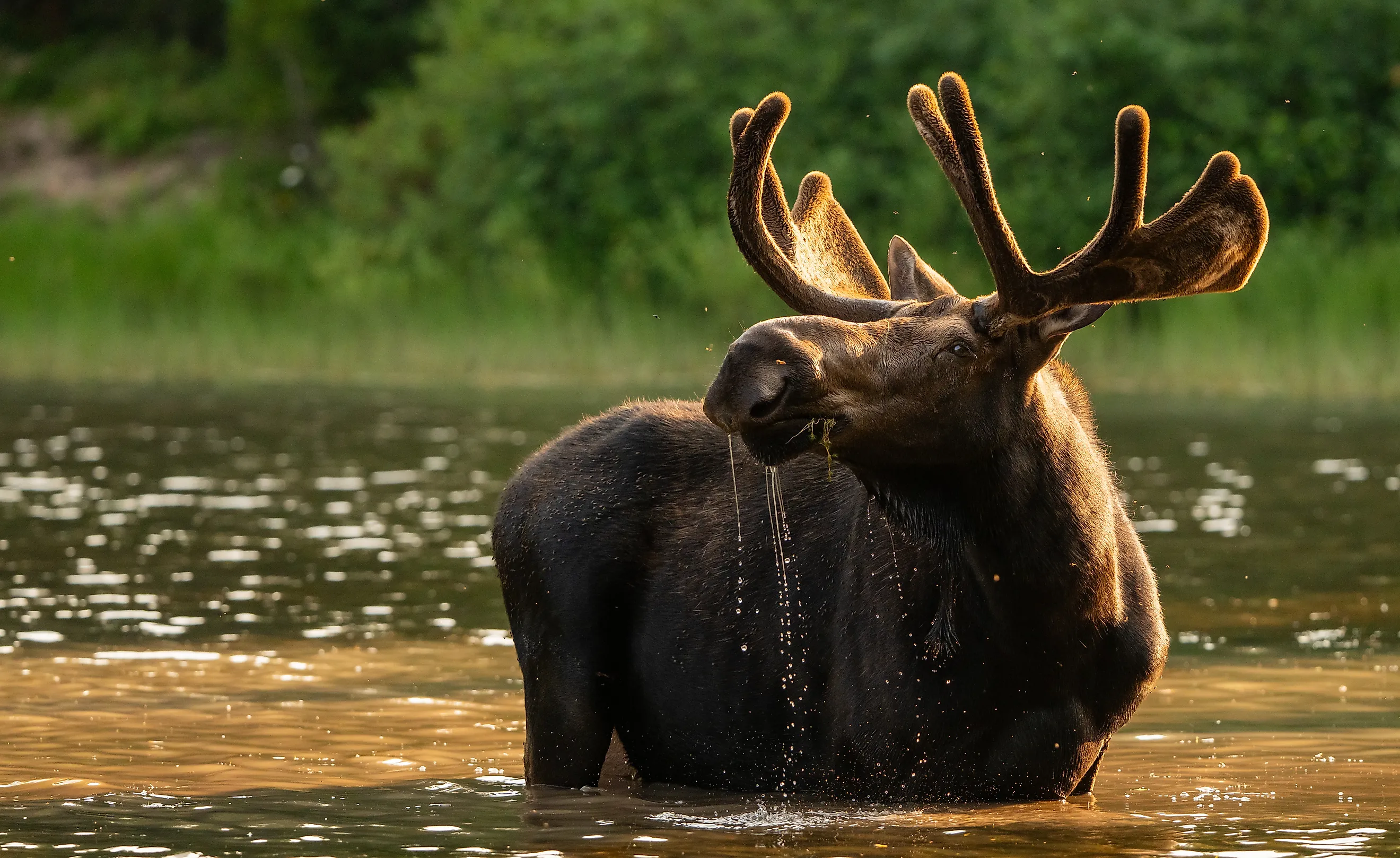
Moose encounters are rarely the serene image of an antlered bull standing in a misty pond at dawn, they can happen faster and hit harder than most visitors expect. Negative encounters happen exactly where you'd expect: a trail, a backyard, a parking lot, anyplace a cow with a spring calf has had enough of the human intrusion.
According to biologists from the Alaska Department of Fish and Game, moose injure more people across the states every year than bears. Negative moose encounters are still rare in parks with millions traveling to parks each year just to get a glimpse of these gentle giants.
There's no single national database tracking moose sightings park by park, since moose range across a dozen states with wildly different tracking systems, and some agencies don't log encounters by park at all. Here, "most encounters" means parks where a state wildlife agency, park staff, or a documented research project has put a number, a quote, or a repeated pattern behind the moose activity, not just a tourism blog's say-so.
These seven state parks, from an Anchorage viewing platform to a Vermont pond nicknamed for the animal, are where that evidence to actually see a moose is strongest.
Chugach State Park, Alaska
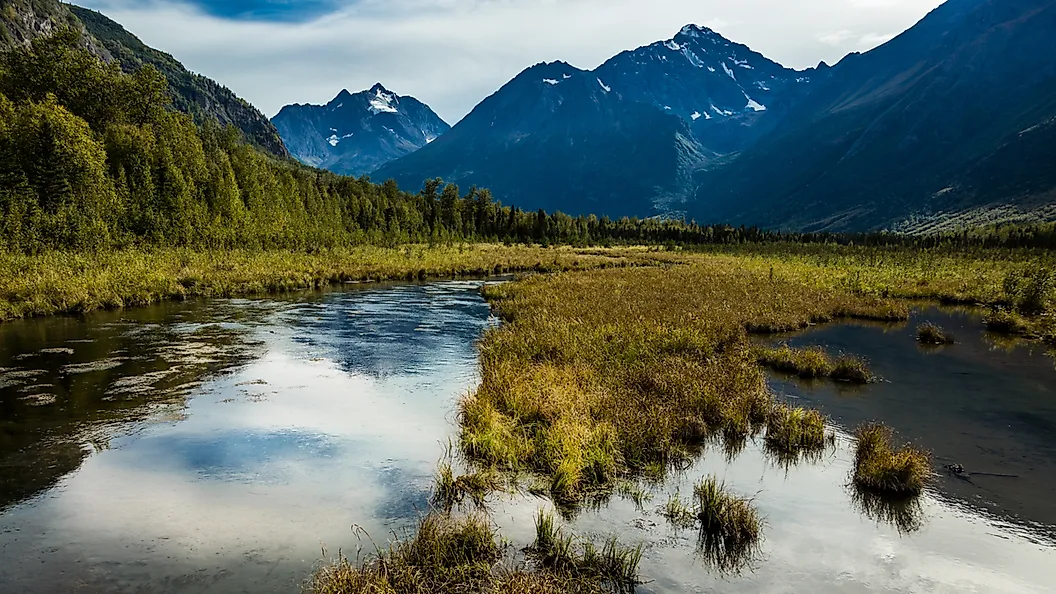
Chugach State Park covers roughly 495,000 acres making it one of the four largest state parks in the country, according to Alaska's own Division of Parks and Outdoor Recreation.
With an entrance just seven miles from downtown Anchorage, it's also where an uneasy, up-close relationship with moose is most visible. The Alaska Department of Fish and Game names the park's Glen Alps viewing platform as a reliable spot to see the animals in fall and early winter, when dozens of moose are often seen below the platform and across the Campbell Creek Valley.
The nearby Powerline Pass Trail is another official viewing location the department points visitors toward. However, that density comes with a real risk.
Wildlife biologist, Tim Spivey, told Alaska media that moose injure more people statewide than bears do, reminding that cows get especially defensive from mid-May through mid-June, when calves are newly born.
His advice for anyone who gets too close: put something solid between yourself and the animal, back away slowly, and never approach a cow with a calf for any reason. The threat does not stop the park from drawing hikers and skiers year-round.
Staff and troopers deal with charges and close calls regularly enough that the guidance is dispensed as standard practice. For more on the species itself, Alaska's Great Land Giant: The Moose covers how the animals survive the state's winters.
State Forest State Park, Colorado

State Forest State Park, roughly 70,800 acres along the west side of the Medicine Bow Mountains near Walden, is in fact a state park despite the double-take name. Colorado Parks and Wildlife calls the surrounding North Park valley the "moose viewing capital of Colorado."
The agency's own materials put more than 600 moose in the area year-round. A three-year Colorado Parks and Wildlife (CPW) research project tracking 70 collared moose there published its final survey in May 2026.
"It is probably the densest area of moose in the state" said Ellen Brandell, CPW biologist, as she described the North Park.
"After one flight turned up 83 animals in two hours, 15 to 20 of them wearing collars. The study set out to measure how many calves survive their first year, prompted by pregnancy rates that came in lower than biologists expected; the results are still being analyzed."
This did not happen by accident. Colorado had no established moose population until 1978, when wildlife officials translocated a dozen animals each year from Wyoming and Utah into North Park to find a herd. The project is a proven success with the state now having more than 3,000 moose statewide, and CPW manages the North Park population toward a target of 500 to 600 animals.
Start a visit at the park's Moose Visitor Center, which has interpretive displays and can point newcomers toward current sighting areas.
Craig Lake State Park, Michigan

Craig Lake State Park, more than 9,700 acres of backcountry in Michigan's Baraga and Marquette counties, is the state's most remote park. It is reachable only by a rutted road that requires four-wheel drive and high clearance, and then by nothing but foot, ski, or snowshoe from November through mid-May.
That isolation is exactly why it made this list. The park sits inside the core range of Michigan's Upper Peninsula moose herd that descended from 59 animals airlifted from Ontario's Algonquin Provincial Park in 1985 and 1987 in a wildlife relocation effort known as the Michigan Moose Lift.
The herd has not grown the way biologists once projected. In January 2025, an aerial survey put roughly 300 moose in the western Upper Peninsula core range across Marquette, Baraga, and Iron counties, and the Michigan Department of Natural Resources (DNR) has launched a collaborative study to work out why.
Craig Lake is still named among the herd's most reliable mainland viewing spots, alongside nearby Van Riper State Park.
Visitors come primarily for Craig Lake itself, a 374-acre lake with six islands and granite bluffs along its northern shore, along with five smaller lakes tucked inside the park's boundaries.
Moose there spend spring, summer, and fall on the property before ranging elsewhere in winter, and the same remoteness that makes them harder to reach also keeps encounters low-key rather than routine.
Tettegouche State Park, Minnesota

Tettegouche State Park stretches across roughly 9,300 acres of Lake Superior shoreline and inland forest along Minnesota's North Shore. Home to High Falls, the tallest waterfall entirely within Minnesota at an estimated 70 feet, along the Baptism River, the park also includes the sea cliffs of Palisade Head and Shovel Point.
It's also a noted boundary line for the species. The Minnesota Department of Natural Resources (DNR) states plainly that the mosse habitat is along the North Shore and begins around Tettegouche State Park, marking the park as the point where the shoreline's tourist corridor gives way to the North Shore Highlands' moose, wolf, and black bear range.
Minnesota's moose have had a rough couple of decades. The state's northeastern population has been closely studied since a sharp decline in the 2000s, and non-hunting adult mortality research conducted by the DNR between 2013 and 2017 tracked causes ranging from wolves to disease.
That history is part of why sightings here carry more weight than a casual roadside glimpse. The animals occupy habitat the state actively monitors rather than a park stocked for tourism. Trails around Mic Mac Lake and Nipisiquit Lake push into that inland habitat, giving hikers a real, if not guaranteed, shot at the state's most storied woodland animal.
Coleman State Park, New Hampshire
Coleman State Park sits on roughly 1,500 acres around Little Diamond Pond in Stewartstown, 12 miles east of Colebrook in New Hampshire's North Country, close enough to the Canadian border that the area feels more like backcountry Quebec than New England.
The state created it in 1956 by buying the Coleman family's Camp Diamond property. It doesn't have an official "moose alley" designation, but park staff have described the wildlife traffic as having moose walk right up the road. That's not marketing language but a park employee describing an ordinary occurrence in a region where moose density is among the highest in the state.
The pond itself draws most day visitors for trout fishing. The park is the northern terminus of the 55-mile Androscoggin Trail and sits within Ride the Wilds, the nearly 1,000-mile network of connected off-highway recreationa vehicle corridors that covers the North Country, so a moose sighting here is as likely from a trail as from a car window.
Nearby Beaver Brook Falls, just off Route 145, adds a scenic stop for anyone extending the trip north. As with anywhere in moose country, wildlife officials advise giving the animals plenty of room and never trying to approach a calf, since a protective cow moose can close distance faster than most people expect.
Brighton State Park, Vermont

Brighton State Park, just east of the village of Island Pond in Vermont's Northeast Kingdom, sits inside Essex County, which Vermont Fish & Wildlife has documented as holding some of the state's highest moose density. Roughly 1.56 moose per square mile in the county's southern half and 1.29 in the north, both well above the department's statewide management target of about one moose per square mile.
The park itself centers on Spectacle Pond, with a separate day-use beach on Island Pond's southern shore, and its trails and shoreline see moose activity often enough, especially in early morning hours, that the surrounding region has picked up an informal "moose alley" reputation among Vermont outdoor writers.
That local abundance hasn't been without cost to the animals themselves. A Vermont Fish & Wildlife study that monitored 126 moose in Essex County found that nearly half of collared calves died over the 2017-2018 winter, with winter ticks responsible for roughly three-quarters of those deaths.
The research led the state to expand moose hunting permits afterward as a management tool, on the reasoning that a thinner herd carries a lighter tick load. Visitors are far more likely to hear loons calling across Spectacle Pond at night than to run into a moose problem, but the density data backs up what local guides have said for years.
Rangeley Lake State Park, Maine

Rangeley Lake State Park covers 869 acres in Maine's Western Mountains, and it's one of the few state parks in the country with an official trail named directly for the reason visitors come. The 0.7-mile Moose Country Corridor Trail is mapped and maintained by Maine's Department of Agriculture, Conservation and Forestry, specifically because it cuts through ground the animals regularly use.
The park's own guidance is direct about what to do if the trail lives up to its name: observe from a distance, and never follow or feed the animals.
The park sits within the broader Rangeley Lakes Region, whose centerpiece lake, Mooselookmeguntic Lake, takes its name from an Abenaki word meaning "moose feeding place," a naming choice that predates state tourism marketing by centuries.
Rangeley Lake State Park is best known for its lakeside campsites, sand beach with mountain views, and landlocked salmon and trout fishing, so wildlife watching here comes bundled with the rest of a classic Maine lake vacation. Visitors should also come prepared for black flies, mosquitoes, and deer ticks, which the park flags as more of a routine nuisance than the moose are.
Where To Actually Look For One
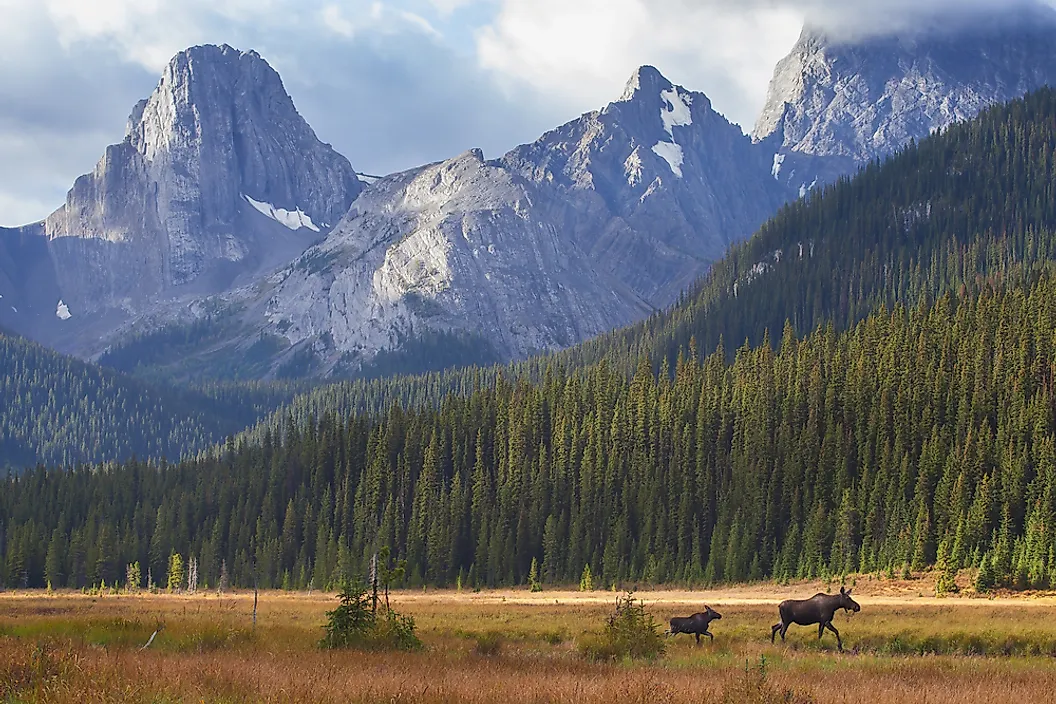
None of these seven parks guarantee a moose sighting, and none of them are especially dangerous by the numbers. Falls, cold-water immersion, and traffic still account for far more park injuries nationally than moose ever will.
What they share is documentation with agency-run viewing platforms, translocation records, collar studies, and, in a couple of cases, a trail or nickname built directly around the animal. That's a meaningfully different standard than the dozens of "best places to see a moose" roundups circulating online without a single wildlife agency behind them.
Fees, seasonal closures, and road access at several of these parks, especially Craig Lake's winter restrictions and Chugach's backcountry trailheads, can change from year to year, so it's worth checking each state agency's current conditions before heading out. Keep dogs leashed, keep children close, and give a cow moose with a calf all the room she wants. She has the right of way, and will make sure you know it too.