The First Scenic Highway In America
The Historic Columbia River Highway in Oregon was always meant to be. This gentle-grade highway, the design of which was influenced by Swiss roads, became a huge success right after it opened. People simply could not get enough of the magnificent views, and it is still one of the most scenic drives in the country today.
The Columbia River Highway was also America's very first scenic highway. It was built from the ground up for those who want to see some of Oregon's natural wonders while driving. Earlier roads existed at the time, of course, but routes like the National Road or the old turnpikes were built to move stagecoaches and wagons. They were not designed with views in mind. The Columbia Highway definitely inspired other scenic highways, however, with the Virginia Mount Vernon Memorial Highway completed just ten years later.
A Highway Designed To Enjoy The View

The star of the Historic Columbia River Highway is the Columbia River Gorge. Originally, highway advocate Sam Hill, who was the founder of the Washington State Good Roads Association, proposed building the highway along Washington side fo the gorge. Construction began in 1913, with the goal of linking Vancouver, Washington, with The Dalles, Oregon.
Samuel C. Lancaster was hired for the job, but he had a different plan. He proposed that the highway be built on the Oregon side, because Oregon features more scenic regions. And because he needed to speak to the budget, he also said that he believed it would be cheaper to build on the Oregon side.

Lancaster's suggestion was accepted, and construction began in 1913. Some sections opened the same year, and the dedication took place in 1916. The entire route opened on June 6, 1922, and instantly became a massive tourist attraction.
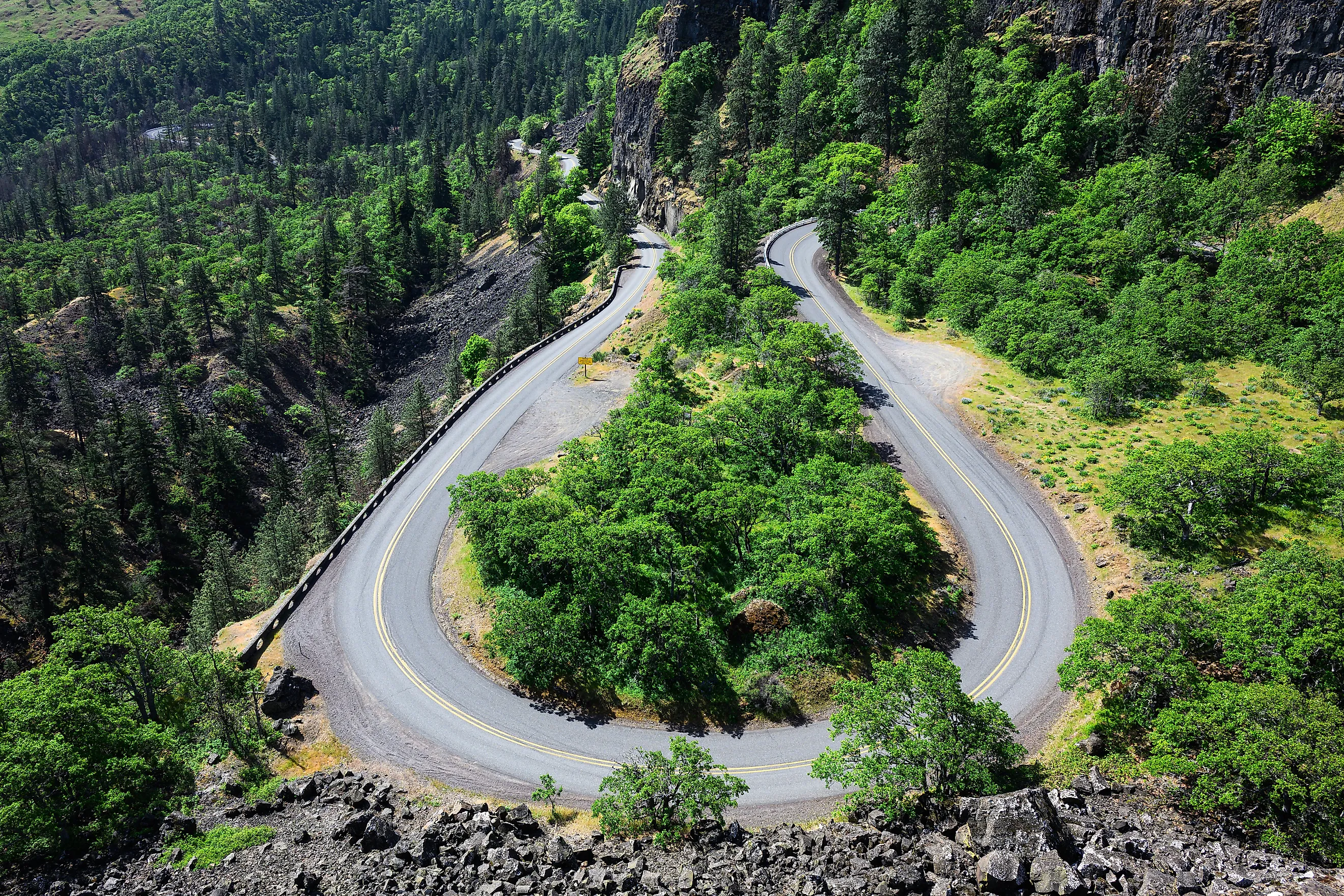
The gentle curve was a huge hit too, since it follows the natural ups and downs of the surrounding landscape. The curves and turns of the road open up the views to the driver and passenger, especially that of the gorge.
Building A Historic Route

The gorge would never have been viewed in all its glory if not for the Historic Columbia River Highway. The railroads that traversed it kept to the riverbanks, and the wagon roads were dangerous. Sam Hill's vision for a highway that highlighted the beauty of the gorge was inspired by similar roads in Europe that stretched through the Alps.
Samuel Lancaster subsequently spent many years studying the region around the gorge. This helped him design a highway that would pass waterfalls and cliffs without destroying trees and other natural wonders.

After Lancaster completed the design, funding from Multnomah County kicked off the construction in 1913. The highway section between Troutdale and Multnomah Falls was built first, with more sections following.
Building America's first scenic highway was no easy feat, with workers having to blast tunnels and build bridges over ravines. They constructed retaining walls one stone at a time, by hand, and Italian stonemasons worked on guardrails and dry-stone walls. The Swiss-inspired Mitchell Point Tunnel was a man-made wonder, with its five cliff windows, but it was unfortunately destroyed in 1966, but reopened in 2025.
Experience The "King Of Roads"

Some parts of the Historic Columbia River Highway were demolished while Interstate 84 was being built. About 40 miles of the original highway remain drivable, mostly between Troutdale and Dodson. People who drive the highway today can still see the waterfalls and scenic viewpoints.
The Portland Women's Forum State Scenic Viewpoint is one of the most popular stops, offering a full view of the gorge, Crown Point, and Vista House. Vista House was once a comfort station from where it sits at Crown Point. Today, there is a museum and gift shop to see, plus exceptional views 733 feet above the Columbia River.

Most visitors drive the Columbia River Highway using their own cars. However, those who have not driven it before should plan for crowds, full parking lots, and prepare to navigate narrow shoulders. Traffic tends to be a lot slower on weekends too, so it is best to drive early in the morning. Those who want to skip the crowds and the traffic headache can opt for a guided shuttle tour that covers all the popular stops.
A Much-Needed Restoration Effort

Interstate 84 was built between the 1950s and the 1960s. As mentioned, sections of the original Columbia River Highway were bypassed or destroyed during this construction process. For many years, much of the old highway was also abandoned. What was left of the section between Troutdale and Ainsworth State Park was listed on the National Register of Historic Places in 1983 and designated a National Historic Landmark in 2000. The Historic Columbia River Highway was also listed on the National Register of Historic Places.

Oregon did not give up on the highway either. In the 1990s, a major restoration project linked the abandoned sections of the highway and reopened them as a biking and hiking trail. Many of these sections are still open today as part of the Historic Columbia River Highway State Trail.
People can run, jog, and bike along designated paths that follow the original road. Visitors can go on e-bike tours along this path or board the Waterfall Shuttle to see all the waterfalls and other natural attractions along the way.
A Highway Of Waterfalls

Speaking of waterfalls, there are several spectacular falls to see while doing the highway drive. Latourell Falls, which is a 249-foot wonder, can be viewed from the parking lot.
There is a trail that leads to Upper Latourell Falls for those who want to see the water up close. Bridal Veil Falls State Park features a platform to see Bridal Veil Falls, while a short walk from Shepperd's Dell Falls leads to a stone arch bridge.
A 5-mile hiking loop combines Wahkeena Falls and Multnomah Falls. Multnomah is the tallest waterfall in Oregon at 620 feet and is also home to the renowned Benson Bridge. East of this waterfall, there is the Horsetail Falls to see right next to the roadway. On the opposite side, you can access the Oneonta Gorge, but it is not always open due to trail damage.
Highways That Pass More Natural Wonders

The Historic Columbia River Highway was the first planned scenic highway in the country. But it has not been the only one for a very long time. Virginia's Mount Vernon Memorial Highway is often mistakenly called the earliest scenic highway. It was completed in 1932, in time for George Washington's 200th birthday, and connected Washington, D.C., to Mount Vernon.
The highway introduced landscaping screens and rights-of-way on a 200-foot scale. But it still opened ten years after the Columbia River Highway. As such, it is considered a first when it comes to federal parkways, but not the first scenic highway. It also forms part of the George Washington Memorial Parkway.

More than twenty years after the Columbia River Highway started drawing visitors in the thousands, the Skyline Drive through Shenandoah National Park in Virginia opened in 1939. The 105-mile road stretches along the Blue Ridge Mountains and was built for sightseeing and those traveling on vacation. There are 75 overlooks along the way, and the speed limit is 35 miles per hour the whole way.
The Lincoln Highway, which was America's first transcontinental highway, also deserves a mention. It once spanned 3,389 miles between New York City and San Francisco. The highway was created in 1913 by linking existing local roads across 13 states, allowing drivers to make their way cross-country from coast to coast. At the same time, the highway was not built solely to view the scenery, so it differs from the vision behind the Columbia River Highway.
Engineering Combined With Sheer Artistry
Samuel Lancaster was essentially a miracle worker. He changed how construction affected nature, while keeping costs as low as possible. He refused to damage the natural surroundings just to get from one place to another.
So, instead of working against the landscape and seeing it as an obstacle, he designed a highway that would work with it. He saw and took the opportunities he could to showcase the views of the gorge and waterfalls, and in the process created the first of many scenic American highways.