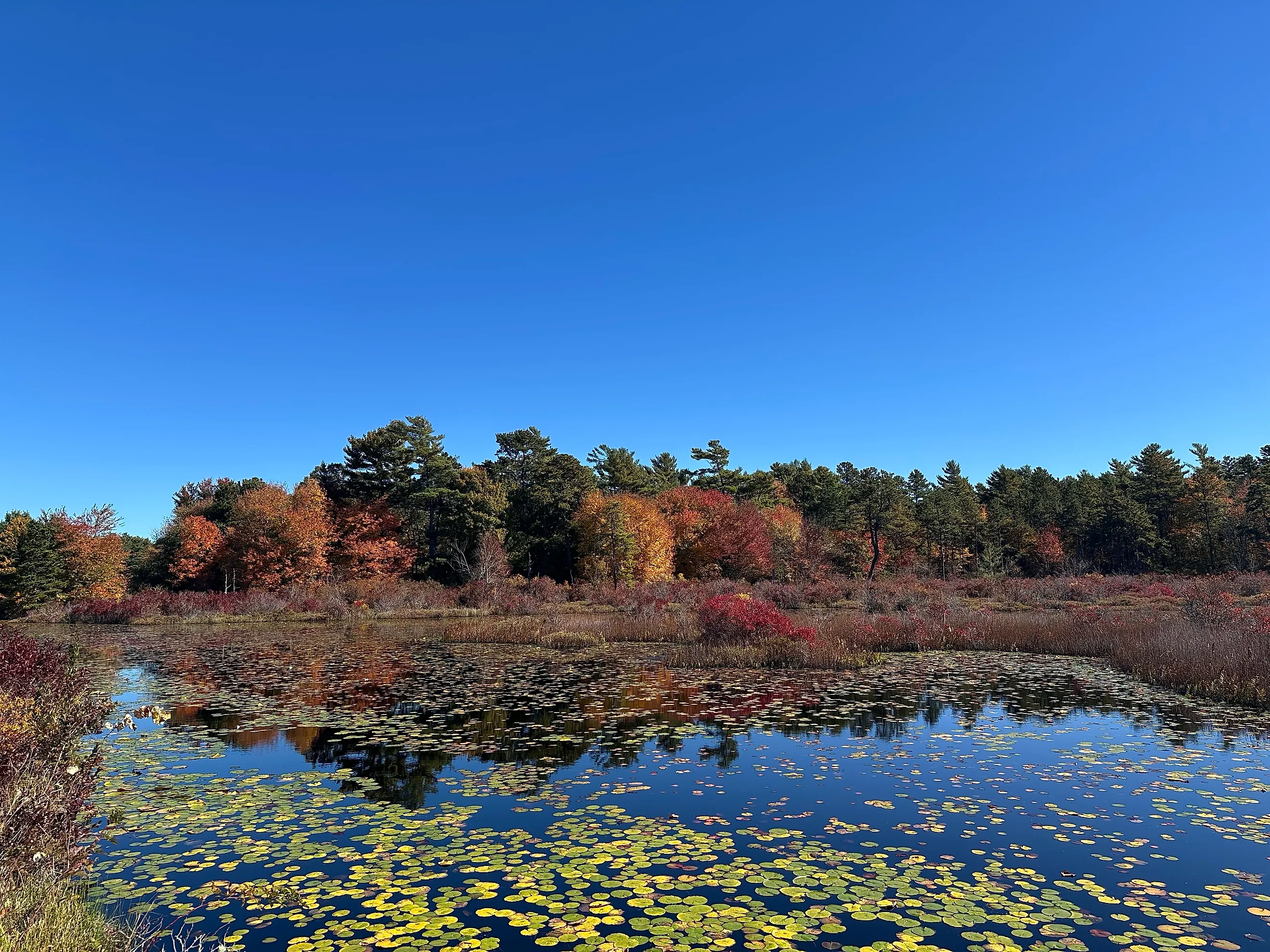
The Last Wild Cranberry Bogs In America
Most cranberries come from commercial farms, where growers flood fields to float the ripe fruit. Wild cranberries still grow in a scattering of natural bogs across the Northeast and upper Midwest, trailing across sphagnum moss and waterlogged peat. Those bogs are growing scarce. Draining for farmland and development has erased many of them, shifting water levels can dry them out, and trees and shrubs creep in to shade the low plants that remain. The bogs that survive stand out because they are still intact, protected as natural areas, tended by conservation groups and a Wampanoag tribe, or kept wild by an island's isolation.
How Wild Cranberry Bogs Form

Two species of wild cranberries grow in the United States. The large cranberry (Vaccinium macrocarpon) is the one cultivated for cranberry sauce and juice, and the small cranberry (Vaccinium oxycoccos) grows mainly in northern bogs. Both produce tart, edible berries. Wild cranberries have grown in North America's bogs for thousands of years. Many of these wetlands formed in depressions left behind by receding glaciers, mostly in cooler northern regions. Over time, mosses, sedges, and other plants spread across the water, sometimes forming floating mats. As dead vegetation accumulated, some of these former lakes developed into peat bogs.
Unlike many marshes and swamps, true bogs receive most of their water from precipitation rather than groundwater. Plants adapted to acidic, nutrient-poor soil thrive in these bogs, where many other species struggle to grow. Sphagnum moss helps maintain the acidity, and fungi that live among the cranberry roots break down organic matter and help the plants absorb nutrients.
Tannersville Cranberry Bog, Pennsylvania

Tannersville Cranberry Bog in Pennsylvania's Pocono Mountains began as a lake left behind by retreating glaciers thousands of years ago. Today, The Nature Conservancy identifies it as the southernmost boreal bog along the eastern seaboard. Though it is in northeastern Pennsylvania, it has plants usually found farther north in the United States and Canada.
The Nature Conservancy protects about 1,000 acres near Tannersville, including the bog and surrounding forests. Wild cranberries grow there alongside boreal shrubs such as Labrador tea, carnivorous pitcher plants, and the Pennsylvania state-endangered heart-leaved twayblade orchid, all visible from a boardwalk that leads deep into the bog.
Over time, trees and shrubs can spread into the open bog, shading out smaller plants. To protect the wild cranberries and other bog vegetation, The Nature Conservancy has worked with volunteers and researchers to remove some of that growth. Crews cleared about 1.3 acres near the boardwalk in 2022. Research by East Stroudsburg University students suggests that opening these areas to more sunlight can help the bog plants return.
Tannersville is one of the more easily accessible wild cranberry bogs, although access to it is carefully managed. Hikers can explore the trails around the bog on their own, but the bog boardwalk is open on guided walks alone, through the Kettle Creek Environmental Education Center.
Beulah Bog, Wisconsin
Near East Troy in southern Wisconsin, Beulah Bog sits within a landscape shaped by glaciers thousands of years ago. The 78-acre State Natural Area contains four kettle holes, depressions formed when large blocks of glacial ice became buried in sediment and eventually melted. Water collected in these hollows, creating the conditions for bogs and other wetlands to develop.
Undisturbed bogs like Beulah are rare in this part of Wisconsin, and multiple stages of wetland development show up side by side. Water lilies grow in the shallow lake. Along its edges, a floating mat of sedges and sphagnum moss stretches into the water. Farther from the shore, tamarack trees and bog shrubs mark the transition to northern wet forest.
Beulah Bog contains both species of wild cranberries native to the United States. Both grow close to the mossy surface of the bog, rather than on upright bushes. The bog has six species of carnivorous plants, including pitcher plants and sundews.
Beulah Bog is open to the public, with a short hiking trail through oak woodland to a boardwalk that crosses the bog and reaches the lake's edge. The boardwalk offers a view of the transition from forest to floating vegetation and open water, although parts of the boardwalk can go underwater in especially wet years.
Aquinnah Wampanoag Cranberry Bogs, Massachusetts
On the western end of Martha's Vineyard, wild cranberries grow in natural bogs set among the sandy dunes near Lobsterville Beach. The Wampanoag Tribe of Gay Head (Aquinnah) manages more than 30 acres of these bogs on its tribal lands. Freshwater wetlands and small ponds lie among the dunes and scrub thickets, where wild cranberries grow and waterfowl gather.
The tribe's Natural Resources Department maintains these naturally occurring bogs by thinning vegetation to encourage cranberry growth. Maintaining the bogs means dealing with environmental challenges as well, especially coastal storms. Storm surges have brought saltwater into the bogs, damaging cranberry habitat and affecting harvests.
Every October, tribal members gather for Cranberry Day, a celebration the tribe describes as its most important holiday. Historically, families traveled to the bogs by ox cart and spent days harvesting cranberries, preparing meals, singing, and dancing. They carried harvested berries by boat to New Bedford, where they traded them for goods such as sugar and molasses. Today, children join their families in the bogs, continuing a harvesting tradition that has connected generations of Wampanoag people to the island's cranberries.
Great Cranberry Island Heath, Maine

Off the coast of Maine's Mount Desert Island, Great Cranberry Island is home to a 175-acre coastal bog where wild cranberries still grow. The wetland occupies a shallow basin on the island's southwestern side, and the abundance of cranberries gave the Cranberry Isles their name.
Great Cranberry Island Heath is one of Maine's notable coastal plateau bogs, a type of wetland rarely found this far south. Over thousands of years, accumulating peat has formed a raised central area of peat moss and scattered black spruce, edged by swamps and marshes.
A survey of Maine's coastal peatlands identified Great Cranberry Island Heath as one of the region's best-preserved examples of this unusual wetland. A ferry connects Great Cranberry Island to Mount Desert Island. Although the heath has no developed public trails, the island has shoreline and walking paths, including those at Cranberry Shores Preserve.
Heath Pond Bog, New Hampshire

Near the Ossipee Pine Barrens in New Hampshire, Heath Pond Bog Natural Area reveals how a glacial lake gradually transformed into a bog. The wetland occupies a kettle-hole depression, where vegetation has slowly spread inward from the shoreline. The remaining open water is surrounded by rings of vegetation that reflect different stages of the bog's development.
A thin band of aquatic plants borders the open water. Farther out, sphagnum moss and cranberries form a wider ring, and beyond them lies a six-acre expanse of low shrubs with scattered larch and black spruce.
A trail through an old pine forest leads to Heath Pond Bog, although the path near the water is unofficial and can be wet. What looks like solid ground may be a floating mat of vegetation over water, or soft peat that seems safe to walk on. The mat is especially unstable near open water, so people should stay on established paths.
Victory Bog, Vermont

Victory Bog is within the 5,438-acre Victory Basin Wildlife Management Area in northeastern Vermont, a landscape of forests, swamps, and open wetlands. The bog itself covers a mere 35 acres or so. Small wild cranberries and pitcher plants grow among the sphagnum moss, as in other northern peatlands.
Victory Bog does not have large stretches of open water like some bogs. Instead, low shrubs grow on raised peat hummocks, with scattered black spruce and patches of cottongrass. The surrounding basin is an important habitat for northern birds as well. More than 130 species have been observed, including black-backed woodpeckers, rusty blackbirds, and the state-endangered spruce grouse, a bird limited to a few isolated areas in Vermont.
Vermont acquired Victory Basin from the New England Power Company in 1969, following years of debate over a proposed US Army Corps of Engineers dam on the Moose River. The project would have flooded the basin, but it never moved forward. Today, the area is protected and people can hike, fish, and watch wildlife.
The Survival of America's Wild Cranberry Bogs
Changes in water levels, drainage, and surrounding vegetation can threaten the conditions that wild cranberries need to survive. Some bogs remain largely undisturbed, and others require active conservation to maintain their habitat. Their survival matters to the carnivorous plants, orchids, and other species that share these acidic, nutrient-poor wetlands. Long before cranberries became a Thanksgiving staple, their wild ancestors were growing in places like these, unaware of their future place beside the turkey.