The Best State Parks On The Gulf Coast
The best beaches on the US Gulf Coast are the ones nobody built a resort on, and most of those sit inside state parks. Five states share this shoreline, and their parks protect the sugar-white sand along with the dunes, salt marshes, estuaries, and pine forests behind it. Alligators, black bears, and white-tailed deer live in that back country. Shorebirds work the beaches year-round, and in spring and fall the parks fill with migrants that just crossed the Gulf of Mexico nonstop from Central and South America. Those two seasons are the ones to plan around. The parks below run from the Florida peninsula to the Texas barrier islands, and each one earns its place on the coast.
Honeymoon Island State Park, Florida

More than a million people come through Honeymoon Island every year, which makes it the most-visited state park in Florida. The draw is a barrier island with over four miles of white sand, warm Gulf water, and enough room to sunbathe, fish, surf, and hunt shells without crowding the next family over. Several stretches of the main beach are marked for swimming. Away from the sand, the 2.5-mile Osprey Trail runs through one of the few virgin slash pine stands left in South Florida, and the birds do most of the work: snowy plovers, least terns, great blue herons, and the osprey the trail is named for. The park keeps signs posted about the eastern diamondback rattlesnakes that also use the trail, which tends to keep hikers on the path. A nature center, picnic pavilions with grills, a playground, and kayak rentals round out the day.
Gulf State Park, Alabama

Gulf State Park covers 6,150 acres of the Alabama coast, and the beach is only the front edge of it. Behind the three miles of white sand sit wetlands, pine forest, and freshwater lakes, including 750-acre Lake Shelby, where kayaking, canoeing, fishing, and swimming all happen within sight of the cabins and cottages built along the shore. A large pool with a splash pad handles families who want their swimming chlorinated. Cyclists and hikers get the 28-mile Hugh S. Branyon Backcountry Trail, which threads through most of the park's ecosystems in a single loop system. The pier is the landmark, though: it runs 1,540 feet into the Gulf and offers 2,448 feet of fishing space, one of the longest fishing piers on the coast. It has been rebuilt after more than one hurricane, most recently the damage from Hurricane Sally.
Henderson Beach State Park, Florida

Emerald water is the reason people stop at Henderson Beach, on the Destin end of Florida's Emerald Coast. The park is small, about 200 acres, but it protects one of the last coastal scrub habitats left in the area, along with a mile of shoreline backed by dunes that reach 30 feet high. Swimmers and anglers work the green water of the Florida Panhandle, and a short nature trail climbs into the scrub and dunes where wading birds and shorebirds turn up all year, with migrants added in spring and fall. Sixty campsites come with water and electric hookups, and the park has picnic pavilions, showers, restrooms, and parking enough to matter on a summer weekend.
Grand Isle State Park, Louisiana

Grand Isle is the only inhabited barrier island in Louisiana, and its 160-acre state park sits on the eastern end where the fishing and the birding are both hard to beat. State officials count more than 280 fish species in the surrounding water, which explains why anglers launch boats straight from the park. A mile of beach handles the swimmers and the shell hunters. Three miles of trails cross the coastal wetlands, and during spring and fall migration those wetlands fill with birds by the hundreds, the first landfall for warblers, tanagers, and buntings that just crossed the Gulf. An observation tower gives a long view over the coast, and the campground holds 49 sites with hookups.
Caladesi Island State Park, Florida

You reach Caladesi by boat, usually the ferry from Honeymoon Island, and that one obstacle is what keeps it quiet. Dr. Beach has ranked Caladesi Island State Park among the top handful of beaches in the country year after year, and its three miles of soft, undisturbed sand are the reason. The nature runs deep here too: mangrove forests, coastal dunes, and maritime hammocks that hold gopher tortoises, rattlesnakes, and birds through the year. A three-mile kayak trail winds through the mangroves, and three miles of mostly flat hiking trails cover the rest. Shelling is good along the whole strand, and the marina has a snack bar, a gift shop, and hookups for boaters who stay.
Galveston Island State Park, Texas

Galveston Island State Park stretches across 2,000 acres of Galveston Island, and it works both sides of the island. Two miles of Gulf beach handle the strolling, the shorebird watching, and the surf fishing, while the bay side across the park adds wetlands, freshwater ponds, dunes, and estuaries, plus its own fishing. Four miles of hiking and biking trails cross those habitats, among them the one-mile Alligator Loop, which circles a freshwater pond and delivers on its name often enough that the sign is not a bluff. Campsites come with water and electric hookups, and a couple of paddling trails let visitors take the marsh from the water.
Delnor-Wiggins Pass State Park, Florida

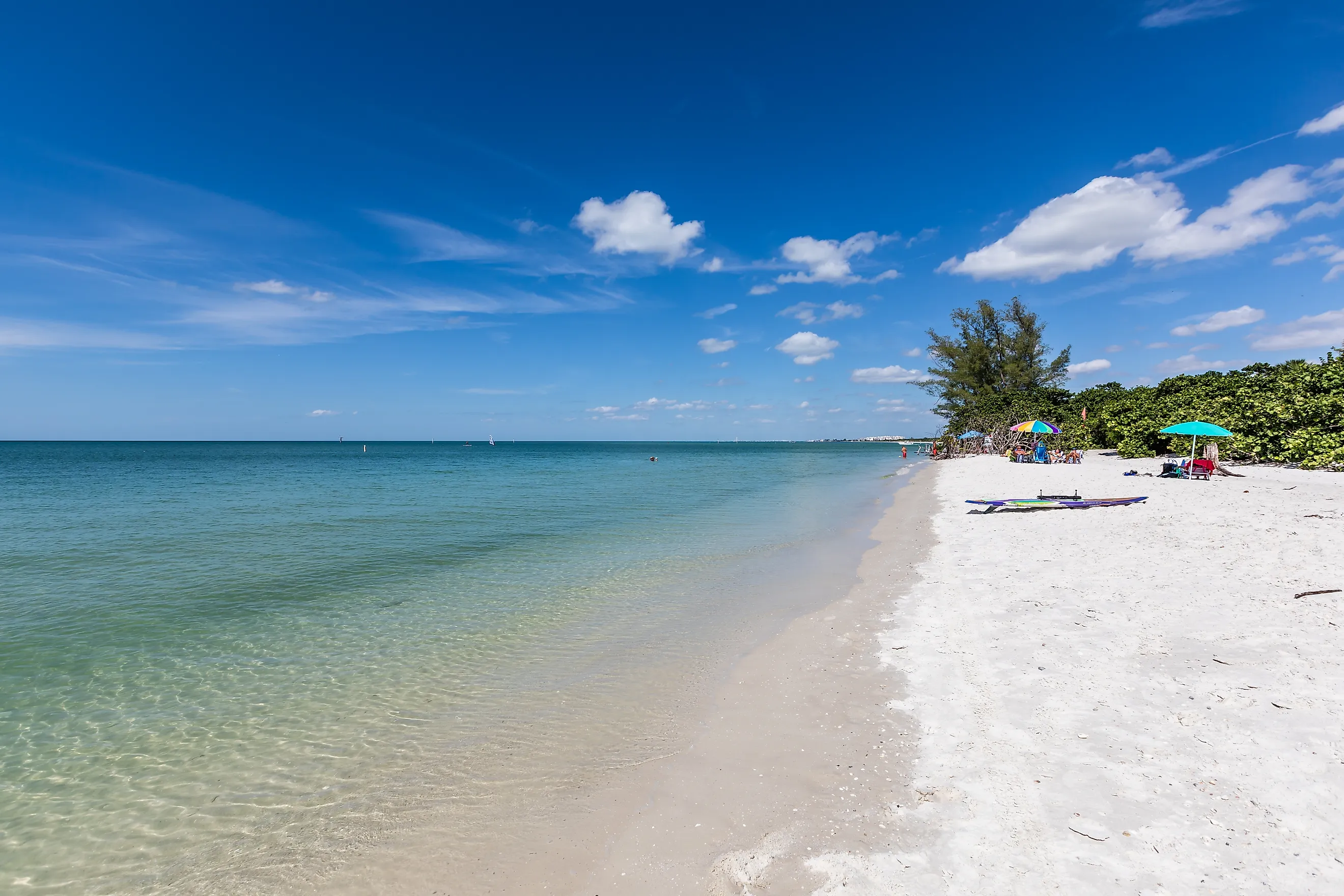
Dr. Beach has named the beach at Delnor-Wiggins Pass the best in Florida, and it is a barrier-island strand near Naples with clear Gulf water and about a mile of fine white sand. The residents are the draw as much as the sand: bald eagles, ospreys, migratory shorebirds, and loggerhead sea turtles that nest on the beach. Designated swimming areas double as spots for snorkeling and scuba, where divers turn up dolphins and sea stars. A boat launch opens the water to paddlers and kayakers, and anglers have their pick of the Gulf, the Cocohatchee River, and Water Turkey Bay. The park took hurricane damage in 2024 and reopened after reconstruction, so it is worth checking hours before a visit.
Grayton Beach State Park, Florida

Grayton Beach is the rare Gulf park with a coastal dune lake in it, an ecosystem that exists in only a handful of places on Earth. The 100-acre Western Lake sits inside the park's roughly 2,000 acres and opens up kayaking, canoeing, and freshwater fishing a short walk from the surf. The mile of sugar-white beach out front handles the swimming, sunbathing, and surf fishing. Behind it, salt marsh, dune, and coastal forest carry more than five miles of hiking and biking trails, and the wildlife list runs to white-tailed deer, black bear, and gray fox. The park sits on the Great Florida Birding Trail, so shorebirds, bald eagles, and ospreys turn up year-round. There are 59 campsites with hookups, plus cabins set back in the trees.
The Coast Worth Protecting
These parks hold the version of the Gulf Coast that predates the high-rises: white sand against calm water, trails through habitats found almost nowhere else, and birds thick enough to plan a trip around. The fishing is the through line, with redfish, speckled trout, and snook running in nearly all of them, whether you cast from a pier, a kayak, or the surf. Add the Gulf-side campsites and the quiet paddling trails, and a weekend in any one of them shows the coast at its best.