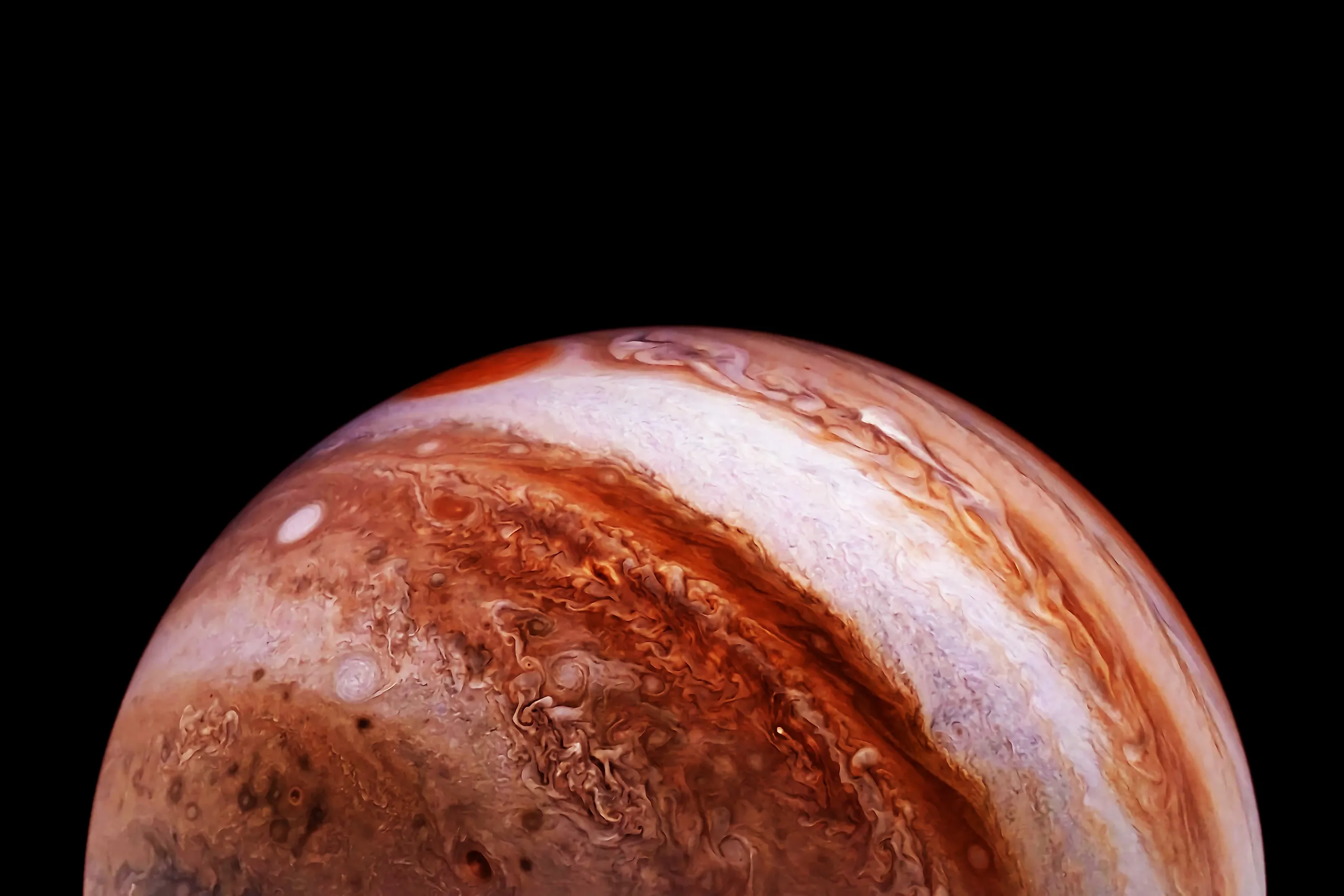
Why Jupiter Is Called A Failed Star
Jupiter is composed mostly of hydrogen and helium, formed at the same time as the Sun from the same primordial gas cloud, and is more massive than every other planet in the solar system combined. By those measures alone, it has more in common with a star than with the four rocky inner planets. What separates a gas giant from a star is mass: Jupiter has about one-thousandth the mass of the Sun (a fact often rounded to "about 0.1%"), which is roughly eighty times less than the threshold needed to start hydrogen fusion at its center. The phrase "failed star" is a popular shorthand for that gap, though as the science of the past decade has made clearer, it is not right.

How Jupiter Compares To The Sun
Jupiter is the largest planet in the solar system. Its mass is about 318 times that of Earth, its volume could contain about 1,321 Earths, and it contains roughly 2.5 times the mass of all the other seven planets in the solar system combined. Jupiter has at least 95 confirmed natural satellites and is orbited by a faint ring system discovered by Voyager 1 in 1979. Its composition resembles the Sun's more than it resembles Earth's: approximately 75% hydrogen and 24% helium by mass, with trace amounts of ammonia, methane, water vapor, and other compounds. The composition is what underlies the comparison to a star. But mass matters more, and Jupiter contains only about one one-thousandth of the Sun's mass. The Sun is so much heavier than its largest planet that it accounts for 99.86% of the mass of the solar system; everything else, including Jupiter, makes up the remaining 0.14%.
Why Stars Shine: The Fusion Threshold

Stars shine because their cores are hot enough and dense enough to fuse hydrogen into helium. The Sun's core sits at approximately 15 million degrees Celsius and 250 billion atmospheres of pressure, conditions under which hydrogen nuclei can collide with enough energy to overcome their mutual electrostatic repulsion and merge. Each fusion event converts a tiny amount of mass into energy following Einstein's E=mc² equation, and the Sun burns through about 600 million tonnes of hydrogen per second through this mechanism. The energy released is what reaches Earth as sunlight 8 minutes and 20 seconds later. Jupiter's core, by contrast, reaches about 24,000 degrees Celsius per NASA's standard estimate. That is hot enough to make Jupiter's center hotter than the Sun's visible photosphere (about 5,500 degrees Celsius), but nowhere near hot enough to start hydrogen fusion. The threshold for sustained hydrogen fusion in a hydrogen-helium body is approximately 10 million degrees Celsius at the core, and you cannot reach that temperature without about 80 times Jupiter's mass.
What Jupiter Would Need To Become A Star
The conversion is a matter of gravitational pressure. The more mass a hydrogen-helium body holds, the harder gravity squeezes its interior, and the higher its central temperature climbs. The minimum mass at which hydrogen fusion can sustain itself indefinitely is approximately 0.075 to 0.080 solar masses, which is roughly 75 to 80 Jupiter masses. Anything smaller cools faster than it can generate fusion energy, and the chain reaction never establishes. Jupiter would need to gain about 75 times its current mass to cross this threshold and become the smallest possible star: a red dwarf at the very lowest end of the stellar mass range. TRAPPIST-1, the nearby star with seven Earth-sized planets discovered in 2017, sits at about 0.09 solar masses (about 90 Jupiter masses) and is just barely above the fusion threshold. Such stars are dim, cool, and red, and shine in infrared more than visible light, but they are stars.
Brown Dwarfs: The In-Between Objects
Between gas giants and the smallest stars are brown dwarfs, objects with enough mass to fuse deuterium (a heavy isotope of hydrogen) for a brief period of their early lives, but not enough to sustain hydrogen fusion the way ordinary stars do. The lower mass limit for a brown dwarf is approximately 13 Jupiter masses, the point at which deuterium fusion becomes possible. Above 13 and below about 80 Jupiter masses, an object is a brown dwarf. Below 13 Jupiter masses, it is a planet. Brown dwarfs cool slowly over hundreds of millions of years and eventually radiate only the residual heat of their formation. Jupiter does not even meet the deuterium-fusion threshold; it is too light by a factor of 13. The phrase "failed star" is sometimes more accurately applied to brown dwarfs, which actually attempted (and abandoned) fusion, than to Jupiter, which is too small to have ever come close.
What Juno Discovered About Jupiter's Interior

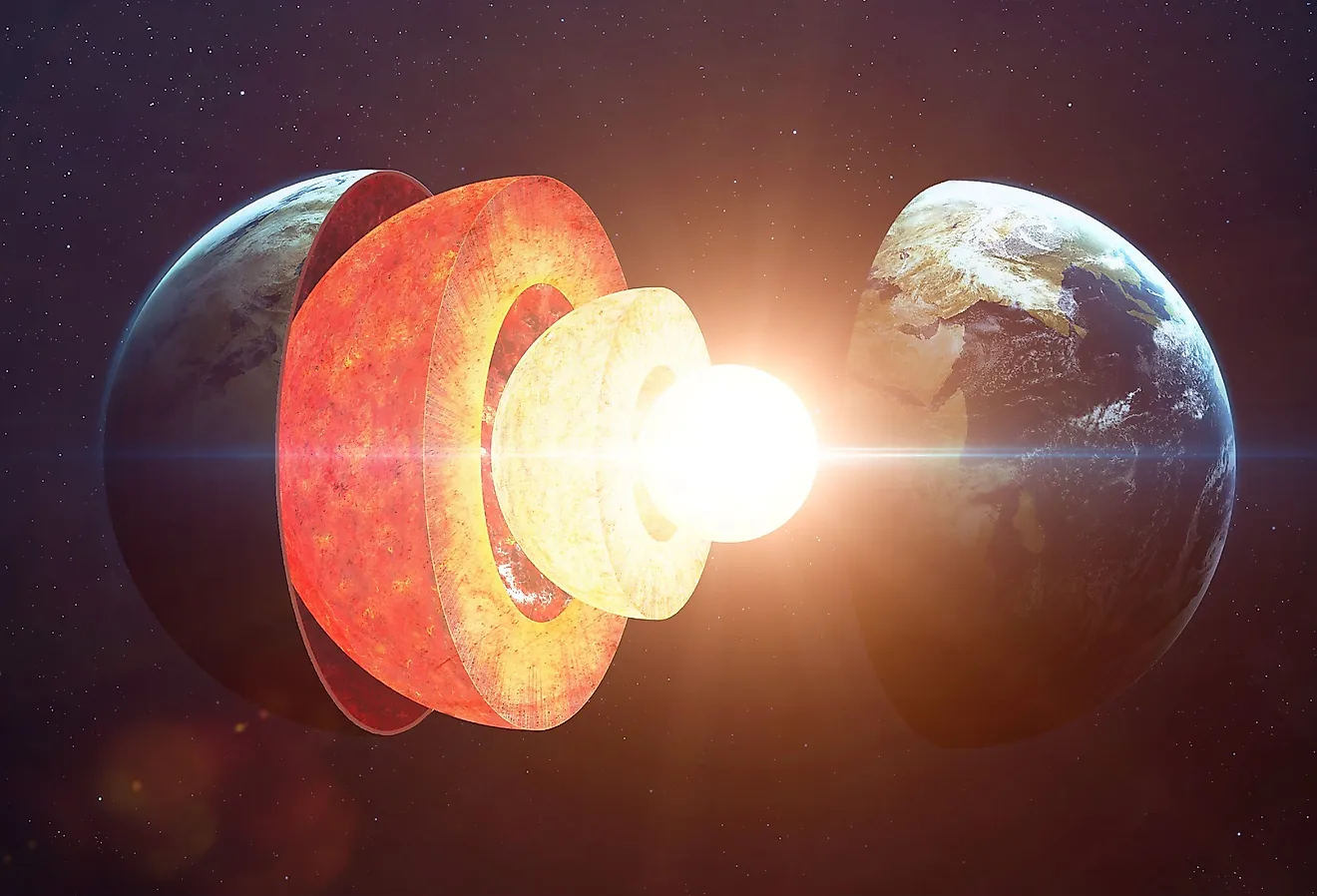
The picture of Jupiter's interior that most articles still describe (a small dense rocky core surrounded by a thick hydrogen envelope) is out of date. The Juno spacecraft, which entered orbit around Jupiter on July 4, 2016 and is still operating, has measured Jupiter's gravitational field with unprecedented precision. The data is inconsistent with a small discrete core. Instead, the heavy elements at Jupiter's center appear to be mixed gradually with the hydrogen above them, in what astronomers now call a "diluted" or "fuzzy" core, possibly extending up to 60 to 75% of the planet's radius. The current best models suggest this fuzzy core contains the equivalent of 14 to 18 Earth masses of heavy elements mixed through a much larger volume of hydrogen and helium. Above the fuzzy core, the next layer is liquid metallic hydrogen, an exotic state of hydrogen that exists under the pressure conditions of Jupiter's interior and conducts electricity like a metal. This metallic hydrogen ocean is the source of Jupiter's magnetic field, which is roughly 20,000 times stronger than Earth's. The "fuzzy core" finding has consequences for how Jupiter formed: it is hard to produce a smeared-out core through the standard core-accretion model, which is why some astronomers now think Jupiter may have accreted its gas envelope much more rapidly than previously believed, or that a giant impact in its youth may have disrupted what had been a more compact core.
Jupiter Is Still Generating Heat

Jupiter is not a star, but it is not an inert ball of gas either. The planet emits about 1.6 to 2 times as much heat as it absorbs from the Sun. The excess heat is residual energy from Jupiter's formation 4.5 billion years ago, slowly leaking outward as the planet contracts under its own gravity. This is the Kelvin-Helmholtz mechanism: as a self-gravitating body shrinks, gravitational potential energy converts to thermal energy in its interior. Jupiter is estimated to be contracting at roughly 2 cm per year, an imperceptible rate that nonetheless releases enough energy to drive the planet's atmospheric circulation. The bands and zones visible at Jupiter's cloud tops, the chains of cyclones over its poles imaged by Juno, and the long-lived storm known as the Great Red Spot are all powered in part by this internal heat working its way up through the atmosphere. The Great Red Spot has been continuously observed for at least 195 years (and possibly since Giovanni Cassini's reports in 1665) and is approximately twice the diameter of Earth, though it has been measurably shrinking since the 1870s. In other words, Jupiter glows faintly in infrared light because it is warm, not because it is producing stellar energy through fusion.
What Would Happen If Jupiter Were A Star

If Jupiter had somehow accumulated 75 to 80 times its current mass during the solar system's formation and ignited as a small red dwarf, the result would be a binary star system. This is essentially the Tatooine scenario from "Star Wars": two suns in the sky, except that Tatooine's stars are roughly Sun-sized and Jupiter-the-star would be dim, red, and probably easier to look at without ruining your eyes. The smallest red dwarfs sit at about 0.08 solar masses, with luminosities roughly 0.01% of the Sun's and surface temperatures of 2,500 to 3,000 K. A Jupiter-star would not be a second daytime sun for Earth, more like a permanent very bright red light hanging where the gas giant used to be. It would still shine far more brightly than the actual Jupiter, which only reflects sunlight, and it would warm the inner solar system measurably. Most simulations of solar system formation with a second star at Jupiter's position suggest that the inner rocky planets would have ended up in very different orbits, or might not have formed at all under the additional gravitational pull. Whether Earth as we know it would still exist in such a system is the kind of open question that makes the thought experiment interesting in the first place.
So Is "Failed Star" The Right Phrase?
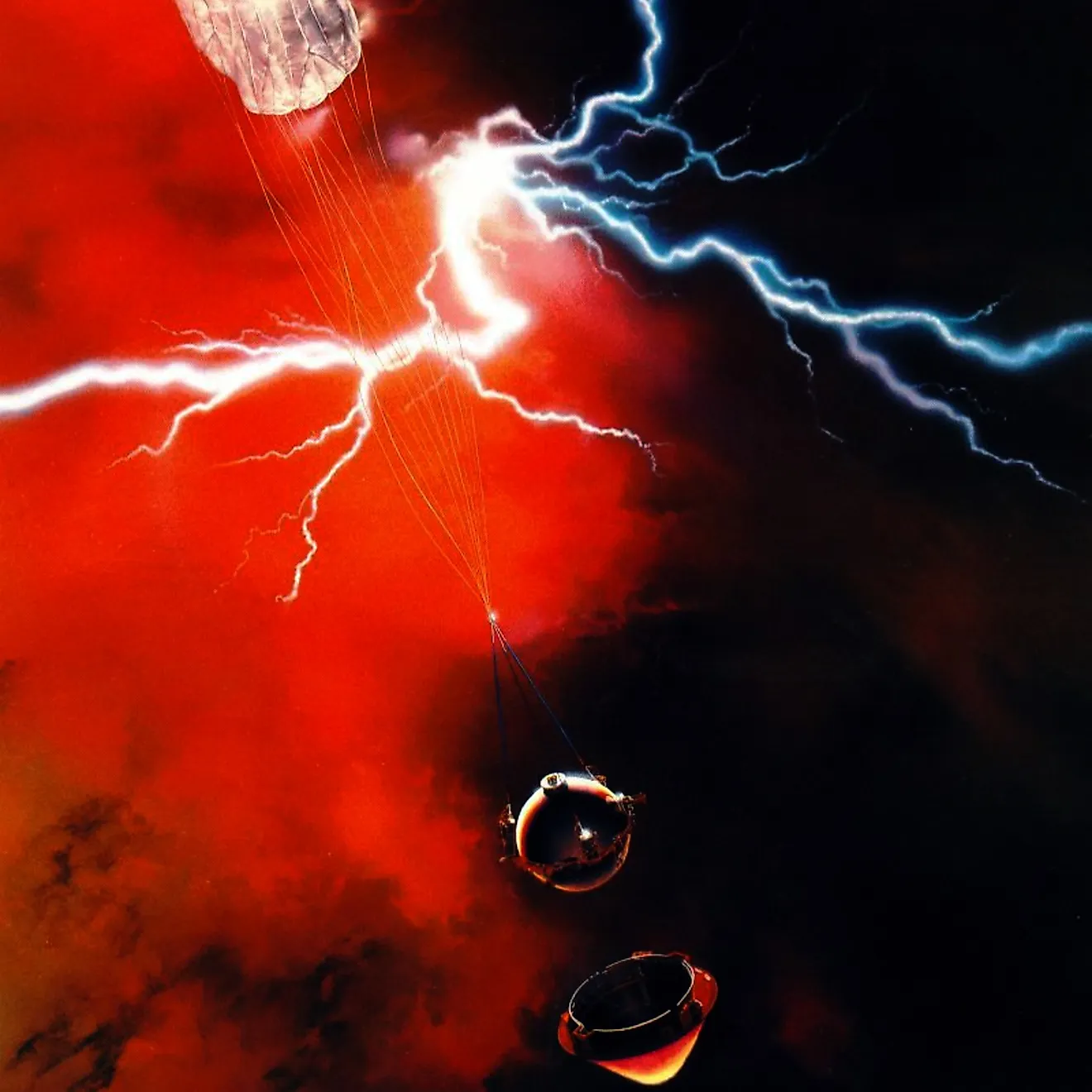
"Failed star" implies Jupiter applied for the job and didn't get it. Jupiter never applied. To genuinely fail at becoming a star, an object has to at least be in the running, and Jupiter is short by a factor of roughly 80. The label is roughly like calling a kayak a failed cargo ship: similar atoms, both float, but one was never going to do what the other does. The phrase has stuck around partly because the composition really is star-like, and partly because Arthur C. Clarke gave us the canonical "what if Jupiter were a star" scenario in fiction. In his 1982 novel "2010: Odyssey Two" and its 1984 film adaptation, the monolith-builders compress Jupiter until it ignites as a small star, which they helpfully name Lucifer, in order to warm Europa enough for life to evolve there. Great ending. The actual gap in mass between Jupiter and the smallest possible red dwarf is the gap between a marble and a bowling ball, and that gap does not close through positive thinking. If "failed star" describes anything well, it describes brown dwarfs, which did briefly fuse deuterium in their first few million years and then gave up; that is much closer to what "failed" should mean. Jupiter is something more honest. It is the largest gas giant the early solar system could produce with the hydrogen and helium it had on hand, and it has been quietly running its own weather system, ring system, and 95-moon entourage ever since.