Is Titan Bigger Than Earth?
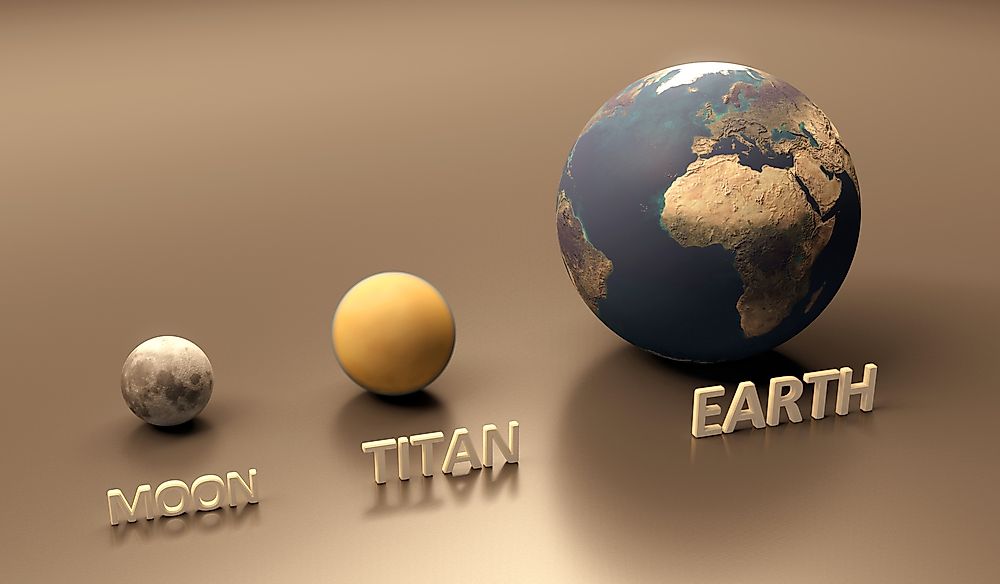
Titan is the largest of Saturn's 285 known moons (the figure changed substantially in 2025 and 2026 as new small outer moons were confirmed) and the second-largest moon in the solar system after Jupiter's Ganymede. Its mean radius is 2,574.7 kilometers (1,599.7 miles), making it larger than the planet Mercury and considerably larger than Earth's Moon. Titan is the only moon known to have a substantial atmosphere, the only body in the solar system besides Earth with stable bodies of liquid on its surface, and (most likely) the only moon with a subsurface liquid-water ocean of the kind that has made it a primary target in the search for habitable environments beyond Earth. The Dutch astronomer Christiaan Huygens discovered Titan on March 25, 1655 using a homemade refracting telescope; it was the first satellite of any planet other than Earth to be found after Galileo's 1610 identification of the four largest moons of Jupiter. Huygens originally called the new moon "Luna Saturni" (Latin for "Saturn's moon"); the name Titan, after the pre-Olympian Greek gods, was suggested in 1847 by John Herschel, son of the astronomer William Herschel and a major Victorian scientist in his own right.

Size, Distance, And Orbit
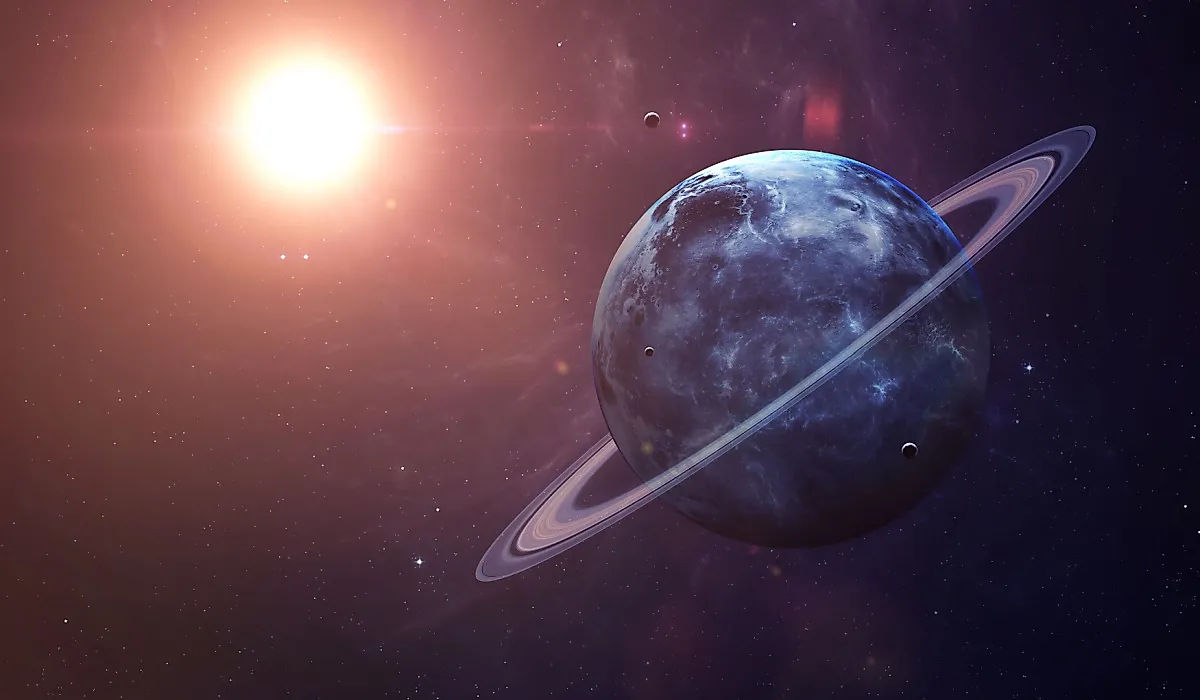
Titan orbits Saturn at a mean distance of 1,221,870 kilometers (759,220 miles), the sixth and outermost of Saturn's planet-sized regular moons. Saturn itself orbits the Sun at about 9.5 astronomical units, or 1,433 million kilometers (886 million miles), and light from the Sun reaches the Saturn system in approximately 79 minutes. At that distance, the apparent solar disk in Titan's sky is about a tenth of the angular size it subtends from Earth, and the sunlight reaching the top of Titan's atmosphere is roughly 1 percent of the intensity at Earth's distance. Titan completes one orbit of Saturn every 15.945 days (15 days 22 hours 41 minutes) and is tidally locked: the same hemisphere always faces Saturn, in the same way that the same hemisphere of Earth's Moon always faces Earth. Titan's axial tilt relative to Saturn's orbital plane is small (about 0.3 degrees), but because Titan effectively shares Saturn's 26.7-degree obliquity to the ecliptic, the moon experiences strong seasons that follow Saturn's 29.46-year year. Each Titanian (and Saturnian) season therefore lasts about 7.4 Earth years.
Atmosphere
Titan's atmosphere is one of its two defining features (the surface chemistry is the other). The bulk composition is approximately 95 percent molecular nitrogen with about 5 percent methane and trace amounts of hydrogen, ethane, acetylene, hydrogen cyanide, argon, and a long inventory of more complex hydrocarbons and nitriles. (The often-repeated comparison with Earth's atmosphere is misleading: Earth's atmosphere is also mostly nitrogen, at about 78 percent, but the remaining ~21 percent is oxygen, with essentially no methane. Titan has essentially no free oxygen.) The atmospheric column is so thick that the surface pressure is approximately 1.45 to 1.48 bar, about 50 percent greater than the atmospheric pressure at Earth's sea level, despite Titan being a smaller body with lower gravity. The atmosphere extends to roughly 600 kilometers above the surface (compared to about 100 kilometers for Earth's dense atmosphere) because Titan's lower gravity allows the gas column to extend much further before tapering off. Sunlight breaks down methane molecules in the upper atmosphere, and the resulting fragments recombine into more complex organic compounds (collectively called tholins), which precipitate slowly to the surface and give the atmosphere its characteristic orange-brown haze. Since methane is destroyed by sunlight on geologically short timescales (tens of millions of years), some ongoing source must be replenishing it; cryovolcanism, in which water mixed with ammonia or methane is extruded onto the surface from a warmer interior, is the most likely candidate.
Surface

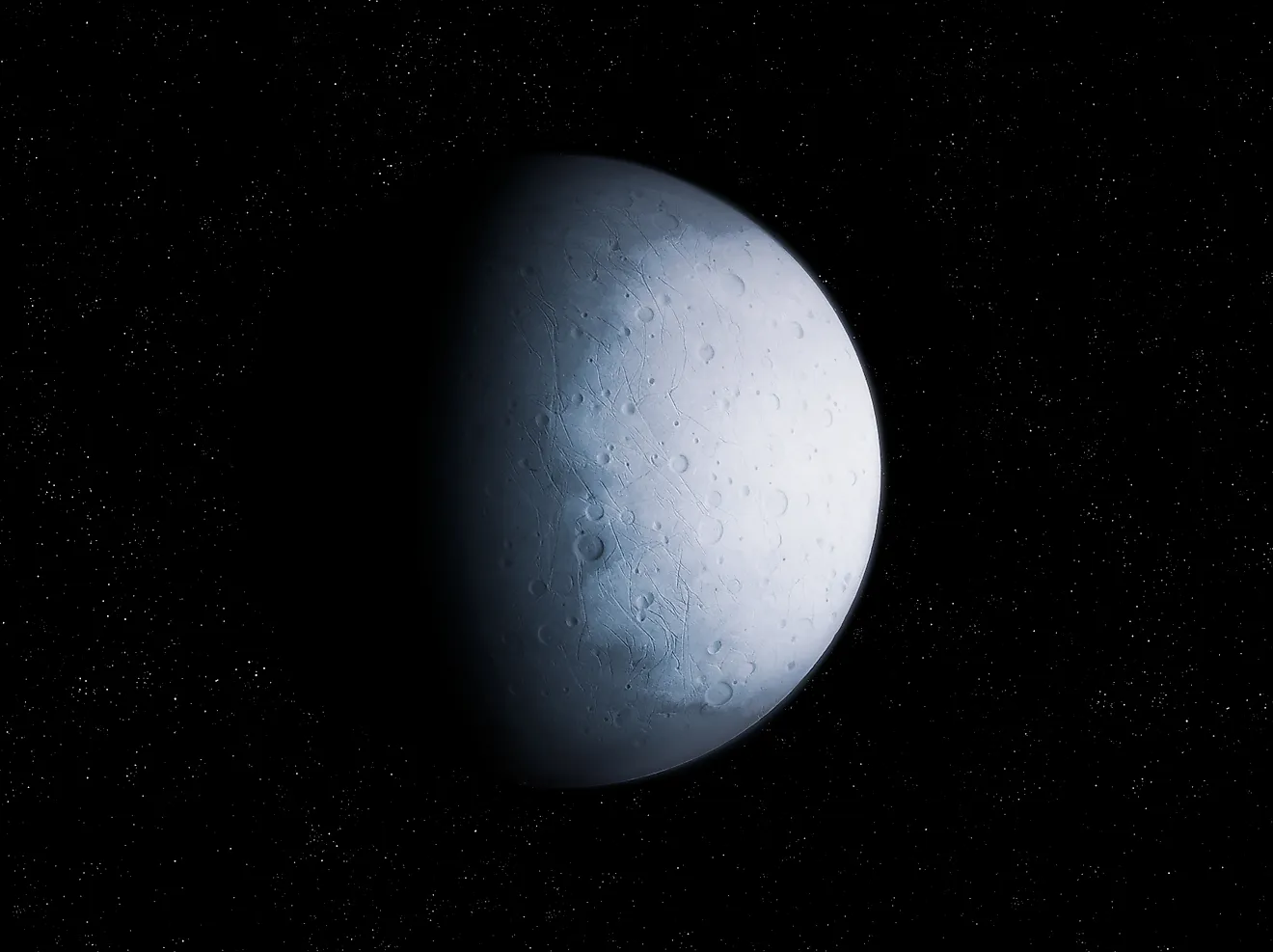
The mean surface temperature on Titan is approximately 94 K (-179 degrees Celsius, -290 degrees Fahrenheit), cold enough that water ice has the mechanical properties of rock and that methane and ethane are present as liquids. The surface has dunes (composed of grains of solid organic material rather than silicate sand, found mostly in the equatorial regions), rolling plains, mountain ranges with peaks above 3,000 meters, river channels carved by liquid methane and ethane, and substantial bodies of standing hydrocarbon liquid in the polar regions. The largest of these bodies is Kraken Mare, located near the north pole, with a surface area of about 400,000 square kilometers (larger than the Caspian Sea on Earth) and a maximum depth of at least 300 meters; the second and third largest, Ligeia Mare and Punga Mare, also sit near the north pole. The hydrocarbon cycle on Titan parallels Earth's water cycle in form but not in chemistry: methane and ethane evaporate from the lakes and seas, form clouds in the lower atmosphere, fall as rain (slowly, given Titan's low gravity), and erode and carry sediment downstream much as water does on Earth. Titan is the only body in the solar system besides Earth where surface erosion by precipitation, river flow, and pooled liquid has been directly observed.
Interior Structure
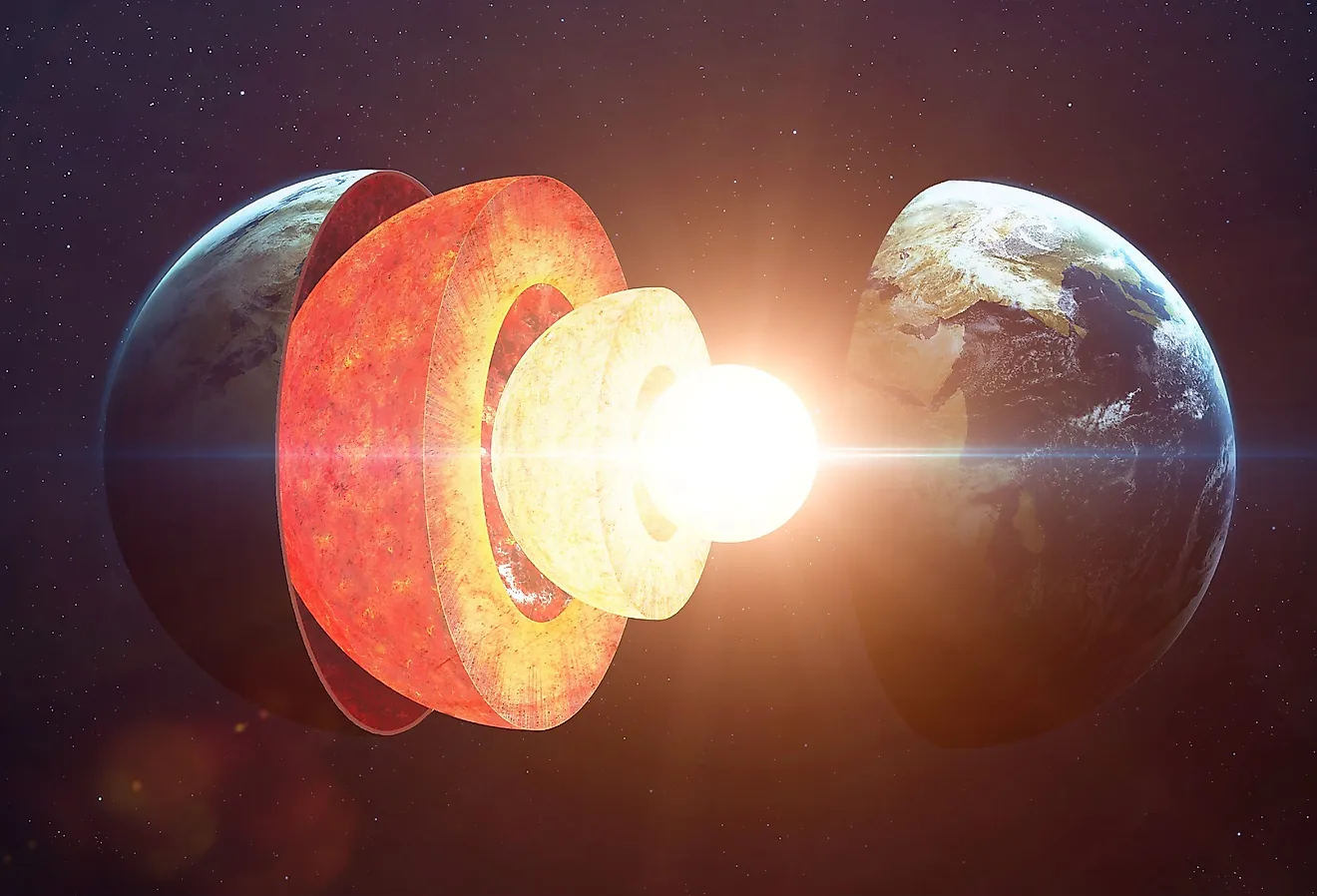
Titan's interior is layered, with a rocky core at the center surrounded by successive shells of high-pressure ice and a liquid or partly-liquid water layer. The leading model based on Cassini gravity measurements has five primary layers: an innermost core of water-bearing silicate rock about 4,000 kilometers in diameter; a shell of high-pressure water ice (Ice VI, a form of ice that exists only under extreme pressures); a layer of liquid water (originally interpreted in 2008 as a globally connected ocean), possibly mixed with ammonia and salts; an outer shell of ordinary water ice; and the surface, with its hydrocarbon overlay. A December 2025 paper in Nature by Marco Petricca and colleagues at NASA's Jet Propulsion Laboratory and Italian institutions reanalyzed the Cassini gravity and tidal-deformation data and proposed that the liquid layer is more likely heterogeneous (a thick high-pressure ice shell with slushy regions and pockets of warm liquid water, possibly reaching 20 degrees Celsius near the rocky core) rather than a single global ocean. The distinction matters for astrobiology: a connected global ocean would allow free chemical communication across the whole moon, while pocketed liquid would create isolated chemical environments. Either way, Titan's interior contains substantial liquid water in contact with rocky material, the basic precondition for the kind of water-rock chemistry that may have produced life on Earth.
Exploration: Pioneer, Voyager, And Cassini-Huygens

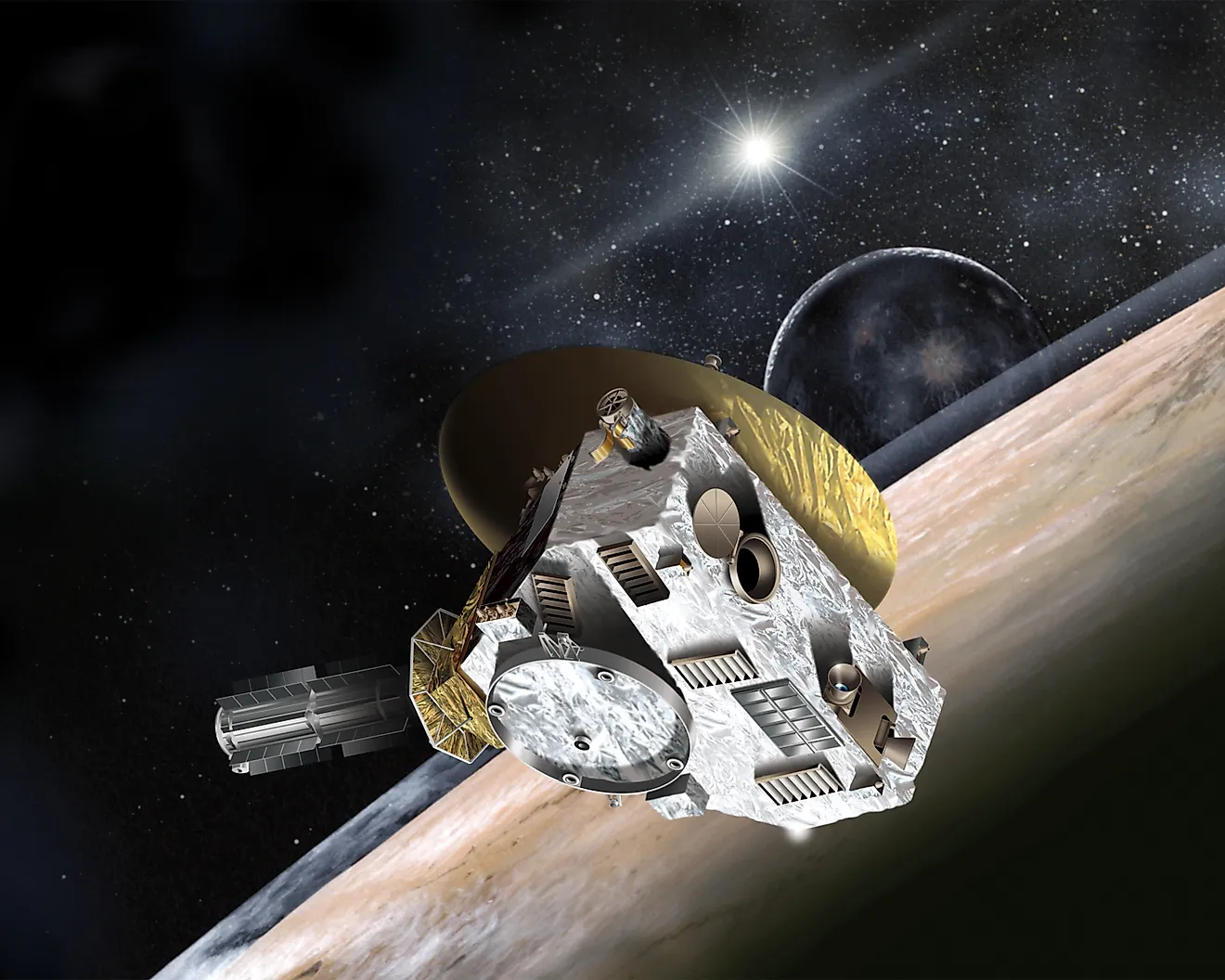
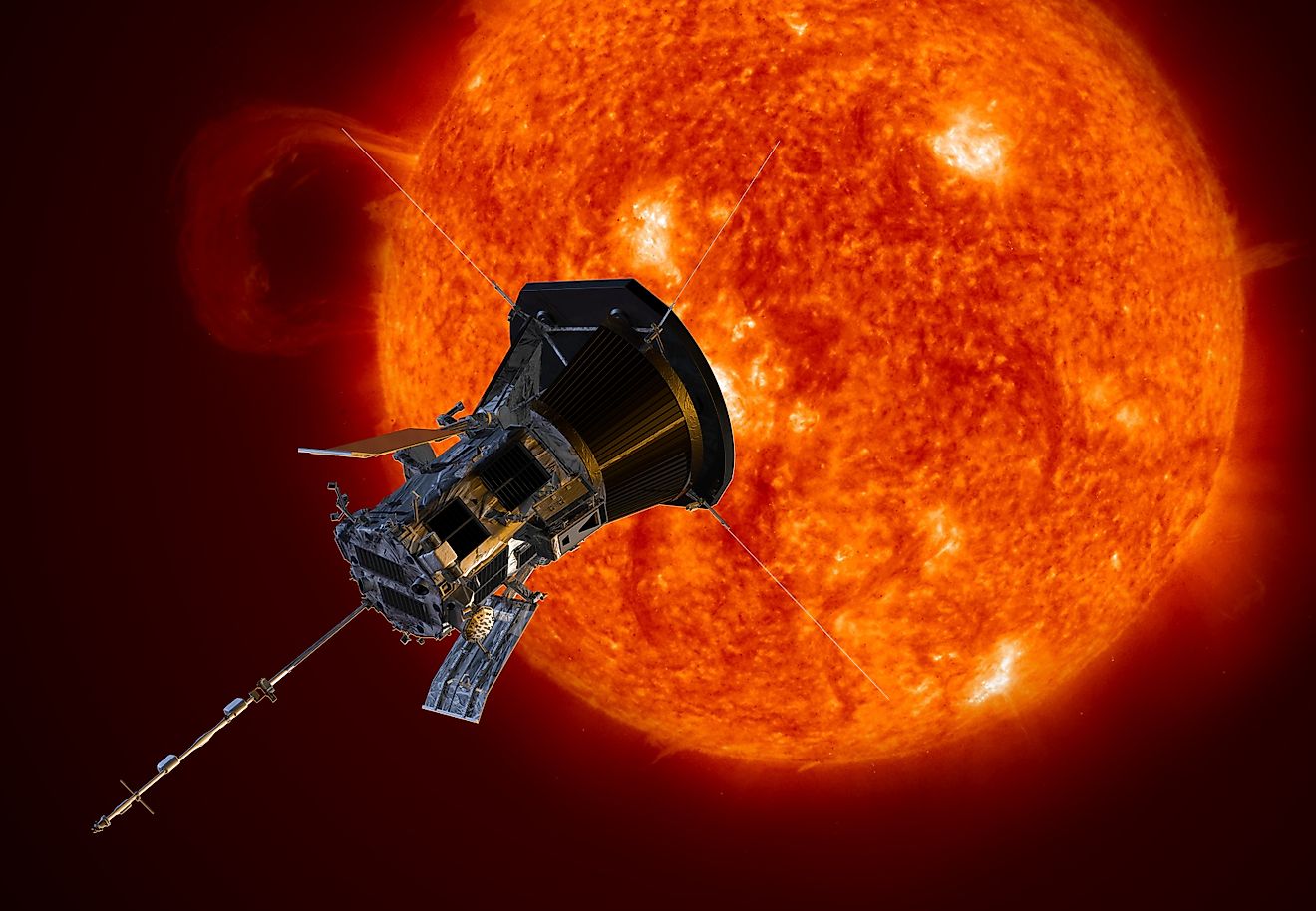
The first spacecraft to encounter the Saturn system was Pioneer 11, which flew past on September 1, 1979 and returned the first close imagery. Voyager 1 followed in November 1980 with a much closer Titan flyby that confirmed the dense nitrogen atmosphere but failed to penetrate the haze for surface imagery (the Voyager team had specifically reoriented the spacecraft for a close Titan pass at the cost of giving up a Pluto encounter, betting that the moon's atmosphere would be the more scientifically valuable target; Pluto was instead visited 35 years later by New Horizons). Voyager 2 followed in August 1981. The Cassini-Huygens mission, a joint NASA/ESA/ASI (Italian Space Agency) project launched on October 15, 1997, became the definitive source of modern Titan science. Cassini entered Saturn orbit on July 1, 2004 and operated until September 15, 2017, when it was deliberately deorbited into Saturn's atmosphere to prevent any possibility of contaminating Titan or Enceladus. Cassini conducted 127 close Titan flybys over its 13 years in the system and provided the gravity, radar, and infrared imaging data underlying most of what is now known about the moon. The Huygens probe (ESA-built and named after Titan's discoverer) separated from Cassini and descended through Titan's atmosphere on January 14, 2005, transmitting data for about 2 hours 30 minutes of parachute descent and approximately 72 minutes from the surface after a soft landing in a frozen riverbed in the Xanadu region. The Huygens landing remains the only spacecraft landing on any body in the outer solar system.
Dragonfly: The Next Mission
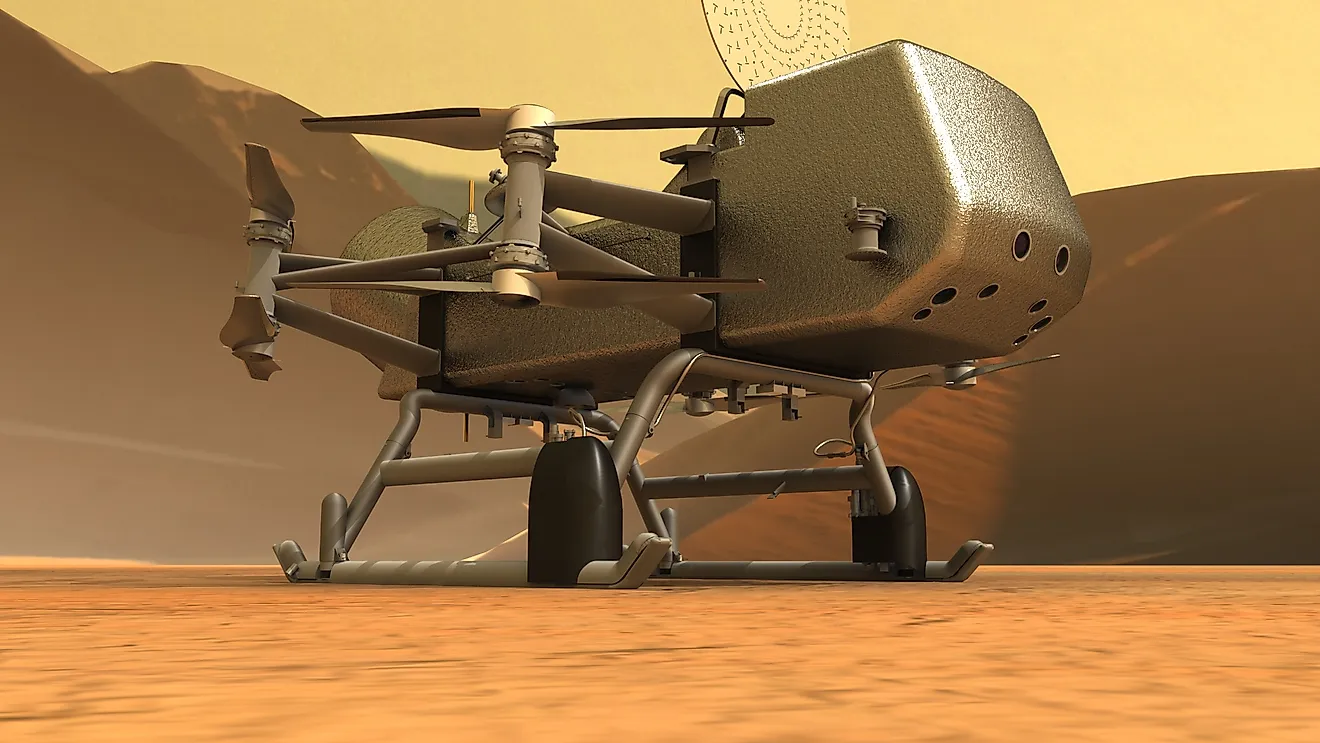
NASA's Dragonfly mission, currently scheduled for launch no earlier than July 2028 with arrival at Titan in 2034, is the next dedicated Titan exploration program. Dragonfly is an eight-rotor rotorcraft (functionally a large drone) about the size of the Mars rover Curiosity, designed to fly between landing sites in Titan's dense atmosphere and low gravity (the combination of which makes powered atmospheric flight much easier on Titan than on Earth or Mars). The mission is targeted to spend at least three years on the surface, making short flights between sites in and around the Selk crater region to investigate Titan's organic chemistry, surface composition, and potential habitability. A seismometer aboard Dragonfly may also provide direct measurements of Titan's interior structure, helping resolve the open question of whether the liquid water layer is a connected ocean or a system of pockets. The mission is led by the Johns Hopkins Applied Physics Laboratory, with principal investigator Elizabeth Turtle.
Astrobiological Significance
Titan is one of three primary targets in the search for habitable environments in the solar system beyond Earth, along with Europa (Jupiter's icy moon, with a subsurface liquid-water ocean directly underneath its ice shell) and Enceladus (Saturn's smaller moon, with confirmed water plumes venting from its subsurface ocean). Titan is unusual among the three because it has two potentially habitable environments rather than one: the subsurface liquid water in contact with rocky material in the deep interior, and the surface hydrocarbon lakes, which contain dissolved organic compounds in chemistry that no other known body offers. Whether life as we understand it could use liquid methane and ethane as a solvent in place of water is an open theoretical question; the chemistry would be radically different from Earth biology, but the surface chemical inventory (long-chain hydrocarbons, nitriles, tholins) provides at least the raw materials. Dragonfly's surface investigation, and any follow-on missions in the 2040s and beyond, will be the primary way of moving the question beyond theory.
A Note On What Has Changed Since The Cassini Era
Most of the standard facts about Titan repeated in popular references derive from Cassini-Huygens data collected between 2004 and 2017, but two substantial updates have occurred since the mission ended. First, the moon count for Saturn was 53 confirmed at the time of Cassini's arrival in 2004, 62 at the time the original version of this article was written, 146 by early 2025, 274 after the IAU's Minor Planet Center confirmed 128 newly discovered small outer moons on March 11, 2025, and 285 after 11 more were confirmed in March 2026. Second, the model of Titan's interior has been actively revised: the standard "global subsurface ocean" framing accepted from the 2008 Cassini gravity result is being replaced by a more complex model with localized liquid pockets, per the Petricca et al. 2025 Nature paper. Neither change affects Titan's status as the largest of Saturn's moons or the second-largest in the solar system; both reflect the active, ongoing science of the Saturn system.