The Four Forces Of Physics
Everything you have ever touched, seen, or felt comes down to four forces. The four forces hold atoms together, light the sun, run your phone, and keep your feet on the floor. Strip them away and the universe falls apart, literally. Three of the four (electromagnetism, the strong nuclear force, and the weak nuclear force) work through messenger particles that physicists have caught and measured. The fourth is gravity, which is the most familiar and, in some ways, still the most mysterious.
Gravity

Gravity is the weakest of the four forces by an absurd margin. A child's magnet can lift a steel paper clip against the gravitational pull of the entire planet Earth. The reason gravity feels dominant in everyday life is that it does two things the other forces do not: it acts at infinite range, and every speck of mass adds to it. Pile up enough mass and gravity wins.
Isaac Newton worked out the math in the 1660s during the plague years he spent at Woolsthorpe Manor. He published Philosophiae Naturalis Principia Mathematica in 1687, describing gravity as a force that pulls any two masses toward each other in proportion to their masses and inversely with the square of the distance between them. Newton's equations were good enough to send Apollo 11 to the Moon. What Newton could not explain was why gravity worked at all.
The answer came from Albert Einstein in 1915. In General Relativity, gravity is not a force pulling on objects from a distance. It is the shape of space and time itself. Mass tells space-time how to curve, and curved space-time tells objects how to move. The sun does not yank on Earth; it puts a dimple in space-time, and Earth rolls along that dimple in a closed loop. Einstein's theory predicted bent starlight, slow clocks on the surface of massive objects, and gravitational waves, all of which have been confirmed.
The open problem is that gravity has refused to fit into quantum mechanics. The other three forces all have working quantum descriptions. Gravity does not. A successful theory of quantum gravity is the largest unsolved problem in modern physics, and string theory, loop quantum gravity, and other contenders have all tried to crack it without conclusive success.
Electromagnetism

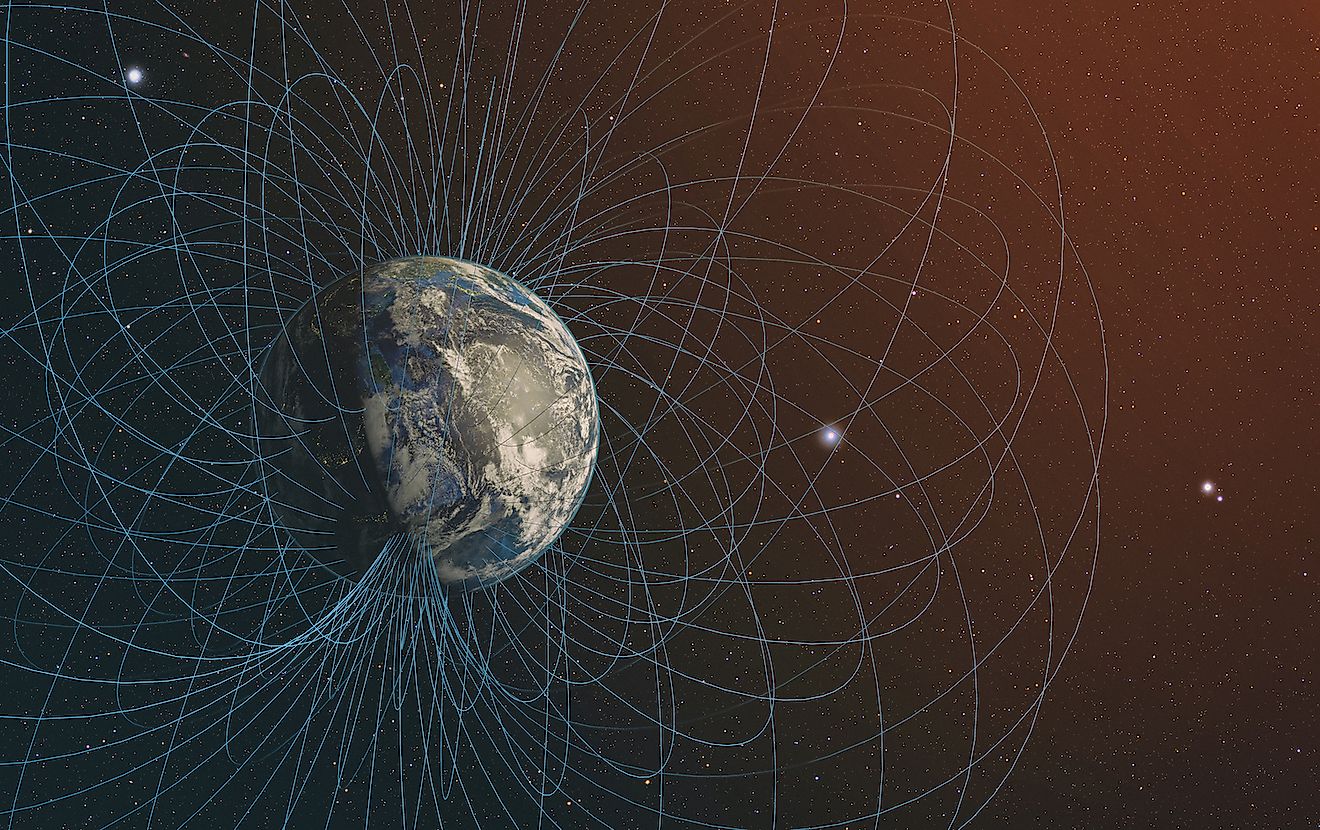
When you push a door, you are not actually touching it. The electrons in your fingertips and the electrons in the door push each other away through the electromagnetic force, hard enough that solid matter feels solid. Every chemical reaction, every electric current, every photon of light, every magnet on a fridge is electromagnetism. The entire global economy runs on this one force.
Electricity and magnetism were originally thought to be two separate phenomena. Michael Faraday demonstrated in the 1820s and 1830s that the two are linked: a moving magnet generates an electric current (electromagnetic induction, 1831), and a current generates a magnetic field. Faraday saw the connection but did not have the math to formalize it. James Clerk Maxwell did. In 1865, Maxwell published "A Dynamical Theory of the Electromagnetic Field," reducing the entire force to four elegant equations. Maxwell's equations predicted that electromagnetic waves should travel through space at a specific speed, and that speed turned out to match the measured speed of light. Light, it turned out, is electromagnetism in motion.
The messenger particle of the electromagnetic force is the photon. Every time you see, hear a radio, microwave food, or get an X-ray, you are exchanging photons. Electromagnetism is roughly 10^36 times stronger than gravity but acts only between charged particles, and most matter is electrically neutral overall, which is why it does not dominate everyday experience the way gravity does.
The Weak Nuclear Force
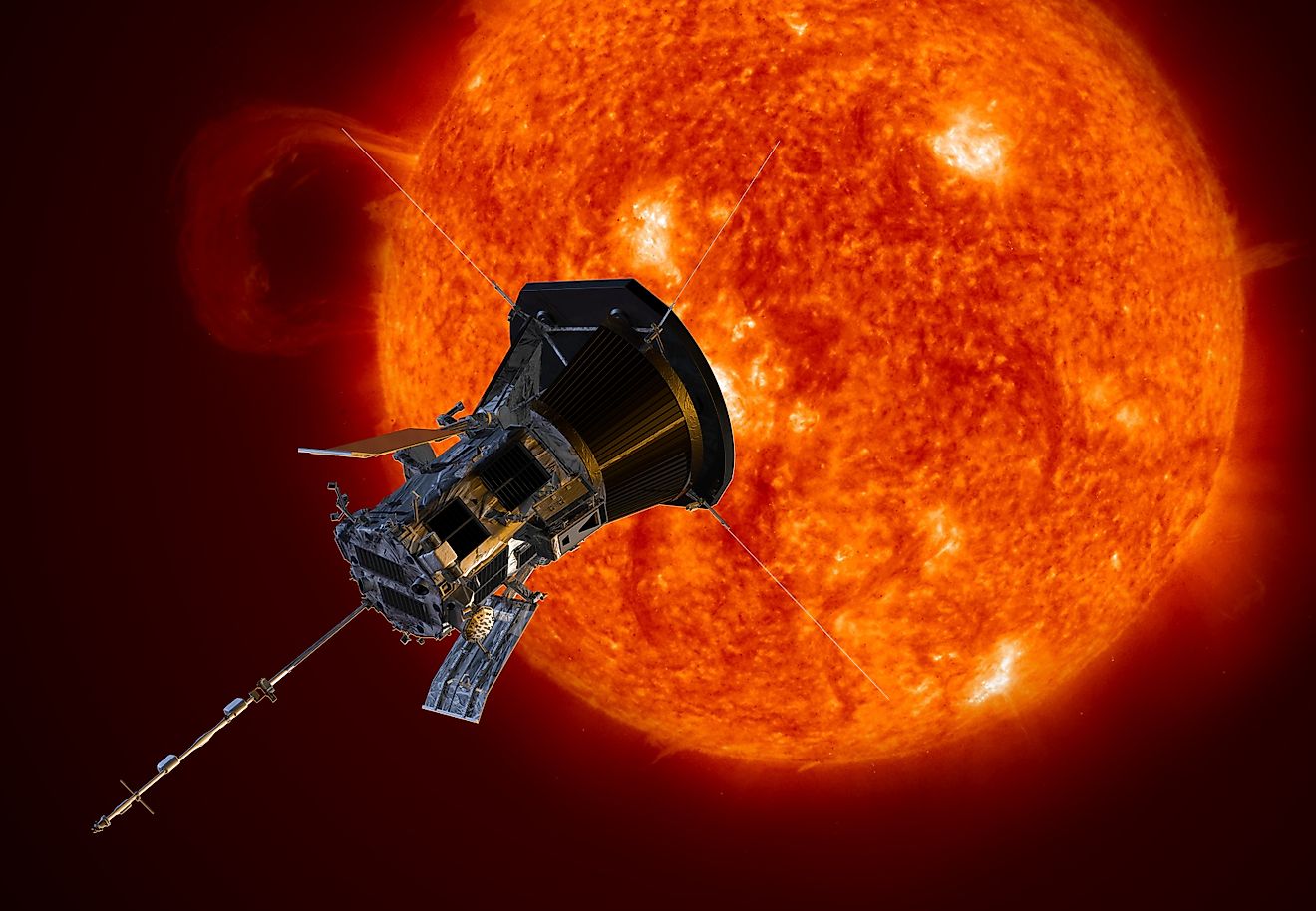
The weak force is what makes the sun shine. Inside the sun's core, the weak force converts protons into neutrons so that hydrogen can fuse into helium, releasing the energy that radiates out as sunlight. Without the weak force, stars would not burn, heavier elements would not form, and the universe would consist of cold hydrogen and helium gas drifting in the dark.
Enrico Fermi proposed the weak force in 1933 to explain a strange kind of radioactive decay (beta decay) in which a neutron in an atomic nucleus turns into a proton, an electron, and a nearly massless particle that became known as the neutrino. Fermi's theory worked but was incomplete. The weak force's messenger particles, the W and Z bosons, were not directly detected until 1983 at CERN, half a century after Fermi predicted the force.
The weak force operates only over distances smaller than an atomic nucleus, which is why it stays out of view in daily life. In the 1960s, Sheldon Glashow, Abdus Salam, and Steven Weinberg showed that the weak force and electromagnetism are actually two faces of a single underlying electroweak force, separated only because the universe cooled below a certain temperature about a trillionth of a second after the Big Bang. The three shared the 1979 Nobel Prize in Physics for the work.
The Strong Nuclear Force
Every atomic nucleus other than hydrogen contains more than one proton, and protons all carry positive electric charge. By the rules of electromagnetism, protons should fly apart from each other. They do not, because the strong nuclear force is stronger than electromagnetism at short range and holds the nucleus together.
The strong force is the strongest force in nature, about 100 times stronger than electromagnetism, ten thousand times stronger than the weak force, and roughly 10^38 times stronger than gravity. It operates over the shortest range of any of the four forces, only across distances about the diameter of a single atomic nucleus.
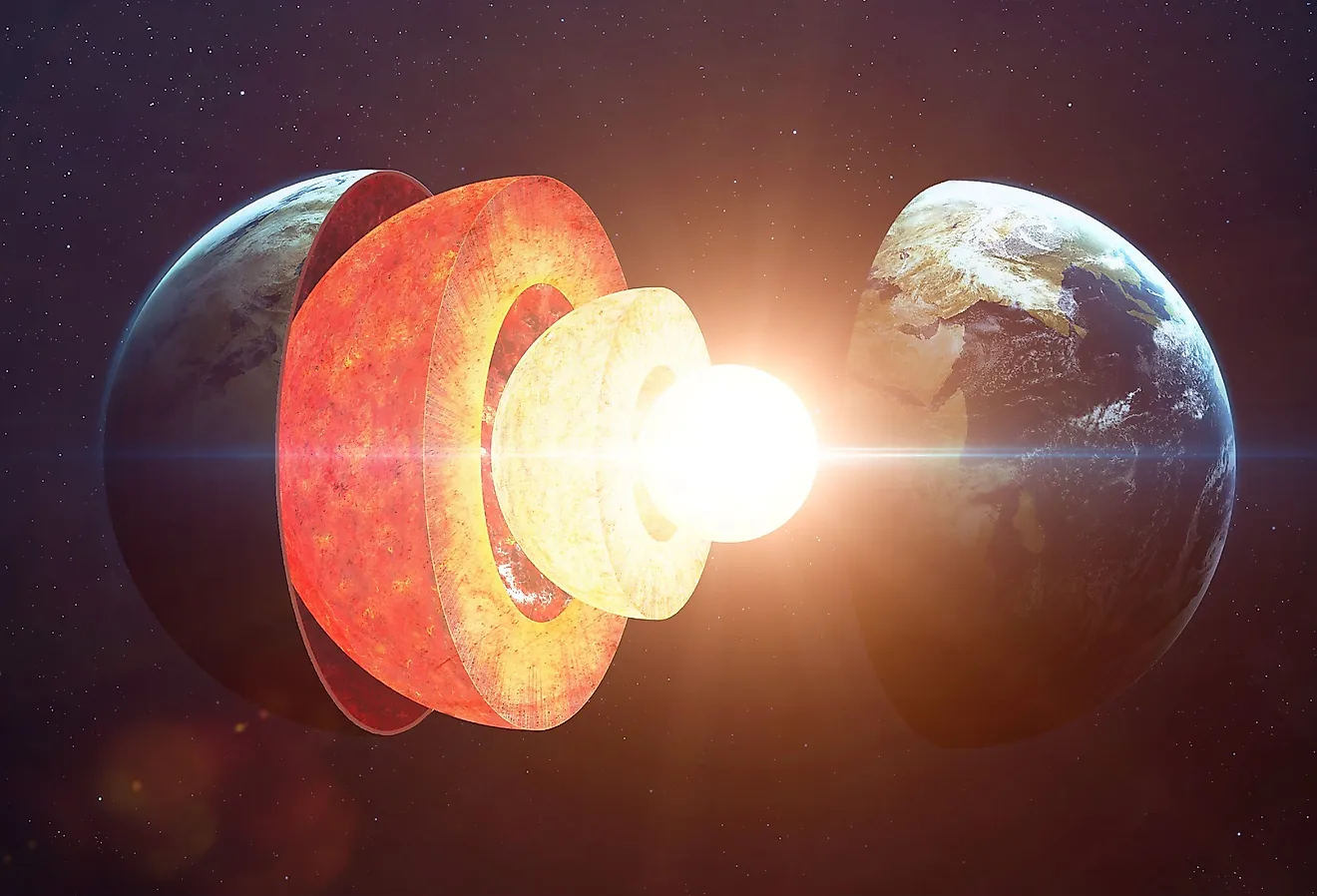
The story of the strong force is layered. At the deepest level, the strong force binds quarks together into protons and neutrons through the exchange of particles called gluons. The theory describing this is called quantum chromodynamics (QCD), worked out in the 1970s. A residual leftover of the gluon-mediated strong force then binds the protons and neutrons together into the nucleus itself. Without the strong force, atoms heavier than hydrogen could not exist, which means no carbon, no oxygen, no iron, no anything that makes up life or planets.
How The Four Forces Compare
Ranked by strength at short range, the four forces stack up in the opposite order of how prominent they feel in everyday life. The strong force is first, electromagnetism is second, the weak force is third, and gravity comes in last, about 10^38 times weaker than the strong force. The two forces that dominate human experience (gravity and electromagnetism) have infinite range, while the two nuclear forces are confined to distances smaller than a single atom. The reason gravity rules planetary motion despite its weakness is that mass only adds, never cancels; the reason electromagnetism does not rule planetary motion despite its strength is that positive and negative charges almost perfectly cancel in bulk matter. The unification of all four forces into a single mathematical framework, sometimes called a "theory of everything," is the long-running project of modern theoretical physics and remains unfinished.