Will Humans Ever Go To Mars?
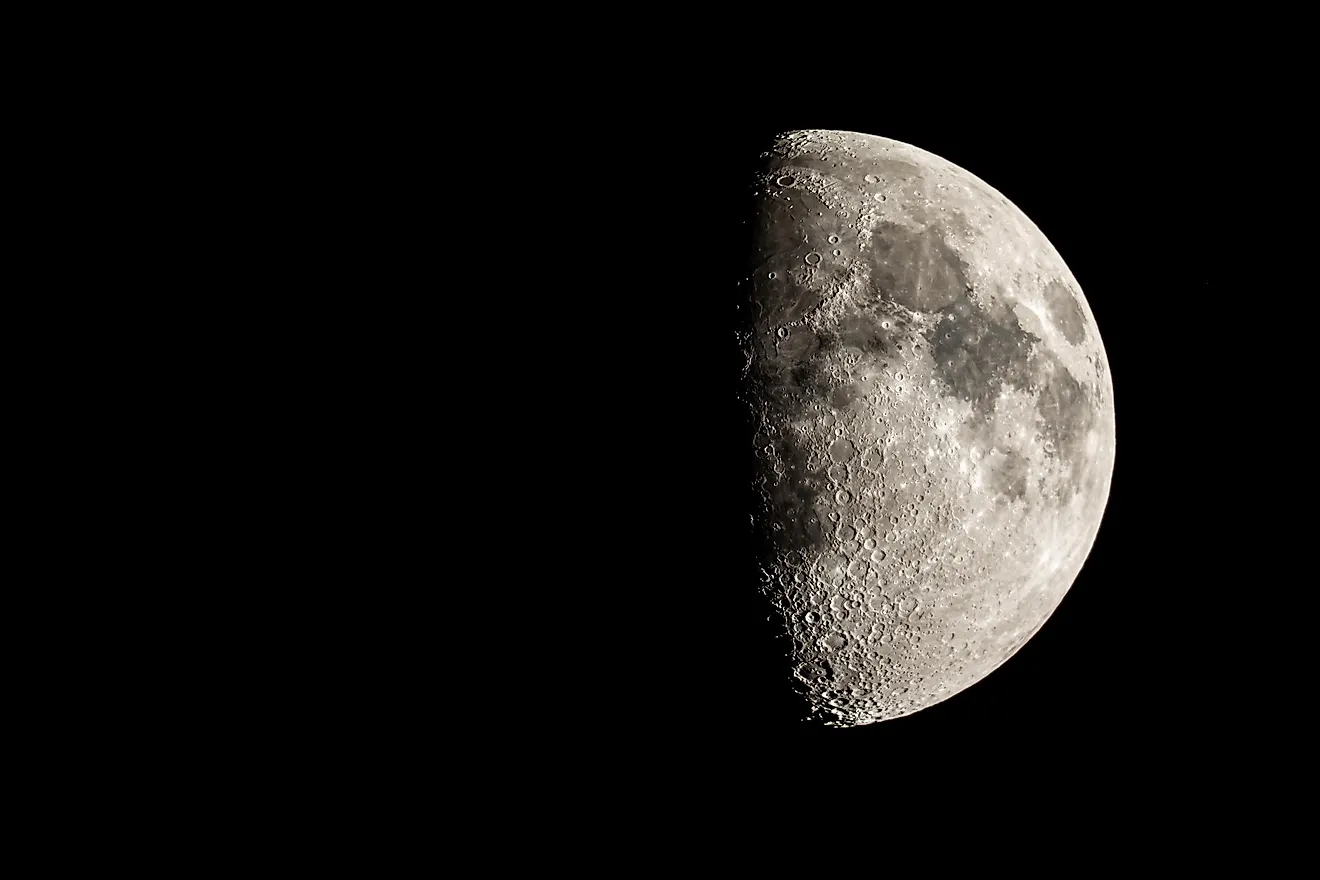
Apollo 11 reached the Moon in three days. A crewed mission to Mars will take seven to nine months one way. The planet is roughly 140 times farther away at its closest approach than the Moon is at any point, and the rocket carrying the first astronauts will have to leave Earth at the right moment, cover 300 million miles of empty space, slow down through an atmosphere that is one percent as thick as Earth's, and land softly enough that the crew can step out and start working. Then they have to come back. Every major space agency in the world is working on the problem, and nobody has it solved yet.
Getting There

Earth and Mars line up for an efficient launch only once every 26 months. Miss the window and the next attempt is more than two years away. The minimum distance during these "transfer windows" is about 34 million miles, and the spacecraft cannot just point at Mars and fire engines. It has to ride an elongated orbit around the Sun called a Hohmann transfer, which is why even at peak alignment the journey runs seven to nine months. Perseverance took 203 days. Curiosity took 254. The Mars Science Laboratory radiation detector measured 0.66 sieverts of cosmic radiation on the round trip, two-thirds of NASA's career limit for a single astronaut.
The trip is also psychologically and physically brutal. The crew will spend the better part of a year in microgravity, which steadily strips bone density and muscle mass. They will be exposed to galactic cosmic rays and unpredictable solar storms that no spacecraft hull can fully block. Communication with Earth runs on a delay of 4 to 24 minutes one way depending on planetary positions, meaning real-time conversation is impossible and most decisions have to be made by the crew on the spot. If anything serious goes wrong on the way out, there is no turning back. The orbital geometry that got the spacecraft there only lets it come home on its own schedule.
Landing on Mars
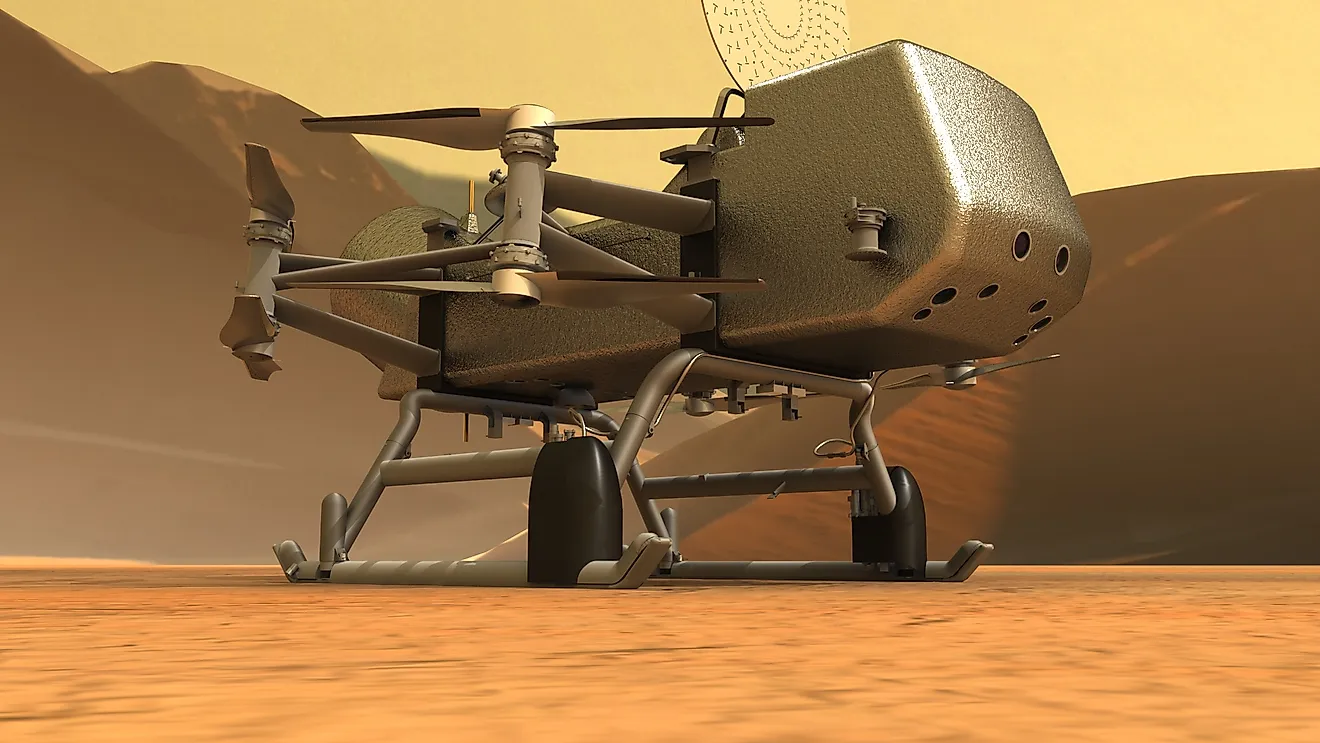
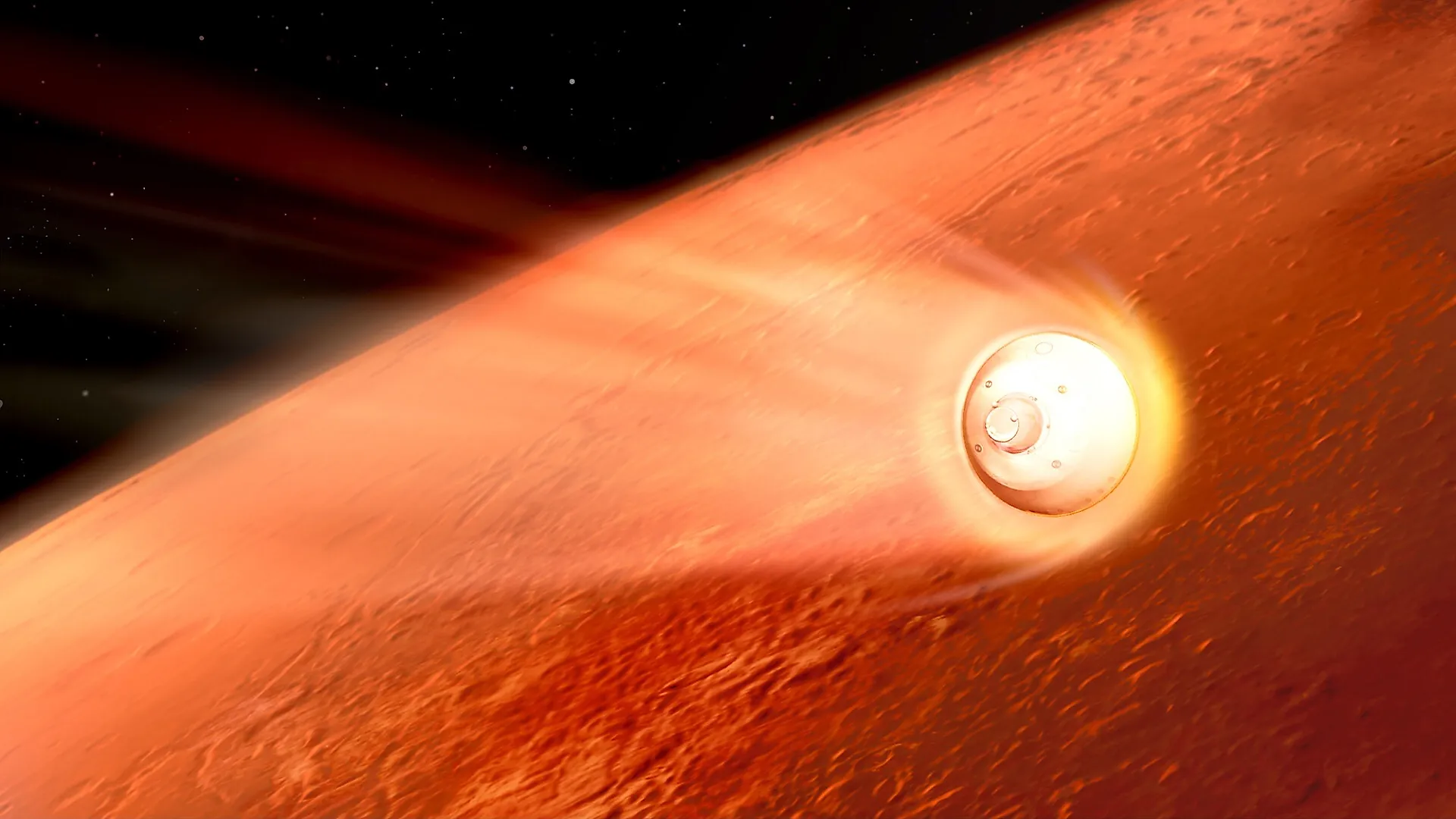
Landing is the part that has killed most attempts. About half of all Mars missions ever launched have failed, and most of those failures came at landing. Mars is harder to land on than either the Moon or Earth for a specific reason: the atmosphere is too thin to slow a spacecraft down the way Earth's does, but thick enough to generate destructive heat during entry. Rovers like Curiosity and Perseverance use a sequence of heat shields, supersonic parachutes, and rocket-powered "sky cranes" that lower the rover on cables in the last few seconds. None of that scales up to a human-rated vehicle weighing tens of tons.
The Soviet Mars 3 became the first spacecraft to soft-land on Mars on December 2, 1971, but lost contact roughly 14 seconds after touchdown. NASA's Viking 1 became the first lander to operate successfully on July 20, 1976, and lasted 2,307 days. Coming back is the problem nobody has yet solved. Mars has 38 percent of Earth's gravity, which is too much to lift off with anything resembling the Apollo lunar module's tiny ascent stage. A return mission needs a real rocket, fully fueled, sitting on the Martian surface and ready to fire. SpaceX has landed Falcon 9 boosters more than 400 times on Earth, and the company is testing Starship for an eventual Mars landing, but no rocket has ever taken off from the surface of another planet other than the Moon.
Surviving the Surface

Mars is cold, dry, irradiated, and constantly trying to kill anyone on its surface. Temperatures swing about 100 degrees Celsius between noon and midnight at the equator. Summer afternoons at low latitudes can reach 20 degrees Celsius. Polar winter nights drop to minus 125. The atmosphere is 95 percent carbon dioxide and runs at about 0.6 percent of Earth's sea-level pressure, which is thin enough that an unprotected human would be unconscious in roughly 15 seconds. Mars also lost its global magnetic field around 4 billion years ago, leaving the surface exposed to solar radiation that Earth's magnetosphere normally deflects.
The dust is its own problem. Mars dust is fine, electrostatically charged, and rich in toxic perchlorates that NASA confirmed in 2008. Dust storms can grow out of small local events into global storms that cover the entire planet for weeks, blocking sunlight enough to disable solar-powered hardware. The 2018 global storm killed the Opportunity rover after almost 15 years of operation. Add the gravity problem (0.38 g, enough to cause significant bone and muscle loss over a multi-year stay) and the basic biological challenge becomes clear: humans cannot just walk around outside.
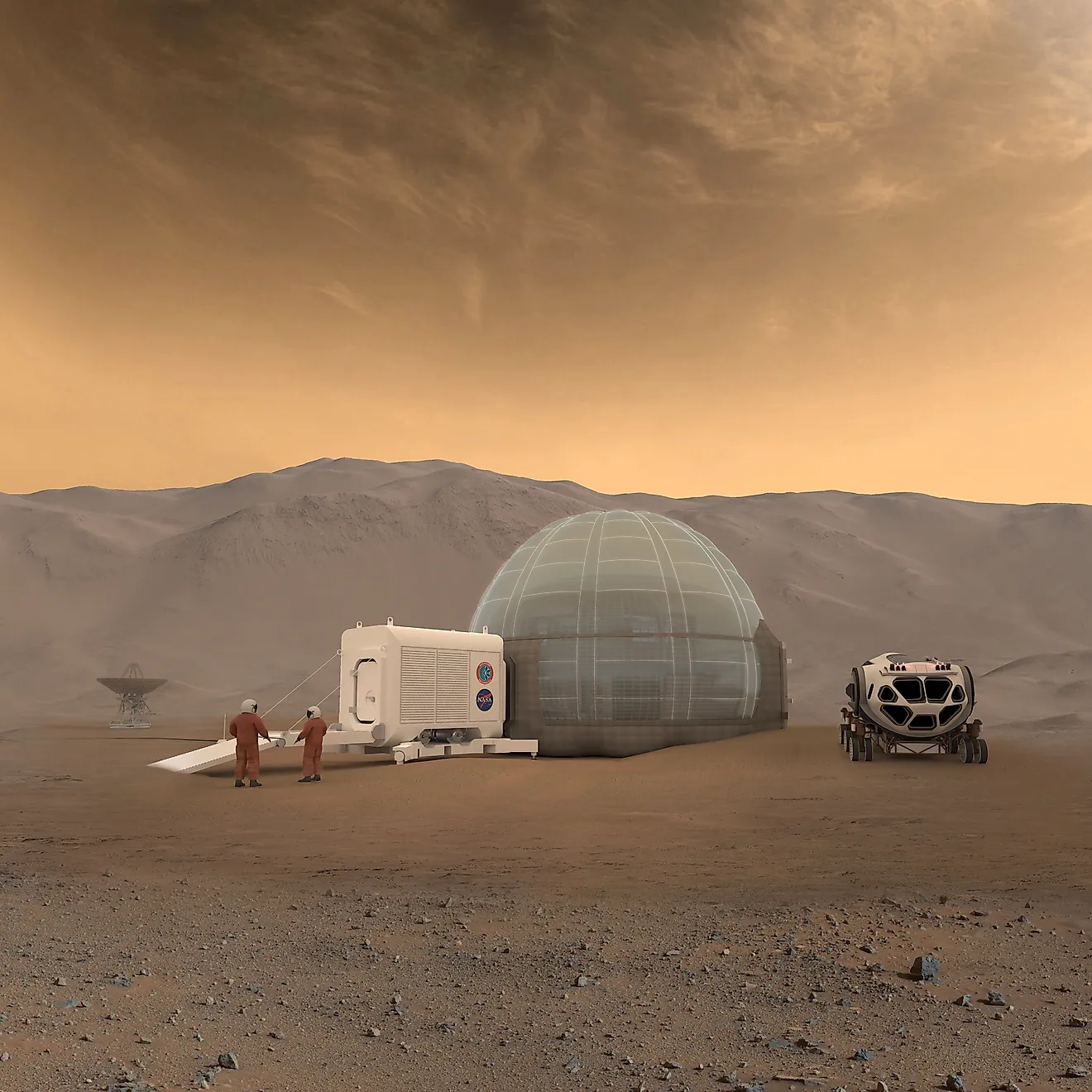
The two leading solutions are pressurized surface habitats and underground shelter in lava tubes. Surface habitats have to shield against radiation, regulate temperature against the 100-degree daily swing, recycle water and oxygen, and hold pressure against a near-vacuum outside. Lava tubes (collapsed underground volcanic channels detected at multiple locations on Mars, some hundreds of meters across) offer natural radiation shielding from tens of meters of rock above, plus protection from dust storms and meteor impacts. The trade-off is access: surface habitats are easier to build, lava tubes are safer once inside.
When This Actually Happens
NASA's published Moon to Mars Architecture treats the Artemis lunar program as the proving ground for the technologies needed to reach Mars, with the first crewed Mars landing tentatively targeted for the late 2030s or early 2040s. The agency's Mars Exploration Program 2024-2044 Plan, released in late 2024, lays out the science campaign that will continue in parallel. Artemis II completed a successful crewed lunar flyby in April 2026, and Artemis III is currently scheduled to put astronauts back on the Moon by 2028 using SpaceX's Starship as the lunar lander.
SpaceX's own Mars timeline has shifted significantly. The company spent 2024 and 2025 telling investors and reporters that uncrewed Starship missions would launch in the November-December 2026 transfer window. On February 9, 2026, Elon Musk announced a five-to-seven-year delay on those Mars plans so the company could focus on its lunar lander obligations under Artemis. Starship's V3 configuration began test flights in early 2026, but the vehicle has not yet completed a full orbital flight, and orbital refueling (which the Mars mission depends on completely) remains an unproven capability. Even an optimistic SpaceX timeline now points to uncrewed Mars landings in 2028 or 2030 at the earliest, with crewed flights years later.
The biggest single variable is money. NASA's budget has held roughly flat in nominal terms for years while the cost of the Artemis program has grown, and any human Mars mission would require sustained funding through multiple presidential administrations and Congressional sessions. The technical problems are difficult but solvable. The political and financial commitment to actually fund the solutions is what determines whether the first boot prints on Mars belong to someone alive today, or to a generation still in school.