Where Is The World's Deepest River?
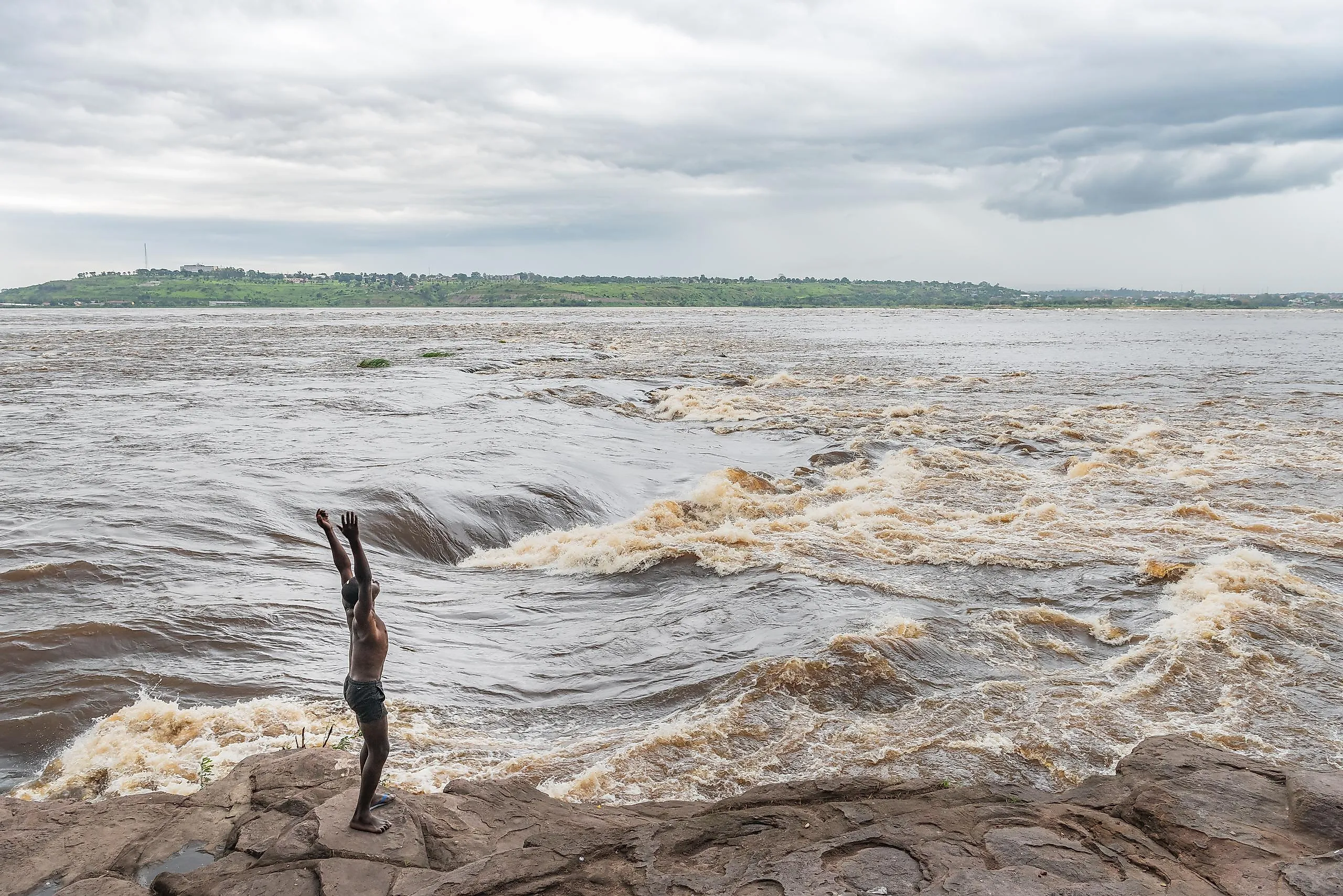
Drop a 60-story skyscraper into the lower reaches of the Congo River and the roof would vanish underwater. At its deepest measured point, the riverbed lies about 720 feet (220 meters) below the surface, which makes the Congo, once known as the Zaire, the deepest river on Earth by a wide margin. The record sits in the Lower Congo, in the stretch below Pool Malebo just east of Brazzaville, where the water runs black and the bottom drops away into trenches no sunlight ever reaches. Over its full 2,920-mile (4,700-kilometer) run through Central Africa, the river averages a more ordinary 33 to 262 feet (10 to 80 meters) deep. It is that final, violent descent to the sea that breaks the record.
Why So Deep?

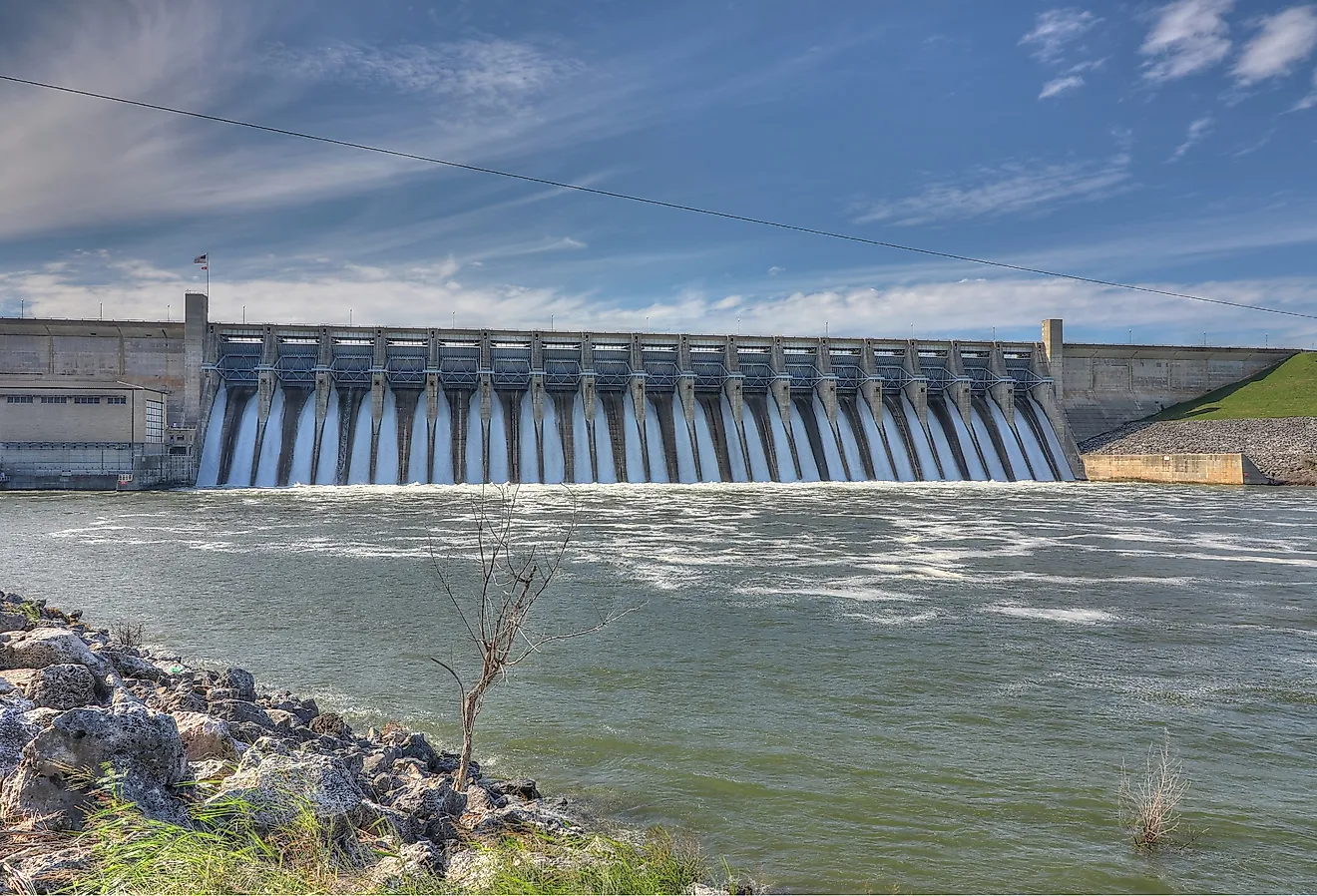
Depth like this needs a cause, and the Congo's is raw power. In its last 200 miles before the Atlantic, the river squeezes into a narrow, hard-rock canyon and plunges through a chain of cataracts known as Livingstone Falls, dropping steeply on its way to the coast. Feeding that descent is a staggering volume of water. The Congo discharges on the order of 1.4 to 1.5 million cubic feet per second, behind only the Amazon among the world's rivers, and forcing that much water down a steep, confined channel produces the most powerful rapids on the planet. Those rapids do not just churn the surface. They scour the bed into a jagged underwater landscape of peaks and troughs, gouging the gorges that plunge to 720 feet.
In The Congo's Dark Depths

The river gave up its secret in the strangest way. For years, fishermen in the Lower Congo occasionally pulled up pale, eyeless fish that turned up only when they were already dead or dying. Locals had a name for one of them, the blind cichlid Lamprologus lethops: "mondeli bureau," loosely, "the white man in an office," a wry nod to a creature that looked stunted, colorless, and sightless. When ichthyologist Melanie Stiassny of the American Museum of Natural History held a barely living specimen, gas bubbles formed under its skin and across its gills. The fish had died of the bends, the same decompression sickness that strikes divers who surface too fast. Something was firing these animals up from extreme depth faster than their bodies could adjust. Chasing that puzzle, Stiassny's team brought in hydrologists and a crew of expert kayakers, and in 2008 they ran echo sounders across a riverbed nobody had ever properly mapped. The readings stunned them. As Stiassny put it, it was almost like boating over a mountain range, all huge peaks and enormous troughs, and one kayaker compared the current to a firehose emptying into a swimming pool. That survey is what crowned the Congo the world's deepest river, dethroning the Yangtze.
The darkness also runs evolution. More than 300 fish species crowd the Lower Congo, many found nowhere else, because the rapids slice the river into isolated pockets that act like islands. Populations are walled off from one another by water too wild to cross, and over time each pocket evolves its own residents. Some, like the blind cichlid, have adapted so completely to a lightless world that they have shed their eyes and pigment entirely.
The Flow Of The Congo

Depth is only the headline. The Congo is also Africa's second-longest river after the Nile and ranks among the ten longest in the world. Its waters gather in the highlands of northeastern Zambia and the Katanga Plateau in the southeastern corner of the Democratic Republic of the Congo, then trace a great counter-clockwise arc, crossing the equator not once but twice before spilling into the Atlantic at the port of Banana. That double crossing is more than a curiosity. Because the river always has part of its basin in a rainy season, its flow stays remarkably steady year-round, unlike rivers that swing between flood and trickle.
The river runs in three parts, the Upper, Middle, and Lower Congo, and its basin reaches into nine countries: the Democratic Republic of the Congo above all, plus the Republic of the Congo, the Central African Republic, Zambia, Angola, Cameroon, Tanzania, Gabon, and Equatorial Guinea. That basin covers roughly 1.3 million square miles, about 13% of Africa's landmass, making it the second-largest river basin on Earth after the Amazon's.
The Congo River As A Lifeline

That same basin holds the second-largest tropical rainforest on the planet, behind only the Amazon, and the biodiversity packed into it is staggering. Roughly 75 million people live along the river across some 150 ethnic groups, whose ways of life stretch across a vast range, anchored at one end by the hunter-gatherer Ba'Aka and at the other by the dense, fast-moving streets of Kinshasa, the DRC's capital. The wider region shelters around 10,000 species of tropical plants, 1,000 birds, 700 fish, and 400 mammals. A great many of them live nowhere else on Earth.
Small wonder the Congo carries a reputation for the ominous and the legendary. It is both a provider and a destroyer, generous and merciless, and its dark, turbulent depths feed every version of the story. No other river on Earth reaches so far below its own surface, and few can match it for length, power, and sheer biological richness.