The Year The Columbia Drowned Celilo Falls
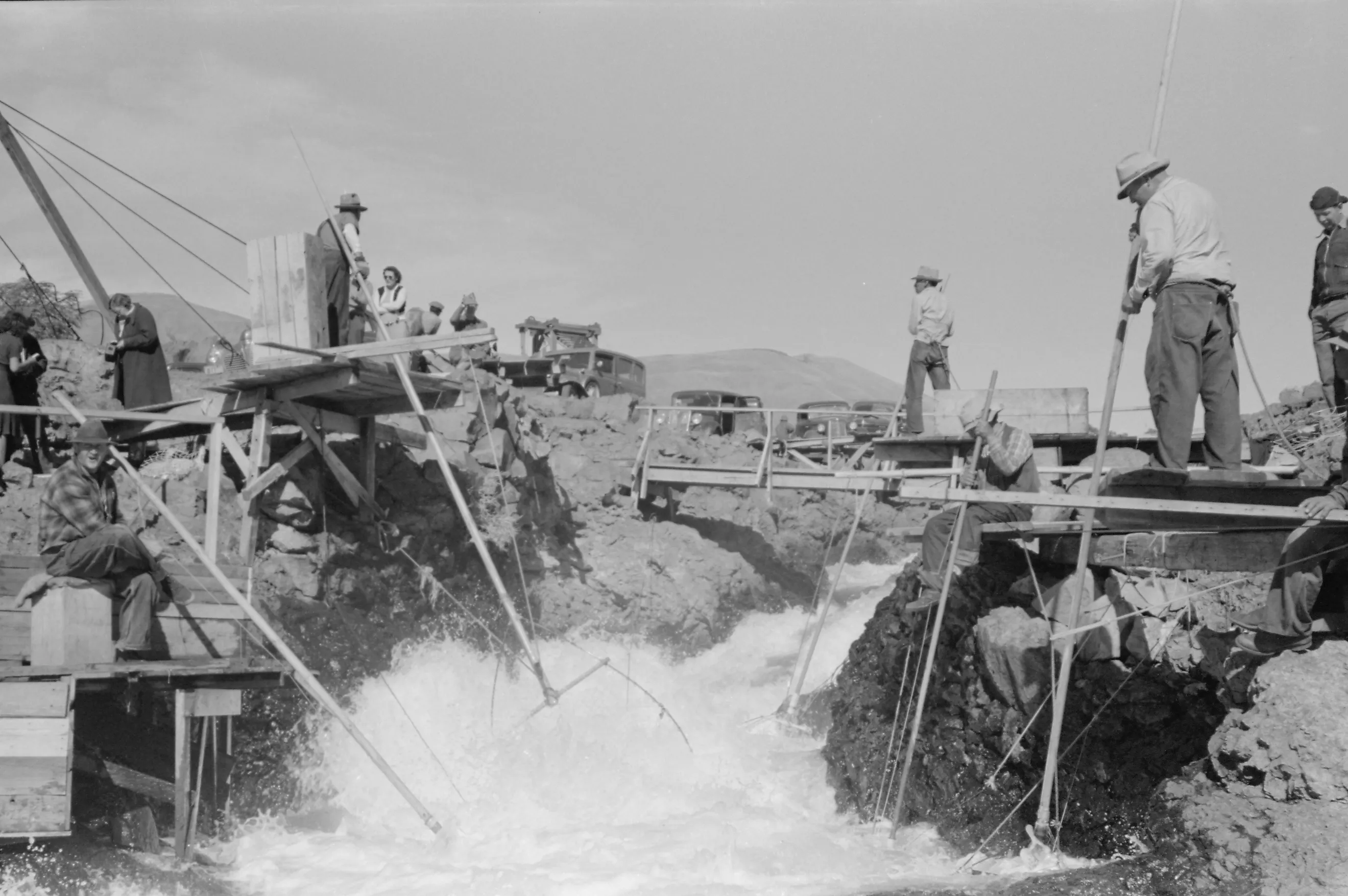
In 1957, the falls at the heart of what is often called the oldest continuously inhabited community in North America disappeared. The Dalles Lock and Dam backed up the Columbia River, submerging Celilo Falls, Oregon, on March 10, 1957, and forming the body of water today known as Celilo Lake. To this day, this action remains controversial, especially due to Celilo Falls' importance to the various Native American groups that called this village home. Some refer to this action as infrastructural colonization.
The History Of Celilo Falls

Located just to the east of the Cascade Range, Celilo Falls has been occupied nearly since its creation. At the end of the last ice age, as glaciers melted, the Columbia River Gorge was flooded multiple times, in a series of events known as the Missoula Floods.
These floods created a long series of islands, eddies, chutes, and other landmarks within the Columbia River, including the waterfall itself. According to oral legends, mythical beings called the Swallow Sisters built a dam to try to prevent salmon from swimming upriver, but a trickster Coyote destroyed the dam, and the falls are what's left behind.
The salmon here is what drew in Native groups dating back from 9,300 to 8,200 BCE. Evidence of how long people have lived along the Columbia includes the Kennewick Man, the skeletal remains of a man who lived around 7,300 B.C. His remains were discovered along the Columbia River near Kennewick, Washington, in 1996 and were returned to the Native American tribes in 2017.

Groups lived along this region in either permanent or temporary settlements for thousands of years and left behind rock art along the river. The Lewis and Clark expedition first passed the falls in October 1805, and on April 19, 1806, during the return journey, its members witnessed a group of Wishram people celebrating the first arrival of salmon, with the fish being caught and divided among the village children to eat.
Unfortunately, when the 1846 Oregon Treaty with Britain gave the U.S. control of the region, natives would begin losing access to the Columbia River. In 1855, the Nez Perce, Umatilla, Yakama, and Warm Springs signed away nearly 45 million acres of land and were removed to reservations. At the same time, natives were allowed to fish at Celilo Falls, as the treaties secured "the right of taking fish at all usual and accustomed places, in common with the citizens of the Territory."
The Dam Project

Although natives continued to fish at Celilo Falls, the U.S. Army Corps of Engineers worked at developing better navigation systems as early as 1871. Over a period of 31 years, through a combination of river dredging, rock removal, and other efforts, the only remaining gap on the Columbia River below Priest Rapids in central Washington was the Dalles-Celilo Reach.
In 1915, the Dalles-Celilo Canal was opened to allow steamboats and other boats to bypass Celilo Falls. However, there was still interest in using the Columbia River for hydropower.
In the 1930s, the Corps of Engineers proposed a dam right on the Celilo Falls section of the Columbia River. It would replace the smaller Dalles-Celilo Canal and enable larger barges to pass through. The Bonneville and Grand Coulee dams came first, in the 1930s, while the Dalles Dam gained approval in 1950, and construction began in 1952.
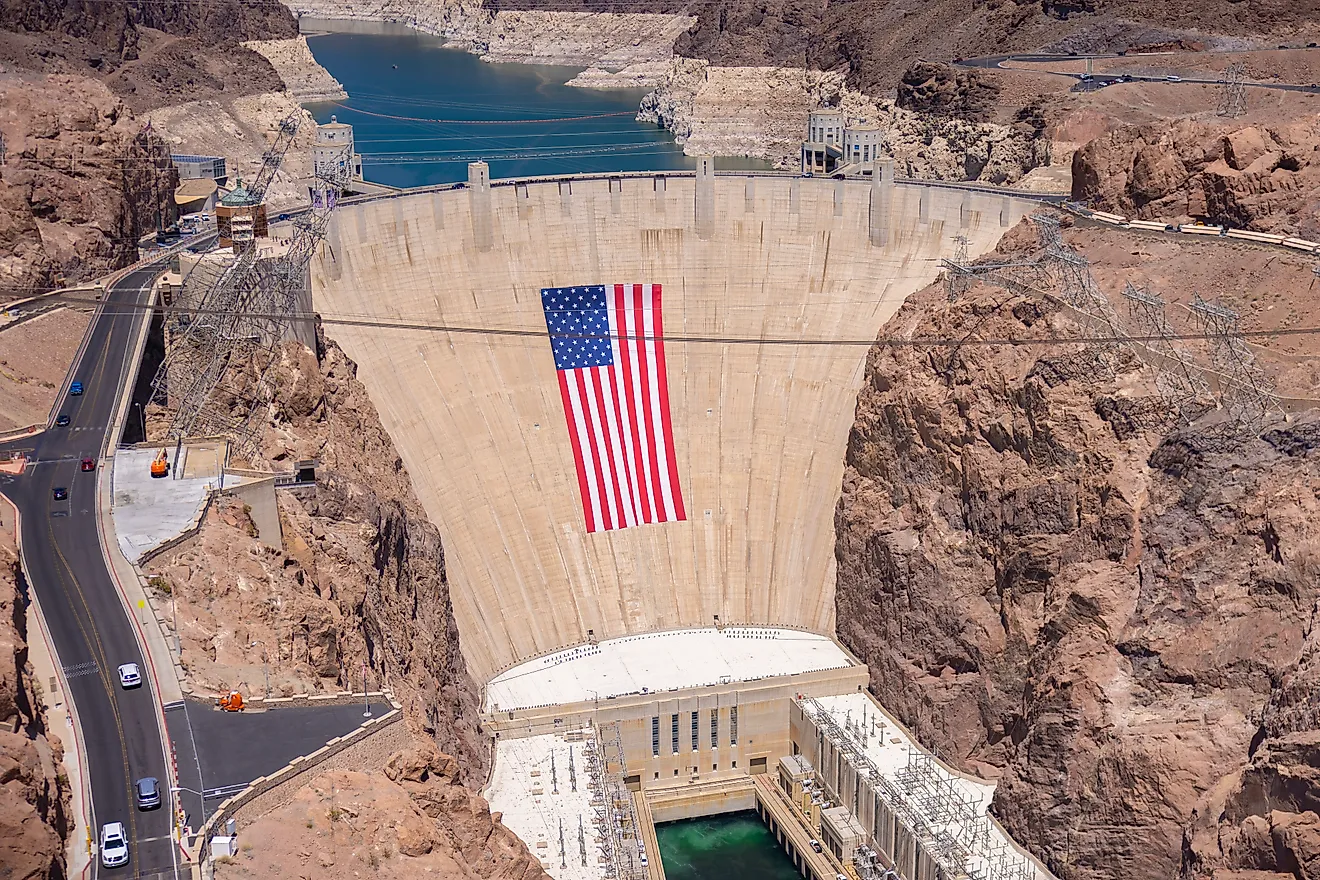
The dam would include a 1,380-foot spillway with 23 radial steel gates, and a powerhouse that could handle vast amounts of power. Fish passage facilities were to be added as well to allow salmon and other species to continue their journey on the Columbia River. Its navigation lock would measure 650 feet by 86 feet to allow barges to pass through the river.
The entire project would end up costing $286 million, but it also meant the complete destruction of Celilo Falls.
The Flooding Of Celilo Falls

The construction of the Dalles Dam was opposed by not just the natives who lived there, but also commercial fishers and the Oregon Fish Commission, who cited concerns that this dam would make it impossible for salmon to spawn.
Tribal representatives from the Yakama, Nez Perce, Umatilla, Warm Springs, and Celilo Falls itself testified before Congress in 1951, stating that fishing was sacred and no amount of money could make up for the loss of the ground. William Minthorn from the Umatilla pointed to his own service in World War II as evidence that they should be treated fairly. However, their appeals did not work, and construction began in February 1952, prior to any settlements being reached for compensation.
Even as the dam was being built, groups such as the Nez Perce, Umatilla, Warm Springs, and Yakama still came to fish, under the eye of Tommy Kuni Thompson, the chief of the village and the man in charge of regulating the fishery. Visitors to the village such as George W. Aguilar Sr. from the Warm Springs Reservation would note how salmon fishing season brought a lot of energy to the village, with full restaurants and dancing teens.
The federal government eventually agreed to pay the tribes nearly $27 million in compensation for removing their fishing rights from the treaties of 1855. In addition, a new village was built as close as possible to Celilo, and the residents were sent there prior to the inundation.
At 10 a.m. on March 10, the Corps closed the gates, and the waters began to rise. Although celebrated by Governor Albert Rosellini of Washington and Governor Elmo Smith of Oregon on the day of the opening, Natives reportedly wept as they watched the fishing platforms, islands, falls, and other features disappear. Even the older Celilo Canal was flooded by the lake. Some would refer to it as "the darkest day" in their history.
The Legacy Of Celilo Falls
As recently as 2019, the Yakama Nation demanded the removal of the Dalles Dam. Nation Chairman JoDe Goudy stated that this dam, along with all of the Columbia River dams, did untold damage to the Yakama Nation's way of life.
In response, the Northwest RiverPartners stated that the dams are a crucial component in combating climate change due to providing carbon-free power. The Dalles Dam today can produce 2.1 million kilowatts at peak production, which is enough electricity to power 800,000 homes. Fourteen generating units were in place by 1960, with more added in later years. It also sees an average of 8 million tons of cargo annually.
In the end, two things are certain about the flooding of Celilo Falls. It provides a great deal of power and commerce to this part of the Columbia River, but it also destroyed an ancient settlement and harmed Native peoples. Any discussion of that event in 1957 must hold these two truths.