The Single Crop That Uses The Most Colorado River Water
It is alfalfa, and the margin is not close. A comprehensive water budget for the Colorado River Basin published in Communications Earth and Environment in March 2024 found that alfalfa consumes more than 5 million acre-feet a year, about 26 percent of every drop taken from the river. For comparison, all the cities, commercial users and industry across the entire basin together consume roughly 3.5 million acre-feet, about 18 percent. So a single crop grown to feed livestock uses substantially more Colorado River water than Phoenix, Las Vegas, Denver, Los Angeles, San Diego, Salt Lake City, Tucson and Albuquerque combined, along with every factory and business attached to them.
Here is the full accounting, why alfalfa in particular, and why the arithmetic is more contested than the headline suggests. The direction of the finding is settled. The exact percentages are not.
The Study That Settled It

Brian Richter of Sustainable Waters worked with eleven other researchers to compile what they describe as the first complete crop-specific accounting of water use across the entire basin, covering the period from 2000 to 2019 and drawing on Landsat satellite data alongside primary records.
Previous estimates had been incomplete, largely for legal reasons. The 1922 Colorado River Compact did not account for the Gila River or for water used in Mexico, so studies built on compact accounting were missing pieces. Richter's team included the Gila, Mexico, water exported out of the basin, reservoir evaporation and the water consumed by riparian vegetation along the river.
Their headline finding is that irrigated agriculture accounts for 52 percent of overall consumption and 74 percent of direct human consumption. Farms use three times more water than every city and industry in the basin put together.
Cattle Feed Is Most Of Agriculture

Within that agricultural share one category dominates everything else. Cattle-feed crops, meaning alfalfa and other grass hays, account for 46 percent of all direct water consumption in the basin and about 32 percent of total consumption, which makes them the single largest use of the river by a wide margin.
In the Upper Basin the concentration is even more extreme. Cattle-feed crops there consume roughly 90 percent of all water used by Upper Basin agriculture, and they use three times as much water as all municipal, commercial and industrial users in those states put together.
Alfalfa specifically is the largest single component of that, at more than 5 million acre-feet and 26 percent of everything consumed. No other crop is close, and no other category of use comes near it either.
Why Alfalfa Drinks So Much
The crop's water use is a function of how it grows rather than of any inefficiency in how it gets irrigated, which is worth stating because the usual assumption is wasteful farming practice.
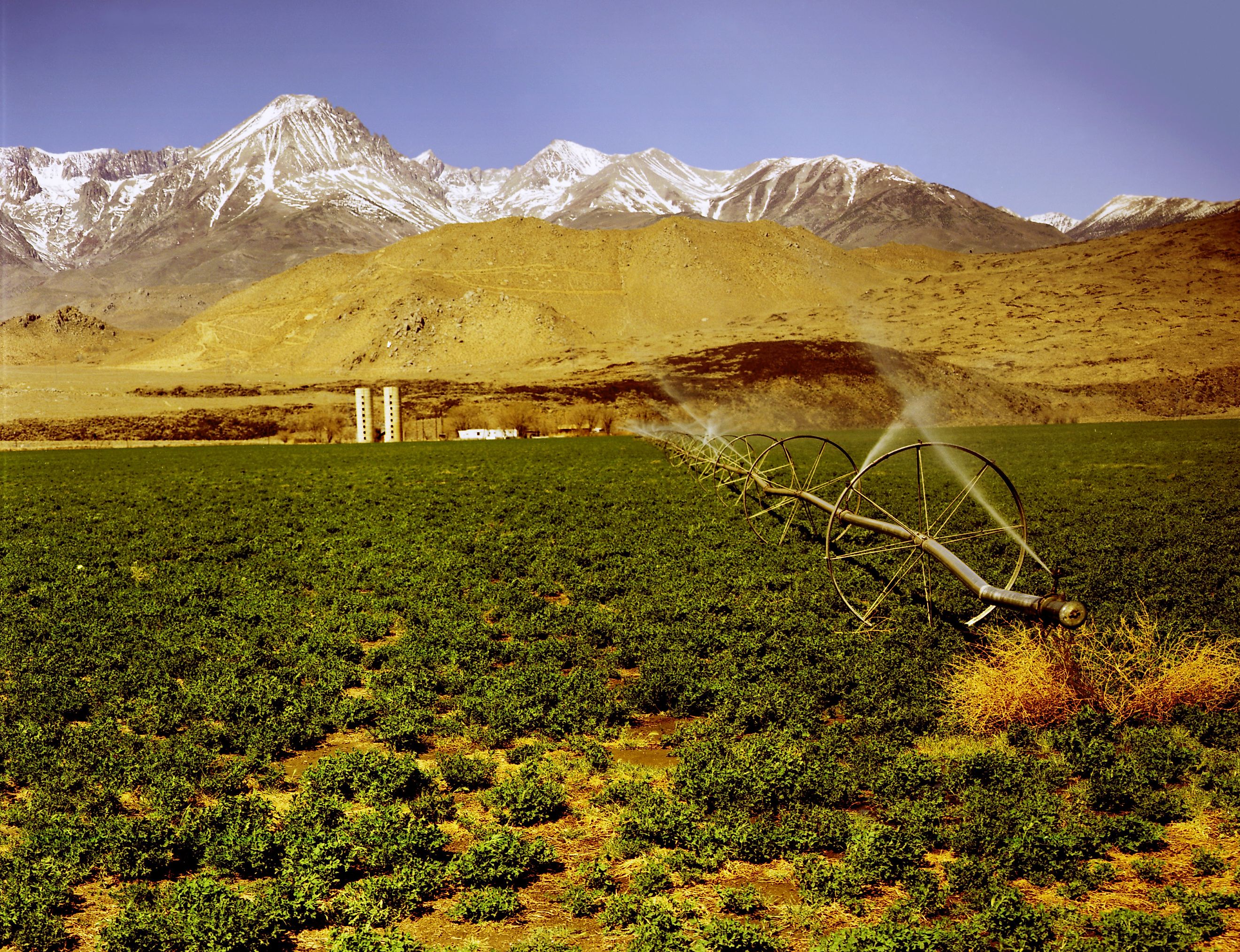
Alfalfa is a perennial, so the field is productive across the entire growing season rather than for a few weeks around a single harvest. It is cut multiple times a year, four or five in warmer parts of the basin, and each cutting is followed by regrowth that needs water. Its root system runs deep and it transpires heavily through the hottest months, which in the desert Southwest means it is drawing water precisely when evaporative demand peaks.
Put a perennial crop with a long season and repeated harvests into a place with 110-degree summers and you get the highest per-acre water consumption of any major crop in the region. The plant is doing exactly what it is supposed to do.
Why Farmers Grow It Anyway
The reasons farmers choose it are sound, which is what makes this a genuinely hard problem rather than a case of obvious waste.
Alfalfa is drought-resilient in a way most crops are not, because it can be left unirrigated during a shortage and will generally recover rather than dying outright, which makes it a low-risk crop in an unreliable water year. It fixes nitrogen in the soil, cutting fertilizer costs and improving the ground for whatever follows it. And it is harvested mechanically, so labor costs are low compared with produce.
Demand is also rising rather than falling, driven by growth in the dairy and beef industries. A farmer choosing alfalfa is making an entirely rational decision under the incentives they actually face, which is why exhortation has never shifted the acreage and payment sometimes has.
The Imperial Valley

No single place illustrates the scale better than the Imperial Valley in southeastern California, which holds the largest single entitlement on the Colorado River. The valley receives around three inches of rain a year and grows crops year-round on Colorado River water delivered through the All-American Canal. Its water rights date from the early twentieth century, which under prior appropriation makes them senior to a great deal of what came later, including entire cities.
Alfalfa is among the largest crops grown there by acreage, alongside winter vegetables. The valley is simultaneously one of the most productive agricultural regions in the country and the single largest consumer of a river that no longer reaches the sea.
Where The Hay Actually Goes
The part of this story that generates the most public argument is export, and it deserves a precise framing rather than an inflammatory one.
Most alfalfa grown with Colorado River water feeds American dairy and beef cattle, and the resulting milk and meat are consumed domestically. A portion is exported, and a portion of the land is farmed by foreign-owned companies growing feed for livestock overseas, which has drawn substantial political attention in Arizona in particular.
Both things are true and the export share is the smaller one. The dominant use is domestic livestock, which means most of this water ends up embedded in the American food supply rather than shipped abroad, and that is the harder version of the problem.
The Numbers Are Contested

Any article citing these figures ought to say plainly that the accounting itself is contested, because it is, and the disagreement is substantive rather than trivial.
Colorado River science compilations note that while Richter's team agrees agriculture represents about 75 percent of direct human uses, their finding that it represents 52 percent of all consumptive uses and losses is lower than the roughly 60 percent other sources give. The difference comes from Richter using a substantially higher figure for riparian evapotranspiration, which enlarges the total pie and shrinks agriculture's share of it.
The team's own estimate for cattle-feed crops also moved, dropping from 53 percent to 46 percent of direct human use as the accounting became more complete. The direction of the finding is not in question. The precise percentages are.
What Else The River Loses
Agriculture is the largest consumer but it is not the only one, and two of the others almost never appear in public discussion of the shortage.
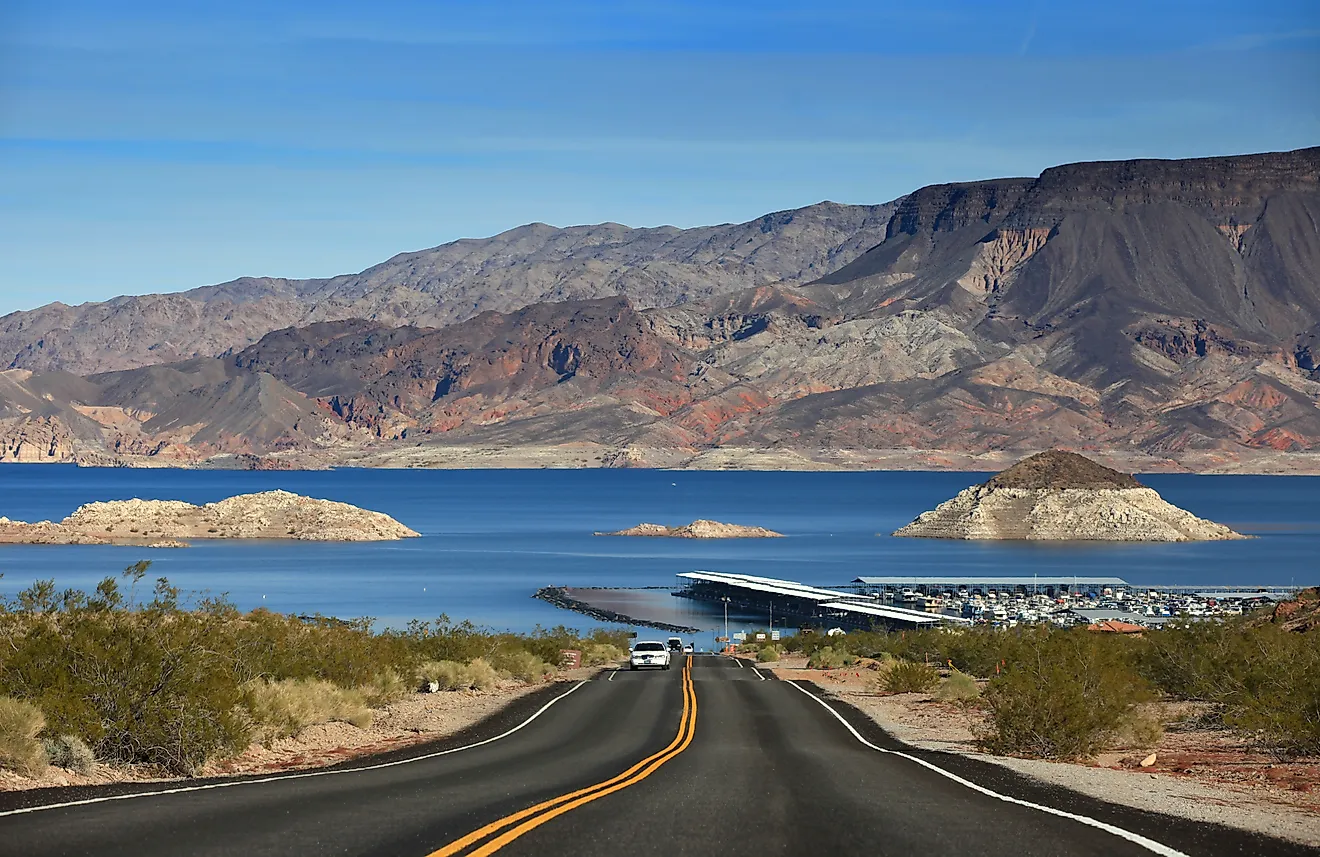
Riparian and wetland vegetation along the river consumes about 19 percent of the water, which is plants drinking the river rather than people diverting it. Reservoir evaporation accounts for roughly 11 percent, which is water lost to the sky from the surface of Lake Mead, Lake Powell and the rest.
Municipal, commercial and industrial use together comes to 18 percent, which produces a genuinely startling comparison. The entire urban Southwest, the thing most people picture when they think about Colorado River demand, uses less of the river than evaporation and streamside plants do between them.
Why It Matters For The Negotiations
The study found the river was overused in 16 of the 21 years examined, with users overdrafting by an average of 10 percent. That is what drove Lake Mead and Lake Powell down to the levels now dominating the news.
Closing a 10 percent gap is arithmetically straightforward and politically close to impossible, but the arithmetic does point somewhere specific. A reduction spread across cities would require enormous behavioral change for a small volume, because cities only use 18 percent to begin with. A comparable percentage reduction in cattle-feed irrigation would free several times more water.
That is why fallowing programs, deficit irrigation and compensated reductions in alfalfa acreage keep appearing in negotiating proposals. It is the only place in the ledger where the numbers are large enough to matter.
The Answer In One Line

Alfalfa consumes about 26 percent of all Colorado River water. Cattle-feed crops together take around 32 percent of total consumption and 46 percent of direct human use, and agriculture as a whole accounts for 52 percent.
The river supplies 40 million people across seven states, 30 tribal nations and two states in Mexico, and the largest single claim on it is a perennial forage crop cut four times a summer to feed cows. Whether that is a problem or simply what a food system looks like is a separate argument. That it is the biggest number in the ledger is not.