How Much Colorado River Water Evaporates Before Anyone Uses It
Before a single drop of the Colorado River reaches a faucet in Phoenix, a lettuce field in Yuma, or a fountain on the Las Vegas Strip, an astonishing amount of it simply vanishes into thin air. Every year, the river loses a huge chunk of its water to evaporation, mostly off the broad, sun-baked surfaces of its giant reservoirs, before anyone ever gets to use it. So exactly how much disappears? Enough to supply entire states.
The Big Number

According to researchers at the Center for Colorado River Studies, about 1.9 million acre-feet of water, or roughly 13 percent of all the water sitting in the system's reservoirs, evaporates away every single year. To put that in gallons, an acre-foot is about 326,000 gallons, so we are talking about well over 600 billion gallons rising into the desert sky annually. The two biggest reservoirs, Lake Mead and Lake Powell, account for the bulk of it: when full, they evaporate a combined 1.135 million acre-feet a year, which is roughly equal to all the Colorado River water that the states of Utah and Nevada consume put together.
Lake Mead: The Sun's Biggest Target

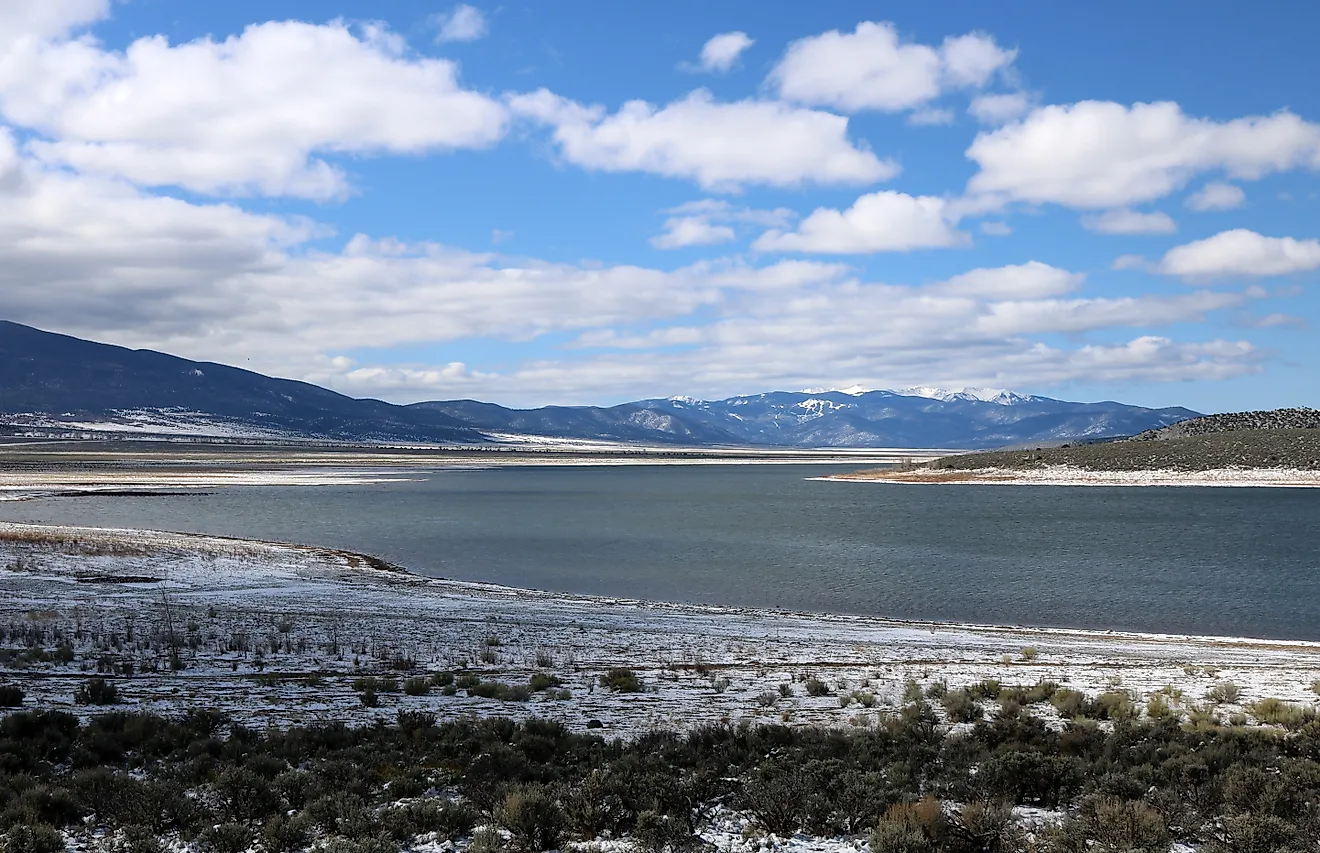
Lake Mead is the single greatest evaporator of them all. Sitting low, hot, and dry behind Hoover Dam, its surface loses roughly 80 inches of water a year, nearly seven vertical feet, straight to evaporation. Because the lake is so enormous and spread out, that adds up to hundreds of thousands of acre-feet vanishing off its surface annually. The hotter months are the worst, but the losses barely let up; even in the dead of winter, Mead is still evaporating at about half its summer rate.
Lake Powell: Evaporation and a Leak

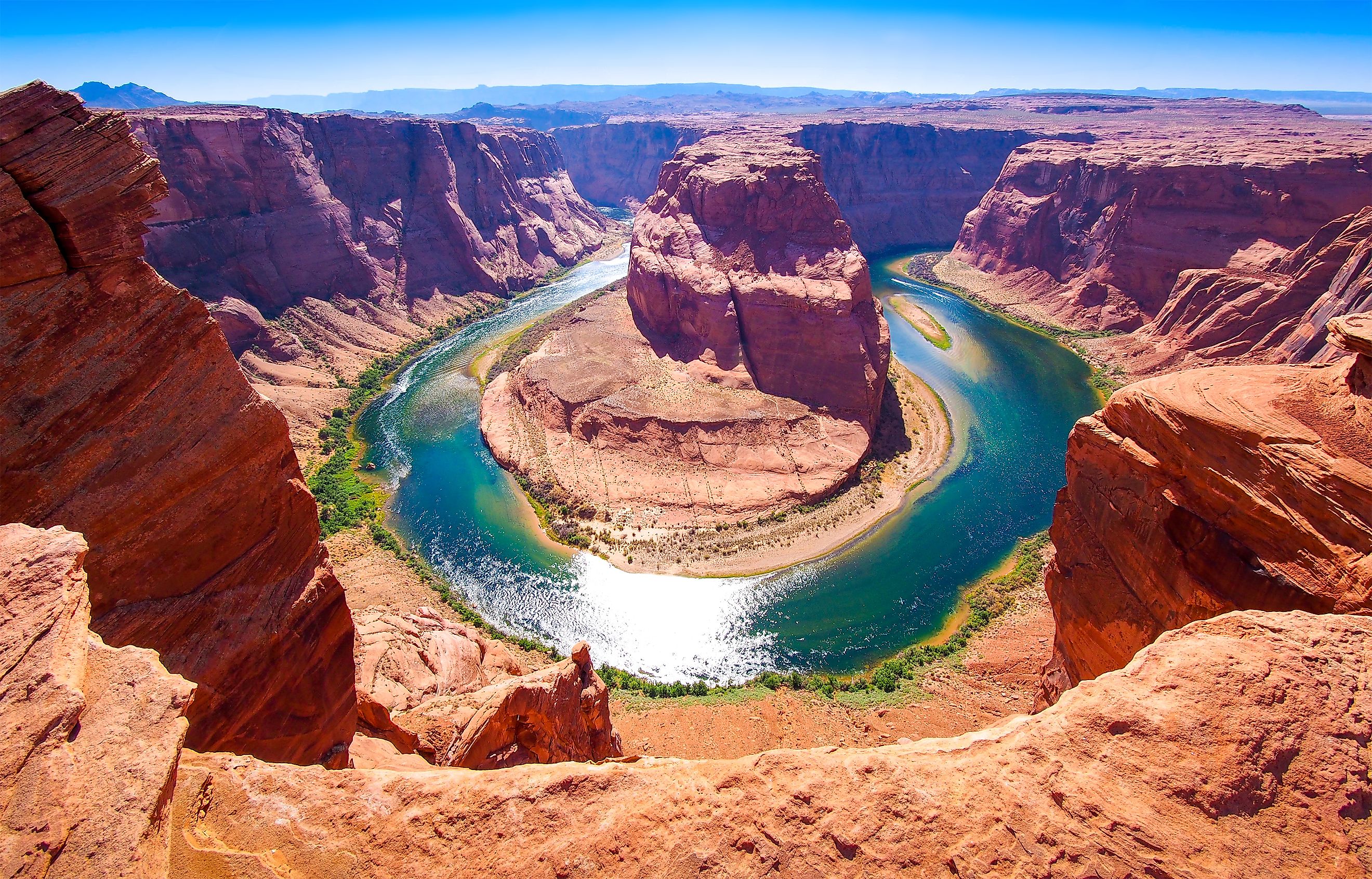
Upstream, Lake Powell has a double problem. It loses around 70 inches of water a year to evaporation, only slightly less than Mead. But Powell is also carved into porous Navajo sandstone, and a meaningful amount of its water quietly soaks into the surrounding rock walls, seeping away as so-called bank storage. Between the sun overhead and the thirsty sandstone all around, a big share of Powell's water never makes it back out to do anyone any good.
It Adds Up to More Than a State Gets

These numbers are hard to grasp until you stack them against what people are actually allowed to take. The entire state of Nevada has a legal right to just 300,000 acre-feet of Colorado River water a year. Yet the Lower Basin alone, the reservoirs from Mead down toward Mexico, loses somewhere around 900,000 acre-feet a year to evaporation. In other words, roughly three times Nevada's entire annual allocation simply evaporates before anyone drinks, irrigates, or flushes a drop of it. The full Mead-and-Powell loss is nearly four times what Nevada is permitted to use.
The Twist: Nobody Pays for It

Here is the part that has become one of the fiercest fights on the river. In the Lower Basin states of Arizona, California, and Nevada, evaporation and other "system losses" have never been subtracted from what water users are allotted, a quirk rooted in a 1964 Supreme Court decision. To make everyone's full delivery arrive, the Bureau of Reclamation simply releases extra water from Lake Mead to cover what the sun takes. That means the river, not the farms and cities drinking from it, has been quietly eating a loss of 1.3 to 1.5 million acre-feet a year. The Upper Basin, by contrast, has long counted its own evaporation. Fixing this "phantom water" is now central to the Colorado's survival talks. Fittingly, a Nevada engineer saw it coming back in 1928, warning that "the first draft on this supply will be reservoir evaporation." He was right, and the river has been paying that draft ever since.