African Countries With Islam As The Religion Of The Majority
Islam reached Africa in the 7th century, within a generation of its founding, and it has been reshaping the continent ever since. Africa is now home to more than a quarter of the world's Muslims, and Islam is the majority faith across a broad band of countries in the north, the Sahel, the Horn, and the islands of the Indian Ocean. The overwhelming majority of African Muslims are Sunni, though the schools of law and the Sufi traditions layered on top of them vary sharply from one region to the next.
The religion arrived by several routes. One of the earliest episodes came around 615, when a group of Muhammad's followers crossed the Red Sea to seek refuge in the Christian kingdom of Aksum, an event known as the first hijra. Arab conquest later carried Islam across North Africa, trans-Saharan trade routes pushed it deep into the Sahel, and merchants spread it down the East African coast. This article covers the African countries where Muslims form a clear majority. Two heavily Muslim places are left off because they are territories rather than sovereign states: Mayotte, a French department, and Western Sahara, a disputed territory. Nigeria, which has the largest Muslim population on the continent in sheer numbers, is also absent, because its people are split almost evenly between Islam and Christianity.
North Africa
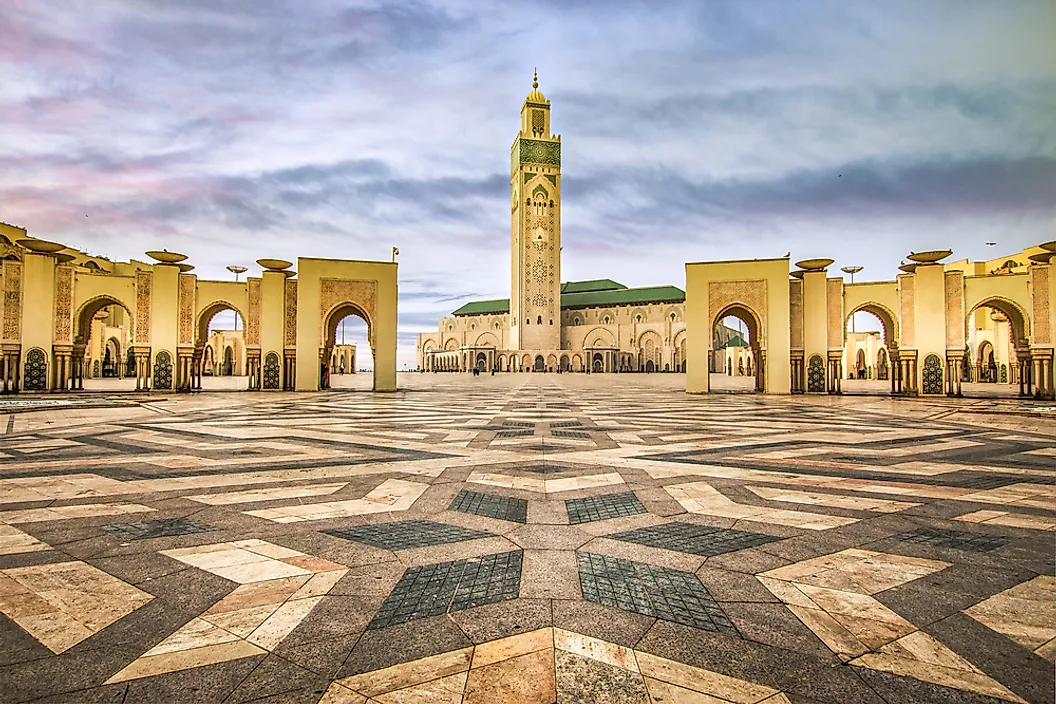
North Africa is the most solidly Muslim part of the continent, and the oldest. Arab armies swept west from Egypt in the 7th century, and within a few generations Islam had displaced Christianity across the Maghreb and taken permanent root among the indigenous Berber population. The Great Mosque of Kairouan in Tunisia, founded in 670, became the first major center of Islam in the Maghreb and a model for mosques across the region. Powerful Berber dynasties, the Almoravids and later the Almohads, went on to rule a Muslim empire that reached across northwest Africa and into Spain.

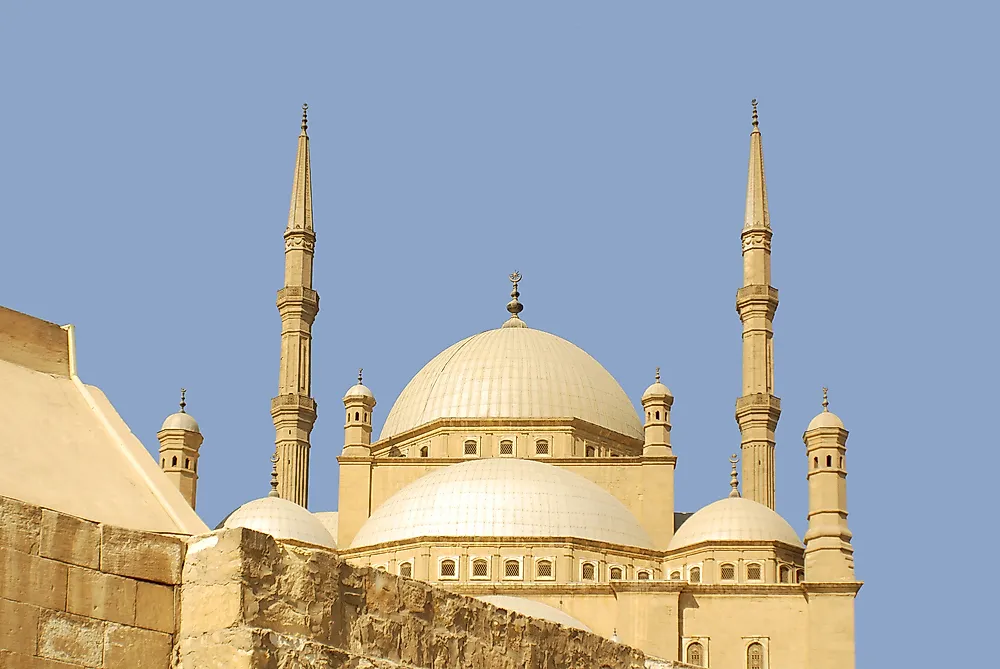
The region now reports some of the highest Muslim percentages anywhere. Algeria, Morocco, and Tunisia are each roughly 99% Muslim, almost entirely Sunni of the Maliki school, with small pockets of other traditions such as the Ibadi communities of Algeria's M'zab Valley. Libya is about 97% Muslim, and Egypt around 90%, with a sizable Coptic Christian minority making up most of the remainder. Two countries anchor the region's edges: Mauritania, on the Atlantic, is essentially 100% Muslim and has been an Islamic republic since independence in 1960, while Sudan, on the Red Sea, is roughly 91% Muslim after the secession of largely non-Muslim South Sudan in 2011.
The Sahel And West Africa
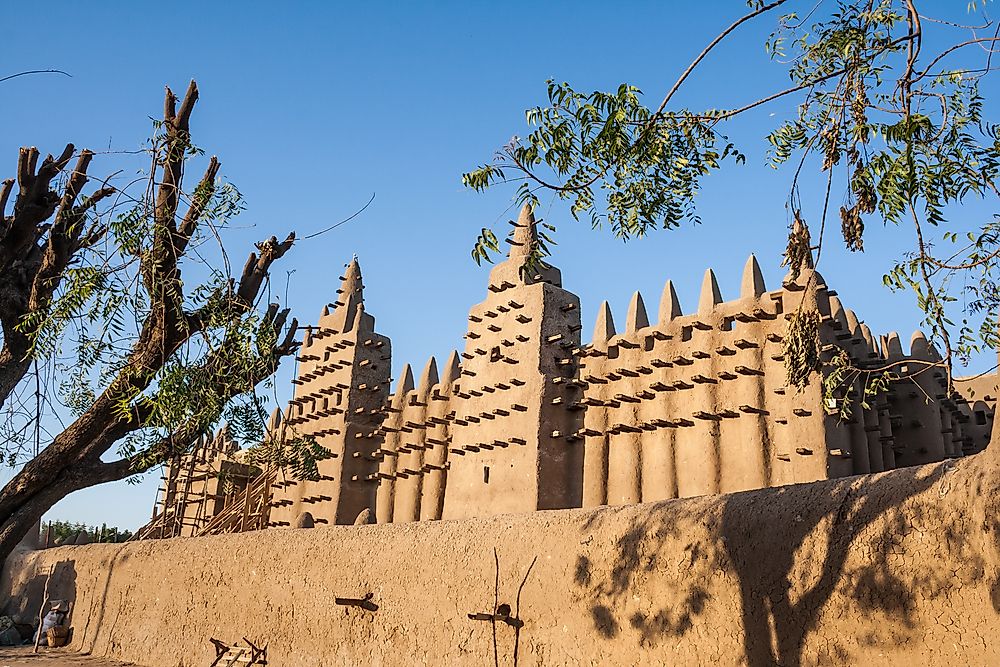
South of the Sahara, Islam spread not by conquest but by commerce. For a thousand years, camel caravans carried salt, gold, and scholarship across the desert, and the faith traveled with them into the great medieval empires of Ghana, Mali, and Songhai. Trading cities like Timbuktu and Djenne grew into centers of Islamic learning, and the towering mud-brick Great Mosque of Djenne in Mali is still the largest earthen building on Earth. The most famous of the region's rulers, Mansa Musa of Mali, made a legendary pilgrimage to Mecca in 1324 and returned with scholars and architects who enriched the region's mosques and schools.
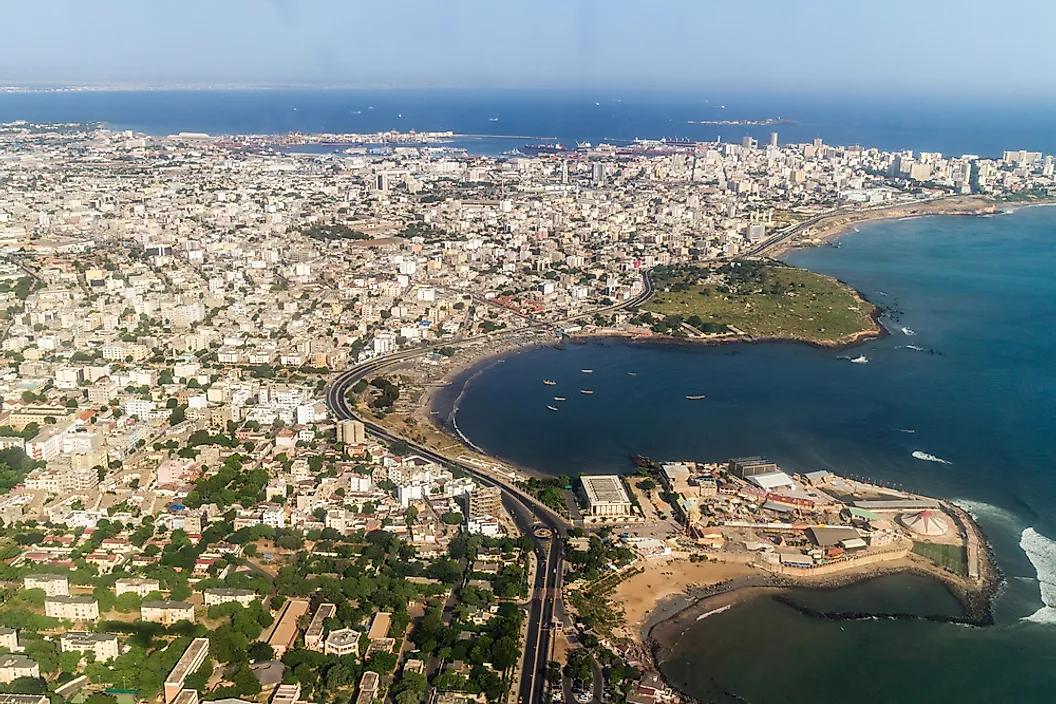
The result is a belt of strongly Muslim countries. Niger is about 99% Muslim, while Senegal and The Gambia sit near 96%, their religious life organized largely through Sufi brotherhoods. Mali is roughly 94% Muslim and Guinea about 89%. Farther south the picture grows more mixed, where Islam meets Christianity and traditional beliefs. Sierra Leone is around 78% Muslim, Burkina Faso about 63%, and Chad, straddling desert and savanna, roughly 55%.
Centers Of Islamic Learning

Islam did not only spread across Africa; it also built some of the world's great centers of scholarship there. The oldest is in Morocco: the University of al-Qarawiyyin in Fez, founded in 859 and often recognized as the oldest continually operating degree-granting university on Earth. A little over a century later, the Fatimids founded al-Azhar in Cairo, which remains one of the most influential seats of Sunni learning anywhere in the world.

The Sahel had its own intellectual capital at Timbuktu, in Mali. Under the Mali Empire and its successors, the city's Sankore Mosque anchored a university where students studied law, astronomy, and theology. Timbuktu's scholars produced and copied a vast library of works, and hundreds of thousands of these medieval manuscripts survive today, a written record of how deep the region's learning ran long before European contact.
Sufism And The Brotherhoods
Much of African Islam is organized not only around mosques but around Sufi brotherhoods, mystical orders that combine devotion, community, and often a revered founding saint. In West Africa especially, these orders have shaped religious and social life for centuries. The Qadiriyya, one of the oldest, and the Tijaniyya, which spread rapidly across the Sahel in the 1800s, together count tens of millions of followers. Senegal is home to the Mouride order, founded in the late 19th century by Amadou Bamba, whose holy city of Touba now draws one of the largest annual pilgrimages in Africa. In Sudan, brotherhoods such as the Ansar and the Khatmiyya have at times been powerful enough to shape national politics. This Sufi character is one of the things that most distinguishes Islam in much of Africa from its practice in the Arab heartland.
The Horn Of Africa
The Horn holds some of the deepest Muslim roots on the continent, reaching almost to the religion's beginning. The Somali port of Zeila is home to the Masjid al-Qiblatayn, a mosque that tradition holds was built in the 7th century, not long after the first Muslims arrived by sea. Medieval Muslim states such as the Ifat and Adal sultanates later rose along the coast and long contested the region with Christian Ethiopia. Somalia today is about 99.8% Muslim, overwhelmingly Sunni of the Shafi'i school, and neighboring Djibouti is roughly 94%. Both countries declared Islam central to the state at independence, even where their constitutions also nodded toward religious freedom.
The Indian Ocean
Islam reached the islands off Africa's east coast the same way it reached the Swahili mainland: aboard the dhows of Arab and Persian traders working the monsoon winds. The Comoros, an archipelago between Mozambique and Madagascar, is about 98% Muslim, mostly Sunni of the Shafi'i school, and the faith runs through daily life, with most children spending a few years in Quranic school learning Arabic and the fundamentals of Islam. Just to the southeast lies Mayotte, geographically part of the same island chain and about 97% Muslim, but politically a department of France rather than an independent country, which is why it does not appear in the list below.
African Countries Where Islam Is The Majority
| # | Country | Approx. % Muslim |
|---|---|---|
| 1 | Mauritania | 100 |
| 2 | Somalia | 99.8 |
| 3 | Niger | 99 |
| 4 | Algeria | 99 |
| 5 | Morocco | 99 |
| 6 | Tunisia | 99 |
| 7 | Comoros | 98 |
| 8 | Libya | 97 |
| 9 | Senegal | 96 |
| 10 | The Gambia | 96 |
| 11 | Mali | 94 |
| 12 | Djibouti | 94 |
| 13 | Sudan | 91 |
| 14 | Egypt | 90 |
| 15 | Guinea | 89 |
| 16 | Sierra Leone | 78 |
| 17 | Burkina Faso | 63 |
| 18 | Chad | 55 |