The Largest Stadiums In Asia
Asia does not build stadiums so much as it builds monuments with seats. The continent holds the two largest sports venues on the planet, and the competition behind them is fierce enough that capacities get one-upped, renovated, and occasionally bulldozed and rebuilt bigger. This ranking goes by seating capacity, the number the stands can actually hold on a normal day, not the optimistic standing-room figures. A word of warning: these numbers move. Kolkata's Salt Lake Stadium was once the biggest on Earth at a reported 120,000 until a 2011 renovation trimmed it back. So here is where the giants stand today, starting with the one that out-sizes them all.
Narendra Modi Stadium

Meet the biggest stadium in Asia, and on Earth: the Narendra Modi Stadium in Ahmedabad, India, which seats a frankly absurd 132,000 people. It is the largest cricket ground ever built, and it earns the title honestly, with a pillarless bowl that gives all 132,000 of them an unobstructed view of someone getting bowled out. Formerly the Motera Stadium, it was knocked down and rebuilt from scratch, reopening in 2020, and it hosted the final of the 2023 Cricket World Cup. India takes its cricket seriously. This is the receipt.
Rungrado 1st of May Stadium

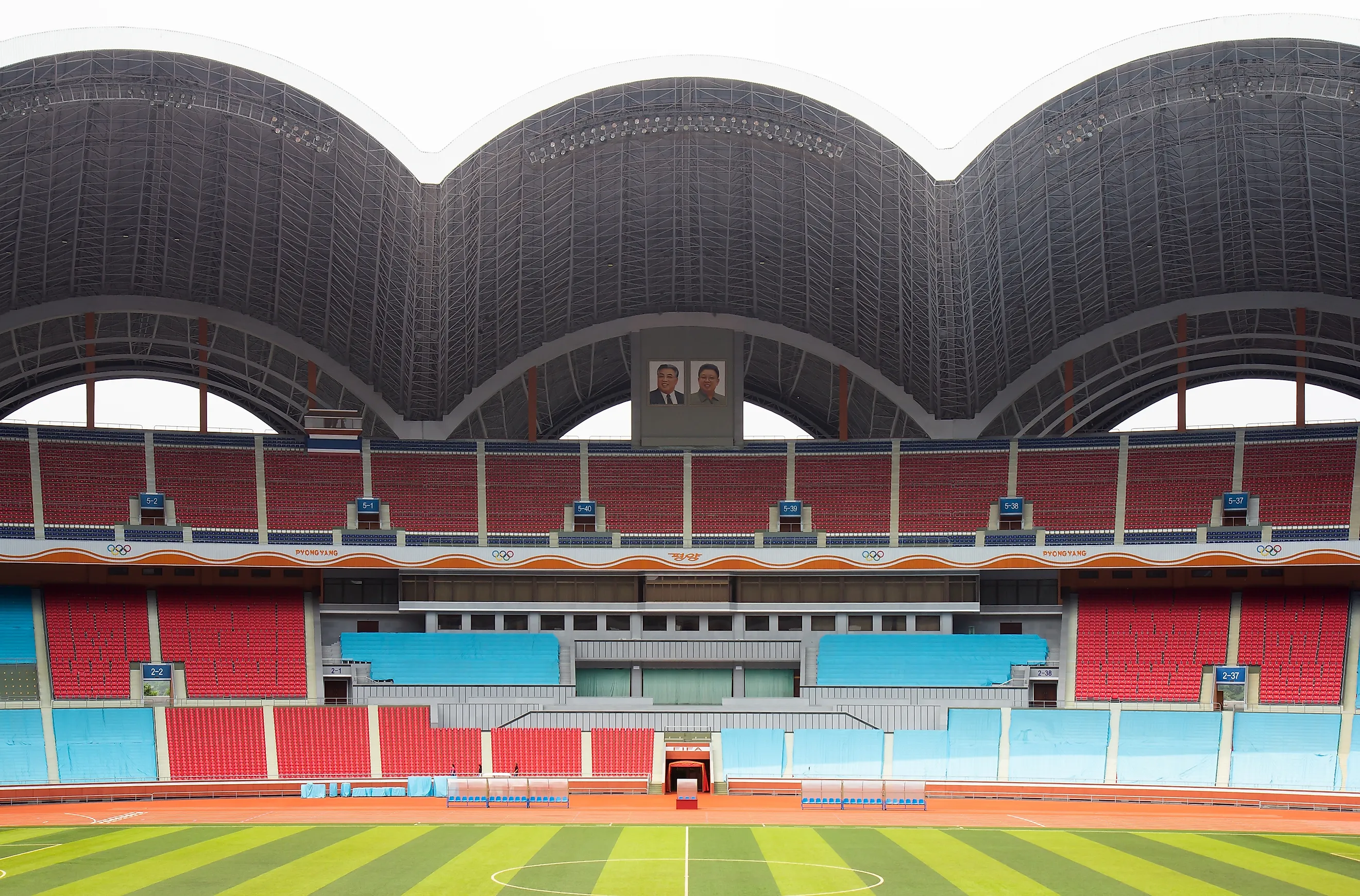
For decades the undisputed champion, Pyongyang's Rungrado 1st of May Stadium wore the world's-biggest crown until Ahmedabad came along. It still seats around 114,000 under a roof of 16 arches arranged to resemble a magnolia blossom, and it is less a football ground than a national stage: its signature event is the Arirang Mass Games, a synchronized spectacle involving tens of thousands of performers at once. It opened on May 1, 1989, which is where the name comes from. Getting a ticket is the tricky part, on account of the whole North Korea situation.
Lusail Stadium

Qatar built the Lusail Stadium to end a World Cup, and in 2022 it did exactly that, hosting the final where Lionel Messi finally got his hands on the trophy. Seating just under 89,000, its gold, bowl-shaped shell was designed to evoke a traditional Arab lantern, which is a much classier origin story than "we needed 89,000 seats in the desert." It is the newest giant on this list and the largest in West Asia.
Bukit Jalil National Stadium
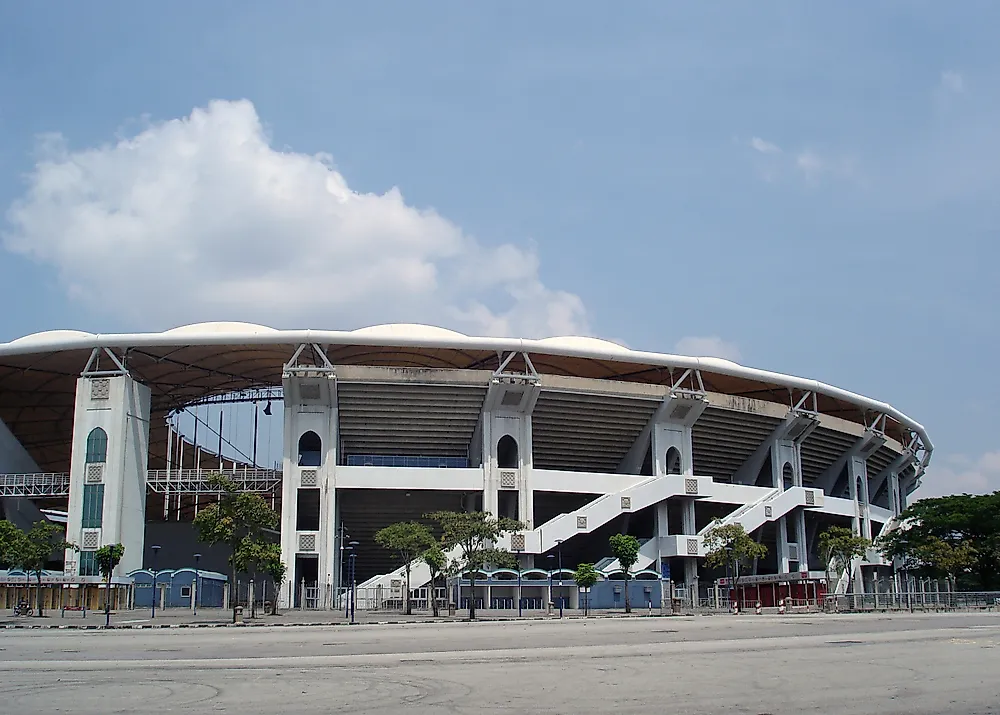
Southeast Asia's biggest stadium opened in 1998, just in time to host the Commonwealth Games, and it has been Malaysia's national football home ever since. A 2017 renovation modernized the place and left it seating about 87,411, which is an oddly specific number for something that enormous. When the national team plays, the stands turn into a wall of noise, which is more or less the entire point of building something this size.
Azadi Stadium

Tehran's Azadi Stadium is the loudest room in Iranian football, shared by fierce rivals Persepolis and Esteghlal the way feuding siblings share a bedroom. It opened in 1971 and once packed in 100,000; a run of renovations has since brought its official capacity down to a still-enormous 78,116. Its record attendance, though, is a reported 128,000, from the days before anyone counted the seats too carefully.
Which Are The Largest Stadiums In Asia?
Here are the largest stadiums in Asia by current seating capacity. Figures reflect renovated, present-day configurations rather than historical or standing-room peaks.
| Rank | Stadium | Capacity | City | Country |
|---|---|---|---|---|
| 1 | Narendra Modi Stadium | 132,000 | Ahmedabad | India |
| 2 | Rungrado 1st of May Stadium | 114,000 | Pyongyang | North Korea |
| 3 | Lusail Stadium | 88,966 | Lusail | Qatar |
| 4 | Bukit Jalil National Stadium | 87,411 | Kuala Lumpur | Malaysia |
| 5 | Salt Lake Stadium | 85,000 | Kolkata | India |
| 6 | Guangdong Olympic Stadium | 80,012 | Guangzhou | China |
| 7 | Beijing National Stadium | 80,000 | Beijing | China |
| 8 | Azadi Stadium | 78,116 | Tehran | Iran |
| 9 | Gelora Bung Karno Stadium | 77,193 | Jakarta | Indonesia |
| 10 | Naghsh-e Jahan Stadium | 75,000 | Isfahan | Iran |
| 11 | Nissan Stadium | 72,327 | Yokohama | Japan |
| 12 | Seoul Olympic Stadium | 69,950 | Seoul | South Korea |
| 13 | Seoul World Cup Stadium | 66,704 | Seoul | South Korea |
| 14 | Daegu Stadium | 66,422 | Daegu | South Korea |
| 15 | Eden Gardens | 66,000 | Kolkata | India |
The Takeaway
A few patterns fall out of the list. Cricket-obsessed India and football-obsessed everywhere-else account for most of the true giants, the Middle East is building fast and building big, and East Asia keeps a tidy cluster of 66,000-to-80,000-seat bowls left over from Olympics and World Cups. The lineup also shifts more than you would think: stadiums get expanded, shrunk, renamed, and rebuilt, so today's ranking is really just a snapshot. One thing never changes, though. On the right night, every one of these places gets very, very loud.