Top 10 Most Dangerous Sports In The World
- About 20,000 injuries a year happen in the world of cheerleading.
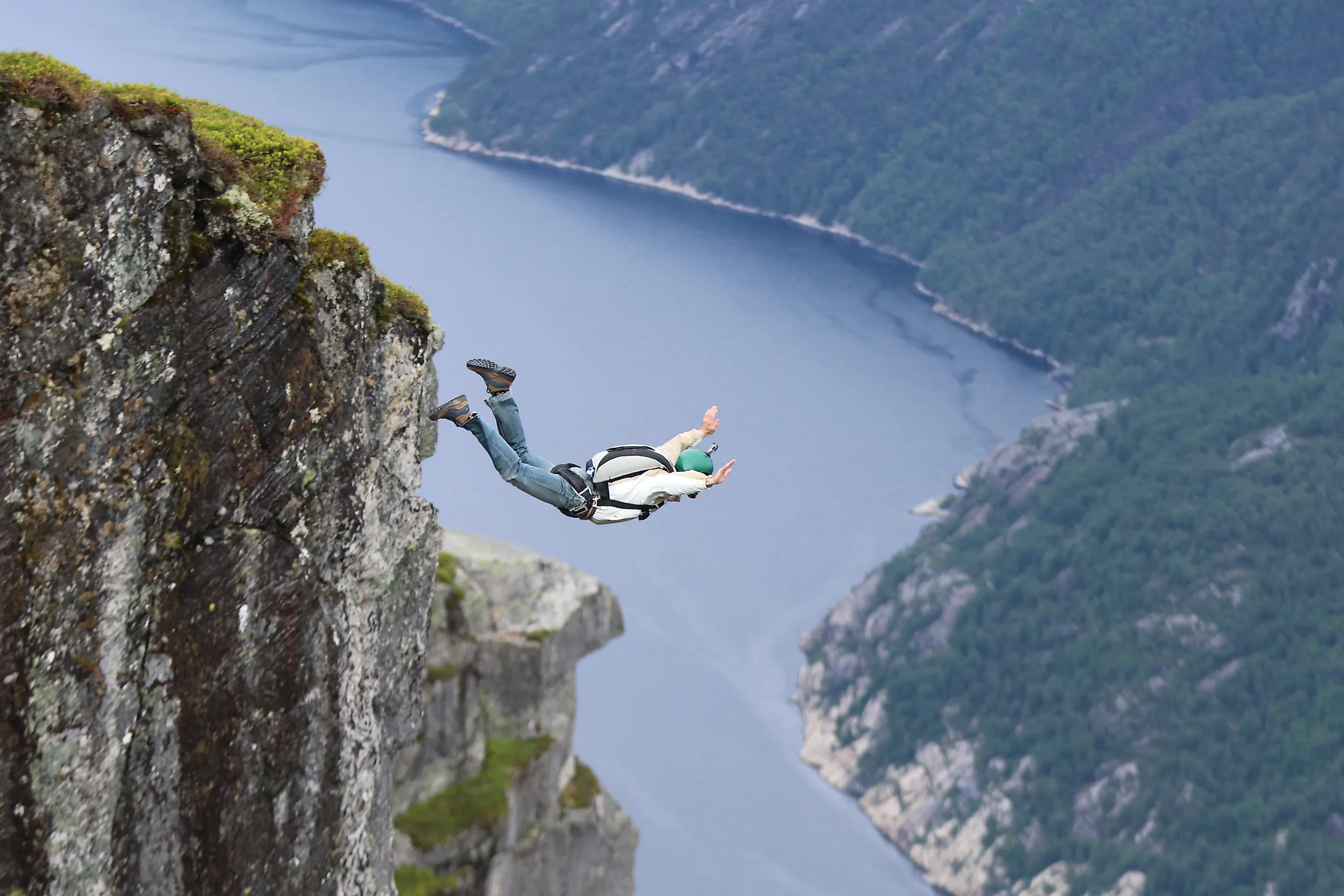
- Base jumpers seek their adrenaline rush by jumping off buildings, antennas, spans, and earth.
- In British Columbia, Canada, you can enjoy the wonders of skiing while being pulled by a helicopter.
Every sport carries some risk. A handful carry a great deal of it. The ten below are all real, widely practiced sports that people genuinely compete in, not obscure stunts invented to look dangerous on camera. Some are risky because of speed, some because of what happens when you land, and a few because they involve a very large animal with its own agenda. Ranking danger precisely is a losing game, since one sport can be deadly, another merely injury-prone, and a third quietly catastrophic, so treat this as a field guide rather than a leaderboard.
Soccer

The most popular sport on earth is also a contact sport that pretends otherwise. Twenty-two people sprint after one ball in cleats, throwing legs into tackles that do not always find the ball first. The result is a steady stream of pulled muscles, torn ligaments, and blown-out knees, and barely a match goes by without the medical staff jogging onto the pitch. None of it slows the sport down; soccer simply has so many players worldwide that its injury count adds up faster than almost anything else.
Rugby

Rugby is what you get when you take the collisions of American football and remove almost all of the padding on purpose. Players tackle, ruck, and maul for eighty minutes with little more than a mouthguard between them and the ground. Unsurprisingly, rugby union and rugby league post some of the highest injury rates of any mainstream team sport, with concussions, facial fractures, and dislocated joints treated as routine hazards of the job rather than freak events. It is enormously popular across Europe, the southern hemisphere, and the Pacific, which is exactly why its injury toll is so visible.
Boxing

Boxing is the rare sport whose basic objective involves landing repeated blows to an opponent's head, and no amount of glove padding changes that. In fact, the padding mostly protects the hands, and the added mass can increase the force delivered on impact. The long-term toll is well documented: studies have found that somewhere between 15 and 40 percent of former boxers show signs of chronic brain injury, and repeated head trauma is linked to conditions such as dementia pugilistica and Parkinson's disease later in life. The knockouts get the highlights, but the sub-concussive hits absorbed round after round do the quiet damage.
Cheerleading

Gymnastics

Bull Riding

The premise of bull riding is refreshingly honest: climb onto a bucking bull that weighs the better part of a ton and try to stay there for eight seconds while it does everything in its considerable power to remove you. When the ride ends, as it usually does, the rider lands hard next to an animal that is still upset. Broken bones, concussions, and neck and head injuries are all standard, which is why it is regularly called the most dangerous eight seconds in sports.
Horse Riding

Riding looks genteel, which is a large part of how it fools people. The catch is that the other athlete weighs over 1,000 pounds and has opinions of its own. Riders fall from height, at speed, next to an animal that can bolt, roll, or kick, and the injuries reflect it. One analysis found that more than 40 percent of hospitalized equestrian injuries required surgery, roughly seven times the rate of typical college sports, with head and spinal injuries leading the list. Measured by severity per participant, equestrian sports rival motorsport, which is not the comparison most people expect.
Racing

Whether the vehicle is a race car or a superbike, hurtling around a circuit at 200 mph a few feet from a wall leaves very little room for error. Safety has improved enormously, with crash structures, barriers, and gear engineered to survive impacts that once were routinely fatal, and the sport is far safer than it was decades ago. Even so, motorsport still takes lives. The Isle of Man TT, run flat out on closed public roads with stone walls for margins, is widely regarded as the most dangerous race in the world, and every season on two wheels or four carries real risk.
Luge

Luge asks its athletes to lie flat on their backs, feet first, on a sled roughly the size of a tea tray, and steer with their calves while sliding down a chute of ice at close to 90 mph. There is no brake and very little margin. The sport's most recent Olympic fatality came in 2010, when 21-year-old Georgian luger Nodar Kumaritashvili died in a training crash at the Vancouver Games, hours before the opening ceremony. In the aftermath, tracks were redesigned with higher walls and padded beams and speeds were reined in, but the fundamentals of the sport remain unforgiving.
BASE Jumping

Most people who jump out of planes at least have the plane. BASE jumpers skip it, leaping instead from fixed objects and deploying a parachute with only seconds to spare. The name is an acronym for the four launch points: buildings, antennas, spans, and earth, meaning cliffs. By fatality rate, it is the deadliest activity on this list by a wide margin. One long-running study of a single Norwegian cliff recorded a death for roughly every 2,300 jumps, and researchers estimate the sport has claimed hundreds of lives from a global pool of only a few thousand active jumpers. It is a real, organized pursuit with its own competitions, but it leaves almost no room for a second chance.
So What Is The Most Dangerous Sport?
It depends entirely on how you keep score. By the odds of dying, nothing here touches BASE jumping, where one mistake is usually the last. By sheer volume of injuries, the contact sports win, with rugby and soccer sending a constant stream of players to the sideline. By the rate of life-altering catastrophic injury per participant, cheerleading and horse riding quietly outrank sports with far scarier reputations. The only safe conclusion is that "dangerous" has several definitions, and every sport on this list is fluent in at least one of them.