The US Beaches With The Most Rattlesnakes
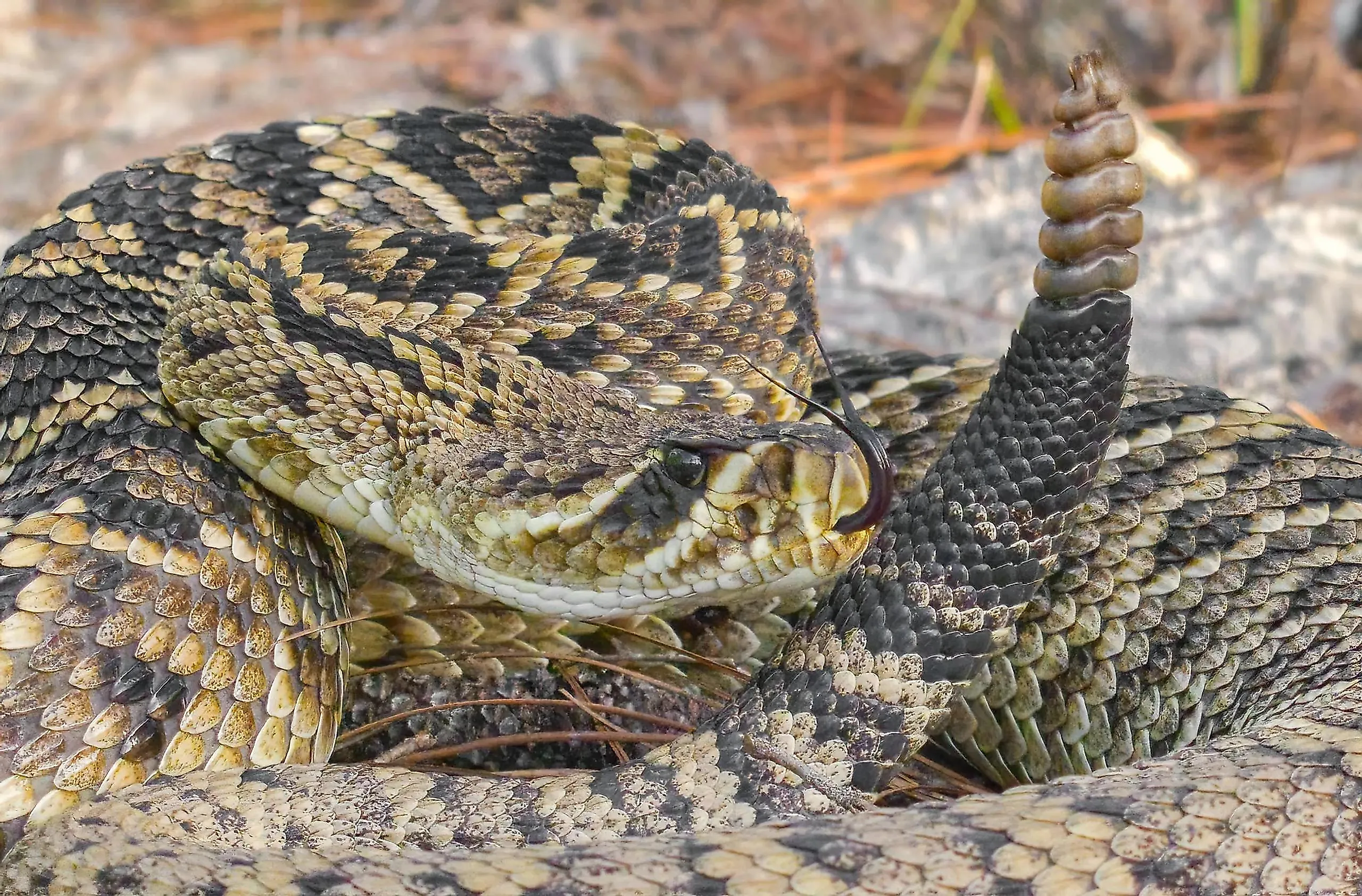
Rattlesnakes are not usually associated with a day at the beach, but several coastal parks managed by the National Park Service have records of two species within their boundaries. These include national seashores along the Atlantic and Gulf coasts, where dunes, grasslands, and coastal forests provide habitat beyond the open sand. The National Park Service maintains these records in its NPSpecies database, which distinguishes confirmed species from probable or unconfirmed reports. The parks below are grouped by their documented rattlesnake diversity, beginning with six that list two species, followed by two that list one. These counts describe species recorded throughout each park, not the number of snakes living directly on its beaches or the likelihood of encountering one.
Padre Island National Seashore, Texas

Padre Island National Seashore has records of two rattlesnake species, the western diamondback and the desert massasauga. Both are listed as uncommon in the park's species inventory. The seashore protects part of North Padre Island near Corpus Christi, Texas, and its beaches include Malaquite Beach, North Beach, and South Beach. Congress authorized the national seashore in 1962. The national seashore spans about 66 miles of the roughly 113-mile-long Padre Island, one of the longest remaining undeveloped stretches of barrier island in the world, and it also protects a rare stretch of coastal prairie.

Although the beaches attract visitors for swimming, fishing, and camping, the surrounding dunes and grasslands support wildlife that may be less visible from the shoreline. The Park Service specifically identifies the western diamondback as a resident of these habitats and warns visitors that rattlesnakes may also occur around mudflats. Staying on designated routes and watching where hands and feet are placed can reduce the risk of an encounter. The desert massasauga has appeared under older scientific naming conventions in species records, but it is counted as a single species.
Gulf Islands National Seashore, Florida and Mississippi

Gulf Islands National Seashore records two rattlesnake species, the eastern diamondback and the pygmy rattlesnake. Established in 1971, the seashore protects coastal environments in Florida and Mississippi, including areas around Pensacola Beach, Perdido Key, and Mississippi's barrier islands. Its beaches are bordered by dunes, coastal vegetation, and other habitats that support reptiles. It is the country's largest national seashore, stretching about 160 miles from Cat Island in Mississippi to the Destin area in Florida, and more than 80 percent of the park's area lies underwater.

The park's snake information also discusses timber rattlesnakes and canebrakes among the venomous snakes native to Florida and Mississippi. However, statewide occurrence does not establish confirmed presence within the national seashore. The park's NPSpecies inventory treats the canebrake as unconfirmed, so it is excluded from the two-species count. The seashore is home to many of the roughly 50 snake species native to Florida and 55 native to Mississippi. The Park Service describes pygmy rattlesnakes as elusive and notes that bites are rare. Visitors exploring vegetated areas should remain alert, even where snakes are seldom seen.
Everglades National Park (Cape Sable), Florida

Everglades National Park records the eastern diamondback and the dusky pygmy rattlesnake, both classified as common in its species inventory. The park includes Cape Sable, a remote coastline west of Flamingo, Florida, where stretches of shell-strewn sand face the Gulf of Mexico. Established in 1947, Everglades National Park protects extensive wetlands and coastal habitats that support a wide range of reptiles. Spanning more than 1.5 million acres at the southern tip of the Florida peninsula, it is the largest subtropical wilderness in the United States and a UNESCO World Heritage Site.

Cape Sable is accessible by boat rather than road, with visitors reaching its shoreline by powerboat, canoe, or kayak through Florida Bay and nearby waterways. Cape Sable's East Cape marks the southernmost point of the US mainland. The Park Service warns that the Bear Lake Canal is overgrown and impassable as a route between Flamingo and Cape Sable. Camping in the area also requires precautions against mosquitoes, biting flies, and raccoons. Although both rattlesnake species are recorded within Everglades, their park-wide abundance classifications do not indicate how often either species occurs on Cape Sable's beaches.
Canaveral National Seashore, Florida

Canaveral National Seashore records two rattlesnake species, the eastern diamondback and the pygmy rattlesnake. Its inventory lists the eastern diamondback as common and the pygmy rattlesnake as occasional. Authorized on January 3, 1975, the seashore protects a section of Florida's Atlantic coast with sandy beaches, coastal dunes, maritime hammocks, and the Mosquito Lagoon. Its 24 miles of undeveloped beach form the longest such stretch on Florida's east coast. Apollo Beach near New Smyrna Beach marks the northern visitor area, while Playalinda Beach near Titusville provides access farther south.

The park is also closely associated with launches from Kennedy Space Center. During launches, Playalinda Beach Road may close approximately 30 minutes before liftoff, and access restrictions can affect the beach south of parking lot 1. NASA may impose additional restrictions without notice. Away from the open sand, the seashore's vegetated habitats provide conditions suitable for rattlesnakes and other wildlife. The seashore provides habitat for 15 federally listed threatened and endangered animal species, and more sea turtles nest on its beaches than in any other national park, with thousands of nests recorded each year.
Cumberland Island National Seashore, Georgia

Cumberland Island National Seashore has records of the eastern diamondback and timber rattlesnake, with the latter commonly called the canebrake in the Southeast. The park's species inventory classifies the eastern diamondback as uncommon and the timber rattlesnake as rare. Located off St. Marys, Georgia, Cumberland Island was established as a national seashore on October 23, 1972. It is the largest of Georgia's barrier islands. Its nearly 18 miles of undeveloped Atlantic shoreline provide nesting habitat for sea turtles and shorebirds, while forests and other vegetation occupy much of the island's interior.

Visitors cannot bring private cars to the island, and travel is primarily on foot or by bicycle. Access is available by passenger ferry from St. Marys or by private boat. The ferry crossing takes about 45 minutes, and the Park Service encourages reservations because trips regularly sell out. There are no stores, restaurants, or food services on the island, so visitors need to bring their own food, water, and any other supplies they will need for the day. The park's two recorded rattlesnake species reflect the difference between the sandy beachfront and the more varied habitats found inland.
Cape Lookout National Seashore, North Carolina

Cape Lookout National Seashore records the timber rattlesnake and pygmy rattlesnake as present, with their abundance listed as unknown. Its inventory also includes an unconfirmed eastern diamondback record, which is not counted. Authorized in 1966, the seashore protects Shackleford Banks and the Core Banks along North Carolina's coast. Together, the seashore's barrier islands stretch for about 56 miles, running from Ocracoke Inlet in the northeast to Beaufort Inlet in the southwest. These barrier islands have sandy beaches, dunes, maritime vegetation, and other habitats that support coastal wildlife.

A 2009 National Park Service amphibian and reptile inventory included the pygmy rattlesnake based on published literature, showing why species records should not be interpreted as recent sightings. Shackleford Banks is also known for its wild horse population. The seashore's best-known landmark is the Cape Lookout Lighthouse, completed in 1859 and painted in a black-and-white diamond pattern. With no bridge connecting the seashore's islands to the mainland, visitors arrive by passenger ferry or private boat. The park's rattlesnake records concern the wider protected area rather than documented concentrations on its beaches.
Cape Hatteras National Seashore, North Carolina

Cape Hatteras National Seashore lists one rattlesnake species as present: the timber rattlesnake, also known regionally as the canebrake. The park's inventory classifies it as common, while the eastern diamondback is categorized as not in the park. Established in 1937 as the country's first national seashore, Cape Hatteras stretches along North Carolina's Outer Banks across Bodie, Hatteras, and Ocracoke islands. The seashore's Cape Hatteras Lighthouse, the tallest brick lighthouse in the United States, was moved 2,900 feet to the southwest in 1999 to protect it from the eroding shoreline.

Its landscape includes beaches, dunes, maritime forests, and wetlands. In addition to the Cape Hatteras Lighthouse, the seashore includes the Bodie Island and Ocracoke lighthouses. The Park Service's reptile information illustrates how canebrake rattlesnakes can remain concealed in vegetation. Beach access varies throughout the year because of weather, wildlife protection measures, and other safety considerations. Off-road vehicle travel is limited to designated routes, and the Park Service maintains an updated beach access map showing temporary restrictions. Visitors should check current conditions before traveling to specific beach access points.
Fort Matanzas National Monument, Florida

Fort Matanzas National Monument records one rattlesnake species, the eastern diamondback, classified as uncommon in its species inventory. The monument protects a historic Spanish fort and surrounding coastal habitat at Matanzas Inlet, south of St. Augustine, Florida. Spanish forces built the fort from coquina, a local shellstone, between 1740 and 1742 to guard the southern approach to the city. President Calvin Coolidge proclaimed the monument in 1924. Around the fort, the monument protects roughly 300 acres of barrier island dunes, salt marsh, and maritime hammock, according to the Park Service.

The fort itself stands on Rattlesnake Island, a name with two possible explanations according to the National Park Service. One account associates the name with a nearby fishing camp, while another connects it to rattlesnakes reportedly discovered during restoration work in 1916. The historic fort is reached by a short passenger ferry trip, with regular service scheduled Thursday through Monday rather than Tuesdays and Wednesdays. Although the island's name suggests a long association with rattlesnakes, the park's species inventory does not show how many inhabit the monument or how frequently visitors encounter them.
What The Species Count Shows
The number of rattlesnake species recorded in a coastal park measures documented diversity, not the concentration of snakes on its beaches. A park with two species is not necessarily more dangerous than one with a single species, and NPSpecies records may reflect observations from dunes, forests, wetlands, or other habitats far from the water. The database also distinguishes confirmed records from probable and unconfirmed occurrences, making those classifications important when comparing parks. Other coastal sites managed by different agencies have their own reptile inventories, but differing survey methods and reporting periods make direct comparisons difficult. For visitors, the practical advice remains consistent: watch where you walk, avoid reaching into concealed spaces, and give any snake encountered enough room to retreat.