Where Alligators And Crocodiles Overlap
There is exactly one place on the entire planet where you can find wild alligators and crocodiles living side by side, and happily for us, it is in the US. Here is where these two ancient reptiles overlap, why it only happens in that one spot, and how to tell them apart if you are ever lucky, or unlucky, enough to meet both.
The Answer: South Florida

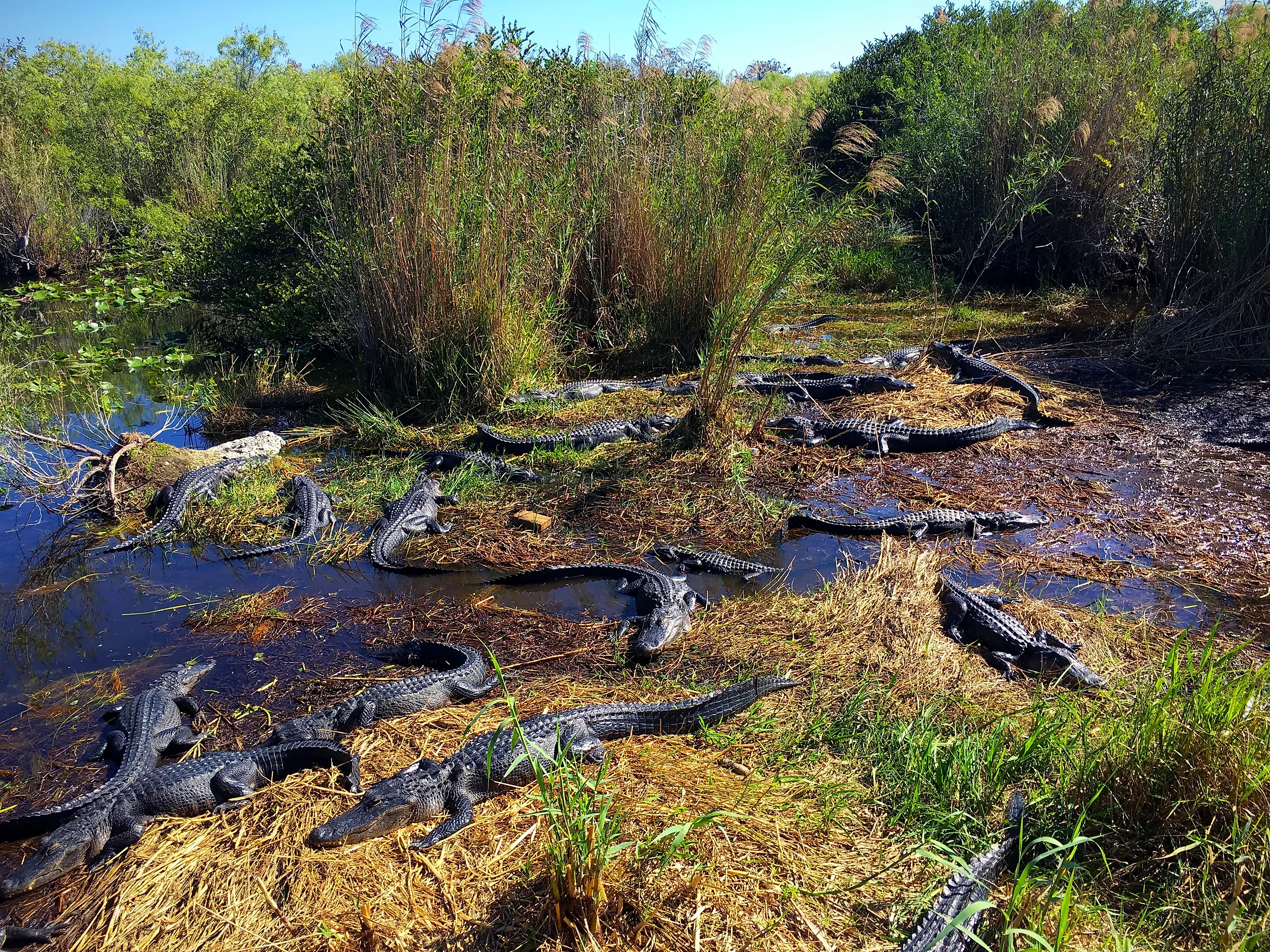
The one and only place on Earth where American alligators and American crocodiles coexist in the wild is the southern tip of Florida, in and around the Everglades. In fact, Everglades National Park is the only national park anywhere that is home to both species at once. Of the world's roughly 23 crocodilian species, just two are native to the US, and this single stretch of subtropical wetland is the one place where their ranges collide.
Gator Territory
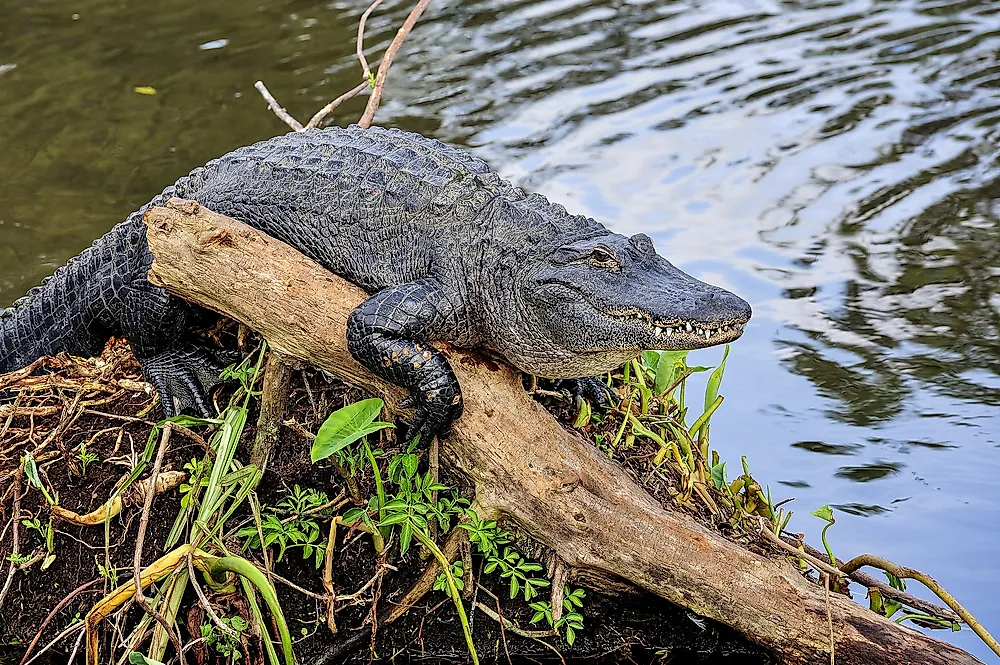
The American alligator is the familiar one. It is a freshwater animal at heart, thriving in marshes, swamps, sloughs, lakes, slow rivers, and drainage canals across the entire southeastern US, from Texas to North Carolina, and throughout all of Florida. Dark, broad-snouted, and far more cold-tolerant than its cousin, the alligator is also enormously common, with Florida alone home to well over a million of them. Down in South Florida, it sits at the very southern edge of its vast range.
Croc Territory

The American crocodile is the rare, reclusive one. Within the US, it lives only in coastal South Florida, haunting the mangrove shorelines, tidal creeks, and brackish bays of the Keys, Florida Bay, Biscayne Bay, and the southern Everglades. Unlike the alligator, it tolerates saltwater thanks to special salt glands, and it is fundamentally a tropical creature whose main range actually runs south through the Caribbean and into Central and South America. Once nearly wiped out in the US, it has clawed its way back to around 2,000 animals, and South Florida marks the northern frontier of its entire world.
Where the Two Meet

South Florida is special because it sits at the exact seam where the alligator's southern limit meets the crocodile's northern one. More than that, the Everglades offers both animals everything they need in one place: freshwater marshes inland that gradually drain out into the salty, mangrove-lined coast. In that brackish middle ground, especially around the southern Everglades, Florida Bay, and Biscayne Bay, gator country and croc country physically overlap. It is a genuine quirk of geography that happens nowhere else on the entire planet.
Telling Them Apart

At a glance the two look alike, but a few field marks give them away. The surest tell is the snout: an alligator's is broad and rounded, shaped like a U (handily remembered as "U for USA"), while a crocodile's is narrower and tapers to a pointed V. Color helps too, as alligators are a dark, near-black and crocodiles a lighter olive-gray. Then there is the smile, since a crocodile flashes a toothier grin with its fourth lower tooth poking out, whereas an alligator's slight overbite neatly hides its bottom teeth. And when in doubt, check the water: a gator almost always means fresh, while a croc usually means salt. Both, of course, are large and powerful predators, so whichever one you happen to spot, the right move is always to admire it from a very respectful distance.