The Oldest Opera Houses Still Staging Shows In America
In the nineteenth century, an opera house was a mark of civic ambition, built by coal merchants, Masons, and gold-rush mining towns eager to bring touring stars to town. A handful of those buildings still raise the curtain today. Philadelphia's Academy of Music, the oldest of the group, drew inspiration from Milan's La Scala and has welcomed opera audiences since 1857. In New York, the Bardavon, named after Shakespeare, was saved from demolition after it closed in 1975. Beardstown's Grand Opera House was nearly complete when a tornado struck on July 4, 1873, forcing a rebuild. In Colorado, the Central City Opera House reopened in 1932 with Lillian Gish on its stage, launching a summer tradition that continues today. Discover seven of the oldest surviving American opera houses still staging live shows, arranged by their original opening dates.
Academy of Music, Pennsylvania

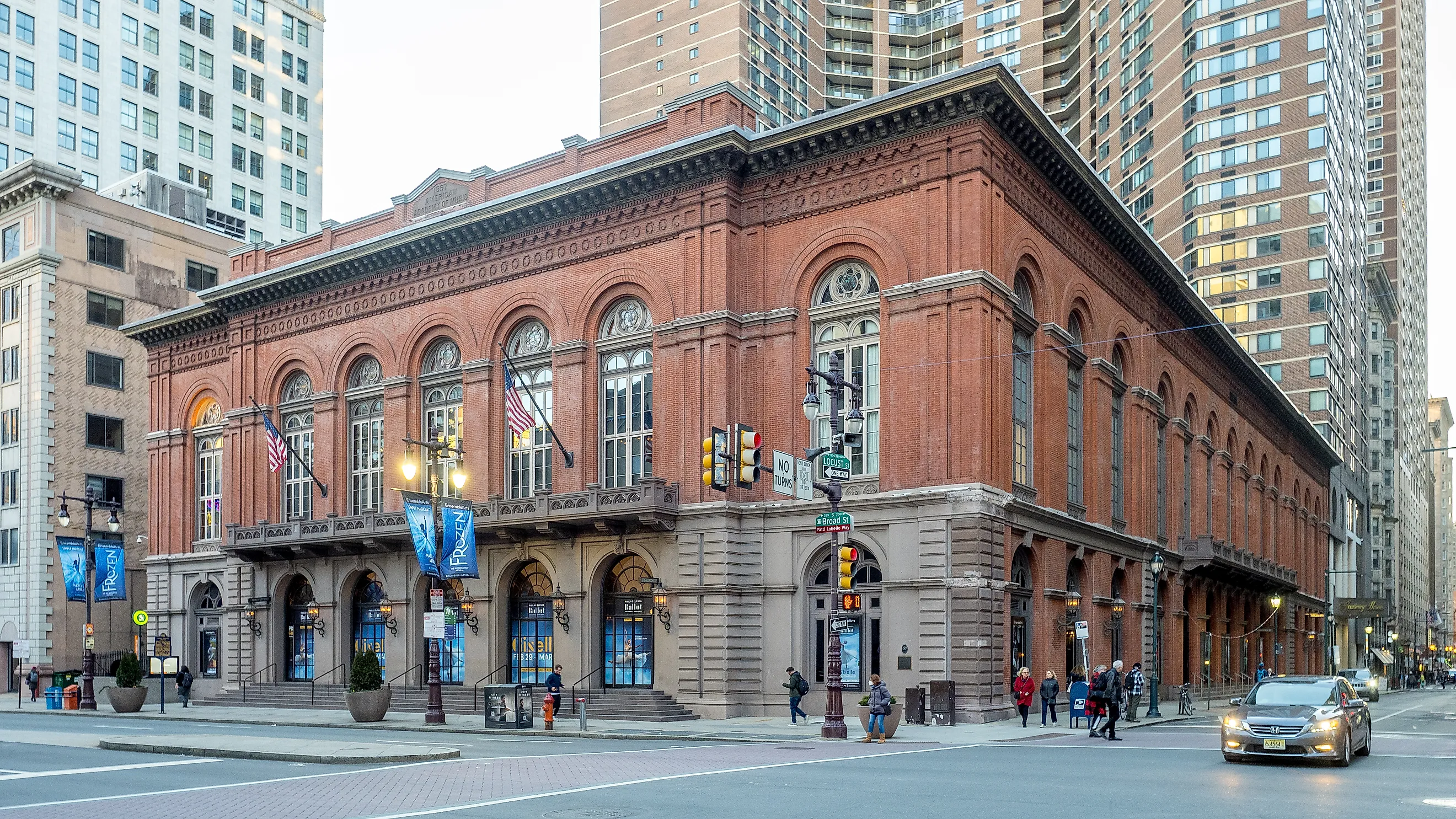
Opened in 1857, the Academy of Music in Philadelphia is widely recognized as the oldest opera house in the United States still used for its original purpose. Architects Napoleon LeBrun and Gustav Runge designed the auditorium with inspiration from European opera houses, particularly La Scala in Milan, and its ornate balconies, decorative columns, and elaborate chandelier, which surrounds the seating for approximately 2,500 spectators. Located at South Broad and Locust Streets, the building earned the nickname the "Grand Old Lady of Locust Street." It officially opened on January 26, 1857, with an inaugural ball, followed by its first complete opera performance, Verdi's Il trovatore, on February 25.
In 1876, the Academy hosted the American premiere of Richard Wagner's The Flying Dutchman, and John Philip Sousa premiered his march, "The Stars and Stripes Forever," in 1897. The Philadelphia Orchestra gave its inaugural concert at the Academy in 1900, kept it as its principal home until 2001, and has owned the building since 1957. Designated a National Historic Landmark in 1962, the Academy remains closely associated with Opera Philadelphia and Philadelphia Ballet, while also hosting touring theatrical productions, concerts, and other performances.
Bardavon 1869 Opera House, New York

The Bardavon 1869 Opera House in Poughkeepsie, New York, opened on February 1, 1869, as the Collingwood Opera House. British immigrant and businessman James Collingwood commissioned the theater on property associated with his coal and lumber business, envisioning a gathering place for entertainment in the growing Hudson Valley community. Its inaugural event, the Citizens Complimentary Concert, featured the Eastman College Band alongside visiting performers from New York City, and the theater soon attracted actor Edwin Booth, composer John Philip Sousa, and dancer Isadora Duncan.
In 1923, new ownership introduced the Bardavon name, a reference to William Shakespeare's nickname, the Bard of Avon. Programming increasingly incorporated vaudeville and motion pictures, and a Wurlitzer pipe organ installed in 1928 accompanied silent films; the instrument spent years away from the building before returning in 1990 following restoration. Declining attendance led to the theater's closure in 1975, but local preservationists saved the building from demolition and established the nonprofit organization that continues to oversee its operations. Added to the National Register of Historic Places in 1977, the 944-seat theater reopened as a performing arts center and now presents concerts, dance performances, theatrical productions, and other cultural events.
Springer Opera House, Georgia

The Springer Opera House opened in Columbus, Georgia, on February 21, 1871, becoming an important center of entertainment during the city's post-Civil War recovery. Entrepreneur Francis Joseph Springer financed the building as part of a broader effort to encourage commercial development and cultural activity in Columbus, and its auditorium originally accommodated approximately 1,250 spectators. The opera house soon became a major stop for touring entertainers, hosting playwright and author Oscar Wilde, pianist Thomas "Blind Tom" Wiggins, and actor Edwin Booth, while Franklin D. Roosevelt delivered a political speech there in 1928.
Motion pictures gradually displaced live performances, and the Springer became a movie theater in 1941 before closing in 1959. With demolition looming, local residents organized a preservation campaign, and the restored Springer reopened in 1965 with a production of St. Elmo, adapted from the novel by Columbus-born author Augusta Jane Evans. Governor Jimmy Carter recognized the building as Georgia's State Theatre through a proclamation in 1971. The designation was formally established in state law in 1992, and it was designated a National Historic Landmark in 1978. Today, the Springer operates as a professional regional theater, presenting musicals, plays, and educational productions.
The Grand Opera House, Delaware

Located in downtown Wilmington, Delaware, the Grand Opera House opened in December 1871 as a combination Masonic temple and public performance venue. Commissioned by the Grand Lodge of Delaware Masons at a cost of approximately $100,000, the Second Empire-style building was designed by architect Thomas Dixon, working with Charles L. Carson, and features an elaborate cast-iron facade decorated with Masonic symbols. Its original auditorium seated approximately 1,400 spectators and presented more than 70 events during its first season alone, when a reserved seat cost one dollar and a four-person box cost five dollars.
Throughout the late nineteenth century, the Grand attracted nationally recognized entertainers, including Buffalo Bill Cody, John Philip Sousa, and actress Ethel Barrymore, and in 1909 it became a regular stop on the vaudeville circuit. Motion pictures eventually dominated its programming, and financial difficulties and mounting maintenance needs contributed to its closure in 1967. Restoration plans gained momentum around the building's centennial in 1971, and the Grand was formally rededicated on February 1, 1973. Today, the venue hosts concerts, ballet, comedy, and other theatrical performances, and Opera Delaware, the Delaware Symphony Orchestra, and First State Ballet Theatre have been among its resident performing arts organizations.
Beardstown Grand Opera House, Illinois

Construction of the Beardstown Grand Opera House began in 1872 in Beardstown, Illinois, under the direction of local businessmen Henry Krohe and George Schneider, who acquired the site of the former Sherman House hotel and reused bricks from the demolished building. Just as the opera house was nearing completion, a tornado struck Beardstown on July 4, 1873, causing extensive structural damage. The owners and local residents worked together to rebuild it, and the building was completed by December 24, 1873, with a second-floor auditorium for approximately 600 spectators, ground-floor storefronts, and a basement saloon.
The Grand hosted theatrical companies, musical performances, and traveling entertainers, including General Tom Thumb, the internationally known entertainer associated with showman P. T. Barnum, giving local audiences access to professional touring productions that might otherwise have been available only in larger cities. As entertainment preferences changed, the building passed through several owners and eventually ceased operating as a traditional opera house. It was added to the National Register of Historic Places in 2000, and the nonprofit Heritage Preservation Foundation acquired it in 2004, undertaking improvements while supporting its continued use. Today, the Beardstown Grand Opera House accommodates community theater productions, live theatrical performances, and other public events.
Goodspeed Opera House, Connecticut

Overlooking the Connecticut River in East Haddam, the Goodspeed Opera House opened for performances on October 24, 1877. The Victorian building was constructed in 1876 for local businessman William H. Goodspeed, a shipping and banking entrepreneur with a strong interest in theater, and combined a theater on its upper floors with offices, a general store, and steamboat-related facilities. Touring companies and entertainers frequently arrived by riverboat from larger cities, including New York, and the inaugural performance featured the comedy Charles II and the farces Box and Cox and Turn Him Out.
Following William Goodspeed's death in 1882, the building's fortunes declined, and the theater eventually closed; the property was later used for purposes including storage for the Connecticut State Highway Department. By 1958, the deteriorating structure was slated for demolition, prompting local residents to organize a campaign to protect it. The Goodspeed Opera House Foundation was established in 1959, and after a substantial restoration, the theater reopened with the musical Oh, Lady! Lady!! on June 18, 1963. Today, it is the mainstage of Goodspeed Musicals, presenting professional productions in its intimate 398-seat auditorium, and the company has sent productions such as Annie on to Broadway.
Central City Opera House, Colorado

In the Colorado mountain town of Central City, the Central City Opera House opened on March 4, 1878, during the region's nineteenth-century mining boom. Gold discoveries beginning in 1859 had transformed the community into a prosperous mining center, and local subscriptions helped finance a substantial theater designed by Denver architect Robert S. Roeschlaub. Built from locally sourced stone and brick, the opera house featured decorative interior artwork by John C. Massman, originally accommodated approximately 750 spectators, and drew touring theatrical companies and musical performers to Central City and the surrounding mining communities.
As local mining declined, the building eventually served as a movie theater before closing in 1927. Preservation efforts led by Ida Kruse McFarlane and Anne Evans secured its restoration through the newly established Central City Opera House Association, and in July 1932, the theater reopened with a production of Camille, starring actress Lillian Gish, establishing the summer performance tradition that continues today. Now maintained by Central City Opera, the historic auditorium accommodates approximately 550 spectators, and its annual summer festival brings singers, musicians, and theatergoers to the former mining town for professional opera in an intimate nineteenth-century setting.
Preserving America's Oldest Opera Houses
From Philadelphia's Academy of Music to Colorado's Central City Opera House, these seven historic venues preserve an important part of America's theatrical heritage. Some, including the Academy and Central City, remain strongly associated with opera, while others have embraced musicals, dramatic theater, and community productions. The preservation of Beardstown's Grand Opera House and Connecticut's Goodspeed Opera House also demonstrates how historic buildings can return to public use after periods of decline. Although their programming has changed over time, all seven continue staging live entertainment in buildings that originated as nineteenth-century opera houses.