11 Prettiest Towns In the Mid-Atlantic
The Mid-Atlantic hides its best looks in small packages. This stretch of the East Coast, running through New York, New Jersey, Pennsylvania, Delaware, Maryland, West Virginia, and Virginia, holds a whaling port 100 miles from the ocean, an island where wild ponies swim an annual channel crossing, and a Pennsylvania mountain town that bought the remains of an Olympic legend and took his name. Between the Appalachians and the Atlantic, these 11 towns prove the region's prettiness comes with backstories worth the drive on their own.
White Sulphur Springs, West Virginia

White Sulphur Springs built a town on a rumor of miracle water. The Shawnee and Cherokee knew these springs long before Europeans arrived, and the local legend dates the town's fame to 1778, when a settler named Amanda Anderson was said to be cured of her rheumatism after taking the waters. The rumor grew into The Greenbrier, the colossal white resort that has hosted presidents and royalty for two centuries, and which hid one of the Cold War's strangest secrets: a classified underground bunker built to house the entire US Congress in a nuclear emergency, kept secret until 1992 and now open for tours.
The town around the resort keeps things more modest. Howard Creek runs through the middle of it, the White Sulphur Springs National Fish Hatchery raises trout beside walking trails, and the Schoolhouse Hotel puts guests up in a converted century-old school. For the deeper history, the Greenbrier Historical Society's North House Museum sits in neighboring Lewisburg, a short drive west.
Saint Michaels, Maryland

Saint Michaels sits on the Miles River near the Chesapeake Bay, where it began as a mid-1600s trading post for trappers and tobacco farmers, and it owes its nickname to one very good trick. During the War of 1812, the story goes, residents blacked out the town and hung lanterns in the trees, fooling British gunners into overshooting; only one house took a hit, and "The Town That Fooled the British" still shows off the Cannonball House to prove it.

The Saint Michaels Historical Walking Tour threads the story together, and the Chesapeake Bay Maritime Museum anchors the waterfront with its relocated 1879 Hooper Strait Lighthouse and working boatyard. For the full postcard, the Inn at Perry Cabin presides over the water's edge in white-manor style, familiar to anyone who has seen Wedding Crashers, which filmed there.
Cape Charles, Virginia

Cape Charles, near the southern tip of Virginia's Eastern Shore, is a railroad town that became a beach town. Farmers worked this stretch of the Shore for two centuries after English settlement in the 1600s, and the town itself was laid out in the 1880s as the terminus where railcars met steamers bound across the Chesapeake. The grid of Victorian and early-1900s homes from that boom now forms a historic district listed on the National Register, with the Cape Charles Museum filling in everything else.

The town's trump card is geographic: its public beach faces west over the Chesapeake, making Cape Charles one of the rare East Coast towns where the sun sets over the water, no charge for the show. At the Cape Charles Natural Area Preserve, a boardwalk crosses rare maritime dune woodland for the quieter version of the same views.
Hudson, New York

Hudson holds two oddball distinctions at once: it was the first city chartered in the United States after independence, in 1785, and it spent its early decades as a whaling port more than 100 miles from the ocean, with Nantucket seafarers sailing their catch up the Hudson River to a safe inland harbor. The wharves are gone; the compact grid and the river views remain.
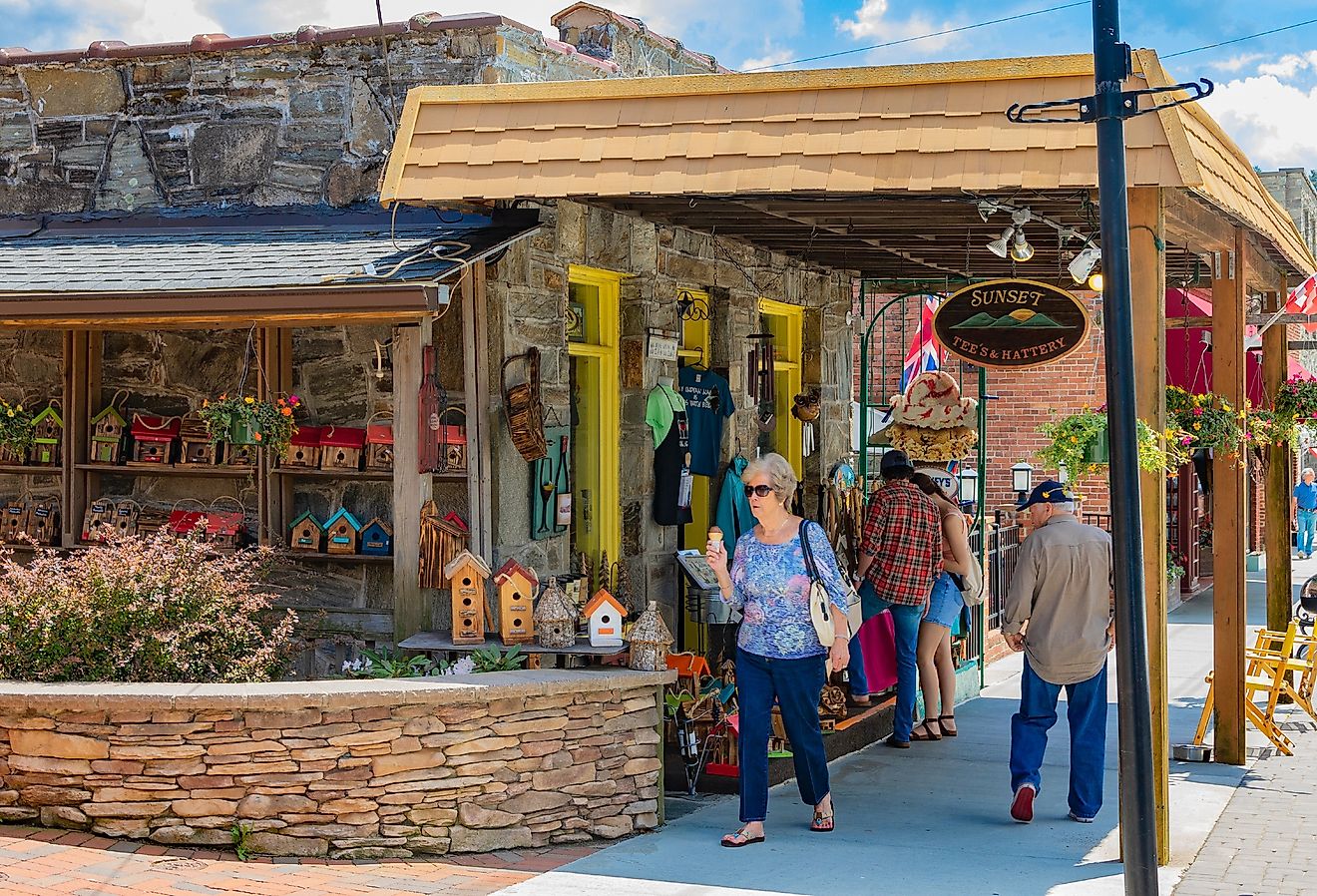
Modern Hudson concentrates its appeal on Warren Street, a mile-long parade of antique shops, galleries, and restaurants in 18th- and 19th-century storefronts that has made the town a Hudson Valley weekend fixture. The Spotty Dog Books & Ale pours pints among the shelves of a former firehouse, Hudson Brewing Company covers the taproom duties, and the 1874 Hudson-Athens Lighthouse still stands mid-river, kept alive by its preservation society.
Jim Thorpe, Pennsylvania

Jim Thorpe has the best origin story of any town name in America. Until 1954 this was Mauch Chunk, a coal-boom town stacked up a Lehigh Gorge hillside so steeply that 19th-century promoters sold it as the "Switzerland of America." When Olympic great Jim Thorpe died, the struggling town struck a deal with his widow, buried the legend here, and took his name, despite Thorpe never having set foot in it while alive. The gamble bought the town a future its scenery went on to earn honestly.
Today the Victorian streetscape along Broadway climbs past the Asa Packer Mansion, the preserved home of the railroad magnate who founded Lehigh University, while the Lehigh Gorge Scenic Railway runs river-and-cliff excursions out of the old stone station. Come October, the gorge turns to full flame and Jim Thorpe hosts some of the best leaf-peeping in the East, with trains timed to prove it.
Buckhannon, West Virginia

Buckhannon's founding story involves two deserters and one enormous tree. The Pringle brothers, who abandoned the British colonial army in the 1760s, hid out for years in the hollow of a giant sycamore just north of the present town, and Pringle Tree Park marks the spot today with a descendant of the original tree, hollow and all. It remains one of the stranger first chapters of any American town.
The town that grew up nearby is a tidy college community on the Buckhannon River, centered on the handsome campus of West Virginia Wesleyan College and a walkable Main Street of brick storefronts. The Buckhannon River Walk Trail follows the water, and each May the town swells for the West Virginia Strawberry Festival, a tradition since 1936 that turns the whole place red for a week.
Boonsboro, Maryland

Boonsboro, in western Maryland near the West Virginia line, was named by relatives of Daniel Boone and has been collecting history ever since. On a single Fourth of July in 1827, the townspeople marched up South Mountain and stacked the first completed monument ever dedicated to George Washington, a rugged stone tower that still stands in its namesake state park with views across the valley. Below it, South Mountain State Battlefield preserves the first major Civil War battle fought in Maryland, the 1862 clash that came just three days before nearby Antietam.
Downtown adds a literary twist: Boonsboro is romance novelist Nora Roberts' hometown of choice, and her family runs both the restored Inn BoonsBoro and the Turn the Page Bookstore, making this possibly the only small town in America where the local bookshop reliably stocks signed bestsellers. Shafer Park, near the center, handles the picnic duties.
Rehoboth Beach, Delaware

Rehoboth Beach began in 1873 as a Methodist camp meeting by the sea, took its name from the Bible, and grew into "The Nation's Summer Capital," the beach town of choice for generations of Washington, DC, escapees. The mile-long boardwalk, first laid the same era the town was founded, remains the main stage, backed by a downtown of shops, taffy, and restaurants that punch far above a town this size.

The Rehoboth Beach Museum keeps the origin story, and the wilder scenery waits minutes north at Cape Henlopen State Park, where dunes, pine woods, and swimming beaches surround the concrete observation towers of Fort Miles, the preserved World War II coastal defense post that once watched the Atlantic for U-boats. Few beach towns pair saltwater taffy and military history this smoothly.
New Hope, Pennsylvania

New Hope got its name from a disaster handled with optimism: when fire destroyed Benjamin Parry's mills on the Delaware River in 1790, he rebuilt and christened them the New Hope Mills, and the village adopted the sentiment. The town went on to become one of the East's great artist colonies, a reputation it keeps with galleries, theaters, and a crowd that treats eccentricity as the local dress code.
Parry's old gristmill survives as the Bucks County Playhouse, the storied 1939 stage where Broadway names have tried out material for decades. The New Hope Railroad runs vintage excursions, Santa trains included, on a line first laid in 1891, and the walk across the Delaware River bridge to Lambertville, New Jersey, turns one pretty town into two. The New Hope Arts and Crafts Festival rounds out the calendar each fall.
Chincoteague, Virginia

Chincoteague, an island town off Virginia's Eastern Shore first settled in the 1600s, is world-famous for its neighbors: the wild ponies of Assateague Island next door. Every July since 1925, the Saltwater Cowboys have swum the herd across the channel for the Chincoteague Pony Swim and auction, the spectacle that Marguerite Henry's 1947 classic Misty of Chincoteague made a childhood legend, and tens of thousands still line the water to watch.
The rest of the island earns the stay. The Captain Timothy Hill House, the island's oldest home with its rare wooden chimney, was rediscovered and restored in 2009; the Chincoteague Island Waterman's Memorial honors the seafaring families who built the town; and the mile-long Island Nature Trail suits every hiking level. Bonus spectacle: NASA's Wallops Flight Facility sits just across the water, so a well-timed visit comes with a rocket launch over the marsh.
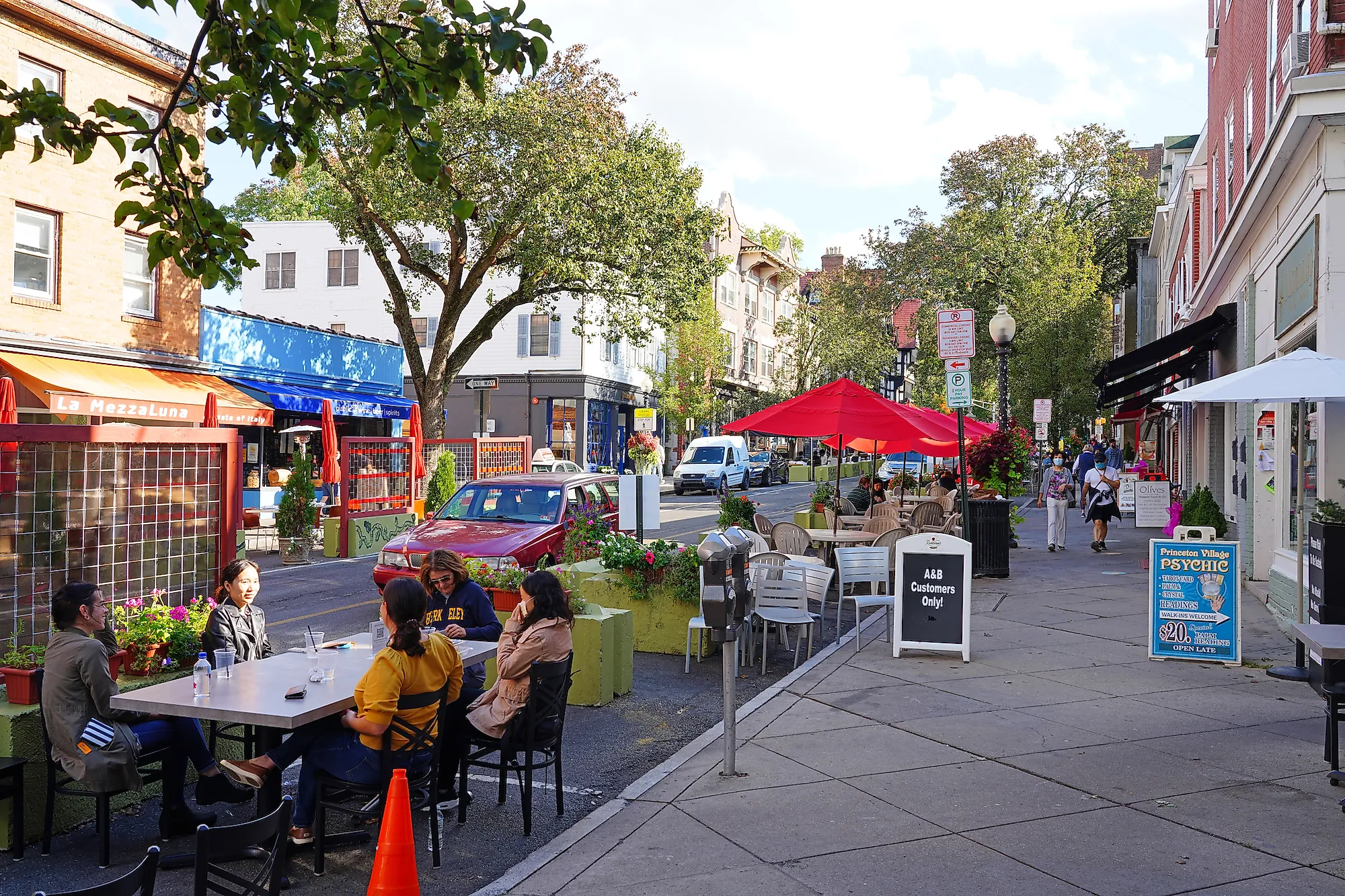
Princeton, New Jersey

Princeton is what happens when a university town has three centuries to perfect itself. Princeton University, chartered in 1746, supplies the Gothic spires and garden walks, with Prospect Garden the showpiece in spring, and its 1756 Nassau Hall carries a national footnote: Congress met there in 1783, briefly making this college town the capital of the United States. George Washington had already left his mark, winning the Battle of Princeton on the town's edge in January 1777, and Albert Einstein later spent his last decades walking these same streets.
Away from the ivy, Mountain Lakes Preserve and the John Witherspoon Woods offer 75 acres of genuine forest minutes from downtown, the Princeton Public Library anchors a lively town calendar, and Hoagie Haven dispenses the region's definitive sandwich to students, professors, and pilgrims without distinction.
Pretty, With Receipts
What separates the Mid-Atlantic's prettiest towns from mere postcard stops is that every good view comes attached to a good story. Saint Michaels out-tricked a navy, Boonsboro out-built the capital's Washington Monument by decades, Hudson hunted whales from 100 miles inland, and Jim Thorpe adopted a hero and grew into the name. Pick any of these 11 and the scenery is guaranteed; the history tags along for free, which in this region it always does.