11 Safest Towns In Northern Ireland For Senior Living
Northern Ireland recorded 93,601 crimes in 2025-26, or 49 crimes per 1,000 residents, down 2.3% from the previous year. Burglary, theft, criminal damage, and both violence with injury and violence without injury declined. Police Service of Northern Ireland statistics are generally reported by policing district rather than by individual town, so these figures work best as a regional baseline. The communities below pair that broader safety picture with access to medical care, emergency services, and programs that help older residents remain active and independent. In Enniskillen, for example, South West Acute Hospital provides full emergency care, while the Around the Meadow Reminiscence Trail encourages outdoor activity and social connection. Comber's Greenway follows a former railway line toward Belfast, giving residents a traffic-separated route for walking and cycling close to home. Read on to discover the best and safest towns for seniors in Northern Ireland.
Enniskillen

Few considerations become more important with age than how far away help is during a medical emergency. In Enniskillen, South West Acute Hospital operates a full Emergency Department, treating critically ill and major trauma patients from across southwestern Northern Ireland. The town also benefits from Fermanagh and Omagh's Age-Friendly program, which addresses fall prevention, dementia awareness, accessible infrastructure, social isolation, and independent living. Some of that work also extends into the community. Shopmobility helps people with limited mobility get around, while the Around the Meadow Reminiscence Trail was created to encourage outdoor activity and social connection through local memories and stories.
Enniskillen's setting makes those outings appealing. Enniskillen Castle overlooks the River Erne, and waterside routes lead toward shops and cafés in a town center surrounded by Upper and Lower Lough Erne. Residents can spend an afternoon at the castle museums, walk beside the water, or take a boat trip on the lough. The result is an uncommon combination for a relatively small community: outdoor recreation and heritage alongside full emergency medicine close to home.
Coleraine

A hospital on the edge of Coleraine offers more than conventional emergency medicine. Causeway Hospital operates a 24-hour Emergency Department, while its Frailty Direct Assessment Unit provides same-day acute assessment for appropriate patients, helping some avoid unnecessary trips through the Emergency Department or hospital admission. Coleraine also functions as the principal service and transportation center for this part of the Causeway Coast. Bus and rail connections make surrounding communities accessible, while everyday shopping and services remain concentrated in town.
The River Bann provides an easy change of pace from the commercial center. Residents can also walk through Mountsandel Wood, where archaeological evidence traces human settlement back thousands of years. When a larger outing appeals, Portrush, Portstewart, and the Causeway Coast are nearby. Coleraine consequently offers access to one of Northern Ireland's best-known coastal regions without requiring residents to give up the practical advantage of a 24-hour Emergency Department in their own town.
Holywood

Living beside Belfast Lough does not leave Holywood isolated from major medical care. The Ulster Hospital at Dundonald operates a 24-hour Emergency Department, giving residents access to one of the region's principal emergency facilities without living in a large city. Holywood itself lends everyday errands and recreation to relatively short outings. Shops and cafés occupy the center, trains connect the town with Belfast and Bangor, and the ruins of Holywood Priory provide a historic stop nearby.
From the shore, the coastal path follows Belfast Lough, while Redburn Country Park offers woodland trails and elevated views for more active residents. Cultra is home to two major cultural destinations: the Ulster Folk Museum and the Ulster Transport Museum. Together, these options allow residents to switch between coastal walks, museums, shopping, and green spaces while retaining straightforward access to Belfast-area healthcare.
Carrickfergus

Carrickfergus Castle makes the town's waterfront difficult to mistake for anywhere else in Northern Ireland. The medieval fortress rises directly beside the harbor, with Marine Gardens and the Belfast Lough shoreline extending the outing beyond the castle grounds. Shops and other services sit only a short distance inland. That compact arrangement is useful later in life because an afternoon out does not require several separate car journeys. Residents can combine the castle, harbor, waterfront paths, and town center in one trip.
Healthcare adds another layer. Local services handle routine needs, while Antrim Area Hospital operates one of the Northern Health and Social Care Trust's two 24-hour Emergency Departments. Carrickfergus also falls within Mid and East Antrim's age-friendly work, which focuses on independence, social participation, and access to services. Its strongest case is therefore not simply historic charm, but the way recreation and everyday destinations cluster around an accessible waterfront while major emergency care remains available within the wider area.
Banbridge

Older residents in Banbridge have a formal voice in how their community approaches aging. Armagh City, Banbridge, and Craigavon Borough's Age Friendly program covers transportation, outdoor spaces, social participation, communication, and access to health and community services, while its Older Persons Council gives seniors an avenue for participating in that work. Major medical care is also within reach. Craigavon Area Hospital operates a 24-hour Emergency Department serving the surrounding region.
Closer to home, the River Bann passes through Banbridge, and Solitude Park provides paths and green space near the center. Shops and cafés supply practical everyday destinations, while the surrounding countryside offers longer excursions. These features allow residents to maintain ordinary routines locally while keeping both age-focused community support and major emergency medicine within the wider area.
Newcastle

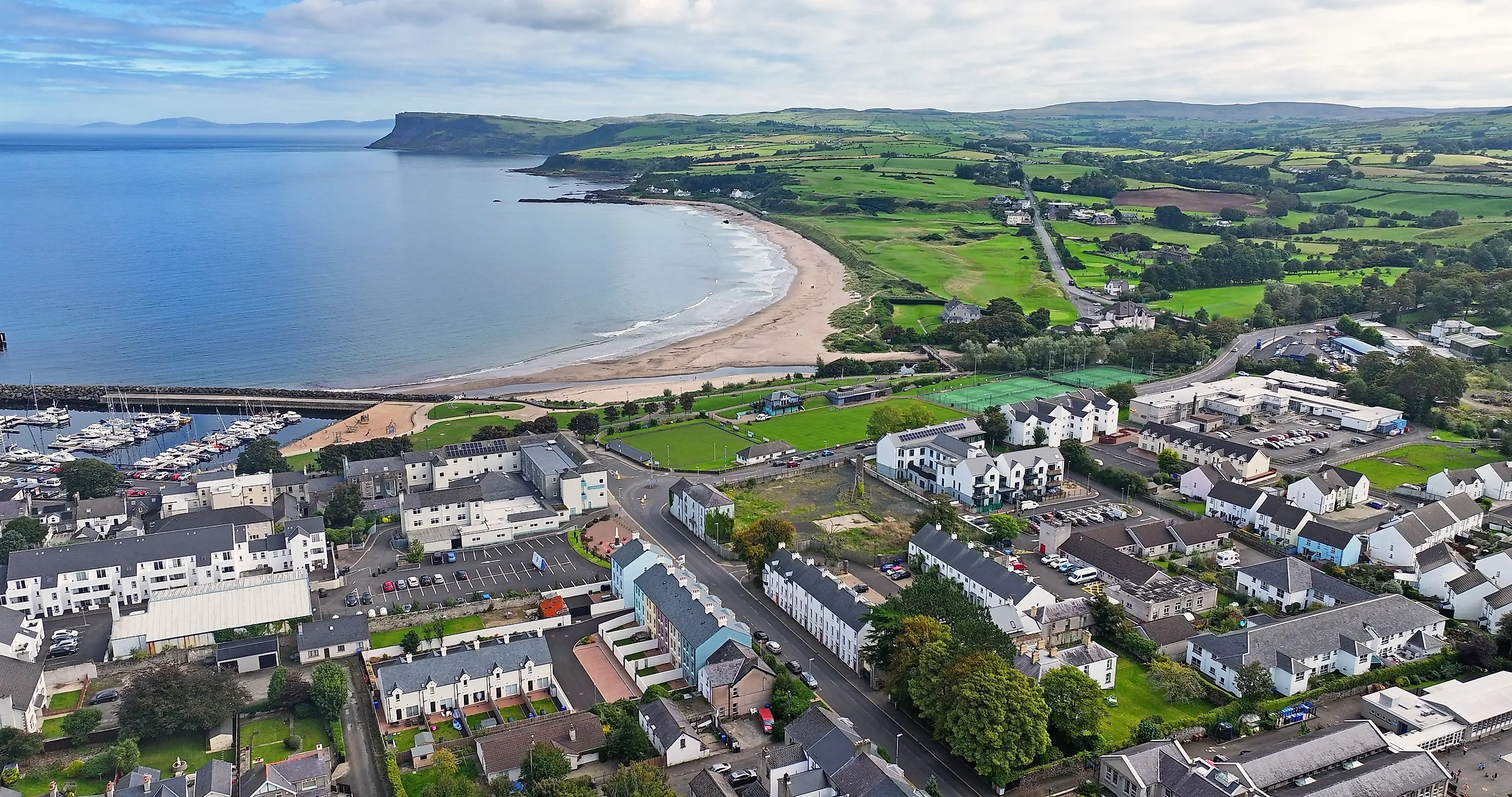
In Newcastle, staying active can begin at the end of the main street. The town center meets the promenade and beach at Dundrum Bay, with the Mourne Mountains rising immediately behind them. Residents can move from shops and cafés to a waterfront walk without planning a separate excursion. The setting accommodates different levels of mobility. A shorter outing can follow the promenade toward the harbor, while more active residents can explore nearby Murlough National Nature Reserve or the woodland trails of Tollymore Forest Park.
Full emergency hospital care is farther away than it is for residents of Enniskillen or Coleraine, making Newcastle's safety case different. Its advantage lies in an environment where walking, social activity, and time outdoors can become part of ordinary routines, backed by community services in the Newry, Mourne, and Down area and the wider Health and Social Care system. For seniors who can live independently, the opportunity to remain active without having to drive to every recreational destination can be particularly valuable.
Ballycastle

Changes to Ballycastle's public realm have addressed something directly relevant to later life: how comfortably residents can move through their community. Accessibility and pedestrian improvements form part of wider Causeway Coast and Glens initiatives, while local programs have included activities such as older-adult exercise and Nordic walking. Dalriada Hospital provides healthcare services in Ballycastle, although it does not operate one of the Northern Trust's full Emergency Departments. Serious emergencies requiring that level of care are handled at facilities including Causeway Hospital.
Ballycastle's daily recreational options begin much closer. The seafront and harbor provide natural destinations from town, the beach extends a waterside outing, and ferries leave for Rathlin Island. The wider Causeway Coast supplies more ambitious excursions. Rather than depending entirely on those attractions, however, Ballycastle's senior-living case rests on the combination of local healthcare, pedestrian improvements, organized active-aging opportunities, and recreation that begins within the community itself.
Omagh

Omagh demonstrates the difference between emergency medicine and urgent care. Omagh Hospital and Primary Care Complex does not have a conventional Emergency Department. Instead, its 24-hour Urgent Care and Treatment Centre is a nurse-led minor-injuries unit with round-the-clock X-ray support. Staff can consult Emergency Department specialists at South West Acute and Altnagelvin hospitals and use telemedicine to assist with diagnosis. That medical model is complemented by Fermanagh and Omagh's Age Friendly Strategy, which addresses fall prevention, dementia awareness, social isolation, accessibility, and independent living.
Shopmobility Omagh has also contributed to local accessibility work aimed at making businesses and public facilities easier for people with disabilities and mobility limitations to use. Residents also have several ways to remain engaged outside the home. The River Strule passes through town, shops and cafés provide everyday destinations, and the Ulster American Folk Park offers a larger cultural excursion nearby. Omagh, therefore, builds its senior-safety case around practical support for aging in place rather than claiming medical facilities it does not have.
Comber

A former railway line gives Comber residents something increasingly valuable with age: a place to walk away from ordinary road traffic. The Comber Greenway follows the old rail corridor toward Belfast, creating a dedicated walking and cycling route that can serve as regular recreation rather than an occasional attraction. Ards and North Down's Age Friendly program provides resources that foster social connection, home safety, health, and access to services. Inclusive walking initiatives provide another way for residents of differing abilities to remain active, while full emergency treatment is available at the Ulster Hospital outside town.
Comber's central square provides a focal point for local shops and cafés, and nearby Strangford Lough expands the possibilities for outdoor excursions. Scrabo Country Park offers another change of scenery. The Greenway remains the most distinctive everyday asset, however, because it provides residents with a repeatable, traffic-separated route to stay active close to home.
Downpatrick

Healthcare, shopping, community facilities, and centuries of history come together in Downpatrick, which serves as an important center for the surrounding part of County Down. Local Health and Social Care services cover routine needs, with emergency and specialist treatment available through the wider South Eastern Trust network. Several of the town's best-known destinations are clustered around its historic core. Down Cathedral stands above the town beside the traditional grave of St. Patrick, while the Down County Museum occupies the former county gaol nearby.
For an outdoor alternative, the Quoile River and surrounding countryside provide a markedly different setting only a short distance away. This concentration matters as much as the attractions themselves. Residents can reach healthcare and everyday services in the same community where they shop, socialize, and pursue cultural activities, reducing the need to travel elsewhere for every part of daily life.
Larne

Larne has turned aging well into a community objective rather than treating it solely as a healthcare issue. Mid and East Antrim's work with older residents emphasizes independence, health, social connection, transportation, and access to services. A dementia-friendly garden beside Larne Leisure Centre and the promenade makes that approach tangible in a public space. Moyle Hospital provides local healthcare services, while serious emergencies requiring a full Emergency Department are handled elsewhere in the Northern Trust, including at Antrim Area Hospital. Keeping that distinction clear is important for residents weighing proximity to different levels of medical care.
Larne's waterfront, meanwhile, provides an accessible setting for ordinary recreation. Residents can follow the promenade toward the Chaine Memorial Tower, watch ferries and other activity around the harbor, or make the short trip to Carnfunnock Country Park for gardens and coastal views. Those options reinforce the town's broader strength: local services and community programs designed to help older residents remain connected to life outside their homes.
Independence As A Measure Of Safety
The practical meaning of safety changes when a community becomes the place where someone intends to grow older. Enniskillen and Coleraine reduce the distance between residents and full emergency care. Omagh combines round-the-clock urgent care with accessibility initiatives, while Banbridge gives older residents a formal role in age-friendly planning. Elsewhere, Comber's traffic-separated Greenway, Ballycastle's pedestrian improvements, and Larne's aging-well programs make remaining active and connected easier. No single statistic captures all of those conditions. Taken together, however, access to medical care, safer opportunities for movement, community support, and places worth visiting regularly can help older residents preserve something central to senior safety: the ability to continue managing everyday life with confidence.