7 Most Rattlesnake Infested Areas in Alabama
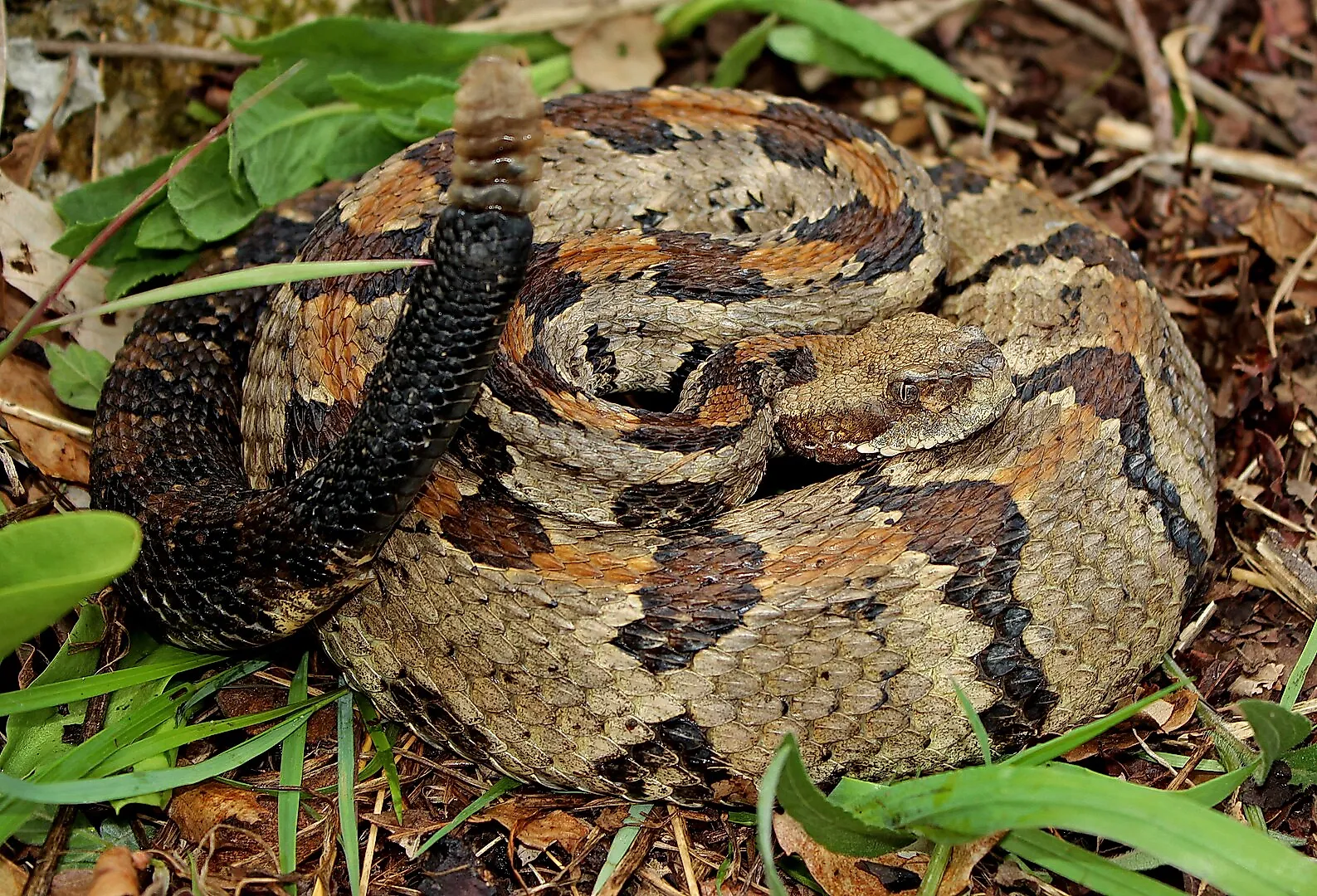
Anyone who fears snakes is going to be a little shaken by Alabama’s rattlesnake statistics. There are three species of rattlesnake that call Alabama home: the eastern diamondback rattlesnake (Crotalus adamanteus), the timber rattlesnake (Crotalus horridus), and the pygmy rattlesnake (Sistrurus miliarius). The eastern diamondback rattlesnake is the largest species of rattlesnake in the world, whereas the timber rattlesnake is so prevalent that it is found in all 67 Alabama counties.
Regardless of whether you are relaxing on a beach in the Gulf Coast at Gulf State Park or hiking trails at Oak Mountain State Park, you may find yourself sharing the space with at least one species of rattlesnake. So read on to learn how to stay safe at the 7 most rattlesnake-infested areas in Alabama.
Gulf State Park

Gulf State Park comprises 6,150 acres, including 2 miles of white sand beach fronting the Gulf of Mexico. The park is laced with 28 miles of trails that wind through nine different ecosystems. Visitors have the opportunity to walk, hike, bike, fish, swim, or simply relax at The Lodge, a 350-room resort directly on the beach.

But if you are on the trails at Gulf State Park, you may spot a pygmy rattlesnake in a coiled position. When they are in this position, they are comparable in size to a loblolly pine cone. They will wait in this position until a prey item passes by, potentially for up to three weeks at a time. They are known to feed on mice, frogs, and lizards, all of which also inhabit Gulf State Park.
Conecuh National Forest

Conecuh National Forest sprawls across southern Alabama, along some of the boundary with Florida. The forest preserves some of the best coastal plain habitat in Alabama, characterized by gently sloping, broad ridges with stream terraces and broad floodplains. The forest features permanent wetlands, seasonal wetlands, large creeks, small creeks, hardwood forests, upland pines, and open grassy areas.

The pygmy rattlesnake is the most prevalent rattlesnake in the forest, present in areas in or near large creeks, hardwood forests, upland pines, and open grassy areas. Eastern diamondback rattlesnakes are only found in upland pines and open grassy areas, and timber rattlesnakes are found in upland pines and hardwood forests.
Little River Canyon National Preserve

The Little River Canyon National Preserve is on the southern edge of the Cumberland Plateau within the southern Appalachian Mountains. It is composed of forested uplands, waterfalls, canyon rims and bluffs, pools, boulders, and sandstone cliffs. It is suitable for hiking, camping, picnicking, kayaking, horseback riding, and birdwatching along the Little River. The Little River is unique in that for most of its course, it flows atop Lookout Mountain.

Many different species of snakes are found in the preserve, including the timber rattlesnake, which lives in many of the areas frequented by people, such as trails, rocky crevices and outcrops, and on the banks of the Little River.
Natchez Trace Parkway

The Natchez Trace Parkway is a 444-mile recreational road and scenic drive that passes through Mississippi, Alabama, and Tennessee. The parkway begins in Natchez and terminates in Nashville. All along the parkway, there are opportunities to get out and explore close to 100 trails, ranging in difficulty from short, paved hikes to trails that are 27 miles one way. 25 different species of snake live along the parkway, including the timber rattlesnake. Although the likelihood of encountering a venomous snake is rare on the Natchez Trace Parkway, it is still a possibility. Proper caution should be exercised when hiking or picnicking at sites along the parkway. Visitors should be aware of where they place their hands and feet near rocky outcrops, and stick to clear, marked trails, away from dense cane thickets or other thick vegetation.
Russell Cave National Monument

Rattlesnakes have also found a home at one of the most complete records of prehistoric cultures in the southeast. For thousands of years, bands of prehistoric Indians sought shelter at Russell Cave. The cave was occupied until the time of European explorers, as the surrounding forest provided food, tools, and fuel for fires. The cave is at the end of a 1.2-mile hiking trail, which winds through 310 acres of untouched forest that timber rattlesnakes call home.

As the weather warms up, rattlesnake sightings, particularly timber rattlesnakes, become more common as they leave their winter den in search of food and basking sites. Rattlesnakes are essential to the ecosystem at Russell Cave as they keep the rodent population under control.
Cahaba River Park

Cahaba River Park is located at the confluence of the Cahaba River and Shades Creek. The park comprises 1,505 acres of dry oak and pine forests, with clearcuts of pine plantation and steep mesic slopes on the river banks. Outdoor activities at the park include canoeing, kayaking, fishing, hiking, mountain biking, and swimming. The park is divided into two sectors: the North Sector and the South Sector. The North Sector is more developed, featuring multi-use trails that vary from ridgetop trails through pine forest to trail running along the river, whereas the South Sector is still undeveloped in parts. Timber rattlesnakes are found in the park. They occupy upland and lowland habitats as well as pine flatwoods, making Cahaba River Park a comfortable home for them to live.
Oak Mountain State Park

Oak Mountain State Park was established in 1927 as a 940-acre park. It has since grown to 11,861 acres, making it Alabama’s largest state park. Its huge land area creates some of the widest variety of outdoor activities of any state park. The three most popular activities in the park are hiking, mountain biking, and horseback riding, as there are over 100 miles of trails to choose from.

However, the trails are also frequented by rattlesnakes, including timber rattlesnakes. Due to foliage and leaf litter on the trails, it is easy for rattlesnakes to blend in if they are in a coiled position on the trail, or simply crossing from one side to the other. Rattlesnakes will usually lie motionless in an attempt to go unnoticed or slither away from people if approached.
Stay Rattlesnake Safe in Alabama
While rattlesnakes are common in the Alabama landscape, encounters with them are still relatively infrequent. Rattlesnakes are most often found in quiet, undisturbed habitats like Cahaba River Park or Russell Cave National Monument. While these places receive a lot of visitors, rattlesnakes tend to avoid humans.
By staying aware of your surroundings, sticking to marked trails, and respecting wildlife, you can safely explore these environments. Understanding where rattlesnakes are most prevalent not only helps reduce the risk of encounters but also highlights their important role in maintaining balanced ecosystems across Alabama.