10 Most Beautiful Small Towns In Texas You Should Visit
Marfa's adobe and red-brick storefronts run pink at sunset under the high-desert light that drew Donald Judd to move here from New York in 1971, and the same light still draws photographers and contemporary artists five decades later. Canyon sits at the rim of Palo Duro Canyon, where Permian red claystone, white gypsum, and yellow Trujillo Formation sandstone drop 800 feet across a 120-mile run. Llano keeps its 19th-century downtown on a courthouse square framed by 1.4-billion-year-old pink granite outcrops of the Llano Uplift. Rockport's coastal live oaks bend permanently windward from constant Gulf onshore wind, and Goose Island's Big Tree has held its 35-foot trunk circumference outside town for upwards of a thousand years. The ten Texas towns below each pair a specific kind of beauty with a town small enough that the view is part of daily life, not a destination you drive to and leave.
Port Isabel

The white-painted 1852 Port Isabel Lighthouse rises 57 feet above the shoreline of the Laguna Madre at the southern tip of Texas, its conical brick tower set against the turquoise shallows of the lagoon and the 2.5-mile arc of the Queen Isabella Causeway running east to South Padre Island. It is the only Texas lighthouse currently open to the public for climbing, with 75 winding cast-iron stairs and three short ladders rising to a catwalk that looks out across the bay, the working shrimp fleet at anchor below, and the barrier island in the distance.
The lighthouse was dark for 117 years after the Coast Guard decommissioned the light in 1905. In December 2022 the Texas Historical Commission installed a reproduction Third Order Fresnel lens at the top, the first time the tower had been lit since the early 20th century. Around the lighthouse, the small plaza fills with the December Christmas Lighted Boat Parade and the November Music Under the Stars concert series, with the white-painted hulls of the working Gulf shrimp boats moving in and out of the channel year-round.
Dripping Springs

Hamilton Pool Preserve, fifteen miles west of downtown Dripping Springs, is one of the most-photographed natural features in the Texas Hill Country: an underground river that collapsed roughly 10,000 to 13,000 years ago left behind a horseshoe-shaped limestone grotto with a 50-foot waterfall plunging into a jade-green pool ringed by maidenhair fern and bald cypress. The site requires advance reservations through the Travis County parks system and has summer-swim closures whenever bacteria levels exceed safe limits, so confirmation before the drive out is essential.
The town itself sits at the edge of the limestone-and-juniper hills that define the eastern Hill Country, with a working downtown that the Texas Legislature designated the state's first Wedding Capital in 2015 on account of the dozens of event venues spread across the surrounding ranchland. The craft distillery corridor anchored by Treaty Oak, Dripping Springs Distilling, and Deep Eddy Vodka has built up alongside the wedding economy. Hays County's population, of which Dripping Springs is part, has grown roughly 70 percent since 2010 as Austin's spillover pushes west.
Rockport

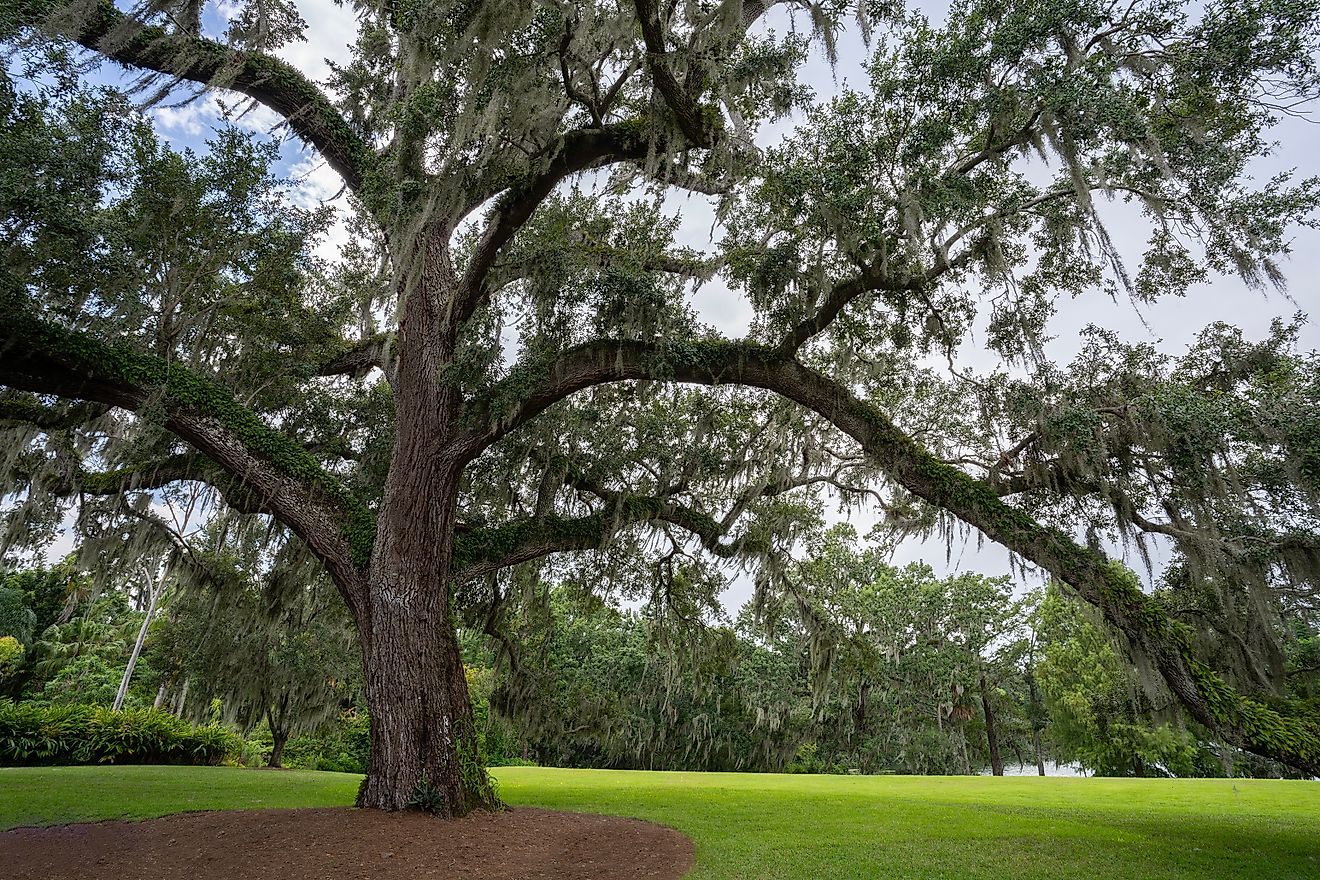
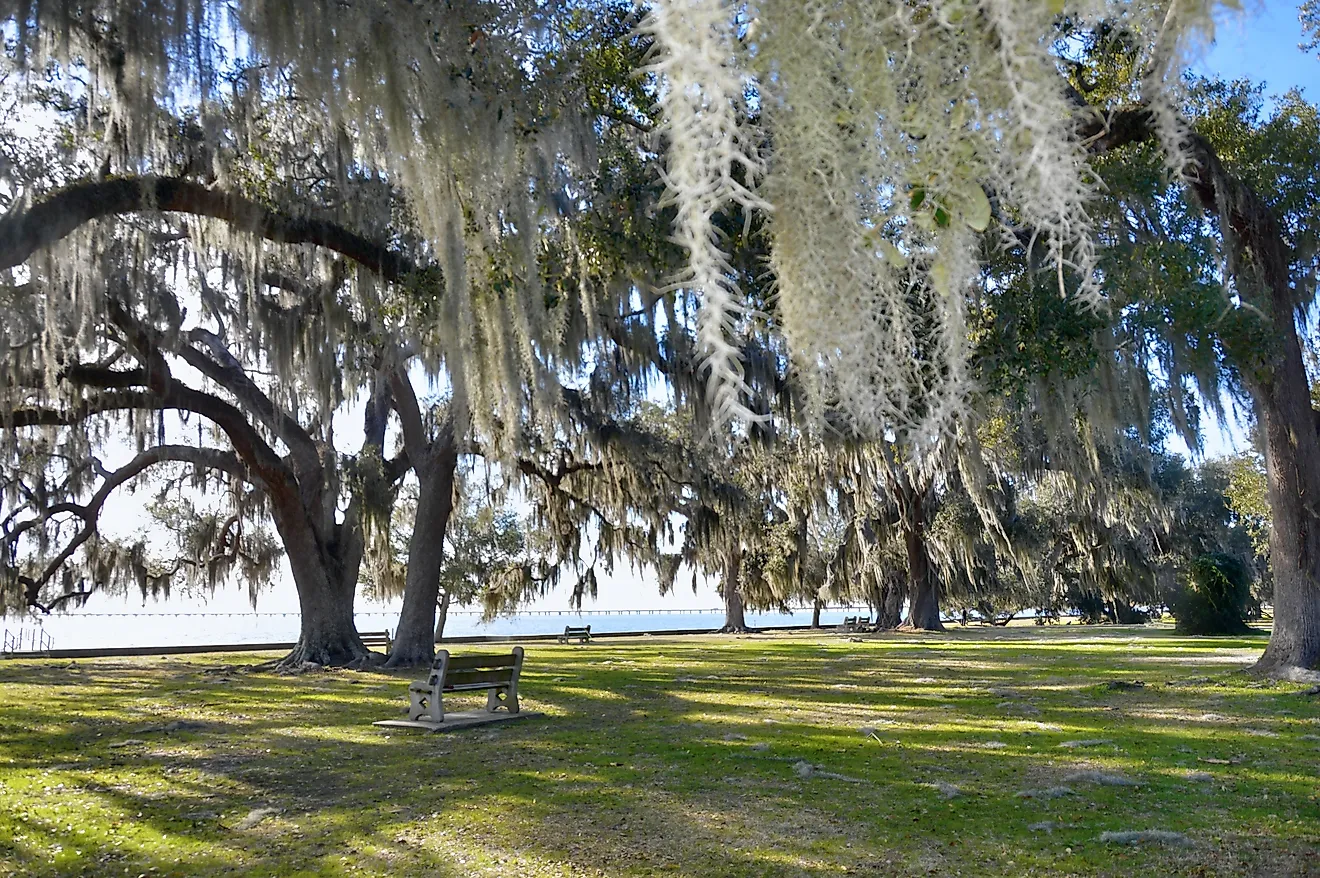
The wind-sculpted coastal live oaks along the Aransas Bay shore lean permanently to the east, their canopies pruned aerodynamic by decades of Gulf onshore breeze. The Big Tree at Goose Island State Park, twelve miles north of Rockport, is the official Texas State Champion live oak by trunk circumference at 35 feet 1.7 inches, with an estimated age of at least 1,000 years and some dendrologists arguing for closer to 2,000. The Fulton Mansion, the 1877 Second Empire-style limestone residence of cattle baron George Fulton in neighboring Fulton, has been restored as a state historic site and reopened in 2017.
Rockport took a direct hit from Hurricane Harvey in 2017, when the storm's eye crossed the town at Category 4 strength, and the years since have been a methodical rebuild. Rockport Beach, a Blue Wave Certified saltwater swimming beach with a covered pavilion and kayak rentals, is the town's main waterfront. The Rockport Center for the Arts runs rotating gallery exhibitions in a coastal-modern building on the harbor, and the Texas Maritime Museum traces the state's Gulf history from the Spanish entradas through the modern offshore industry.
Canyon

Palo Duro Canyon drops 800 feet into banded walls of Permian-age red claystone, white gypsum, and yellow Trujillo Formation sandstone twelve miles east of the town of Canyon, running 120 miles long and up to 20 miles wide. It is the second-largest canyon system in the United States after the Grand Canyon, and Texans were calling it "the Grand Canyon of Texas" decades before Arizona's became a national park in 1919. Lighthouse Rock, the 310-foot freestanding hoodoo formation at the head of one of the park's most-photographed trails, is the canyon's signature image, particularly at sunset when the iron-rich sandstone runs deepest red.
Palo Duro Canyon State Park covers the northernmost section of the canyon with hiking, mountain biking, horseback riding, and the long-running outdoor musical TEXAS in the Pioneer Amphitheatre. The Panhandle-Plains Historical Museum on the West Texas A&M University campus, the largest history museum in the state with a permanent collection of more than three million artifacts, has been closed to the public since March 2025 after a fire marshal inspection identified roughly 150 life-safety violations across the nearly century-old buildings. The Panhandle-Plains Historical Society announced in late 2025 that it was evaluating relocation options for the collection; check before planning a stop.
Marfa

Marfa's 1886 Presidio County Courthouse, a red-brick Second Empire pile with a mansard roof and a small bell-tower cupola, rises above a flat high-desert plain at 4,688 feet elevation, visible across 360 degrees of unbroken horizon. The dry desert light over the Trans-Pecos has a particular optical clarity, and that light is what drew minimalist sculptor Donald Judd to move here from New York City in 1971 and convert the decommissioned Fort D.A. Russell into permanent installation space.
The Chinati Foundation, opened to the public in 1986 and still actively managed by a curatorial staff, holds Judd's large-scale milled-aluminum sculptures in two converted artillery sheds and additional permanent works by Dan Flavin, John Chamberlain, Robert Irwin, Carl Andre, and others. The companion Judd Foundation manages additional Judd-curated properties around town including The Block, where Judd lived and worked. East of town, the Marfa Lights, periodically observed unexplained orbs visible at the free roadside viewing platform on Highway 90, have been documented since the 1880s. El Cosmico on the south side of town rents yurts, vintage Airstream trailers, and Sioux-style teepees as overnight options at the edge of the open desert.
Salado

Salado Creek runs clear over a flat limestone bottom past stands of bald cypress and pecan, one of the very few Hill Country creeks that has not been dammed, fenced, or diverted into a reservoir. The ruins of Salado College, a four-story limestone building chartered in 1860 as one of the earliest coeducational schools in Texas, sit on College Hill above the creek and the town. The college closed in 1924 after years of decline, but the stone walls remain, and the surrounding district was placed on the National Register of Historic Places in 1976.
Main Street runs tree-lined past dozens of independent galleries, antique stores, and family-owned shops in 19th-century stone-and-frame buildings, with the Barbee Mercantile (built around 1870) among the oldest continuously operating commercial buildings in central Texas. The Salado Sculpture Garden runs an open-air collection along the main pedestrian corridor. Chalk Ridge Falls Park, just outside town, covers a short hike to a multi-step limestone waterfall along Cowhouse Creek. Barrow Brewing Company on Royal Street operates out of a converted feed warehouse with weekend live music in the courtyard.
Port Aransas

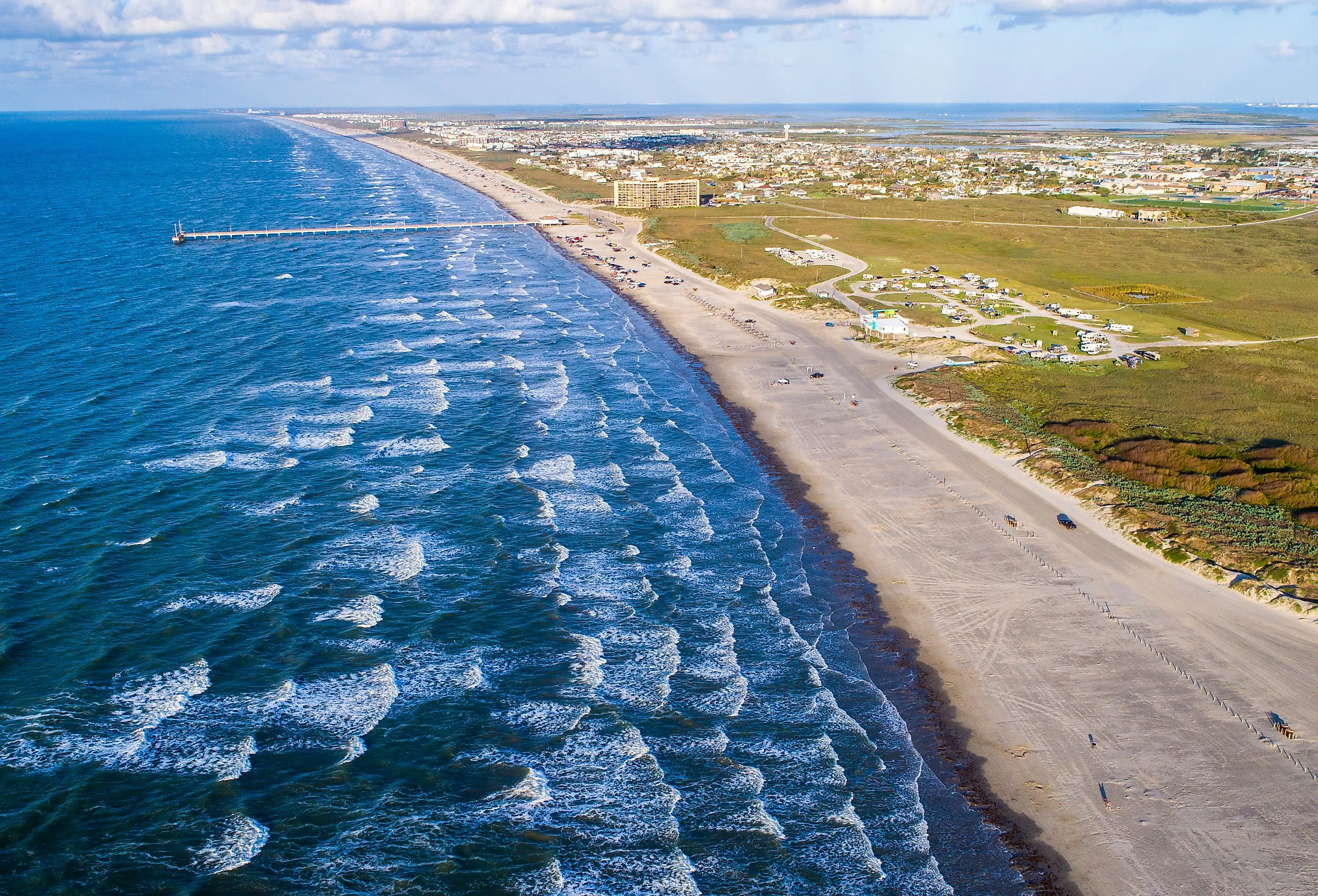
Mustang Island's 18-mile barrier beach faces the Gulf of Mexico across a band of low dunes stabilized by sea oats and panic grass, with the working harbor of Port Aransas sheltered behind the island's north end at the Aransas Pass channel. The barrier-island light at sunrise and sunset is the visual draw, paired with the unbroken horizon line of the Gulf and the silhouetted shrimp boats running in and out of the pass.
Mustang Island State Park covers five miles of beachfront, dunes, and coastal grassland on the southern half of the island, with primitive beach camping and a paved bike trail. The Leonabelle Turnbull Birding Center boardwalk extends into a freshwater pond known for roseate spoonbills, herons, and seasonal migrants on both flyways. Kemp's ridley sea turtles nest on these beaches from April through July, and the Animal Rehabilitation Keep at the University of Texas Marine Science Institute runs occasional public release events for rehabilitated juveniles. Texas SandFest each April is one of the largest master sand-sculpting competitions in North America, drawing professional sculptors and around 100,000 spectators over a single weekend.
Llano

The Llano River runs through pink Precambrian granite, with boulder-strewn rapids and shallow swimming holes worn smooth across 1.4 billion years of weathering. The Llano Uplift, the geological structure underlying the river and the surrounding hill country, is one of the largest exposures of Precambrian basement rock in North America. The town itself sits at the river's most accessible crossing, with the 1893 pink granite-and-red sandstone Llano County Courthouse anchoring a square ringed by 19th-century commercial buildings.
The Badu Building, an 1891 former bank built of locally quarried Llanite (a rare blue-quartz granite found only in this part of Texas), now houses a restaurant. The Llano County Museum on Bessemer Avenue covers regional history including the geological story of the Llano Uplift. The Llano Earth Art Fest each spring brings international rock-balancing artists who somehow get massive river stones to stand on tiny contact points. Inks Lake State Park, 20 minutes south, runs hiking and swimming along a Highland Lakes shoreline of pink granite outcrops sloping into clear water.
Marble Falls

Bluebonnet fields cover the limestone-rim hills around Marble Falls each March and early April, with the abandoned 19th-century Bluebonnet House on Park Road 4 the most-photographed scene in the Highland Lakes. The Colorado River backs up behind Max Starcke Dam to form Lake Marble Falls along the town's southern edge, with limestone bluffs framing the far shore and Lake LBJ a short drive upstream. The original marble falls that gave the town its name were submerged when the dam was completed in 1951, so the town's namesake has been underwater for nearly three-quarters of a century.
Hidden Falls Adventure Park covers 3,000 acres for ATVs, dirt bikes, and rock-crawling trucks across granite slabs and creek beds. The Backbone Trail loops through Reveille Peak Ranch and pulls hikers up onto a granite outcrop with Hill Country views in three directions. The wine corridor immediately west of town includes Fall Creek Vineyards (Texas's first commercial-scale winery on Lake Buchanan, founded 1975), Flat Creek Estate, and Spicewood Vineyards.
Granbury

The 1891 Hood County Courthouse, a Second Empire design in cream limestone with a four-faced clock tower, anchors a town square of preserved limestone and brick Victorian storefronts that has held its 19th-century shape better than almost any other in Texas. The square went on the National Register of Historic Places in 1974 as one of the earliest Texas downtowns recognized in its entirety. Lake Granbury wraps the south side of town with City Beach Park and a public bathhouse two blocks from the square.
The Granbury Opera House on the square opened in 1886, was restored in 1975 after decades of disuse, and now runs a year-round live theater season. The Hood County Jail Museum and the Bridge Street History Center both trace the frontier story. Outlaw Jesse James was reportedly buried in Granbury under his alleged assumed name J. Frank Dalton (the claim is widely disputed by historians and the marked grave in the Granbury Cemetery is generally considered a curiosity rather than an authenticated James burial). Lake Granbury itself is a 1969 reservoir on the Brazos River that defines the local recreation calendar through the summer.
Ten Texas Views Worth The Drive
The beauty across these ten towns runs on visual variety rather than a single template. Palo Duro's banded canyon walls at Canyon and the granite slabs of the Llano River at Llano are geological. Hamilton Pool's collapsed grotto outside Dripping Springs and the wind-shaped live oaks of Rockport are biological. Marfa's high-desert light, the Bluebonnet House outside Marble Falls in March, and the sunrise glow over the Mustang Island dunes at Port Aransas are atmospheric. The Port Isabel Lighthouse on the Laguna Madre, the courthouse square in Granbury, and the limestone ruins of Salado College are architectural and historical. Each town is small enough that its visual signature is part of the daily routine, which is what separates these places from the big-state vistas that draw the postcards.